Showcase your capabilities
If you design, build or supply USBL Systems, create a profile to showcase your capabilities and connect with visitors who have an active requirement for your solutions.



Ultra-Short Baseline (USBL) systems provide real-time underwater acoustic positioning for commercial oceanography, environmental monitoring, subsea construction, and hydrographic surveying. Combining transducers, transponders, and advanced signal processing, USBL technology enables the accurate tracking and navigation of ROVs, AUVs, and divers across varied depths and conditions.
This category outlines USBL system suppliers for marine and subsea operations, including manufacturers of acoustic positioning equipment, calibration and communication modules, and integrated navigation solutions.
Read the Technology Overview
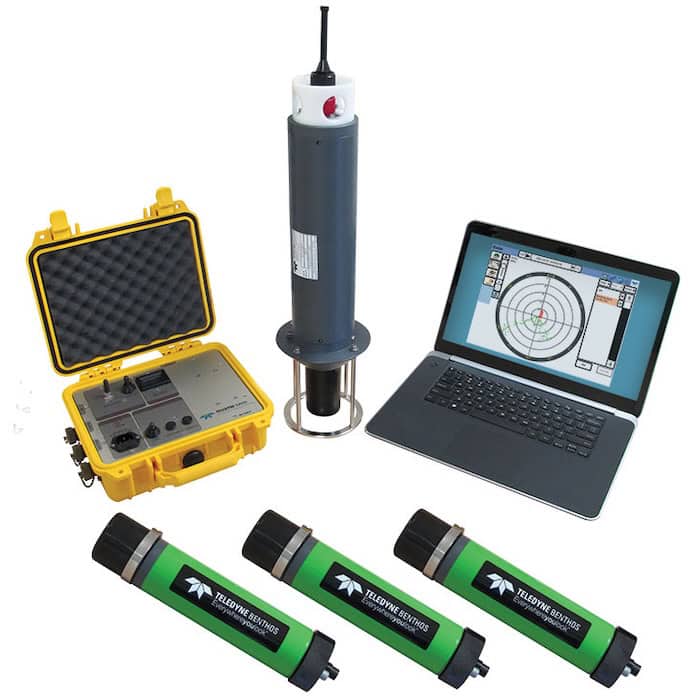
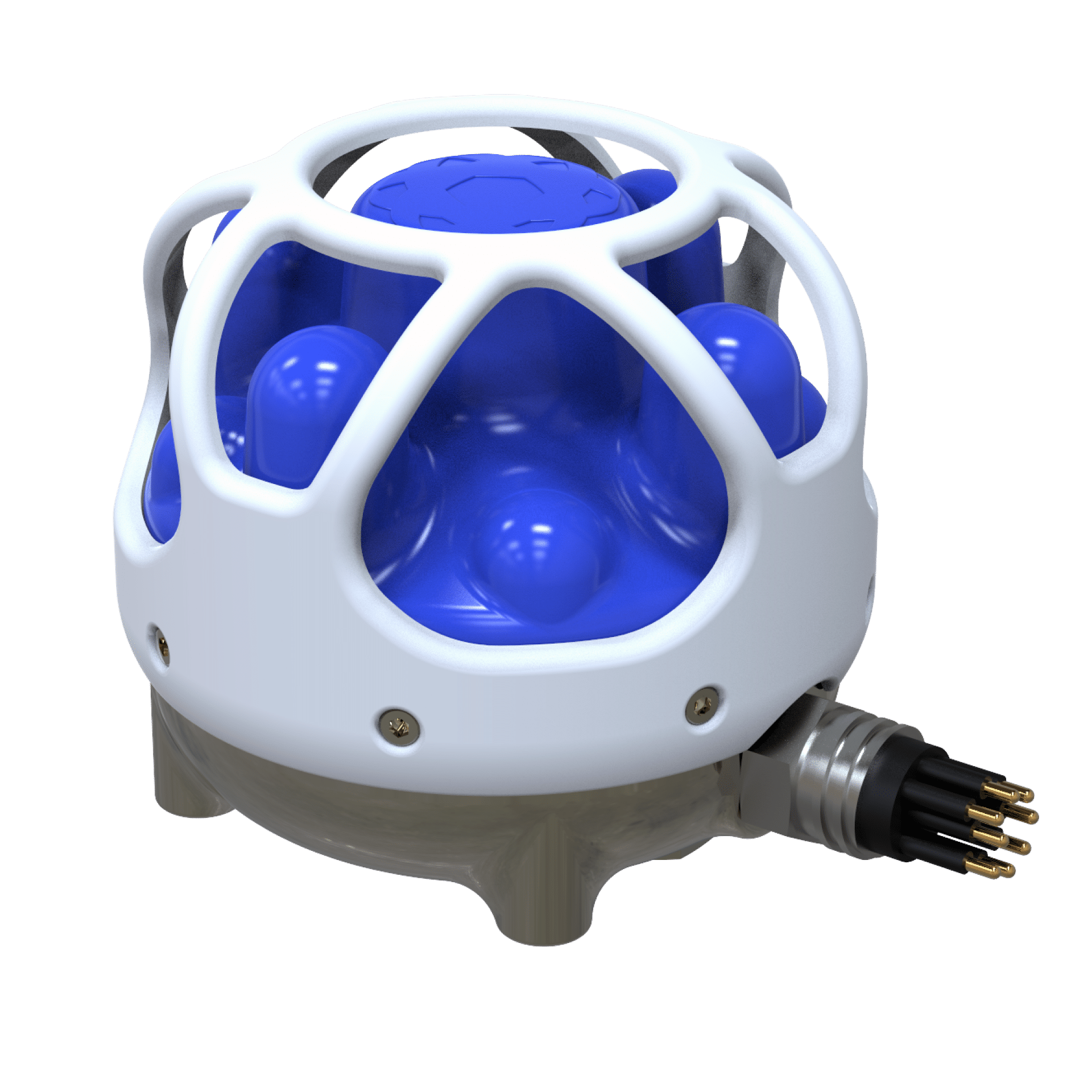
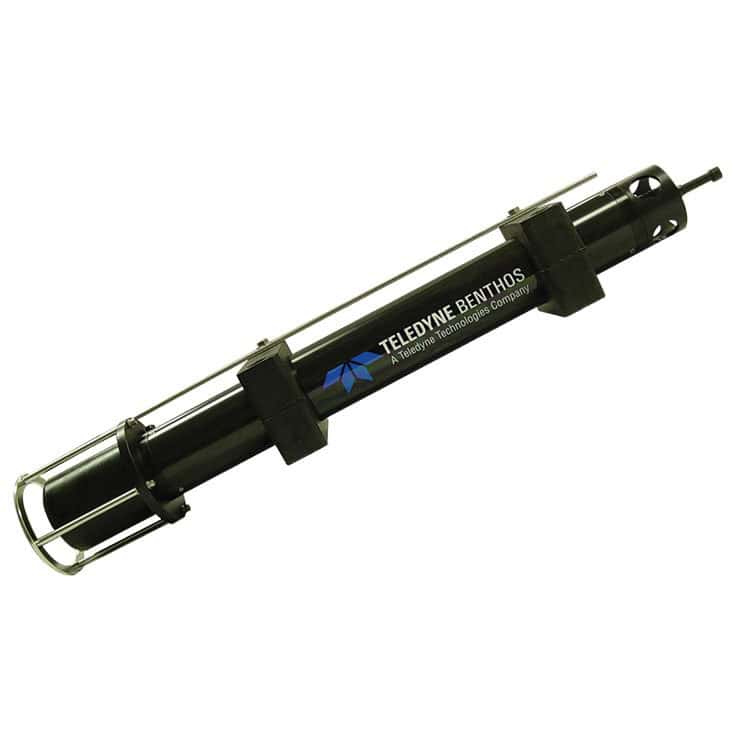
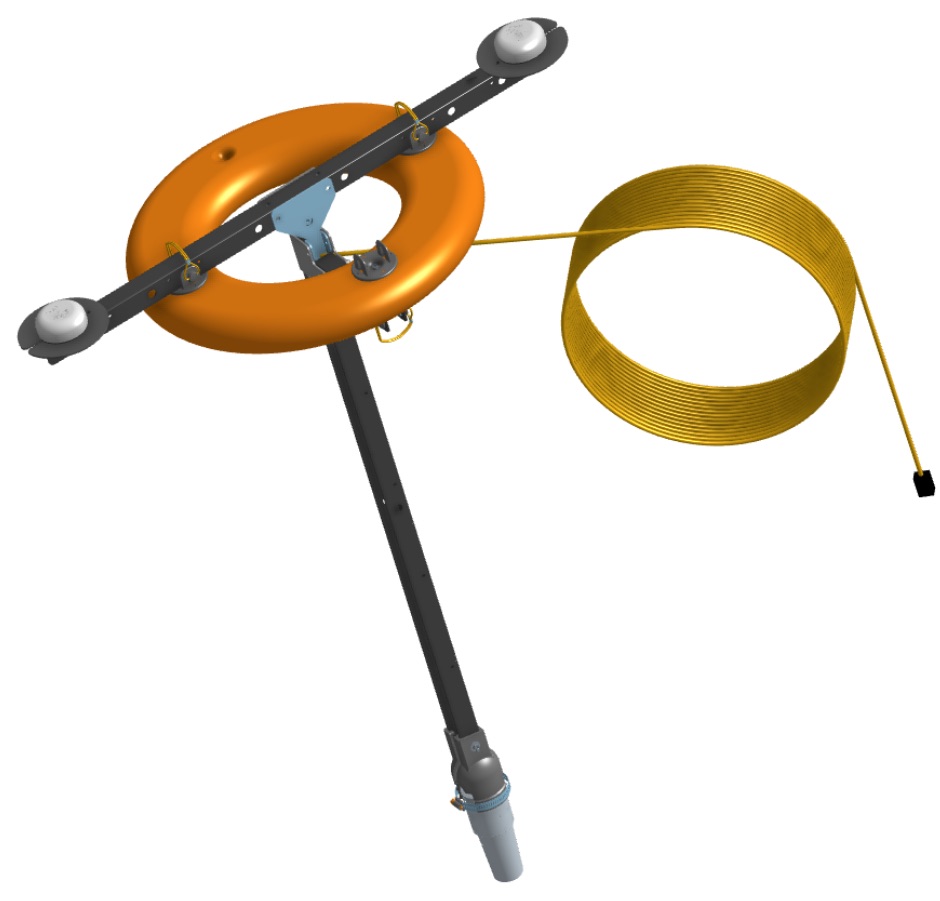
High-Performance Instruments, Sensors & Technologies for Exploring & Monitoring Subsea Environments

High-Accuracy Inertial Sensors & Acoustic Positioning Systems for Marine, Maritime & Offshore Applications

Cutting-Edge Underwater Imaging & Positioning Solutions for Subsea Exploration

Innovative Subsea & Marine Navigation, Positioning & Survey Solutions

If you design, build or supply USBL Systems, create a profile to showcase your capabilities and connect with visitors who have an active requirement for your solutions.


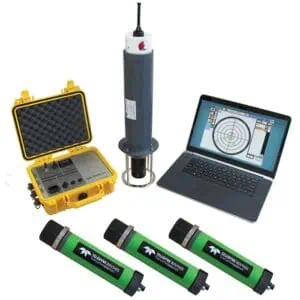
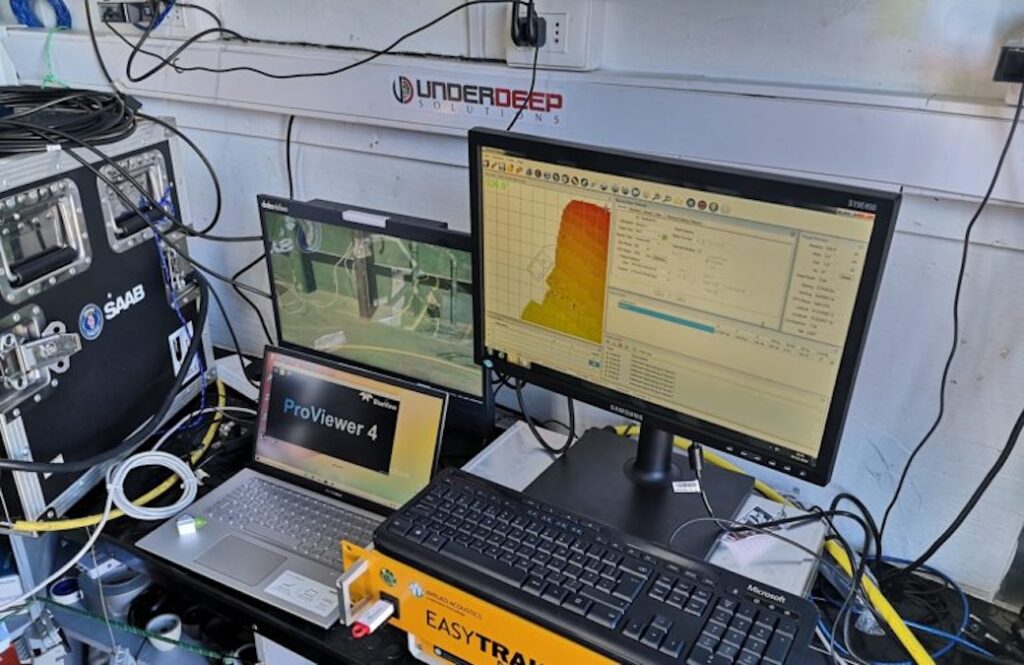
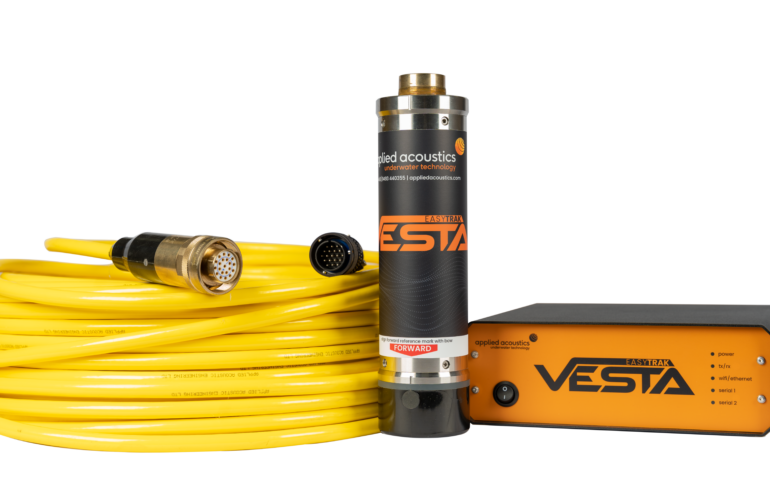
Easytrak USBL Systems by Applied Acoustics
Ultra-Short Baseline (USBL) systems accurately determine the subsea location of assets like ROVs, AUVs, divers, and scientific instruments in commercial marine operations. By relying on the transmission and reception of sound pulses between a vessel-mounted transceiver and a subsea transponder or beacon, a USBL system calculates the target’s position relative to the surface support vessel. This calculation forms a critical link, providing real-time subsea navigation and control across commercial and research marine operations.
The versatility of the ultra-short baseline system makes it an indispensable tool for engineers and scientists alike. In offshore construction, USBL positioning systems precisely guide equipment during pipeline alignment, structure installation, and deepwater asset placement. In oceanography and survey work, they enable the precise navigation of autonomous platforms collecting geophysical and environmental data.
Additionally, for critical scientific missions, USBL tracking supports repeatable sampling, habitat mapping, and crucial, long-term instrument recovery. Essentially, ultra-short baseline measurement is paramount wherever precise underwater positioning is required without the logistical complexity of deploying a full seabed network.
At its core, an ultra-short baseline system emits a sound pulse from the transceiver that is instantly received by the target’s transponder. The transponder replies with a return pulse, allowing the system to accurately measure the two-way travel time. This measurement, when paired with the known speed of sound in water, determines the range (distance).
Crucially, the subtle phase and amplitude differences detected across the multiple hydrophone elements within the transceiver array provide the angular information, enabling a precise, three-dimensional (3D) determination of the target’s position.

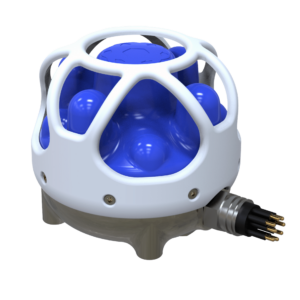
Subsonus by Advanced Navigation
Modern, high-end USBL positioning systems leverage advanced phase-difference techniques to resolve bearing (horizontal angle) and elevation (vertical angle) with sub-degree accuracy. By instantly combining high-fidelity angle-of-arrival and range data, the system computes an instantaneous and continuous position solution relative to the vessel. This sophisticated approach allows the USBL tracking system to dynamically monitor highly mobile targets, even in acoustically challenging environments.
The speed of sound in water is a variable, not a constant; it changes based on temperature, salinity, and pressure. These properties, particularly the resulting Sound Velocity Profile (SVP), introduce systematic errors if left uncorrected. To ensure maximum positional accuracy, all high-grade ultra-short baseline system deployments rely on continuous corrections derived from sound velocity profilers or expendable probes.
While Long Baseline (LBL) systems offer the highest absolute accuracy by referencing fixed seabed transponders, the ultra-short baseline system is preferred for its rapid deployment and superior operational flexibility. Short Baseline (SBL) acoustic positioning systems offer a middle ground but require a known, rigid array geometry.
However, when coupled with Inertial Navigation Systems (INS) or Doppler Velocity Logs (DVL), USBL forms a robust hybrid navigation solution. This integration ensures the system maintains high precision and redundancy, even when acoustic conditions, such as near-surface noise or thermoclines, temporarily degrade the primary acoustic link.
Core components of an ultra-short baseline acoustic positioning system include:
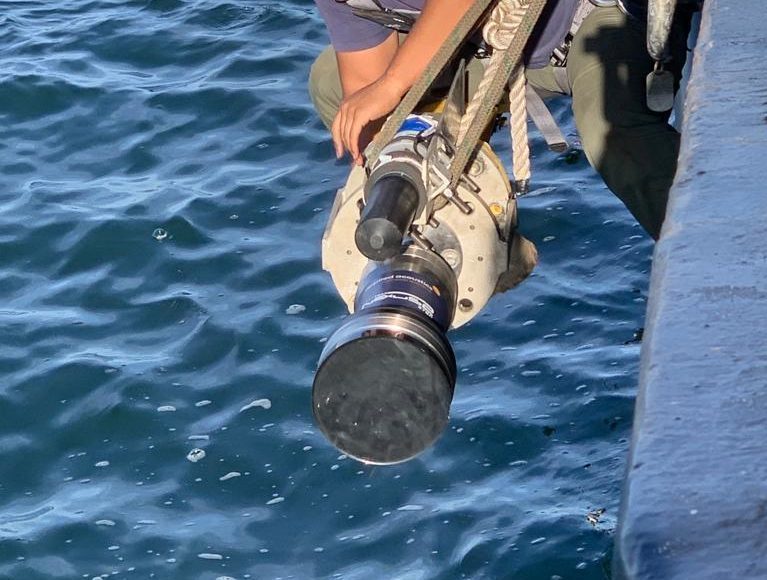
The USBL transceiver is mounted to the vessel and contains multiple hydrophone elements in a compact, typically circular, array. These elements are manufactured from specialized ceramic materials chosen for their acoustic sensitivity and stability under varying pressure.
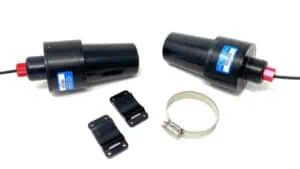
This subsea unit, often referred to as a USBL beacon, replies to the interrogation. These are depth-rated units selected for a specific frequency band and may also house integrated tilt and temperature sensors for diagnostic feedback. Power efficiency is key for ensuring long-term deployment viability.
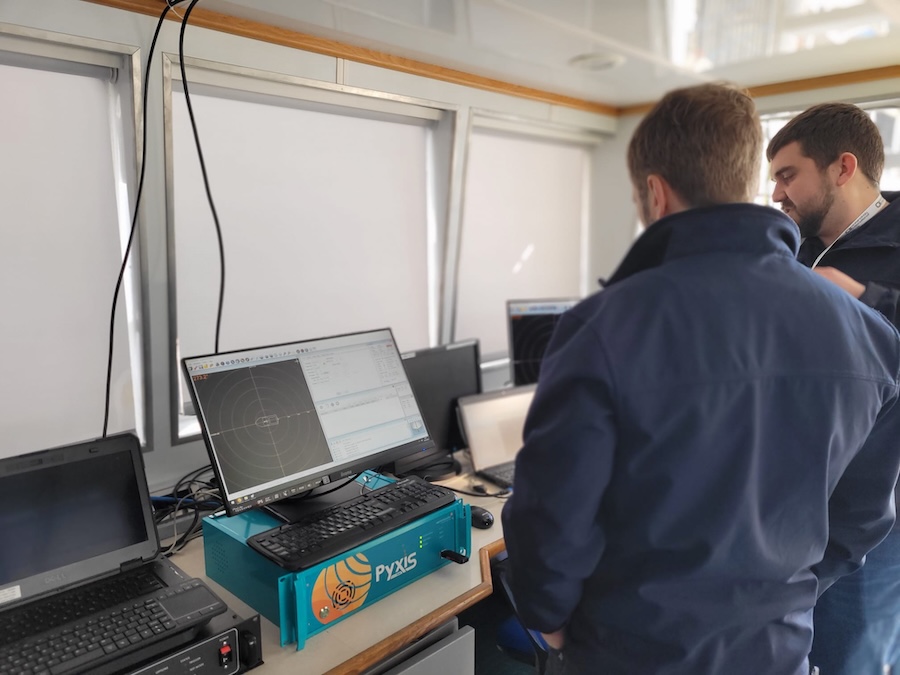
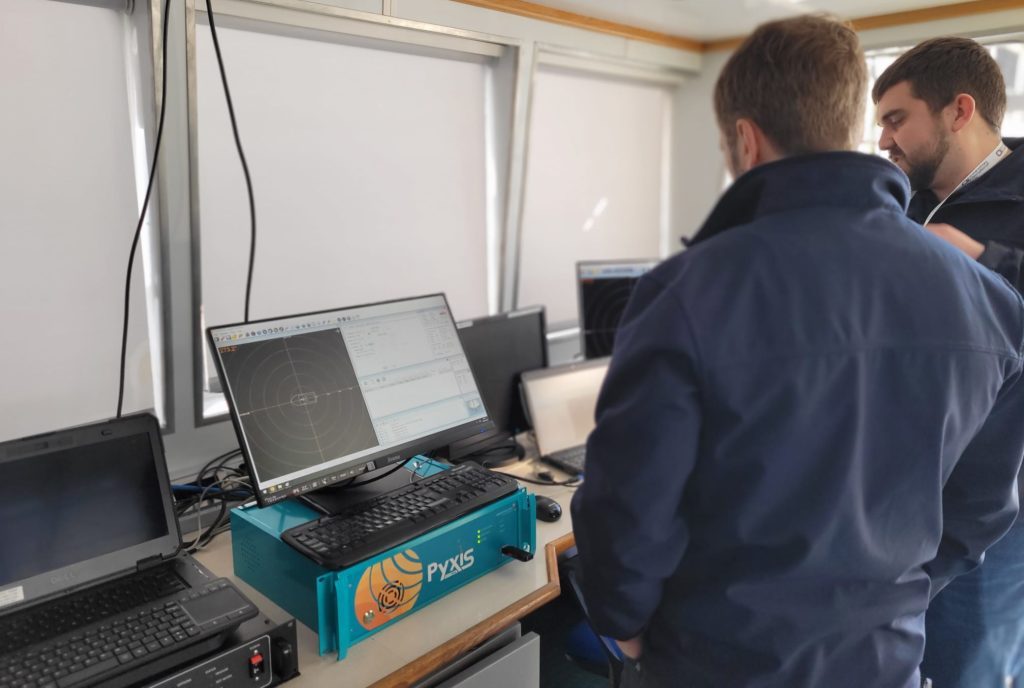
The topside processor is the brain, translating raw acoustic data into range and bearing solutions. It applies real-time motion compensation using inputs from vessel reference systems. These control units seamlessly integrate with navigation and Dynamic Positioning (DP) consoles.
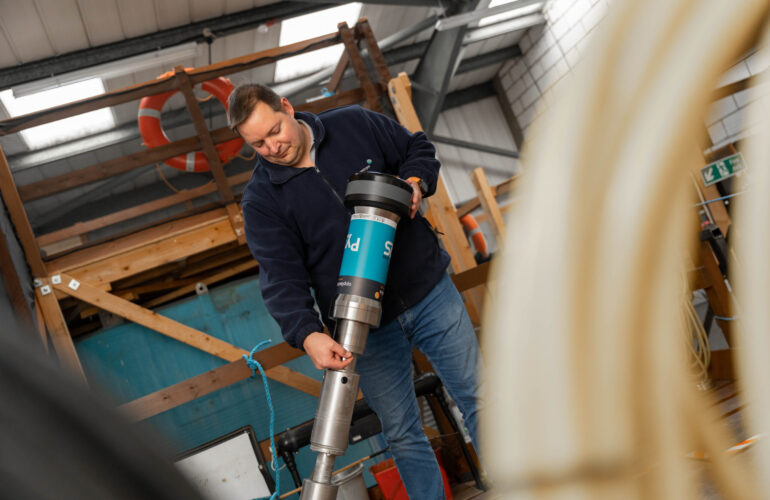
USBL transceivers can be permanently hull-mounted for dedicated vessels or rapidly pole-mounted for temporary survey work. Critical integration with surface systems, specifically high-precision GNSS receivers, Motion Reference Units (MRUs), and gyrocompasses, is non-negotiable. This integration ensures the system accurately compensates for the vessel’s pitch, roll, and heave, maintaining a stable position reference.
ROVs and AUVs depend on the ultra-short baseline link for accurate navigation and tracking relative to the surface vessel. Hybrid navigation architectures, combining the high positional stability of INS with the drift-free referencing of USBL, are standard practice, delivering the redundancy and accuracy required for demanding tasks like subsea inspection and mapping.
In addition to pure positioning, many acoustic positioning systems can function as two-way acoustic modems. This feature enables reliable communication, transmitting telemetry data, status messages, and sensor readings. While data rates are typically modest, this link is sufficient for crucial command-and-control functions in autonomous and remotely operated operations.
The advanced capability of the ultra-short baseline acoustic positioning system drives its use across multiple sectors:
Accuracy is determined by the slant range, acoustic geometry, vessel motion, and ambient water conditions. While commercial systems typically achieve 0.1–0.5% of slant range accuracy, survey-grade units represent the gold standard. Under ideal, highly controlled conditions, these high-end systems can achieve centimeter-level accuracy (e.g., 5-10 cm at a range of 1000 m), which is essential for metrology and precise construction tasks.
Achieving optimal performance necessitates rigorous calibration. This involves physically aligning the USBL frame to the vessel’s primary reference points, validating all offset measurements, and performing controlled tests, such as patch calibration, to verify positional results against ground truth.
The ultra-short baseline sector features a blend of established marine technology leaders and specialized acoustic firms, all competing on accuracy, resilience, and integration:
These leaders continue to push the boundaries of environmental resilience and seamless ultra-short baseline integration, significantly advancing the precision and reach of subsea operations globally.
 Searching Companies & Products