



Showcase your capabilities
If you design, build or supply ROV Cameras, create a profile to showcase your capabilities and connect with visitors who have an active requirement for your solutions.


ROV cameras, or remotely operated vehicle cameras are specialised imaging systems developed for underwater exploration, research and inspection. ROV camera payloads are integrated into remotely operated underwater vehicles to capture high-resolution images and video of the ocean floor, marine life, geological features and underwater infrastructure.
Read the Technology Overview
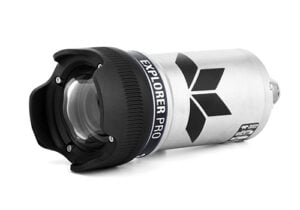
High-Performance Instruments, Sensors & Technologies for Exploring & Monitoring Subsea Environments

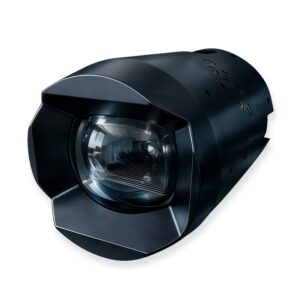
Cutting-Edge Underwater Optical Imaging Systems for Subsea Inspections & Surveys

If you design, build or supply ROV Cameras, create a profile to showcase your capabilities and connect with visitors who have an active requirement for your solutions.

Remotely Operated Vehicles (ROVs) are the indispensable workhorses providing visual access to the subsea world, extending human presence into environments too deep or hazardous for divers. At the core of every successful ROV mission is its subsea camera system, the vehicle’s ‘eyes’, delivering live, high-fidelity visual data, maintaining situational awareness, and enabling precise inspection. These sophisticated submersible underwater camera setups transform complex operations from blind manipulation into controlled, data-driven processes, allowing engineers and scientists to conduct delicate interventions, detailed surveys, and critical observations with confidence and accuracy.
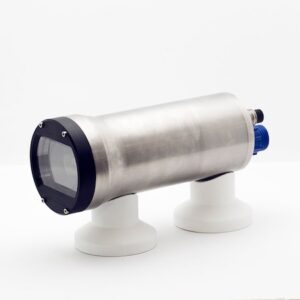
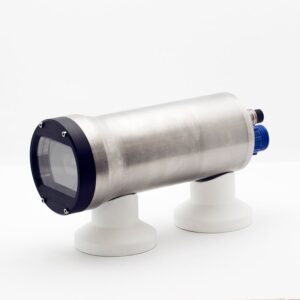
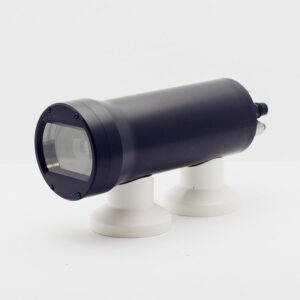
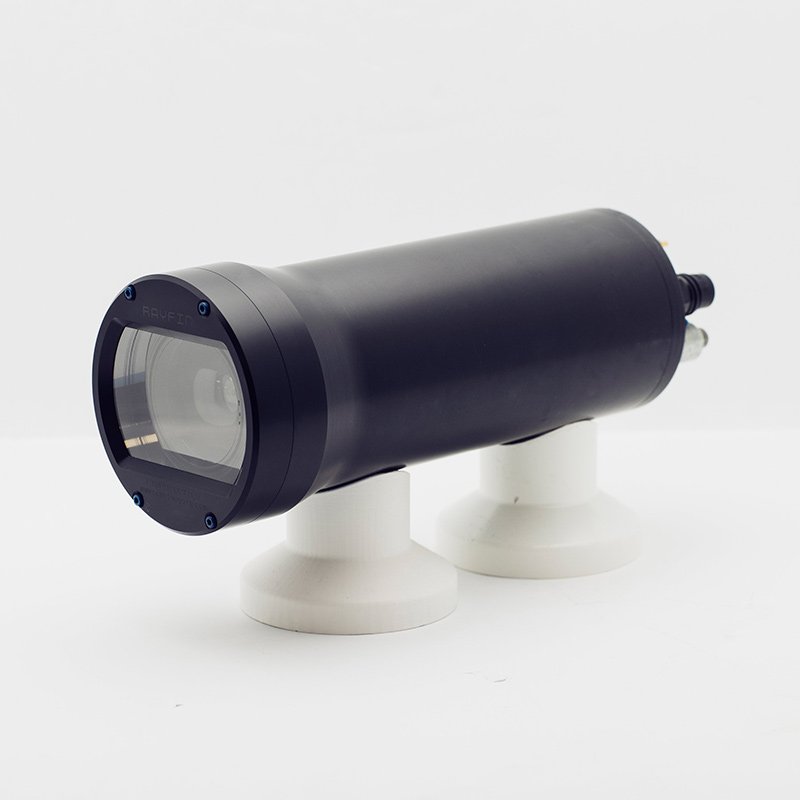
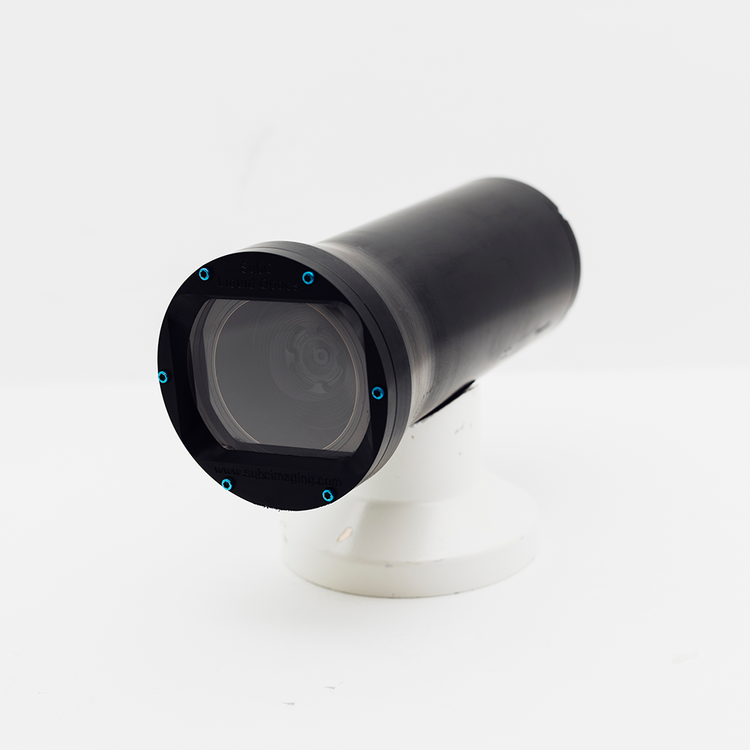
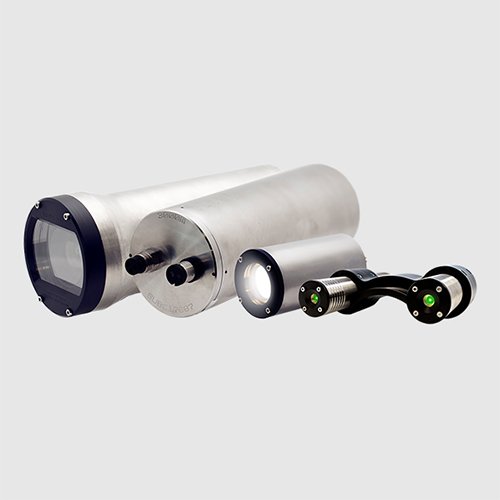
Rayfin Benthic 6000m Subsea Camera by SubC Imaging
ROV cameras are essential for a wide range of tasks, from high-resolution visual inspection of subsea structures and pipelines to deep-sea ecological monitoring. They are fundamental for both manual piloting and autonomous navigation, enabling ROV pilots to accurately position the vehicle and identify targets across intricate underwater terrains. Alongside ROV lights, these submersible ROV cameras are the primary enablers for complex maintenance and repair work, providing the visual confirmation needed for accurate manipulator placement and tool engagement.
For the ocean engineering and scientific community, high-quality visual data is the absolute backbone of decision-making. In industry, video and still imagery meticulously document asset integrity, track corrosion progression, and map biofouling. This data is critical for regulatory compliance and lifecycle management of high-value infrastructure. In ocean science, these systems are used for habitat characterization, behavioral observation of marine species, and photogrammetric 3D reconstruction of biological and geological formations.
The demands of the subsea environment necessitate a diverse range of imaging tools. Modern ROVs deploy a suite of specialized underwater cameras for ROVs to meet specific mission requirements.
Current-generation ROVs commonly employ 4K Ultra HD video systems to deliver crystal-clear imagery during missions. While higher resolutions exist for digital video recording, 4K remains the practical high-end standard for real-time streaming, balancing image quality with the challenging bandwidth limitations of the tether. These systems use highly efficient encoders, such as H.264/H.265, and advanced stabilization algorithms alongside digital noise reduction to preserve clarity even in highly turbid or low-light conditions. Crucially, they operate via low-latency links, ensuring pilot control inputs are perfectly synchronized with the visual feedback.
Still cameras are indispensable for generating documentation-quality imagery and acquiring quantitative data. High-megapixel sensors are chosen to capture the fine structural detail necessary for advanced photogrammetry and condition assessment. These systems are typically synchronized with powerful strobes (to “freeze” motion blur) and integrated with laser scaling systems to produce distortion-free, metrically accurate data sets. This is vital for calculating exact dimensions, corrosion pit depths, or mapping the size of biological specimens for scientific analysis.
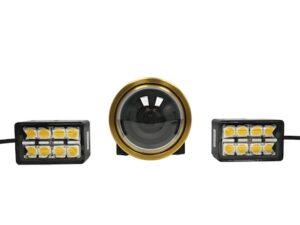
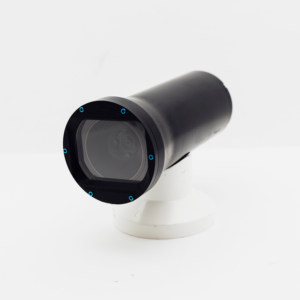
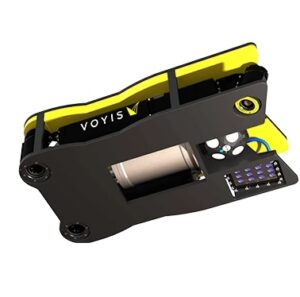
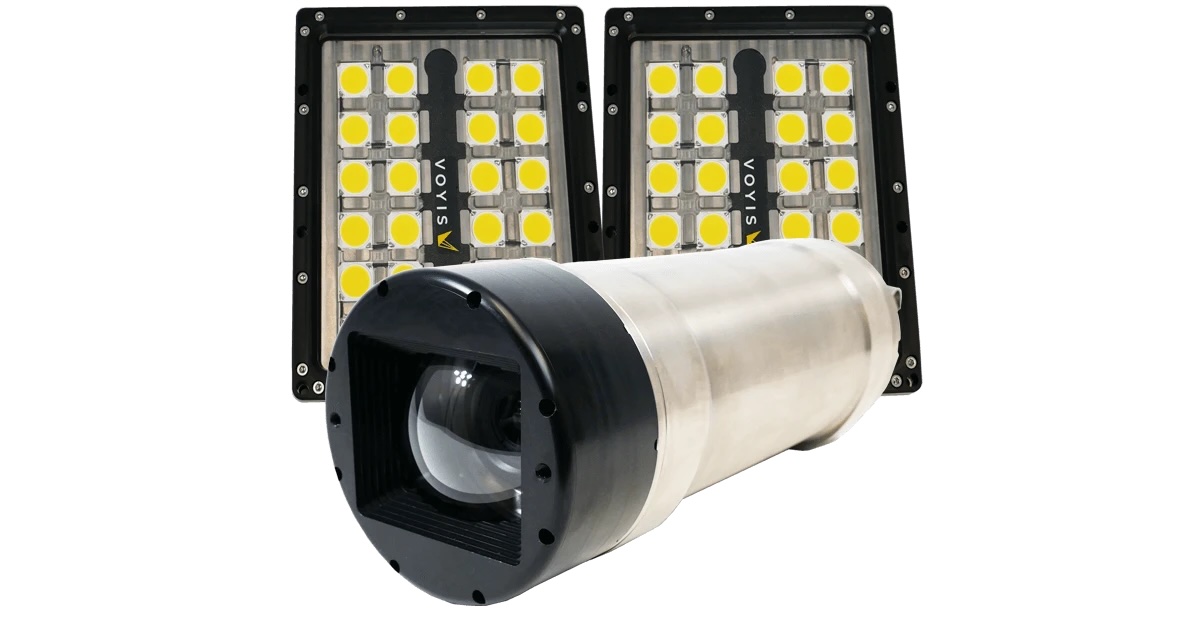
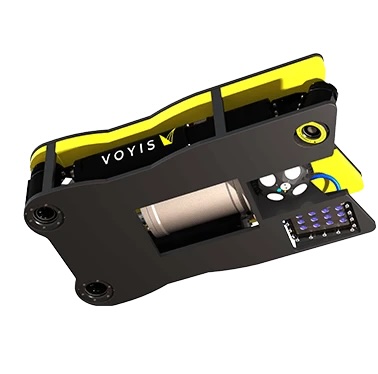
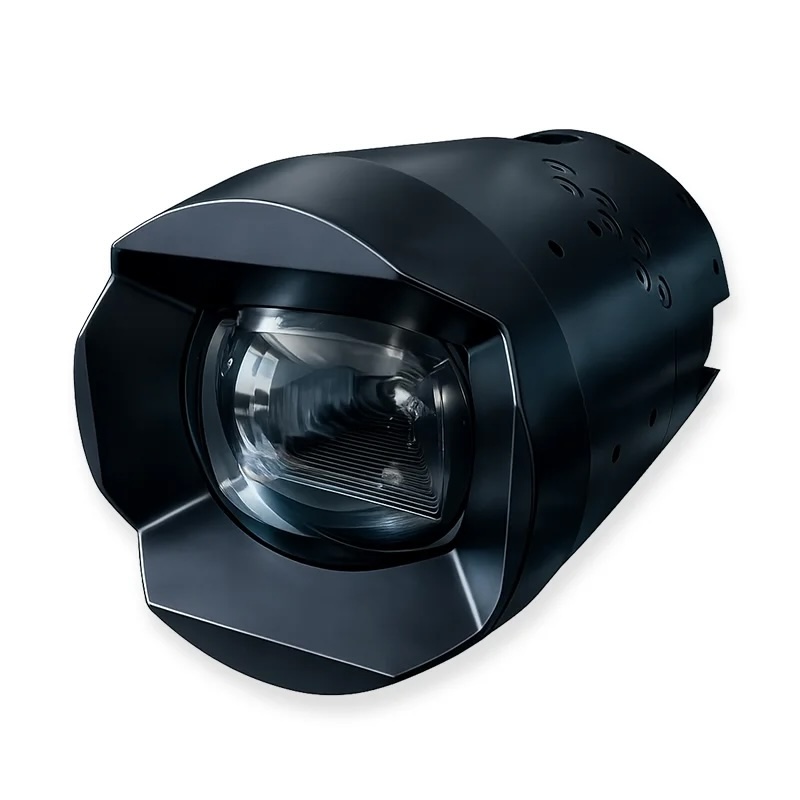
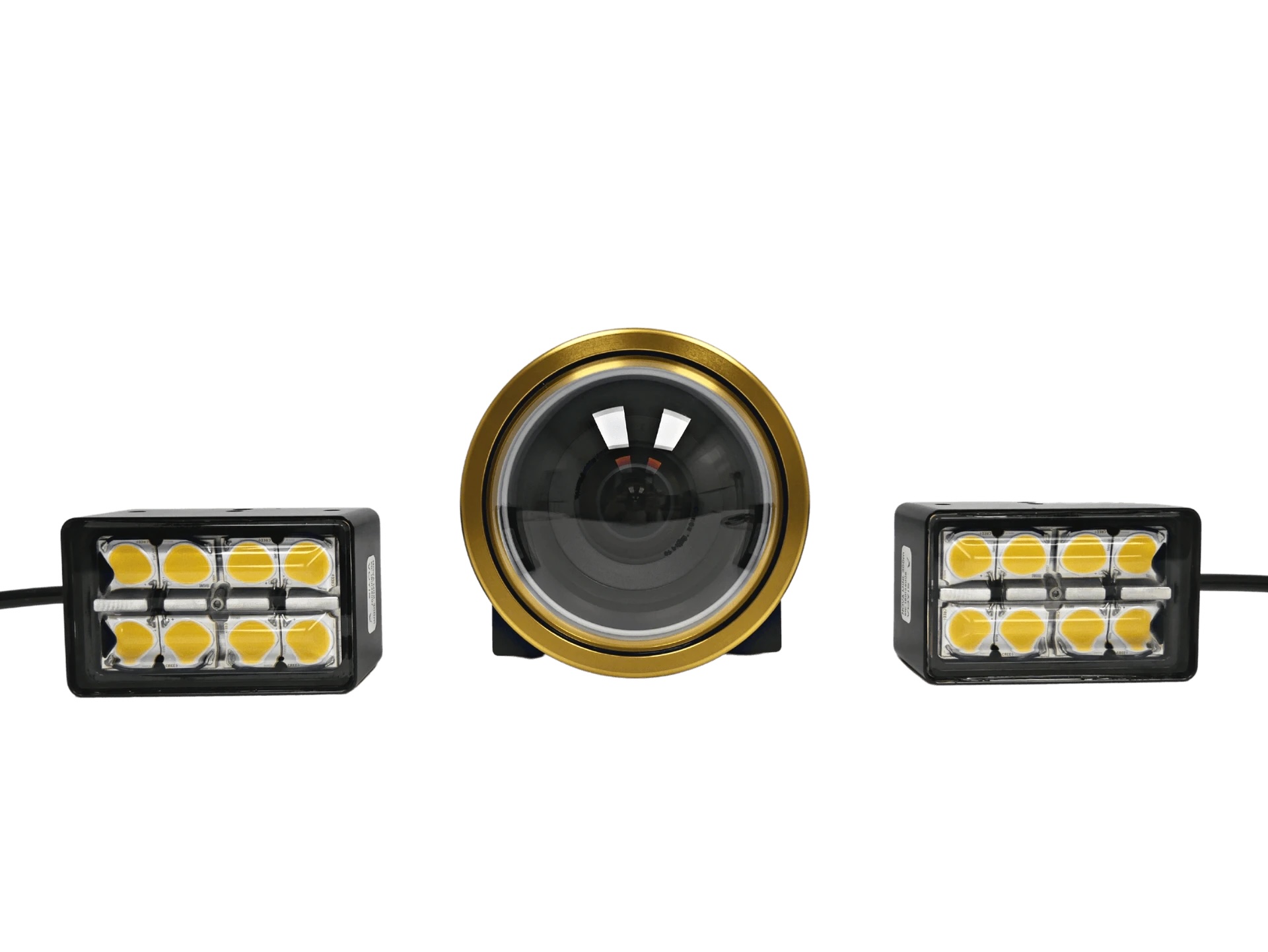
Discovery by Voyis
For deepwater operations where sunlight is non-existent, ROVs rely on specialized, high-sensitivity cameras that excel with minimal illumination. The industry has largely transitioned to modern Back-Illuminated CMOS (BSI-CMOS) sensors, which offer superior dynamic range and significantly lower power draw than older CCDs. Pairing BSI-CMOS technology with Global Shutters is a critical trend; the Global Shutter ensures sharp, distortion-free images during dynamic ROV motion, an essential feature for both navigation and high-speed inspection.
Certain missions demand imaging beyond the visible spectrum or standard 2D video:
The successful collection of visual data subsea depends fundamentally on meticulous optics and controlled lighting.
Underwater optics are complex because they must compensate for the severe effects of refraction and distortion caused by the transition from water to glass. Dome ports are typically used for wide-angle fields of view as they help minimize the aberration caused by the water-glass interface, while flat ports are reserved for narrow-field applications. Advanced engineering is critical: specialized, water-corrected optics utilize anti-reflective and hydrophobic coatings to enhance clarity, reduce light scatter from suspended particles (backscatter), and inhibit biofouling during extended deployment. Furthermore, internal autofocus and motorized zoom mechanisms are standard for maintaining sharp imaging across variable working distances.
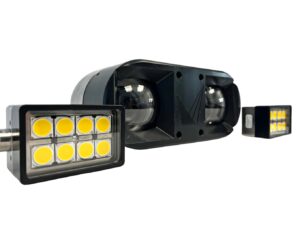
Illumination is arguably the most critical design factor in subsea imaging. High-intensity LED arrays have become the standard, providing efficient and powerful subsea lighting with adjustable color temperatures and beam patterns.
To withstand the harsh forces of the subsea environment, rov camera underwater systems require precision-engineered pressure housings.
An ROV video camera system is more than just a lens; it’s a seamlessly integrated network of sensors and control software.
Cameras are rarely mounted statically. They utilize pan-and-tilt units or, for survey-grade work, fully stabilized gimbals that actively counteract vehicle motion to maintain steady imagery during dynamic maneuvers and in strong currents. Furthermore, auxiliary cameras are frequently mounted directly onto manipulator arms and tooling skids to provide a critical, close-up perspective for highly precise tasks like wire-cutting, valve-turning, or sample collection.
All camera systems interface directly with the topside control console via high-bandwidth fiber-optic or Ethernet connections. The mission control software manages essential camera functions (focus, zoom, lighting intensity, white balance) and provides real-time software overlays. These overlays are essential for displaying vital metadata (telemetry, depth, heading, and GPS/acoustic positioning) directly onto the video feed, thereby ensuring crucial data is correlated with the image for post-mission analysis and reporting.
For oceanographers and marine biologists, ROV imaging and profiling systems are essential for deep-sea ecosystem mapping and behavioral studies. They allow for the non-destructive observation of benthic habitats, time-series imaging for monitoring environmental change (e.g., coral bleaching or deep-sea mining impacts), and the collection of high-resolution imagery for quantitative habitat characterization.
In the offshore energy and subsea cable sectors, high-performance ROV cameras are indispensable for subsea pipeline inspection, manifold surveys, and offshore wind foundation assessment. High-definition video and metrology-grade still imagery are used to quantify mechanical wear, check weld integrity, and map biofouling coverage. The ability to conduct these precise inspections remotely drastically reduces operational risk and is central to condition-based maintenance planning.
Submersible underwater cameras are critical in maritime security for tasks such as harbor surveillance, hull inspection, and mine countermeasure (MCM) missions. Their reliability in low-visibility environments and ability to transmit live video feeds makes them invaluable tools for subsea reconnaissance, ordnance disposal, and securing critical naval and commercial port infrastructure.
 Searching Companies & Products