

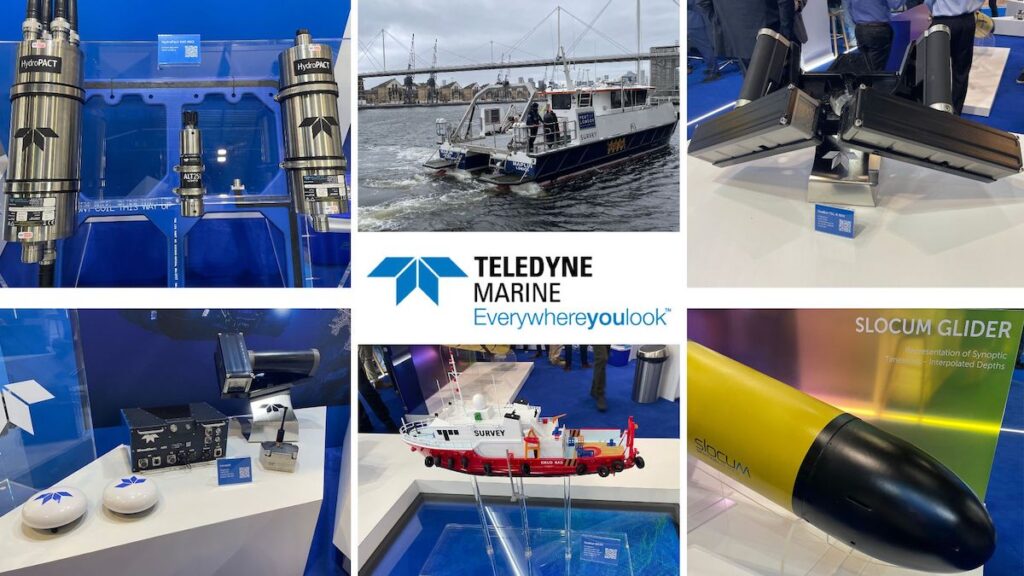
OceanScienceTechnology.com visited the Teledyne Marine stand at Oceanology International 2026 in London, examining the company’s latest sonar, navigation, subsea sensing, and autonomous survey technologies on display.
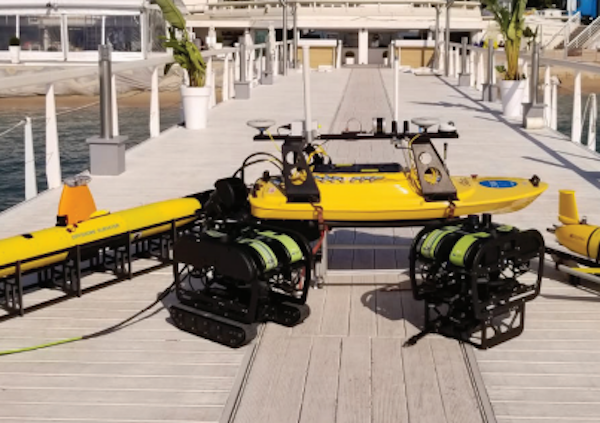
Oceanology International brought together leading developers of ocean technology at London’s ExCeL, where Teledyne Marine presented a wide range of hydrographic and navigation systems spanning multibeam sonar, subsea positioning, oceanographic instrumentation, and autonomous platforms. OST stopped by the company’s stand to explore the latest technologies and headed dockside to observe live demonstrations taking place during the event.
SeaBat D100 Portable Multibeam Echosounder
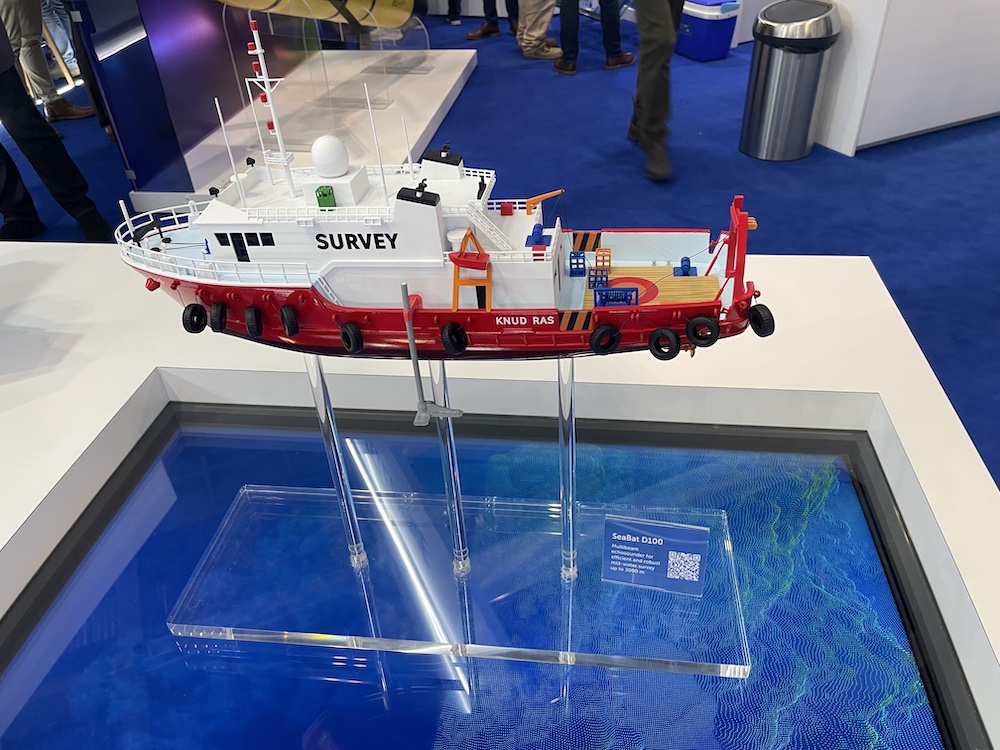
One of the key systems featured was the new SeaBat D100, a compact multibeam echosounder designed for hydrographic surveys in depths down to 3000 meters.
The portable system combines a compact processor with simplified cabling and flexible mounting options, allowing rapid mobilization on a range of vessels rather than requiring permanent survey installations.
Designed for vessel-of-opportunity operations, the system incorporates beam stabilization and multi-ping capability to improve swath coverage and along-track data density while maintaining high-resolution bathymetric performance in challenging survey conditions.
SeaBat T51 IDH Integrated Dual-Head Multibeam Sonar
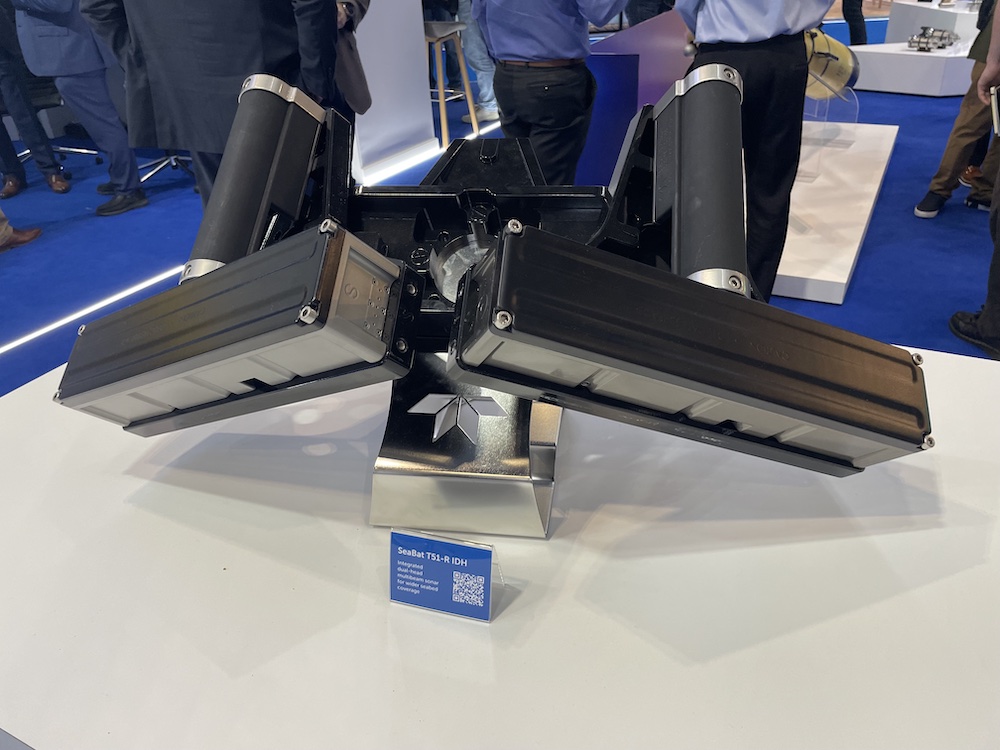
Teledyne Marine also introduced the SeaBat T51 Integrated Dual Head (IDH) multibeam configuration, extending dual-head capability to the SeaBat T51-R for surface vessels and the SeaBat T51-S for ROV deployment, which is depth rated to 6000 meters.
The system integrates two sonar heads within a single processor, reducing system complexity while providing wider swath coverage and improved along-track data density.
Operating both sonar heads simultaneously at full rate eliminates the need for staggered pinging, allowing survey operators to maintain survey speed while collecting higher resolution seabed data, supporting applications such as pipeline mapping, free-span detection, and detailed bathymetric surveys.
HydroPACT 440 MK2 Subsea Pipe & Cable Tracking System
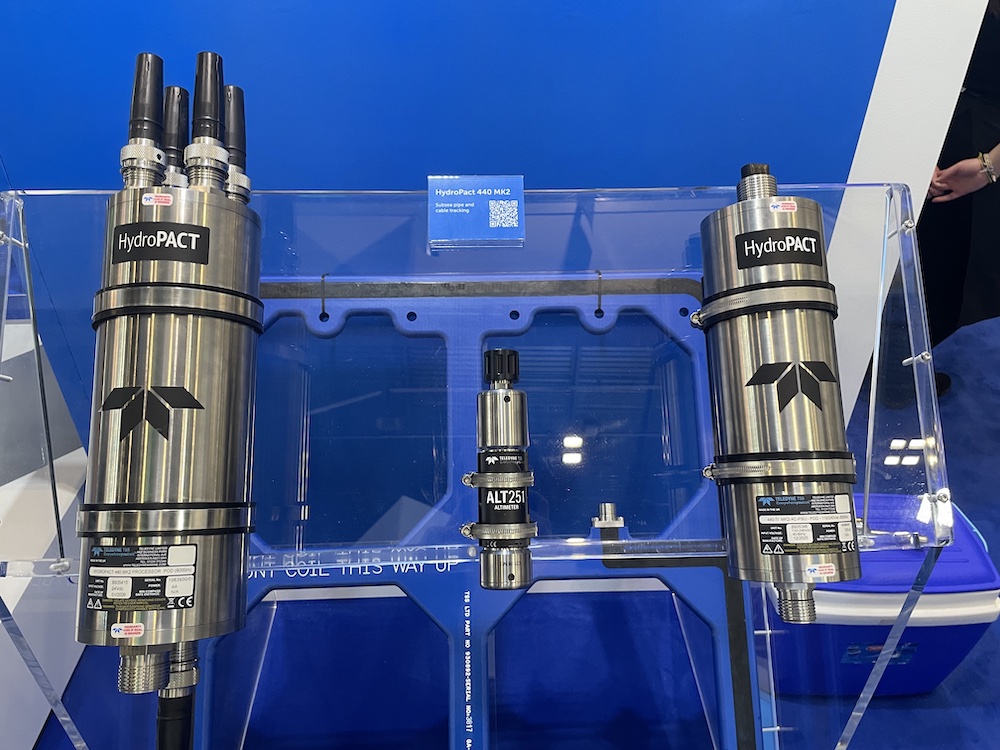
Another system on display was the HydroPACT 440 MK2, an updated version of Teledyne Marine’s long-established subsea pipe and cable tracking system.
The MK2 introduces a titanium subsea housing with a 6000-meter depth rating and can now be configured as a 24V DC single subsea pod.
Updated topside components include new RMC11 computers and a Windows 11 compatible version of the DeepView operating system, while maintaining the familiar workflow and performance characteristics used by offshore survey teams for pipeline installation, cable monitoring, and proof-of-lay operations.
Oceanographic Sensing & Subsea Navigation Instruments
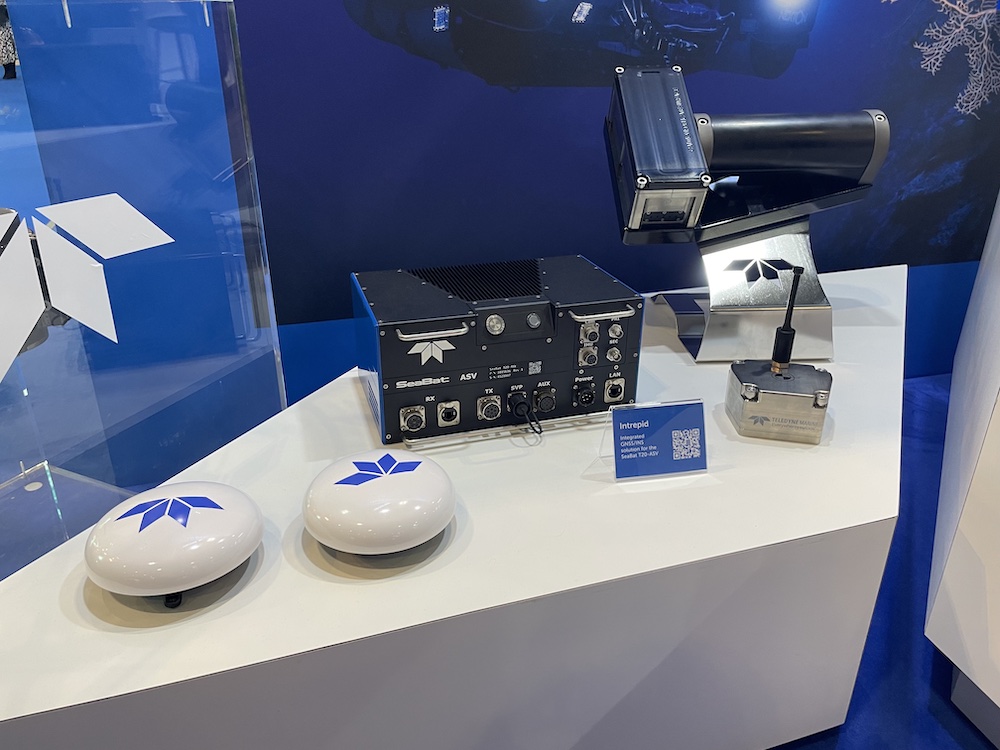
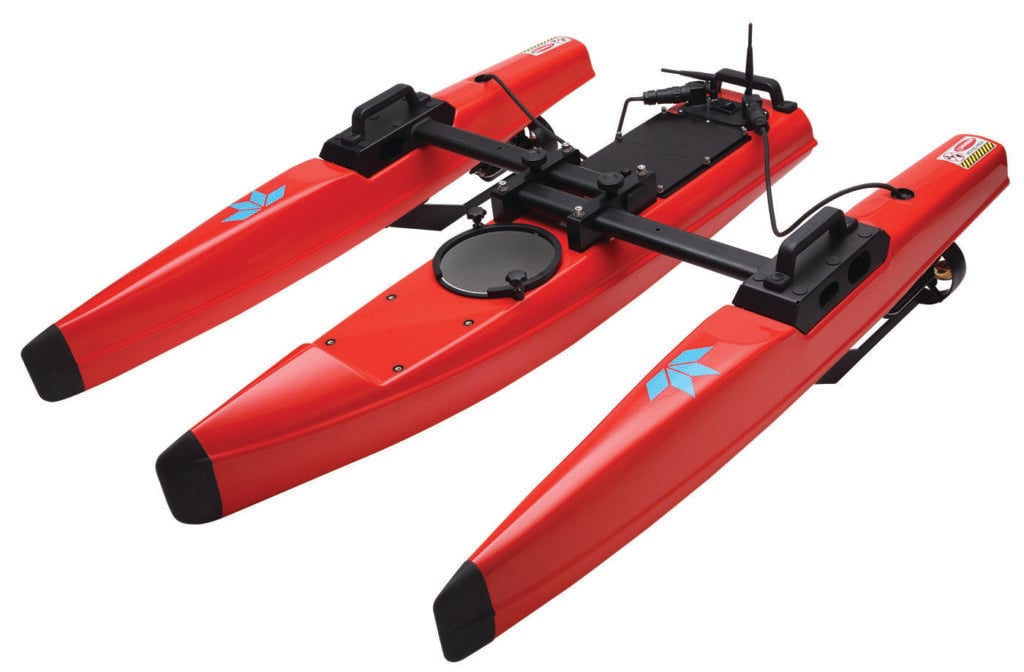
Alongside its hydrographic systems, Teledyne Marine presented a range of navigation and sensing technologies including the Intrepid GNSS INS, an integrated positioning and inertial navigation solution designed for the SeaBat ASV product line.
The system simplifies survey setup through integration within the SeaBat user interface and supports RTK corrections via NTRIP connectivity and Fugro MarineStar services.
Oceanographic instrumentation was represented by the Workhorse Proteus Acoustic Doppler Current Profiler (ADCP), an evolution of Teledyne RD Instruments’ long-standing Workhorse ADCP, designed to measure ocean currents, waves, turbulence, and water transport across oceans, estuaries, and rivers.
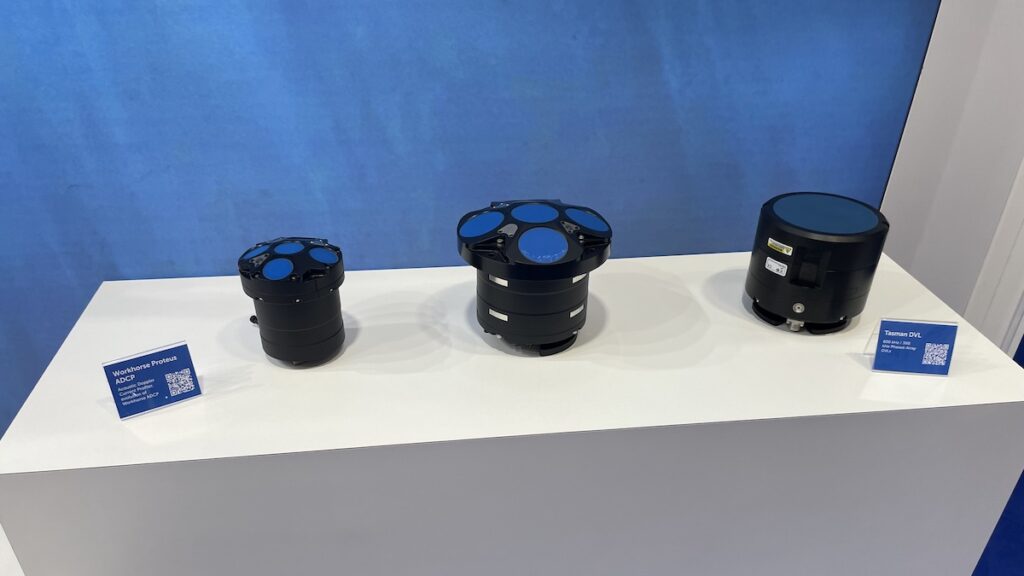
Also displayed was the Tasman DVL, a next-generation Doppler Velocity Log designed for subsea navigation, offering bottom-tracking ranges from 0.15 to 420 meters in depths of up to 6000 meters. The system features enhanced broadband signal processing, Ethernet connectivity, system health monitoring, and field-replaceable phased array transducers, supporting navigation for ROVs and AUVs.
Autonomous Survey Platforms & On-Water Demonstrations
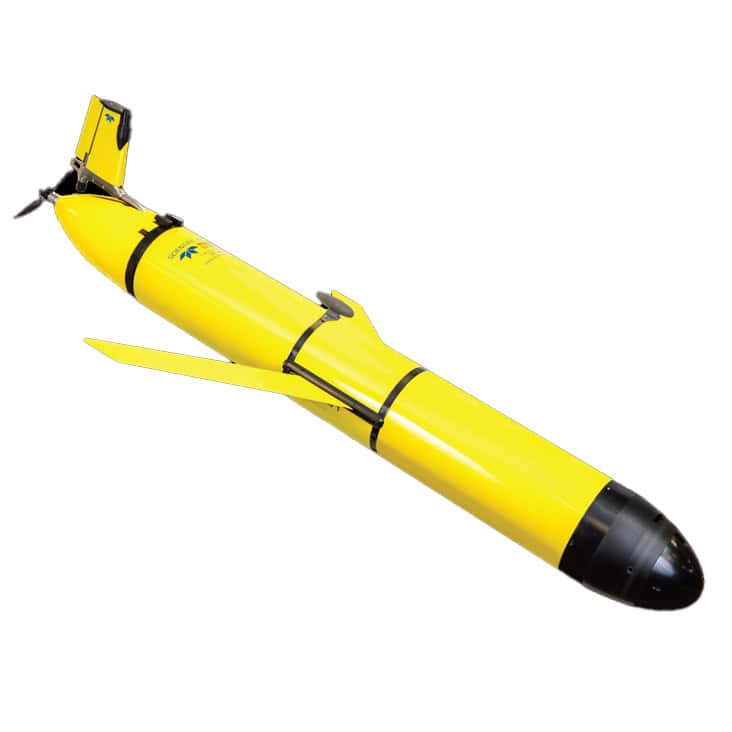
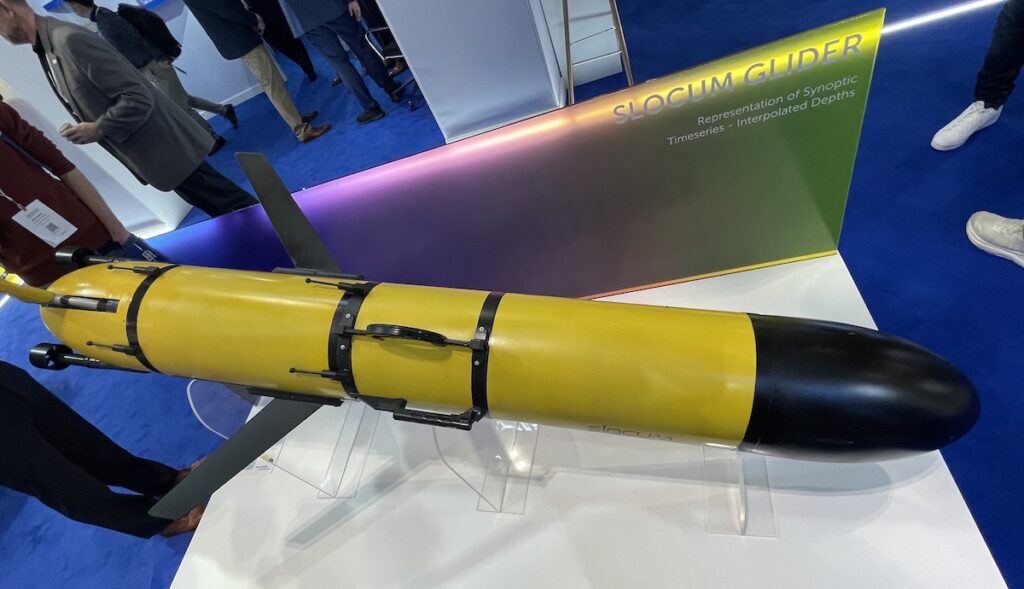
Autonomous survey operations were another focus of the stand. Visitors could see a Gavia Autonomous Underwater Vehicle (AUV) equipped with SeaBat T20 multibeam sonar and the Compact Navigator system, alongside the Slocum Sentinel glider, with Teledyne highlighting the ongoing global Sentinel Mission undertaken by the “Redwing” glider.
Teledyne Forward Looking Sonar (FLS) systems were also demonstrated aboard Maritime Robotics Uncrewed Surface Vessels (USVs) during the event.
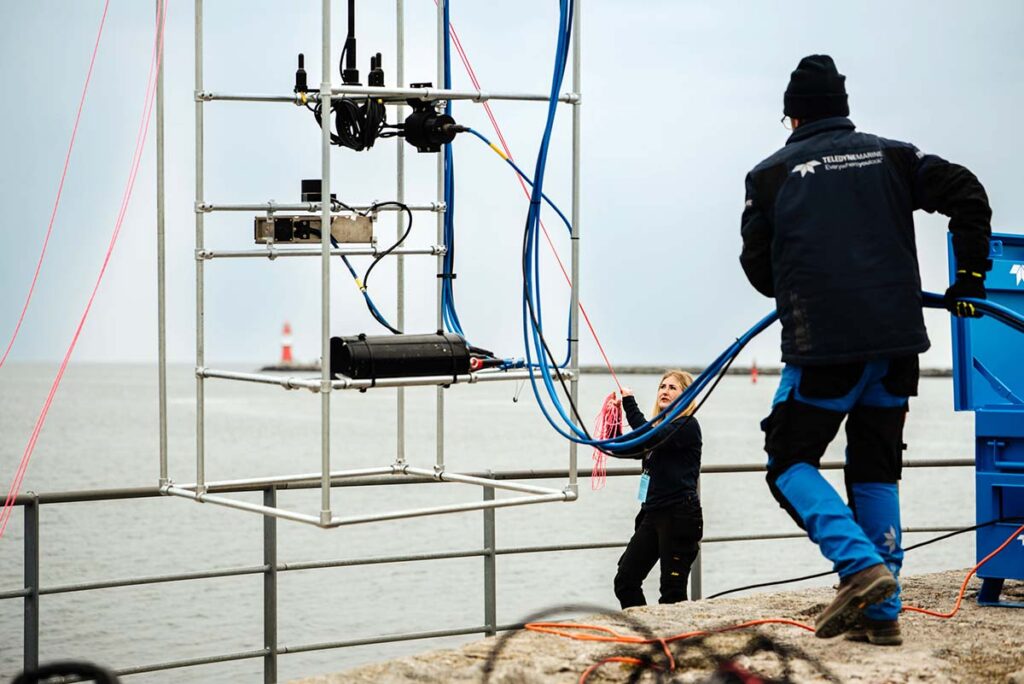
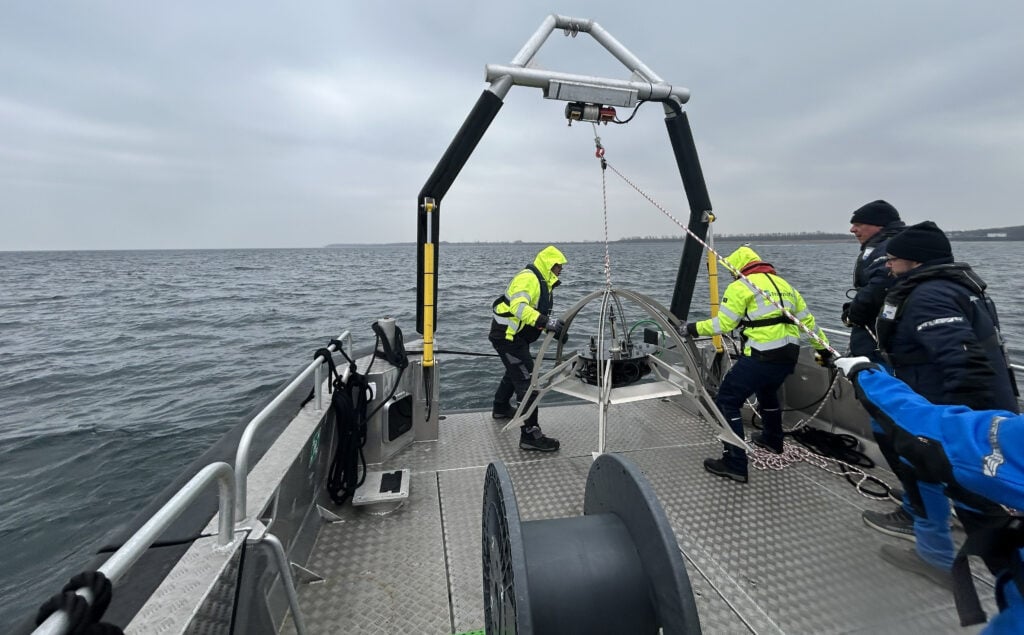
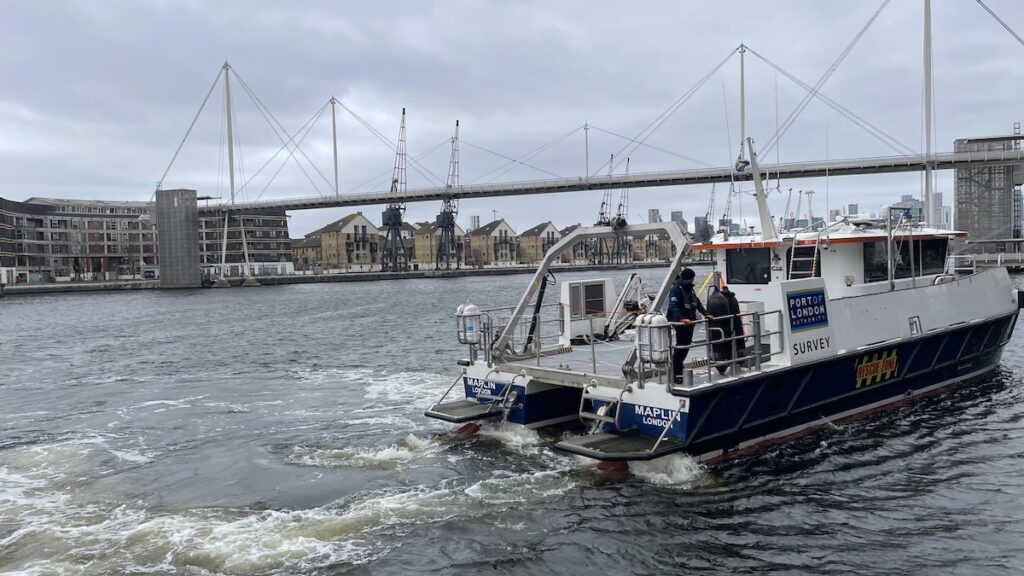
Live demonstrations were conducted aboard the vessel Maplin on the River Thames, where attendees observed the SeaBat T51-R IDH operating alongside the Compact Navigator positioning system in real survey conditions. The demonstration showed how multibeam and navigation technologies combine to deliver high-resolution bathymetric data and efficient survey workflows.
Interconnect, Cabling & Observation Technologies
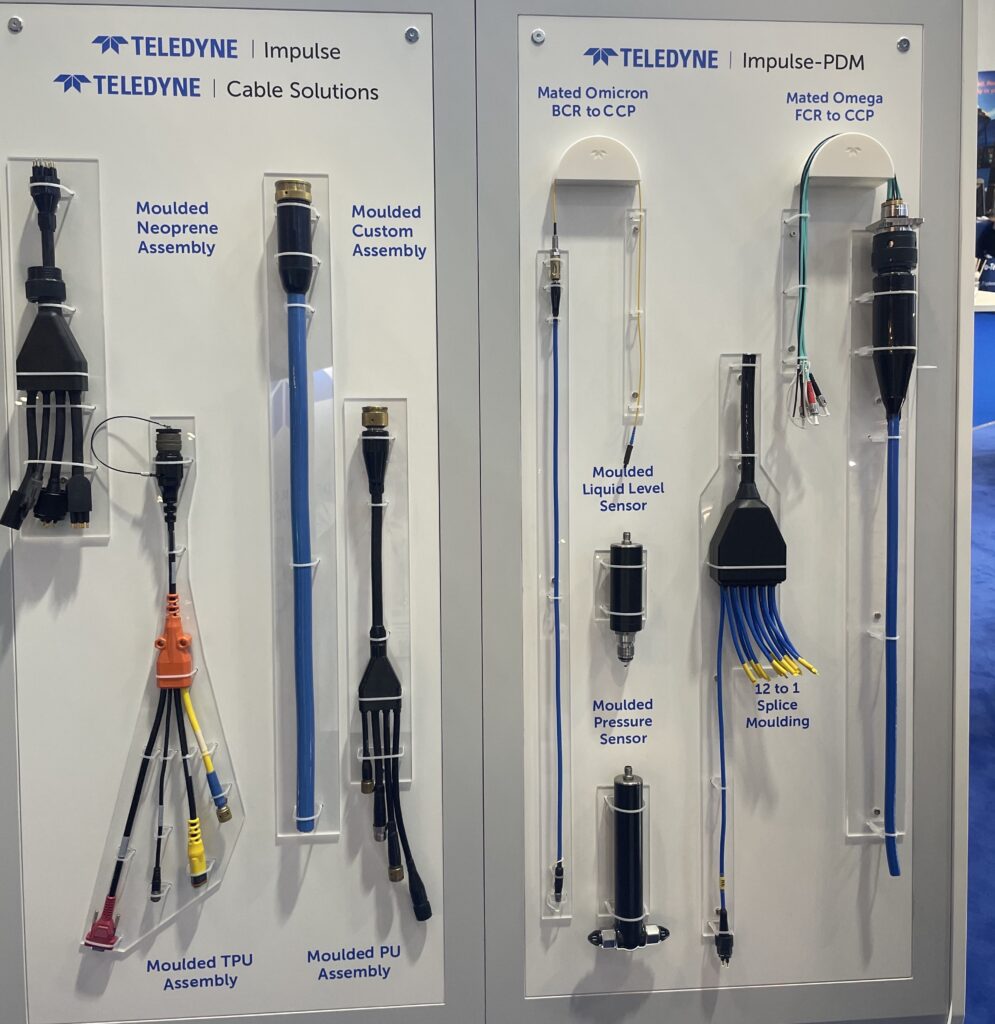
The stand also featured subsea connectivity and sensor technologies including Teledyne Impulse and Teledyne Impulse-PDM electrical and optical interconnection systems designed for harsh marine environments.
Teledyne Cable Solutions (TCS) cable assemblies and wire products were displayed alongside liquid level sensors and moulded pressure sensors used in offshore, subsea, and industrial applications.
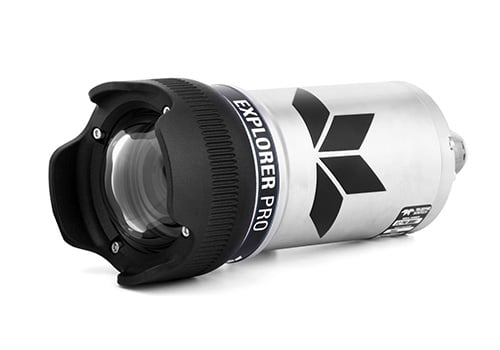
Subsea imaging and monitoring technologies on display included the Explorer PRO II, Surveyor HD-Pro II, and Surveyor HD II cameras, as well as the Teledyne Passive Acoustic Monitoring System for underwater acoustic observation and environmental monitoring.
Celebrating 50 Years of Teledyne RESON
Oceanology International 2026 also marked the 50th anniversary of Teledyne RESON, one of the key brands within the Teledyne Marine portfolio. To commemorate the milestone, the company hosted a reception at its stand, bringing together customers, partners, and industry colleagues to celebrate five decades of development in underwater acoustic technology.
Across the stand and live demonstrations, Teledyne Marine presented a broad portfolio of technologies supporting hydrographic surveying, subsea navigation, oceanographic research, and autonomous marine operations.