Showcase your capabilities
If you design, build or supply Acoustic Pingers, create a profile to showcase your capabilities and connect with visitors who have an active requirement for your solutions.



Acoustic pingers are self-contained underwater devices that emit repeatable acoustic pulses to support the detection, localization, and recovery of submerged assets. Used across oceanographic research, offshore energy, and defense, underwater acoustic pingers provide a simple and highly reliable means of homing on equipment when visual contact and GPS are unavailable.
This page features underwater acoustic pinger suppliers for AUVs, ROVs, moorings, and subsea infrastructure, supporting tracking, emergency recovery, and marking of critical assets.
Read the Technology Overview


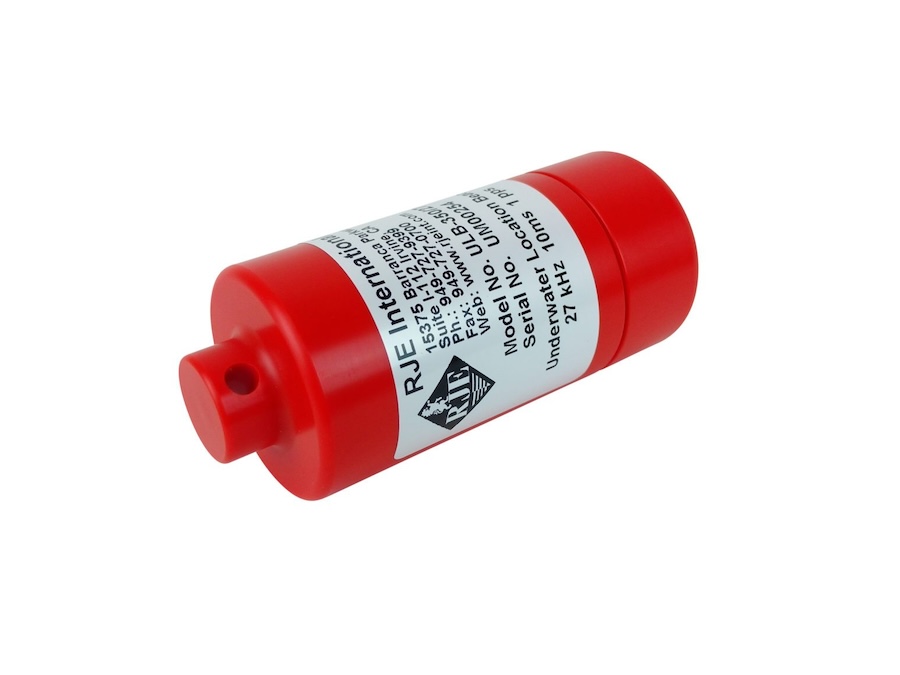

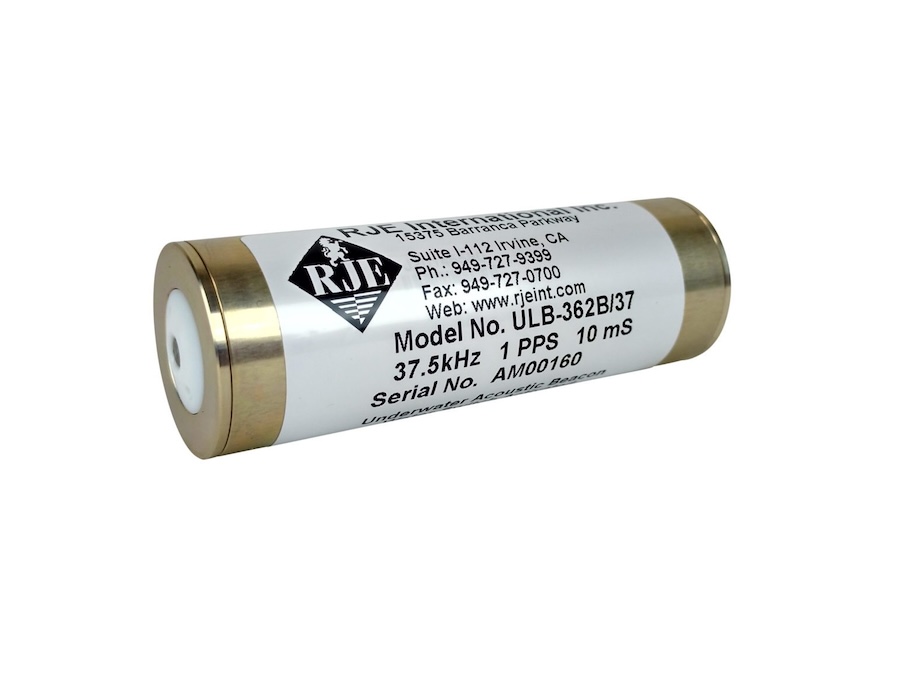
Underwater Acoustic Tracking & Recovery Solutions for Mission-Critical Subsea Assets

If you design, build or supply Acoustic Pingers, create a profile to showcase your capabilities and connect with visitors who have an active requirement for your solutions.

Underwater acoustic pingers emit repeatable acoustic pulses that facilitate the detection and localization of equipment across the maritime sector. From deep-sea oceanographic research to offshore energy and defense, these compact devices provide a reliable breadcrumb in a medium where visual contact is often impossible. Unlike more complex systems, a pinger does not require external infrastructure to function, making it a secure safety net for recovery-critical scenarios.
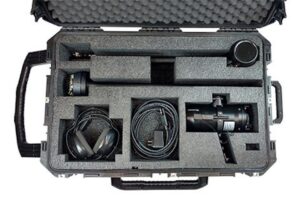
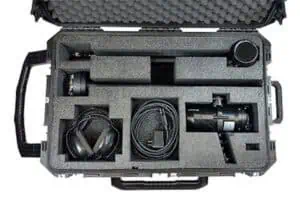
PRS-275 Diver & Surface Acoustic Pinger Receiver System by RJE International
Tracking is a common use of this technology. Pingers are integrated into AUVs, ROVs, moorings, and towed sensor arrays. If a vehicle becomes disabled or a mooring line parts, the pinger device provides the only viable method for a surface vessel equipped with a hydrophone to home in on the asset. In high-value asset recovery, emergency locator pingers are designed to activate automatically upon immersion, providing a high-output signal for critical data recovery.
For long-term deployments, such as benthic observatories or sediment traps, pingers are indispensable. Researchers often deploy equipment for months or years in deep-water environments where GPS is unavailable. An underwater acoustic pinger allows the recovery vessel to relocate the instrument precisely, even if the seabed environment has changed or surface markers have drifted.
A specialized application of pinger technology is the Acoustic Deterrent Device (ADD). These are designed to emit specific frequencies and patterns intended to deter marine mammals from hazardous areas, such as active construction sites, offshore wind farms, or fishing nets. While sharing the same physical architecture as a standard pinger, an ADD is tuned specifically to biological sensitivities to ensure environmental compliance and animal safety.
In the offshore sector, pingers mark submerged infrastructure like manifolds, wellheads, and cable routes. They assist ROV pilots in navigating low-visibility environments. In defense, they are primarily used in test and evaluation ranges to track torpedoes, underwater targets, or UUVs during training exercises without needing complex networked arrays.
Traditional continuous pingers emit pulses at a fixed rate. While highly reliable, they can be difficult to differentiate in busy environments. Modern coded pingers solve this by transmitting unique digital identifiers, allowing operators to distinguish between multiple assets on the same frequency.
Emergency units are often dormant, triggered only by water contact or pressure, prioritizing maximum output and endurance over size. Conversely, long-life or ultra-low-power pingers are designed for multi-year missions, utilizing extremely low duty cycles to conserve battery at the expense of a reduced detection range.
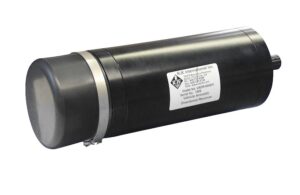
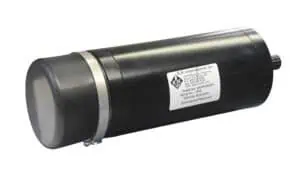
VADR-600M passive underwater acoustic pinger receiver by RJE International.
While most pingers are omnidirectional to ensure signals can be picked up from any angle, directional pingers focus acoustic energy into a specific beam. This increases the effective range and localization accuracy but requires precise orientation during deployment.
Deep-sea operations necessitate high-power pingers that operate at lower frequencies to combat acoustic absorption over long distances. At the other end of the spectrum, miniature and embedded pingers are designed for SWaP-constrained (Size, Weight, and Power) platforms like micro-AUVs or small sensor nodes.
Frequency selection is a fundamental trade-off. Low-frequency signals (e.g., 10 kHz to 20 kHz) travel further because they are less affected by absorption, but they require larger transducers and more power. High-frequency signals (e.g., 30 kHz to 50 kHz+) allow for smaller, more compact pinger designs and better timing resolution but are limited in range, particularly in high-noise environments.
Manufacturer-stated ranges are nominal and real-world performance is heavily dictated by environmental variables. Ambient noise from shipping traffic or biological sources can mask signals, while the sound speed profile (thermoclines and salinity layers) can refract acoustic paths. Additionally, seabed composition plays a role; soft silt tends to absorb signals, while rocky bottoms may cause multi-path interference.
Endurance is the heartbeat of pinger reliability. Primary lithium batteries are the standard for long-term deployments due to their high energy density. For shorter, repetitive missions, rechargeable systems are often preferred for lower lifecycle costs.
Fixed pinger installations, such as those on seabed-mounted observatories, prioritize mechanical robustness and corrosion resistance. In contrast, mobile platforms like gliders or tow bodies require pingers with minimal hydrodynamic impact and high resistance to host-vehicle acoustic noise.
Drop-and-forget units are used in contingency scenarios where recovery certainty is low. These units prioritize simplicity and autonomy. Design considerations focus on survivability and activation reliability, ensuring the pinger device triggers exactly when needed, even after long periods of dormancy.
The industry is seeing a shift toward smart pinger technology. This includes the integration of environmental sensors that can vary the ping rate based on battery health or detected movement. Furthermore, as the sector moves toward more autonomous operations, pingers are increasingly used as navigation waypoints for AUV swarms, bridging the gap between simple recovery markers and active navigation aids.
 Searching Companies & Products