Showcase your capabilities
If you design, build or supply Chlorophyll Sensors, create a profile to showcase your capabilities and connect with visitors who have an active requirement for your solutions.



Chlorophyll sensors are optical instruments used to monitor chlorophyll, particularly chlorophyll-a, as an indicator of phytoplankton biomass in aquatic environments. Technologies include single-channel and multispectral fluorometers, variable fluorescence instruments, and spectral or absorption-based sensors for profiling, water-quality monitoring, bloom detection, and biogeochemical research.
This page features suppliers of chlorophyll sensors for deployment on buoys, moorings, profiling floats, gliders, sondes, AUVs, and USVs.
Read the Technology Overview
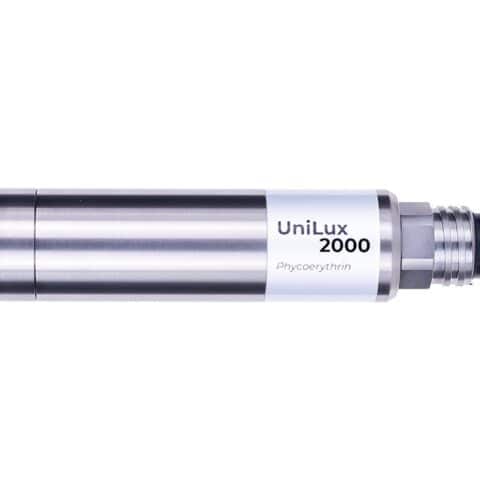
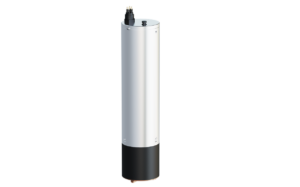
High-Precision Sensors, Multiparameter CTDs & Integrated Systems for Marine Environmental Research & Monitoring

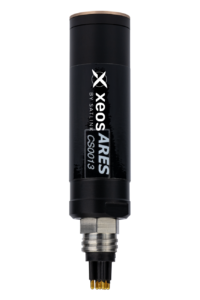
Telemetry Tracking Beacons & Equipment for Marine & Offshore Applications

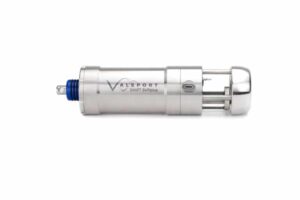
High-Precision Oceanographic Sensors & Hydrographic Measurement Solutions for Marine & Subsea Platforms

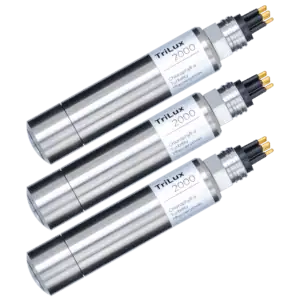
Advanced Water Quality Monitoring & Environmental Sensing Solutions

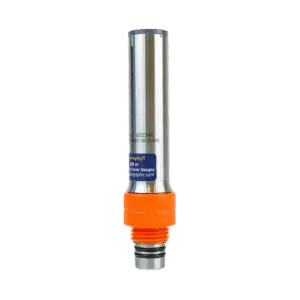
Modular Hydrographic & Oceanographic Instrumentation for Survey, Research & Autonomous Marine Operations

If you design, build or supply Chlorophyll Sensors, create a profile to showcase your capabilities and connect with visitors who have an active requirement for your solutions.

Chlorophyll sensors are optical instruments used to detect and monitor chlorophyll in aquatic environments, particularly chlorophyll-a, the primary photosynthetic pigment commonly used as an indicator of phytoplankton biomass. Most in situ instruments measure chlorophyll fluorescence and use the resulting optical signal as a proxy for concentration, enabling rapid and continuous observations throughout the water column as an optically derived estimate rather than a direct measurement of extracted pigment.
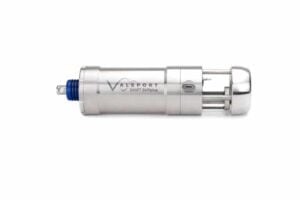
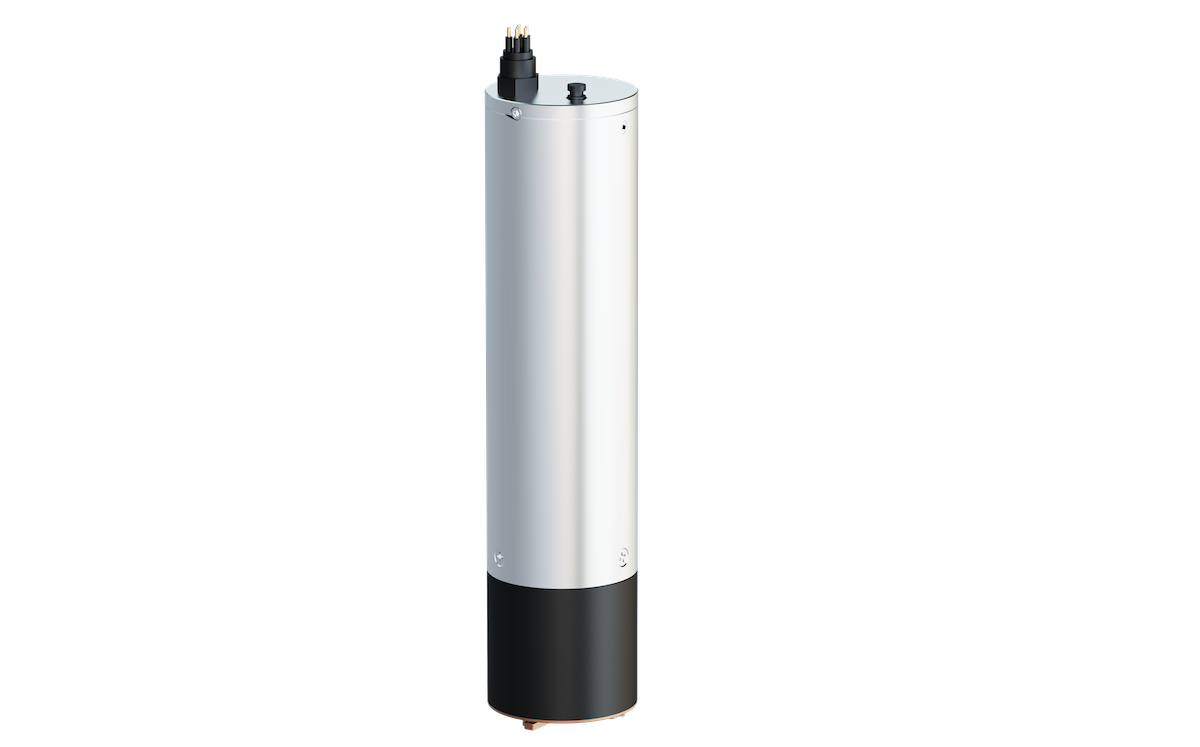
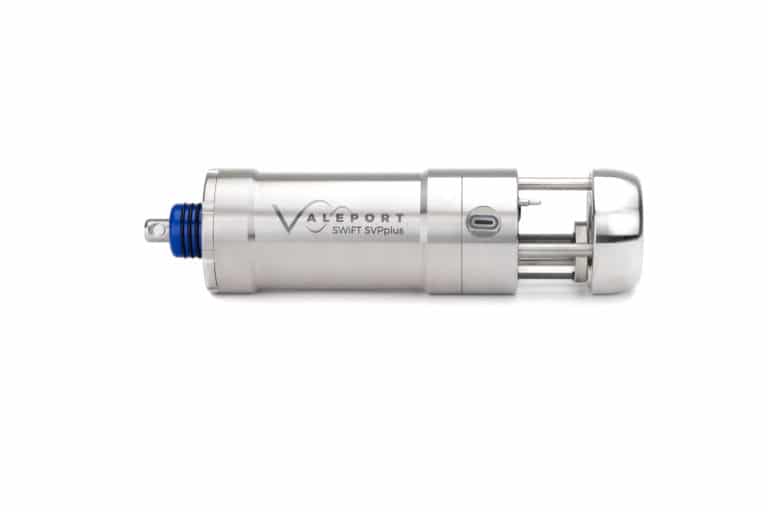
SWiFT SVPplus Chlorophyll a by Teledyne Valeport
In situ chlorophyll measurements provide greater spatial and temporal coverage than extracted laboratory analysis alone, although discrete samples remain important for calibration and validation. Chlorophyll concentration should also be distinguished from phytoplankton physiology, since fluorescence can vary with species composition, light exposure, nutrient conditions, photosynthetic state, and non-photochemical quenching as well as pigment abundance.
Single-channel fluorometers use a defined excitation wavelength or band to stimulate chlorophyll fluorescence and detect the resulting emission at longer wavelengths. Their relatively simple optical architecture makes them suitable for routine profiling, fixed monitoring stations, multiparameter sondes, and autonomous ocean platforms. A single-channel chlorophyll a sensor is generally selected where the primary requirement is continuous estimation of chlorophyll concentration rather than detailed characterization of pigment composition or photosynthetic physiology. Local calibration improves quantitative estimates.
Multi-wavelength and multispectral fluorometers interrogate the sample using more than one optical band. Differences in the excitation and fluorescence characteristics of photosynthetic pigments can provide additional information about phytoplankton composition and may support broad discrimination between groups with different accessory pigments, although this does not provide direct taxonomic identification. Interpretation remains dependent on species composition, physiological state, optical interference, and calibration, so multispectral measurements are often most useful when combined with independent biological or chemical observations.
Variable fluorescence sensors measure changes in fluorescence as photosystem II responds to controlled excitation. Fast Repetition Rate Fluorometry (FRRF) applies rapid sequences of light pulses to characterize photosynthetic responses over very short timescales. Rather than functioning solely as a chlorophyll detector, FRRF instruments can derive parameters associated with photochemical efficiency and electron transport, making them useful for studies of phytoplankton physiology, photosynthetic performance, and productivity.
Spectral and absorption-based sensors characterize how phytoplankton pigments affect light across selected wavelengths rather than relying exclusively on emitted fluorescence. These techniques can provide broader information about pigment absorption and inherent optical properties. Measurements may still be influenced by suspended particles, Colored Dissolved Organic Matter (CDOM), optical path length, scattering, and instrument configuration, so the most appropriate technology depends on the required data product and deployment environment.
Measurements of chlorophyll in ocean environments help researchers map phytoplankton distributions horizontally and through the water column. High-resolution profiles can identify structures such as subsurface chlorophyll maxima that are not apparent from surface observations alone. Chlorophyll alone does not directly measure primary productivity. When combined with irradiance, nutrient, oxygen, and hydrographic data, chlorophyll measurements can support studies of the environmental factors controlling phytoplankton biomass and productivity.
Continuous chlorophyll measurements can identify rapid increases or decreases in phytoplankton abundance and support the detection, tracking, and characterization of algal blooms. Elevated chlorophyll alone does not establish that a bloom is harmful or identify the organisms involved. A HAB monitoring system may therefore combine chlorophyll sensing with pigment-specific fluorescence, microscopy, molecular analysis, toxin measurements, or other biological techniques.
Ocean chlorophyll concentration is an important biological parameter in coastal and estuarine water-quality monitoring because nutrient enrichment can stimulate phytoplankton growth. Fixed sensors, buoys, profilers, and mobile platforms can characterize seasonal patterns and short-lived changes around river discharges, upwelling zones, aquaculture areas, and other dynamic environments. Continuous measurement is particularly valuable where biological conditions change more rapidly than conventional sampling schedules can capture.
Phytoplankton primary production influences marine food webs and the transformation and movement of carbon through the ocean. Chlorophyll observations provide biological context for measurements of dissolved oxygen, nutrients, particulate matter, irradiance, and inorganic carbon chemistry. Integrated datasets help researchers investigate how circulation, mixing, nutrient supply, light availability, and other environmental conditions influence phytoplankton communities and marine biogeochemical processes.
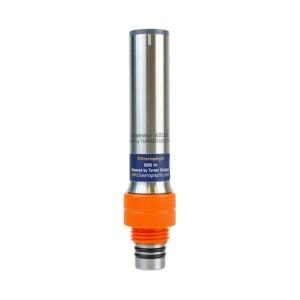
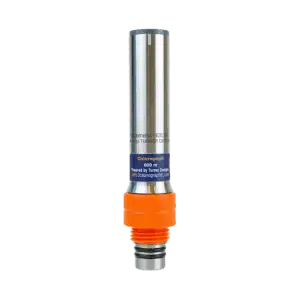
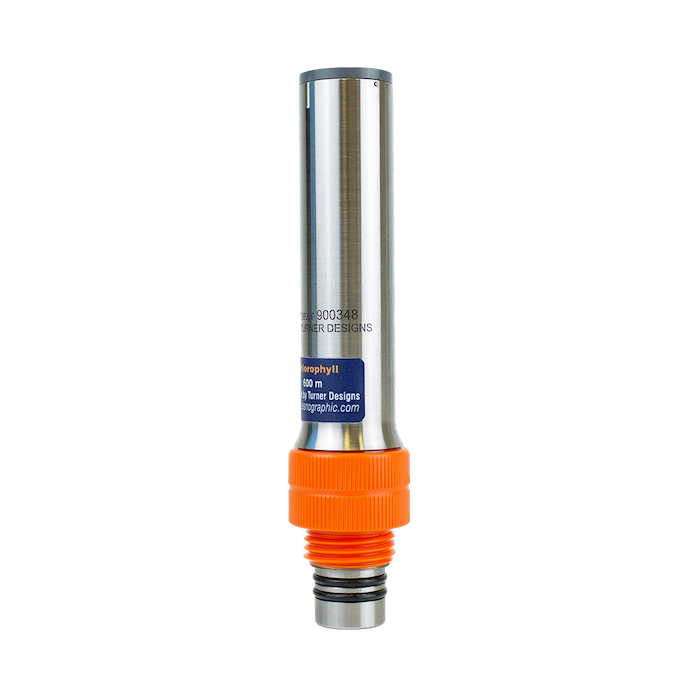
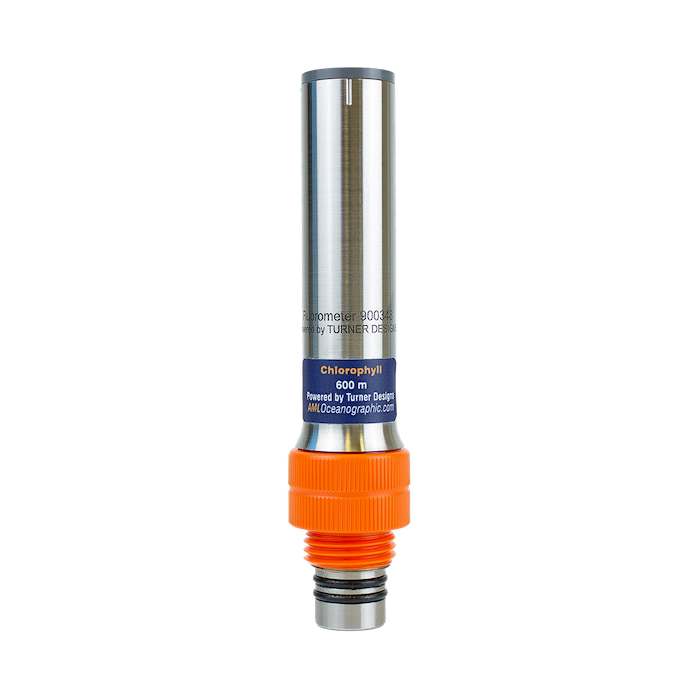
Chlorophyll A&B Red Excitation Sensor by AML Oceanographic
In situ measurements provide an important connection between subsurface biological observations and ocean-color products derived from satellite remote sensing. Floats, gliders, moorings, ships, and fixed observatories can collect depth-resolved ocean chlorophyll data that complement surface-focused satellite measurements. Combining these sources supports analysis of seasonal variability, ecosystem change, regional productivity, and global ocean chlorophyll patterns over extended timescales.
Chlorophyll probes and sensors can be integrated with a variety of oceanographic platforms, depending on the required depth range, spatial coverage, endurance, and sampling frequency.
Platform integration should also account for sensor depth rating, power demand, sampling rate, optical geometry, biofouling risk, data interfaces, and access for maintenance or calibration.
Reference methods and documented quality-control procedures help researchers validate sensor measurements and improve comparability between instruments, platforms, and monitoring programs.
The appropriate reference procedure should match the sensor technology, deployment conditions, required data quality, and intended scientific use of the measurements.
Advances in optical instrumentation are expanding the range of biological information available from chlorophyll measurements while improving their suitability for autonomous and long-duration ocean observation.
These developments are extending chlorophyll sensing beyond routine estimation of ocean chlorophyll concentration toward more integrated observation of phytoplankton abundance, composition, physiology, and ecological variability.
 Searching Companies & Products