
Showcase your capabilities
If you design, build or supply Imaging Sonar, create a profile to showcase your capabilities and connect with visitors who have an active requirement for your solutions.



Imaging sonar uses acoustic pulses and echo processing to produce real-time underwater imagery where turbidity, darkness, or suspended sediment limits optical cameras. From navigation to high-resolution mapping, modern 2D and 3D imaging sonar systems deliver crucial spatial awareness in these environments.
This category features leading imaging sonar suppliers, providing systems built for integration with ROVs, AUVs, towed platforms, surface vessels, and fixed installations.
Read the Technology Overview
High-Performance Instruments, Sensors & Technologies for Exploring & Monitoring Subsea Environments

Cutting-Edge Underwater Imaging & Positioning Solutions for Subsea Exploration

Industry-Leading Underwater Imaging and Power Solutions for Demanding Professional Survey Applications

Innovative, High-Performance Underwater Sensing Technologies for the Marine Industry

Cutting-Edge Surveying, Positioning & Sensing Solutions for Hydrographic & Oceanographic Applications

If you design, build or supply Imaging Sonar, create a profile to showcase your capabilities and connect with visitors who have an active requirement for your solutions.

Underwater imaging sonar serves as a vital sensor for subsea operations when zero-visibility conditions render standard optical cameras ineffective. By projecting acoustic energy pulses into the water column and measuring the timing, direction, and intensity of the returning echoes, an these sonar imaging systems convert raw data into interpretable underwater sonar images. Bright regions on the display generally signify strong acoustic returns, while dark patches may indicate acoustic shadows, open water, or areas producing weak reflections. Return intensity also depends on surface roughness, target orientation, incidence angle, range, and system gain.
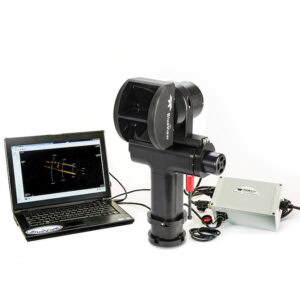
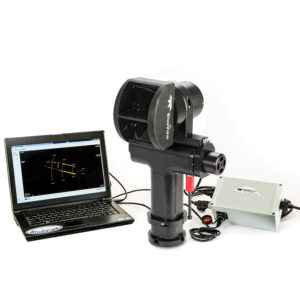
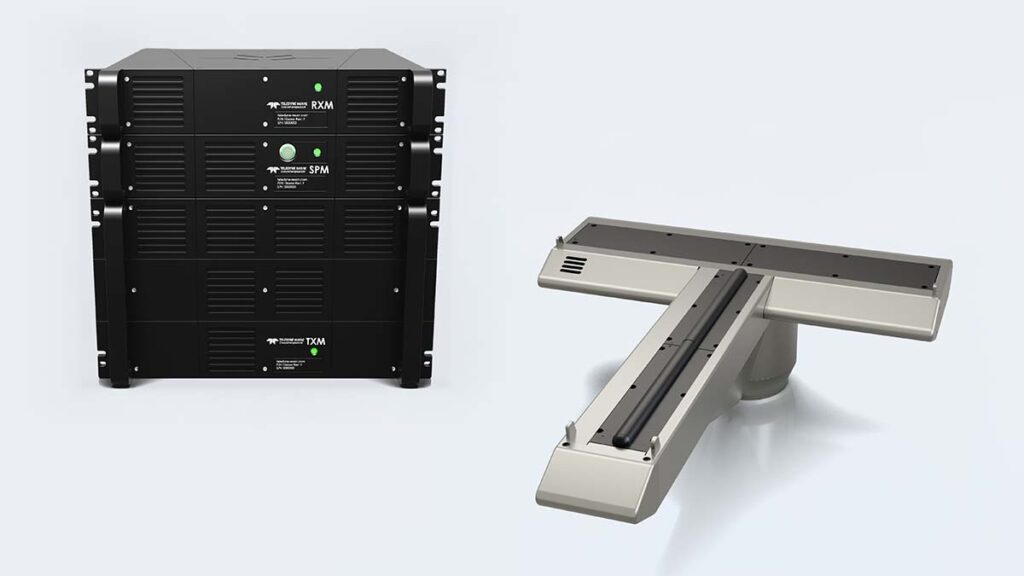
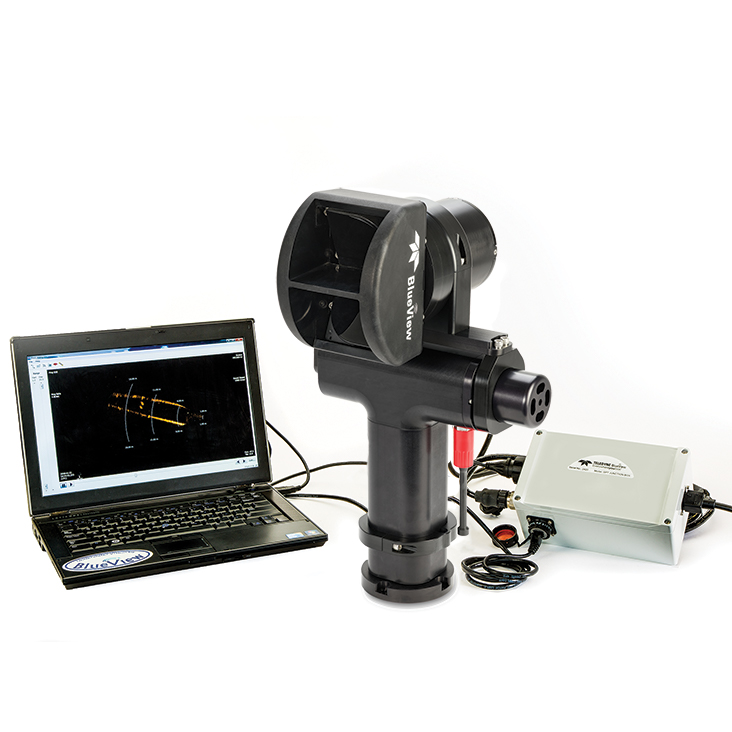
BlueView BV5000 MK2 3D by Teledyne Marine.
This technology provides real-time situational awareness, structural mapping, and broad-area seabed classification across turbid marine environments. Seabed classification may require additional processing and supporting survey data to distinguish between different materials and habitat types. Selecting the right sonar imaging system requires balancing operating frequency and maximum range, as higher frequencies generally deliver finer spatial detail but experience greater acoustic attenuation. Ultimately, subsea operators choose imaging sonars based on target size, deployment platform payload constraints, required resolution, and local environmental conditions.
Subsea infrastructure requires rigorous assessment that cannot be reliably performed with optical cameras alone. Engineers utilize specialized sonar imaging equipment to inspect pipelines, cables, production manifolds, risers, mooring systems, and offshore foundations. Incorporating an advanced underwater sonar imaging system enables operators to identify the position, orientation, and visible geometry of an asset from a safe distance before deploying divers. On Remotely Operated Vehicles (ROVs), a forward imaging sonar gives pilots an immediate view of structures beyond the effective reach of vehicle lights, supporting safe approach, station keeping, and tool placement in turbid water.
Ocean scientists use underwater sonar imaging to observe physical and biological processes that may be difficult to study through optical observation. Key applications include habitat characterization, seabed mapping, fish monitoring, and sediment transport research around sensitive reefs. High-frequency multibeam imaging sonar systems and acoustic cameras record the movement and behavior of marine life without requiring artificial light, helping to reduce light-induced behavioral disruptions. In benthic research, side imaging sonar systems provide critical spatial context by revealing variations in seabed texture, relief, and habitat boundaries, although supporting samples or optical observations may be required for definitive classification.
Search and recovery teams employ sonar imaging devices to locate submerged vehicles, vessels, downed aircraft, and missing equipment when positions are uncertain. Broad-area searches typically rely on a towed imaging sonar to cover large areas of the seabed efficiently. Once a potential target is flagged, operators switch to a forward imaging sonar or a high-resolution scanning system to conduct a detailed investigation. This technology is particularly valuable in hazardous environments where divers face near-zero visibility, helping operators assess target position, shape, and orientation before personnel enter the water.
Beyond standard offshore and scientific operations, sonar imaging plays an expanding role across industrial sectors such as aquaculture and port security. Underwater vehicles leverage forward-looking arrays for obstacle detection, terrain following, and close-quarters maneuvering. When tightly integrated with navigation instruments and suitable processing software, the data can feed localization algorithms in GPS-denied environments. Archaeological surveys also employ these systems to map historical wrecks without direct physical contact, while the renewable energy sector relies on them to support installation surveys, as-built verification, and infrastructure inspection.
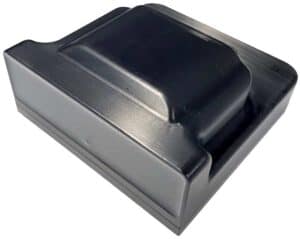
Omniscan 450 Compact by Cerulean Sonar.
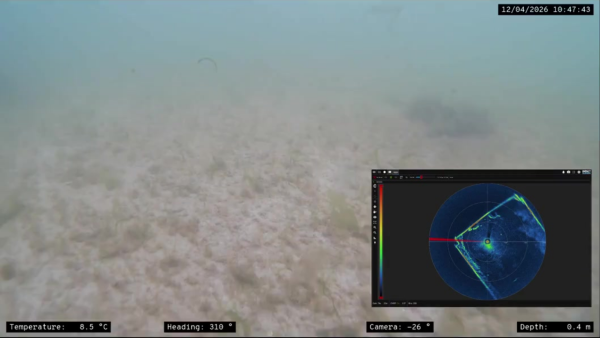
A forward-looking imaging sonar projects acoustic beams ahead of a platform and translates the returning echoes into a real-time view of the path ahead. Commonly installed on ROVs and AUVs, its primary functions include obstacle detection, target approach, and general piloting awareness. Many modern systems utilize electronically formed beams to cover a wide horizontal sector without relying on physical moving parts, enabling a fast image refresh rate. Operators must note that the vertical beam width is often broader than the horizontal focus, meaning that returns from different elevations may appear at the same range and bearing within a flat 2D sonar imaging view.
A multibeam imaging sonar functions by transmitting an acoustic pulse and listening across a defined field of view using multiple, narrow, electronically formed receive beams. A single transmitted pulse can produce a complete set of range-resolved measurements, generating an instantaneous 2D imaging sonar frame in many system architectures. This electronic architecture reduces or eliminates the need for mechanical scanning mechanisms, improving reliability and enabling high refresh rates suitable for tracking moving targets. System performance is heavily dictated by operating frequency, array size, element spacing, beamwidth, signal bandwidth, and processing power.
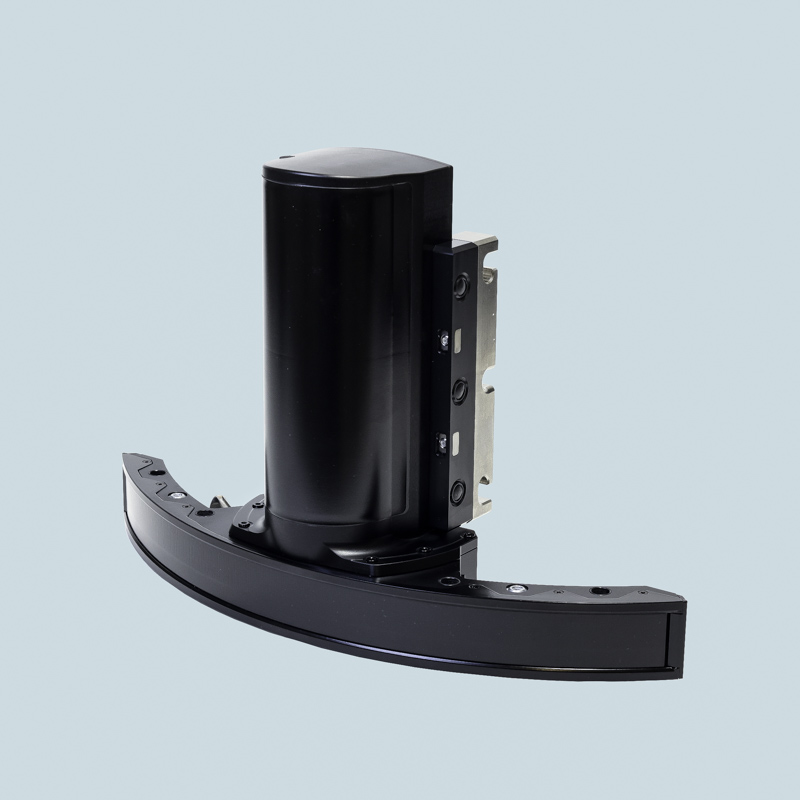
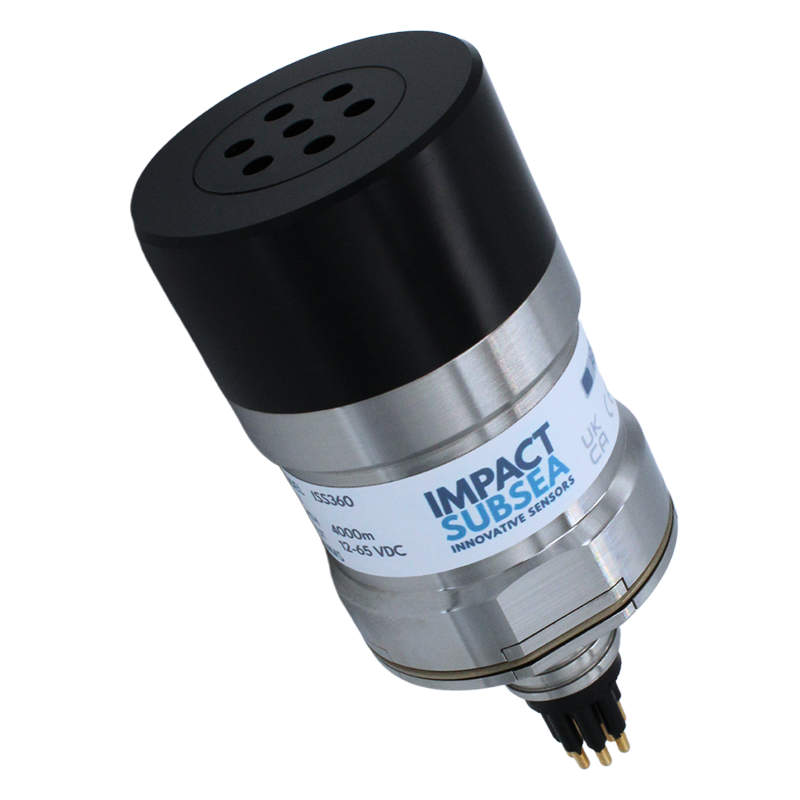
Mechanically scanning units utilize a highly focused, narrow acoustic beam that is physically stepped through a selected sector or a complete 360-degree circle. In many systems, the transducer elements rotate internally within a fluid-filled stationary housing, allowing the external structure to remain fixed. This design can deliver detailed panoramic images using a relatively compact sensor head. However, because the image is assembled progressively as the motor steps the beam, movement of the platform or target during the scan can introduce geometric distortion.
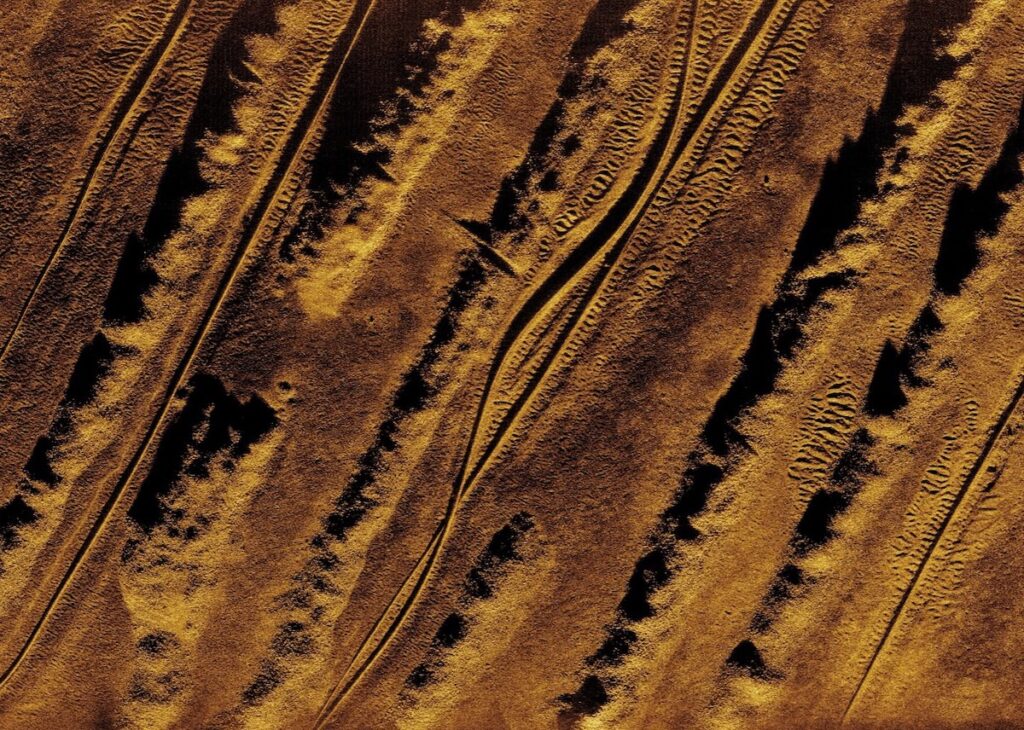
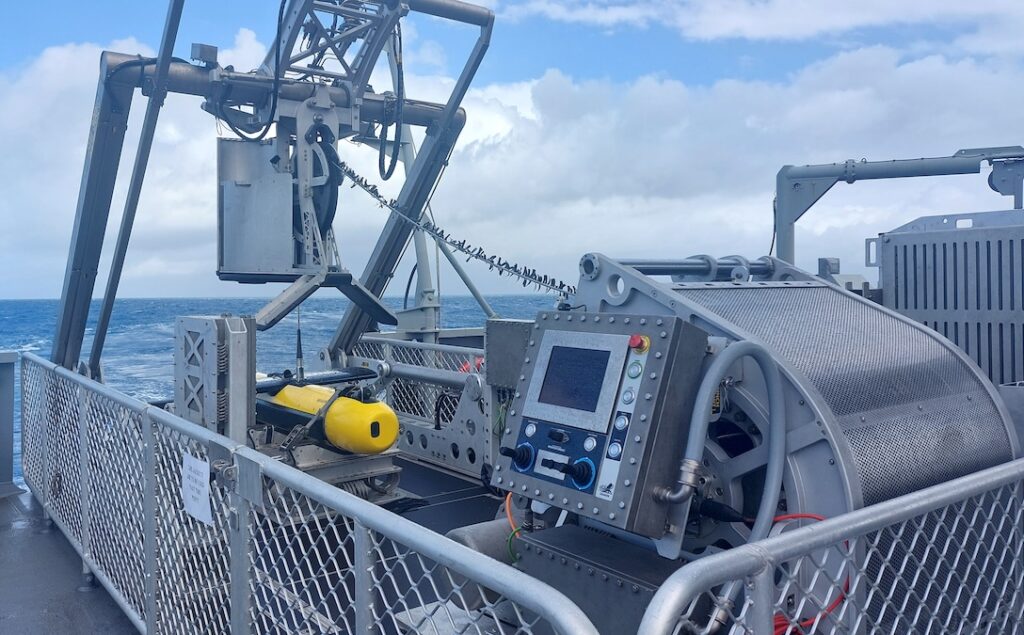
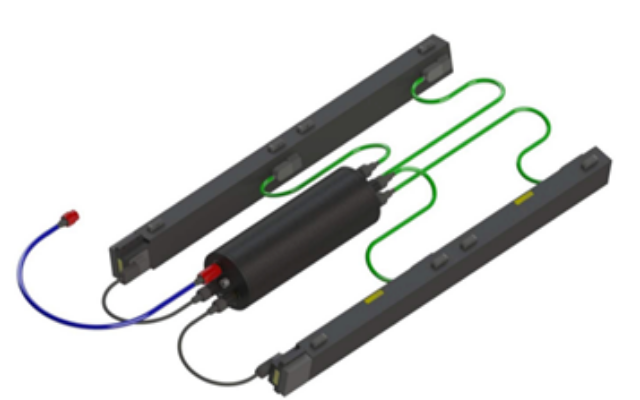
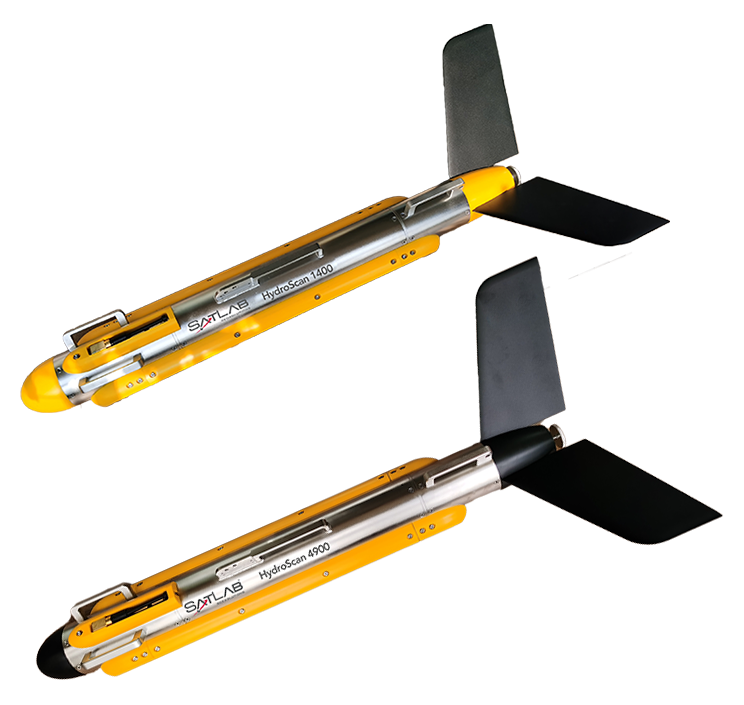
When wide-area seabed mapping is the objective, side-scan systems provide a dedicated side imaging sonar capability. Typically packaged into a towed body or integrated along the flanks of an AUV, this architecture projects fan-shaped acoustic pulses perpendicular to the survey track line. The resulting images reveal variations in seabed reflectivity and small-scale topography. Hard, rough, or favorably oriented surfaces can yield intense reflections, whereas objects protruding from the bottom cast prominent acoustic shadows that can help operators estimate target height when the sonar altitude and viewing geometry are known.
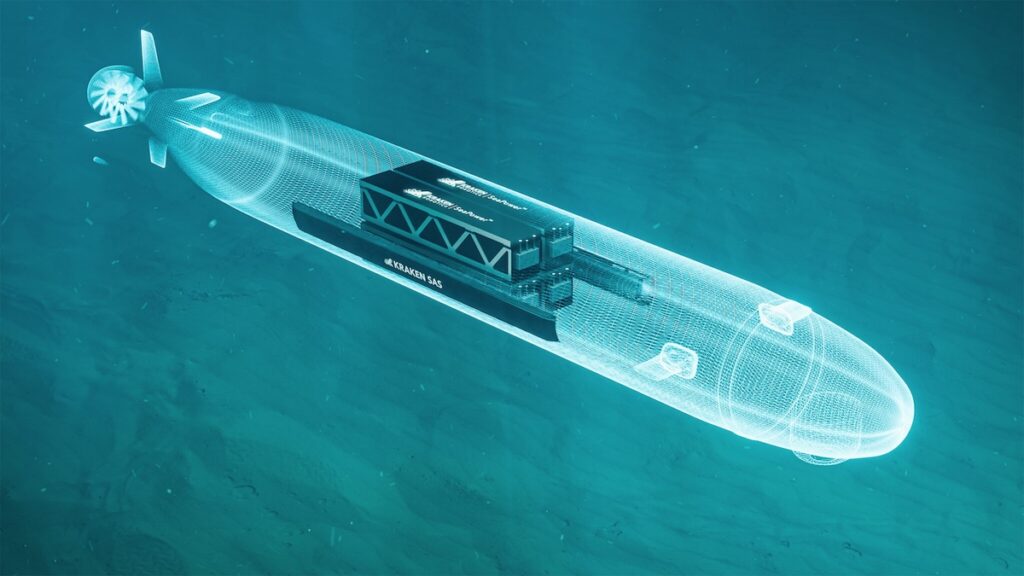
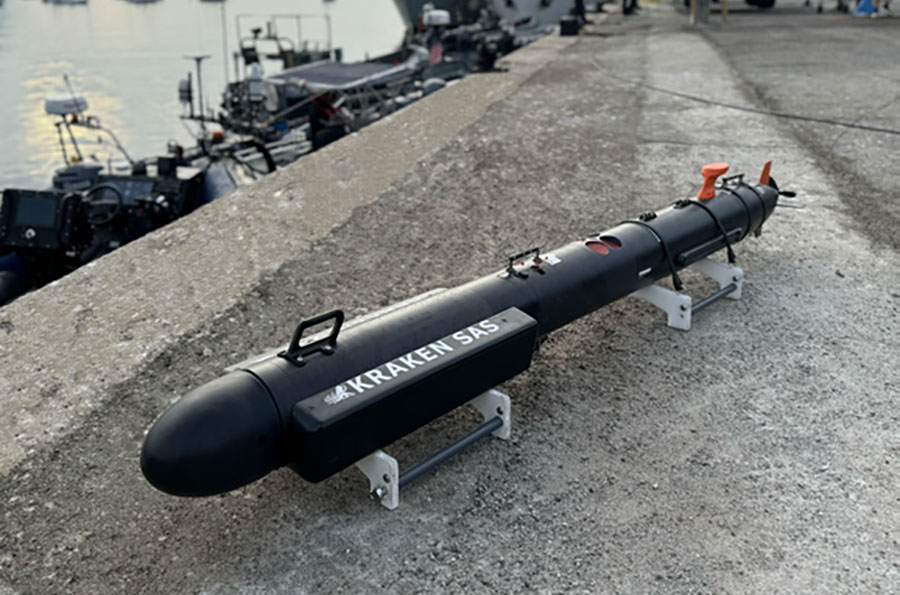
Synthetic Aperture Sonar (SAS) leverages the controlled forward motion of an underwater vehicle to combine successive acoustic returns coherently, synthesizing a virtual array that is significantly longer than the physical transducer. Unlike conventional side-scan systems, where along-track resolution generally degrades as range increases, synthetic aperture processing can maintain very high along-track resolution that is substantially less dependent on range across the operating swath. This makes it a valuable tool for detecting small objects and mapping pipelines over large areas. The trade-off lies in demanding navigation and motion-estimation requirements, acoustic coherence constraints, and high processing requirements.
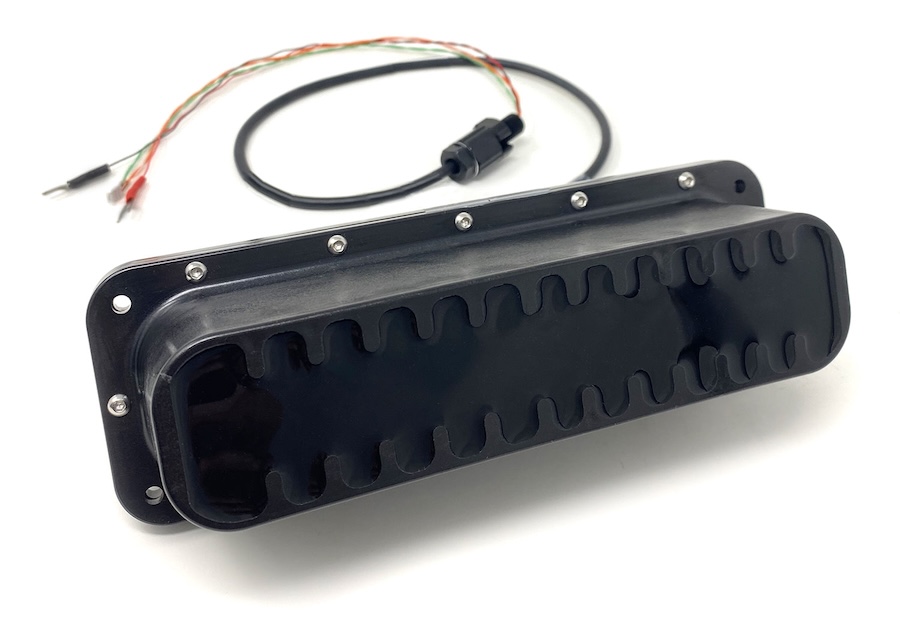
Standard acoustic systems rely on several interconnected subassemblies to capture and process underwater data.
Together, these hardware elements influence resolution, data clarity, frame rate, and acoustic range. Operational depth limits also depend on the pressure ratings of the housing, connectors, cabling, and associated mechanical components.
Continuing engineering developments are expanding the capabilities of modern acoustic mapping systems.
These emerging trends point toward increasingly autonomous subsea systems capable of real-time environmental adaptation and long-term deployment with reduced human intervention.
 Searching Companies & Products