
Showcase your capabilities
If you design, build or supply Electric Field Sensors, create a profile to showcase your capabilities and connect with visitors who have an active requirement for your solutions.



Source underwater electric field sensor technology from specialist suppliers and manufacturers serving ocean science, marine infrastructure monitoring, and naval defense programs. These systems support passive, non-acoustic sensing for subsea intrusion detection, buried object detection, corrosion monitoring, and naval electric signature analysis, operating effectively in low-visibility and acoustically complex environments.
Read the Technology Overview
If you design, build or supply Electric Field Sensors, create a profile to showcase your capabilities and connect with visitors who have an active requirement for your solutions.

Underwater electric field sensors measure spatial and temporal variations in electric fields within conductive marine environments using electrode arrays and low noise amplification electronics. These systems detect weak signals generated by biological activity, corrosion processes, buried infrastructure, or moving vessels, with measurements recorded through onboard data logging or passed to host platforms for real-time or post-mission analysis.
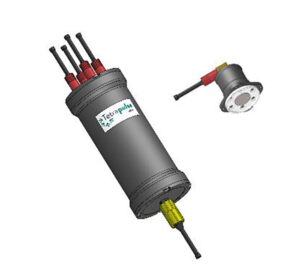
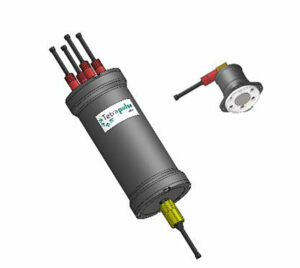
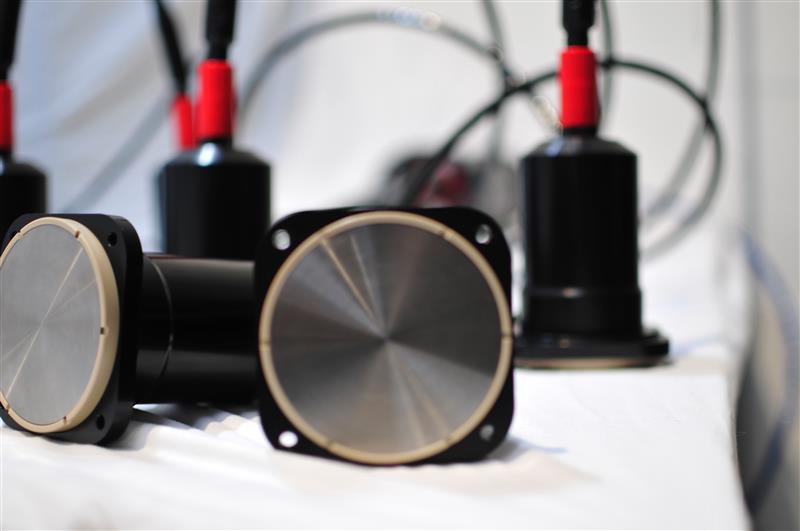
Tetrapulse ESENSE 300 subsea electric field sensor by Elwave.
Operating passively and independently of acoustic emissions, electric field sensing performs reliably in acoustically cluttered or sensitive environments, making it suitable for long-duration monitoring, covert surveillance, and scientific observation. System performance is driven by electrode design, spacing, and signal-conditioning quality, with modular architectures supporting deployment on fixed seabed installations and moorings, and integration with remotely operated or autonomous underwater vehicles via platform-supplied power and data interfaces.
These sensors are also sometimes known as underwater electric potential sensors (UEP), subsea electromagnetic sensors, and underwater electric sensing systems.
Electric field sensors detect disturbances in ambient electric-field conditions caused by moving objects, divers, or unauthorized vehicles. This supports subsea intrusion detection for port security, offshore assets, and critical infrastructure protection in environments where acoustic methods may be degraded or undesirable.
Electric field sensors are used to study natural electric phenomena associated with marine organisms, sediment interactions, and oceanographic processes. These measurements support marine research programs focused on ecosystem behavior, habitat characterization, and environmental impact monitoring.
Subsea electric field sensing enables detection of corrosion activity, coating degradation, and cathodic protection performance on pipelines and cables. Continuous monitoring supports early identification of integrity issues and reduces the risk of leaks or failures in critical subsea infrastructure.
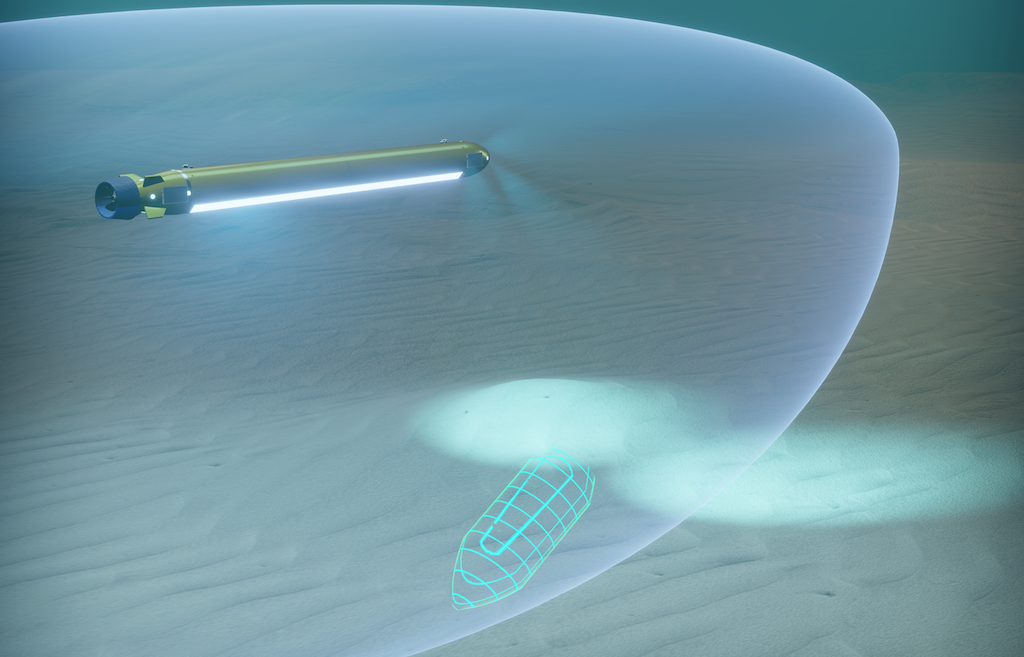
In naval defense applications, underwater electric-field sensors enable passive detection of vessels and other underwater assets via their electric signatures. This capability supports naval electric signature sensing, harbor protection, and covert maritime surveillance without emitting detectable signals.
Electric field mapping techniques can identify buried metallic objects, subsea cables, pipelines, and unexploded ordnance (UXO). This provides a non-acoustic detection method for targets that may be obscured in sediment or difficult to detect using sonar.
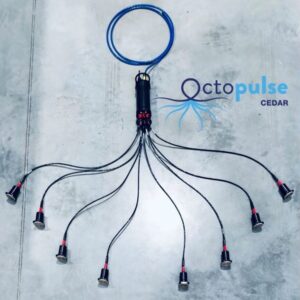
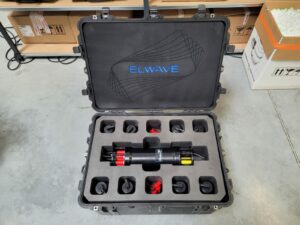
Octopulse underwater electric field sensor by Elwave.
Underwater electric field sensors are increasingly used to monitor offshore wind installations and other marine energy assets. Measurements help assess corrosion, environmental interactions, and long-term asset performance.
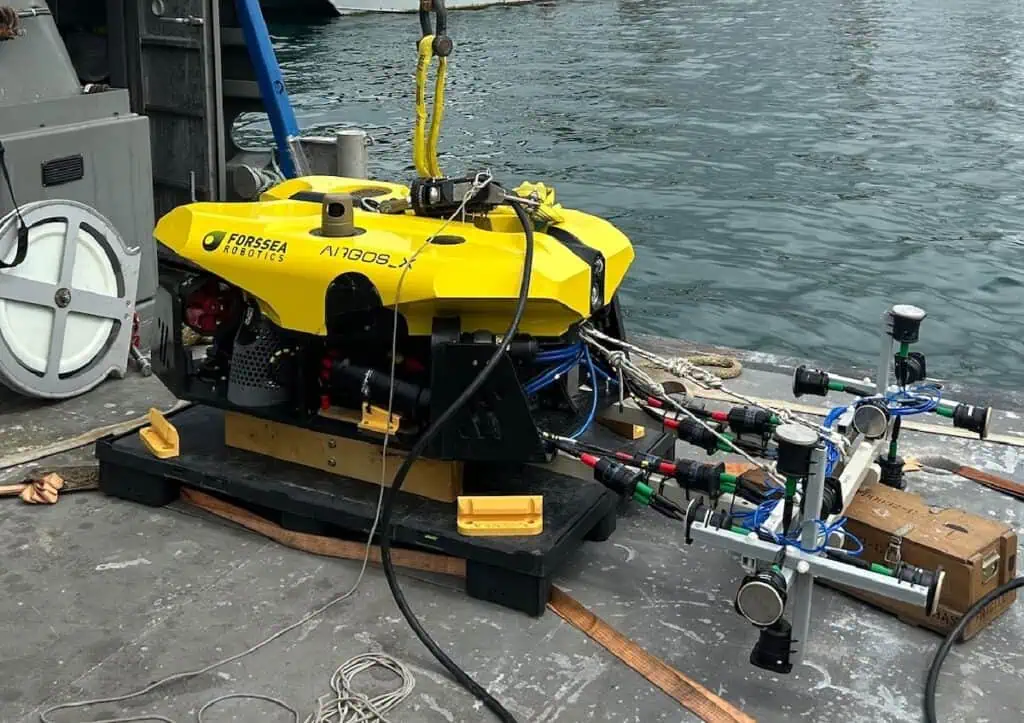
Underwater electric field sensors are available in a range of configurations depending on application requirements. Fixed electrode arrays are commonly deployed for continuous monitoring of specific assets or regions. Towed or mobile sensor configurations support survey and mapping operations, while compact sensors are integrated into remotely operated vehicle sensors or autonomous platforms.
Electric field sensors are often integrated into a broader subsea instrumentation suite. Compatibility with standard marine data interfaces simplifies integration with oceanographic sensors, navigation systems, and mission control software. For mobile platforms, synchronization with vehicle motion and positioning systems improves data accuracy and interpretation.
Data handling capabilities are a key consideration for engineers and buyers. Systems may support onboard storage, real-time streaming, or hybrid approaches, depending on available bandwidth and power. Visualization software enables electric field mapping, trend analysis, and anomaly detection to support operational decision-making.
Underwater electric field sensors complement traditional subsea sensing technologies rather than replacing them.
Compared to sonar systems, electric field sensing operates passively and is unaffected by acoustic noise or reverberation, making it suitable for covert operations and cluttered environments.
Optical sensing systems provide high-resolution imaging but are limited by turbidity and light availability, whereas electric field sensors maintain performance in low-visibility conditions.
Magnetic sensing detects ferrous objects but may be less sensitive to certain targets or environmental conditions, while electric field sensing can detect electrochemical and movement-related signals from a wider range of sources.
In practice, electric field sensors are often deployed alongside acoustic, optical, and magnetic systems to provide multimodal detection and improved situational awareness.
Electric field sensing offers several advantages for subsea monitoring and detection applications:
These characteristics make electric field sensors particularly suitable for defense, security, and long-duration monitoring deployments.
While electric field sensing is application-specific, subsea deployments typically align with recognized marine engineering and defense standards for environmental robustness, electromagnetic compatibility, and system reliability. Materials selection, sealing methods, and connector standards influence long-term performance in corrosive marine environments.
Deployment planning must account for seabed conditions, biofouling risk, and potential electromagnetic interference from nearby infrastructure. Proper calibration and validation procedures are essential to ensure measurement accuracy over extended deployment periods.
Underwater electric field sensors represent a specialized but increasingly important capability for ocean science, marine industry, and naval defense stakeholders seeking passive, high-sensitivity subsea monitoring solutions. Their flexibility, low observability, and compatibility with modern subsea platforms make them a valuable component of advanced marine sensing architectures.
 Searching Companies & Products