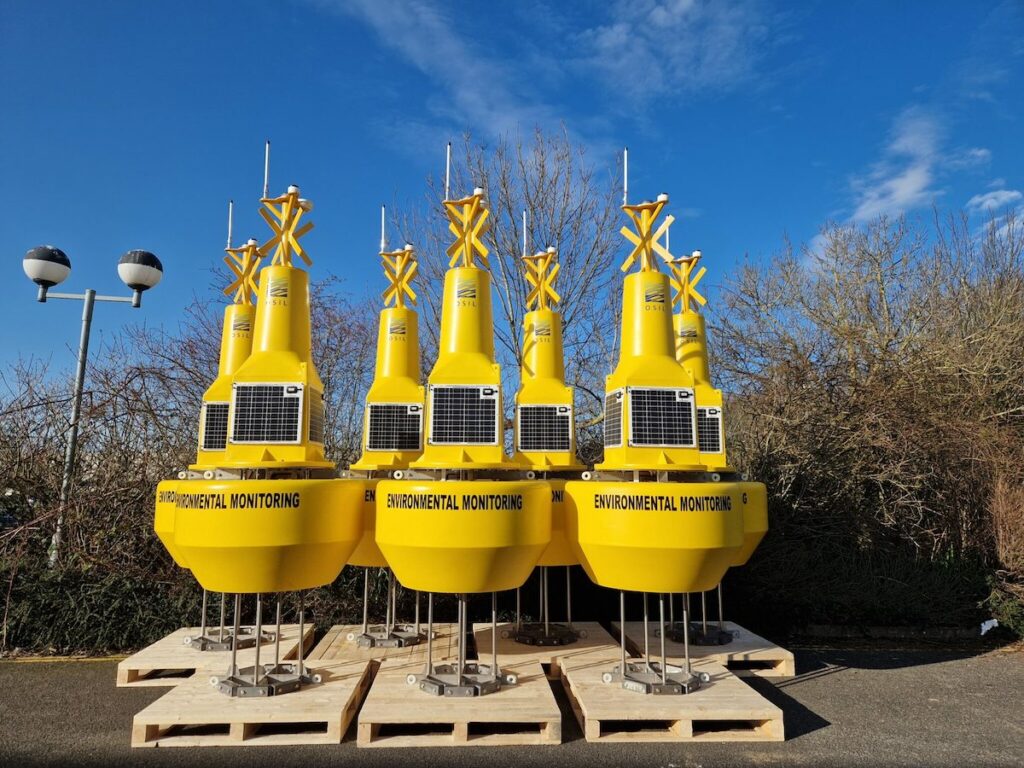
Showcase your capabilities
If you design, build or supply Wave Buoys, create a profile to showcase your capabilities and connect with visitors who have an active requirement for your solutions.


Wave buoys are essential tools for collecting precise and reliable wave-related oceanographic data. Designed to measure critical parameters such as wave height, wave period, and wave direction, these devices are widely used in applications ranging from scientific research to weather forecasting and offshore renewable energy projects. Some advanced wave buoys also incorporate additional sensors for measuring water currents, tide levels, and other environmental data, making them versatile assets for understanding marine conditions.
Read the Technology Overview
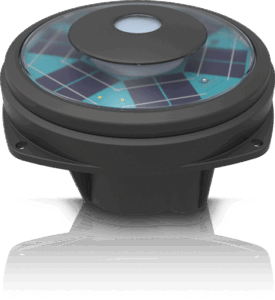
Telemetry Tracking Beacons & Equipment for Marine & Offshore Applications

If you design, build or supply Wave Buoys, create a profile to showcase your capabilities and connect with visitors who have an active requirement for your solutions.

Wave buoys are specialized instruments deployed in marine environments to measure and monitor ocean wave characteristics. These floating devices are equipped with sensors that capture data such as wave height, wave period, and wave direction. By transmitting this information in real time or storing it for later retrieval, wave buoys play a crucial role in understanding ocean dynamics.
Modern wave buoys often utilize satellite communication systems to relay data to onshore stations, ensuring timely analysis and integration into applications like weather forecasting and marine traffic safety.
Wave buoys serve a broad range of purposes across scientific, industrial, and safety-related fields:
Wave buoys monitor wave patterns and provide real-time data, contributing to accurate marine weather predictions, including wave height forecasts. This information is vital for coastal communities and marine operations.
Wave data is instrumental in the development and maintenance of offshore renewable energy infrastructure, such as wave energy converters and wind farms.
Oceanographers and researchers rely on wave buoys to study phenomena like ocean wave height and wave sampling, advancing our understanding of marine ecosystems and climate change impacts.
Shipping and navigation benefit from wave buoys that provide data to enhance safety in challenging marine conditions.
Wave buoys are designed to withstand the harsh conditions of marine environments while delivering accurate and reliable data. Key features include:
Wave buoys can be categorized by the type of wave data they collect, the sensing technology they use, and the environment in which they are deployed. Common types include:
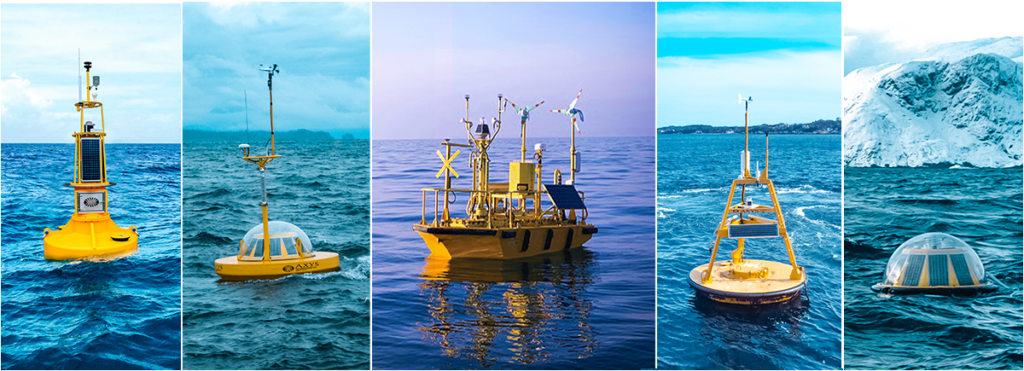
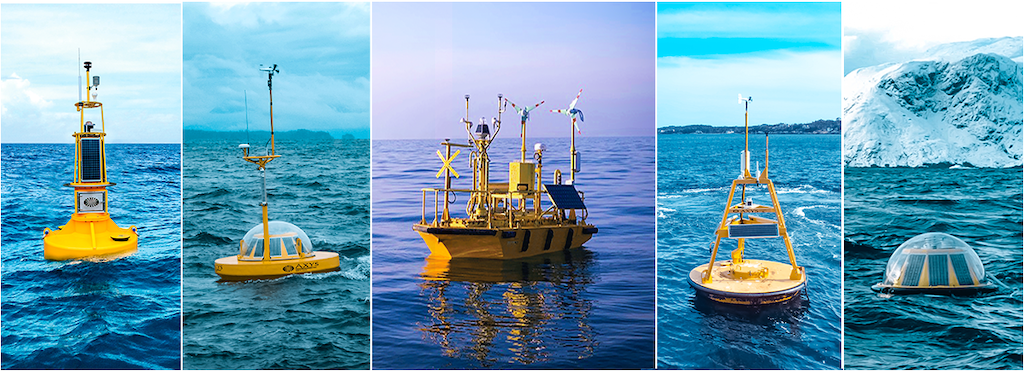
In addition to standalone wave buoys, wave measurement technologies are frequently integrated into metocean buoys. These multipurpose platforms not only collect wave data but also monitor weather conditions, sea temperature, and other oceanographic parameters. The versatility of metocean buoys makes them invaluable for offshore renewable energy projects, hydrographic surveys, and other marine applications.
The deployment of wave buoys offers numerous advantages for both scientific and practical purposes:
Recent advancements in wave buoy technology have centered on enhancing accuracy, connectivity, and data processing capabilities. These innovations include the integration of satellite systems, which improve global coverage and ensure reliable data transmission. Improved wave buoy sensors now enable more precise measurements of wave height, wave period, and water current patterns, while energy-efficient designs, such as solar-powered and self-sustaining systems, extend the operational life of wave buoys and reduce maintenance requirements.
Wave measuring buoys provide a foundation for creating detailed wave height maps and forecasts, essential for applications like marine weather prediction and hydrographic surveys. By offering precise measurements of wave dynamics, these tools enable industries and researchers to make informed decisions that promote safety, efficiency, and sustainability in marine operations.
Wave buoys are indispensable for collecting high-quality wave data across a variety of applications, including weather forecasting, marine research, and offshore energy projects. With advanced capabilities such as water current and tide level measurement, as well as integration into metocean buoy platforms, wave measurement buoys remain at the forefront of oceanographic technology. Their ability to deliver real-time, actionable insights ensures their continued relevance in understanding and managing the world’s oceans.
 Searching Companies & Products