Marine explosive ordnance disposal (EOD) and mine countermeasures (MCM) encompass a wide range of technologies and strategies designed to detect, identify, and neutralize underwater threats such as naval mines and unexploded ordnance (UXO). These systems are central in maintaining maritime security, ensuring safe navigation, and supporting naval operations. From autonomous vehicles to robotic manipulators, marine EOD technologies are continually evolving to meet the complex challenges of modern underwater warfare and defense.
If you design, build or supply EOD and Mine Countermeasures, create a profile to showcase your capabilities and connect with visitors who have an active requirement for your solutions.
The deployment of marine EOD systems spans multiple domains, including naval mine clearance, underwater demolition, UXO mitigation, and surveillance. Whether integrated into manned missions or operated remotely via robotic platforms, these solutions enhance safety and efficiency across various defense and civilian scenarios.
Remotely Operated Vehicles (ROVs) and Robotic Manipulation
ROVs play a central role in both marine EOD and MCM. Designed to operate in hazardous environments, EOD ROVs with sensors, cameras, and robotic manipulators are deployed to inspect, identify, and interact with underwater threats. These remotely operated vehicles vary in size and configuration, from compact inspection-class ROVs to large work-class models capable of carrying out full mine clearance tasks.
The robotic manipulator arms mounted on EOD ROVs enable detailed tasks such as cutting, gripping, or placing explosive charges. With precise controls and interchangeable tools, these systems offer the flexibility required for complex underwater missions.
Marine EOD Operations and Capabilities
Marine EOD operations focus on locating and safely neutralizing explosive hazards in marine environments. These missions often involve unexploded ordnance left over from past conflicts, sea mines deployed in contested zones, or improvised underwater threats. EOD operators use a combination of diver-based tactics and remote systems to manage risk during UXO clearance and mine disposal.
Mine Countermeasures (MCM) and Strategic Defense
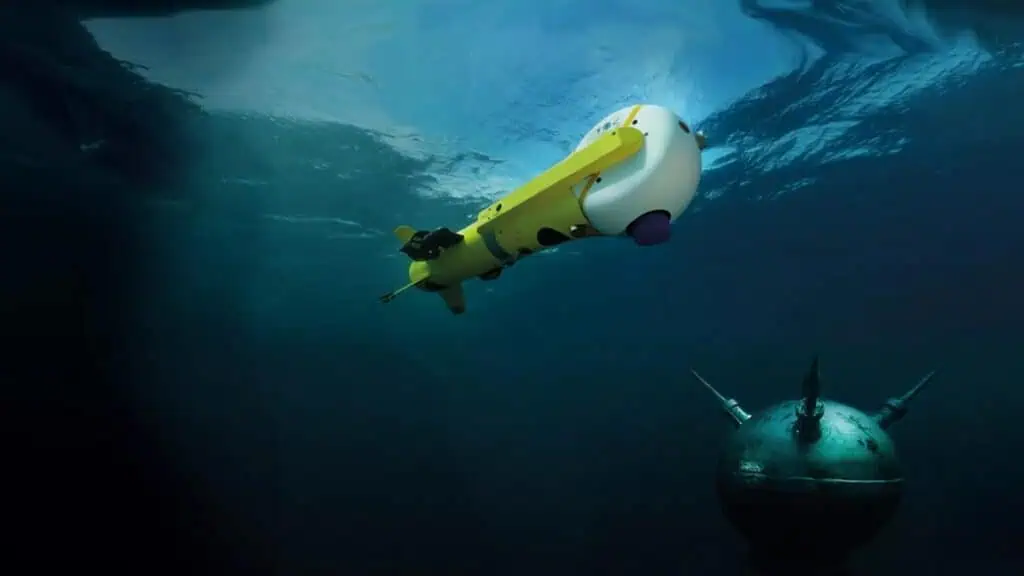
MCM technologies are critical to identifying, classifying, and neutralizing naval mines. These include acoustic and magnetic mine detection systems, remotely operated vehicles (ROVs), and advanced data analysis platforms. Mine countermeasures reduce risks to ships, submarines, and infrastructure by enabling safe passage through potentially mined waters.
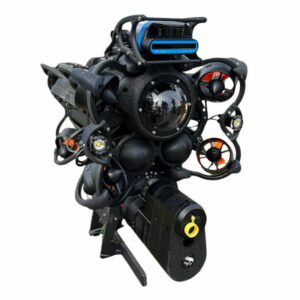
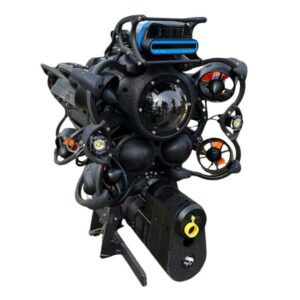
SRV-8 MDV by Oceanbotics.
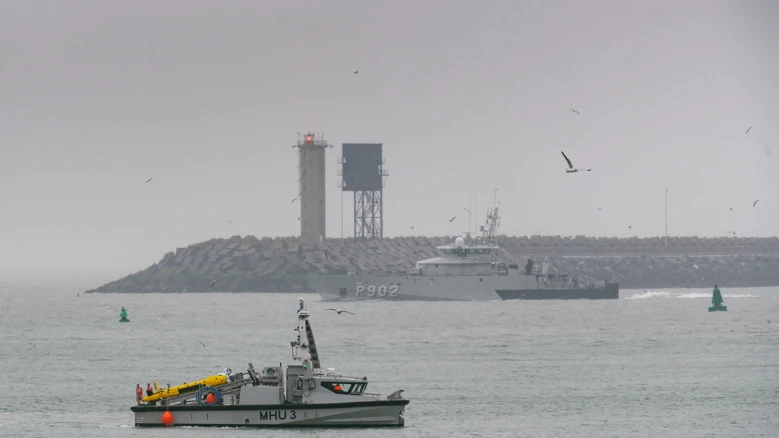
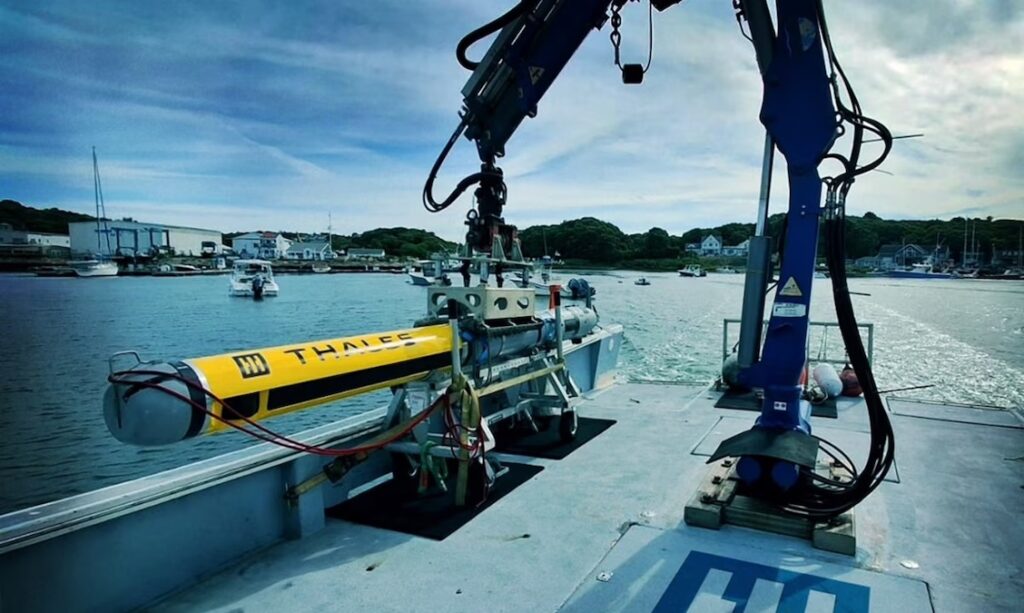
MCM drones and robotic mine clearance platforms are increasingly replacing conventional minesweeper vessels. These systems offer faster response times, lower operational risks, and improved effectiveness across various underwater environments.
UXO Detection, Classification, and Clearance
Detecting unexploded ordnance underwater involves specialized sensor packages including sonar, magnetometers, and imaging systems. These technologies distinguish between harmless debris and live ordnance, guiding clearance teams in their response. UXO clearance strategies typically involve detailed mapping, classification, and remote or diver-based disposal depending on environmental and operational conditions.
Remotely operated vehicles and robotic systems allow UXO mitigation at depth and in difficult conditions, reducing human exposure and enhancing accuracy.
Integrated Technologies for Mine Detection and Disposal
Modern marine EOD systems combine hardware and software to deliver comprehensive underwater mine countermeasures. Sensor integration, AI-driven threat recognition, and real-time communication platforms enhance situational awareness and enable rapid decision-making. These systems typically include:
Autonomous control algorithms enabling semi-autonomous or fully autonomous operations
Data-link systems that transmit video and telemetry to surface control stations in real-time
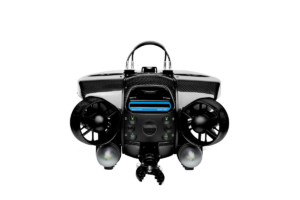
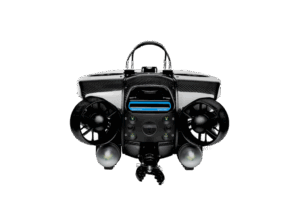
REVOLUTION Remotely Operated Vehicle by Deep Trekker.
These integrated components work together to deliver a coordinated mine detection and disposal capability, reducing risk and improving operational efficiency in both defense and civilian missions.
Applications Beyond Defense
While marine EOD and MCM are primarily defense-driven, many technologies are adapted for civilian use. Offshore construction, subsea cable installation, and archaeological projects often require UXO detection and clearance before operations can proceed. In these settings, ROVs and underwater detection systems ensure safety and compliance with regulatory standards.
Materials, Standards, and System Resilience
Marine EOD systems are designed to withstand harsh underwater environments. Components are typically built to military specifications, such as MIL-STD-810 for environmental resilience and MIL-STD-2105 for explosive safety. Systems must perform reliably under pressure, temperature extremes, and corrosive saltwater exposure.
Specialized materials and redundant system design ensure ROV manipulators, detection arrays, and control units remain operational during extended missions. Durability and accuracy are especially important in live mine countermeasures scenarios where failure is not an option.
A renewed framework agreement between key industrial partners Exail and KNDS aims to secure the high-volume production of autonomous mine countermeasure systems to meet the rapidly growing operational demands of global naval forces
Belgium Naval & Robotics has delivered the first mine countermeasures toolbox for the Belgian-Dutch rMCM programme, designed and produced by Exail to enable stand-off detection, identification, and neutralisation of naval mines
Teledyne Marine has delivered the first four GAVIA AUV systems to Sweden under a multi-year agreement, enhancing underwater surveillance, mine countermeasures, seabed mapping and intelligence capabilities for the Swedish Armed Forces
Elwave, in collaboration with Sonardyne International, Atlantas Marine Limited, ECS Special Projects, and Voyis, conducted on-water trials in Portland Harbour, United Kingdom, testing its EPULSE active sensing range with the TETRAPULSE sensor integrated into a compact MCM robotic stack for mine detection
A new order through the NATO Support & Procurement Agency will provide European navies with several hundred robotic systems for autonomous mine clearance
Deep Trekker ROVs are helping UNDP and Ukrainian agencies safely advance large-scale underwater demining through technology, training, and national capacity building
IQUA Robotics deployed its SPARUS II UUV at REPMUS 25 for mine countermeasures and critical underwater infrastructure missions, showing automatic target detection, multimodal sensing, onboard mapping, and NATO STANAG 4817 interoperability with the Spanish Navy, US Navy, and Thales Group
Thales and HII have integrated the SAMDIS 600 sonar with the REMUS 620 UUV, advancing autonomous mine countermeasures and undersea security through enhanced detection, classification, and imaging capabilities
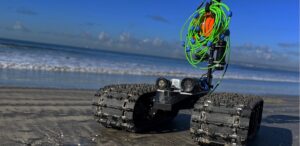
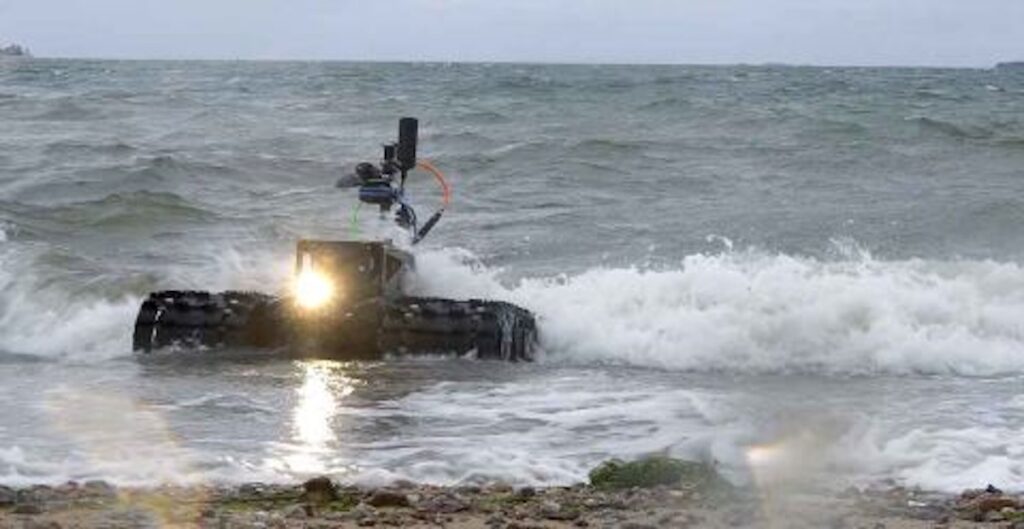
Greensea IQ has secured a $9 million task order from the U.S. Marine Corps to supply Bayonet 250 Amphibious Unmanned Ground Vehicles (AUGVs) to support littoral mine countermeasure and subsea threat mitigation operations