


Strategic Robotic Systems (SRS) outlines how hybrid underwater vehicles can support Mine Countermeasures (MCM) by moving personnel away from some of the most dangerous stages of underwater mine neutralization. Read more >>
These operations can require divers to work close to live ordnance in low visibility, under pressure, and with limited communication, creating significant risks during the approach, inspection, and neutralization of a threat.
A diver neutralizing a mine must approach closely enough to attach a charge or manually disrupt the device, and even with training and precision, the margin between a controlled operation and a catastrophic outcome is narrow. Deep MCM dives expose operators to decompression sickness, nitrogen narcosis, and barotrauma, with these risks compounding with mission duration and depth.
Underwater visibility can drop to near zero, while acoustic communication is limited and unreliable. If a diver encounters an unexpected threat, equipment failure, or entanglement, options for help and available time are limited. High-stress, physically demanding dives can also degrade decision-making, and a single mistake in mine countermeasures can be fatal for both the diver and nearby personnel.
Closing the UUV Capability Gap
Remotely Operated Vehicles (ROVs) and Autonomous Underwater Vehicles (AUVs) represent two established approaches to unmanned underwater operations. ROVs provide tethered, operator-controlled capability and can approach a threat or deploy a disruptor, though tether management in a minefield creates additional risks and restricts mobility. AUVs can operate across larger areas without continuous operator control, but lack the real-time precision required for ordnance neutralization.
A hybrid underwater vehicle combines both operating modes, allowing an autonomous search pattern to be conducted using side-scan sonar and forward-looking sonar to detect and classify potential threats before switching to tethered ROV control for close-in inspection, precise positioning, and disruptor deployment.
FUSION for Mine Countermeasures
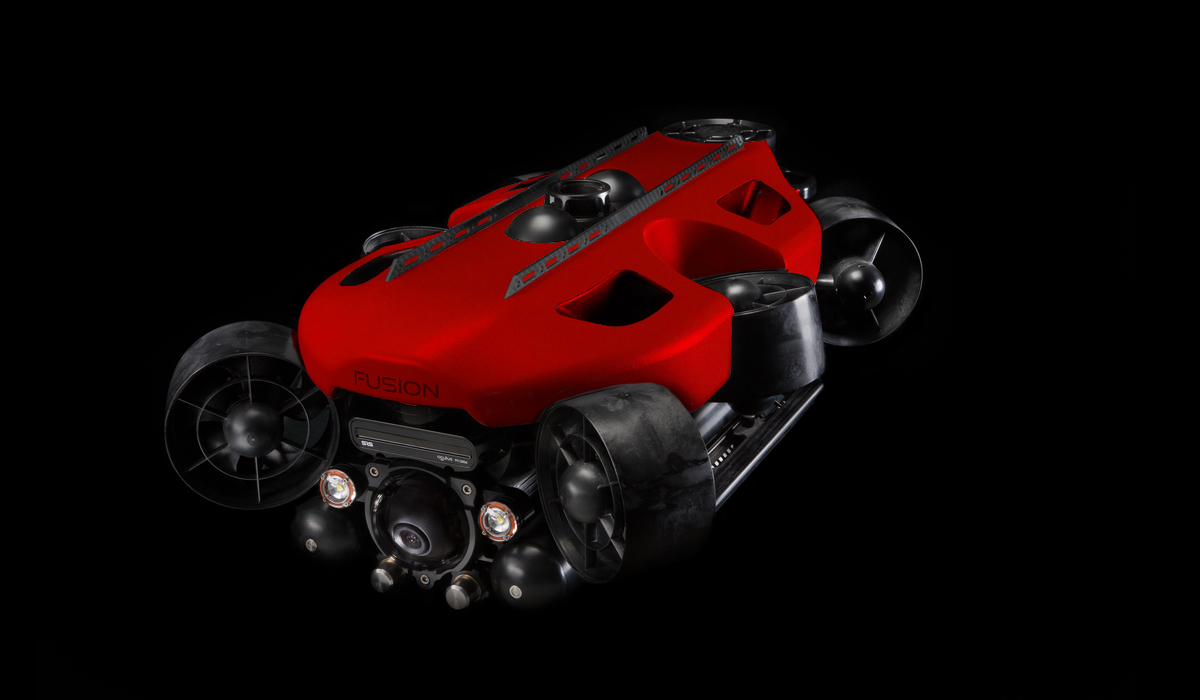
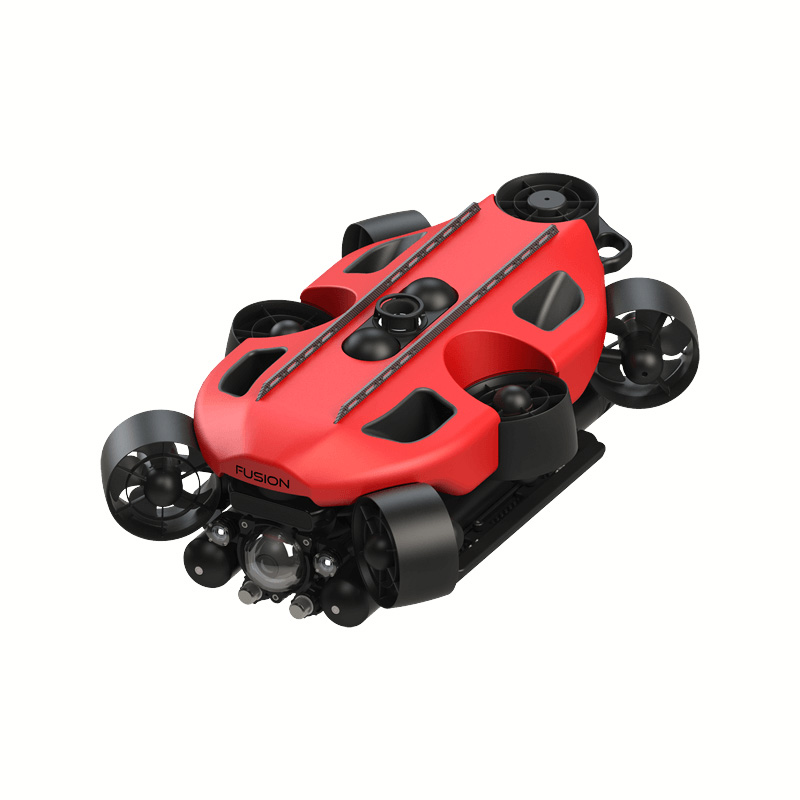
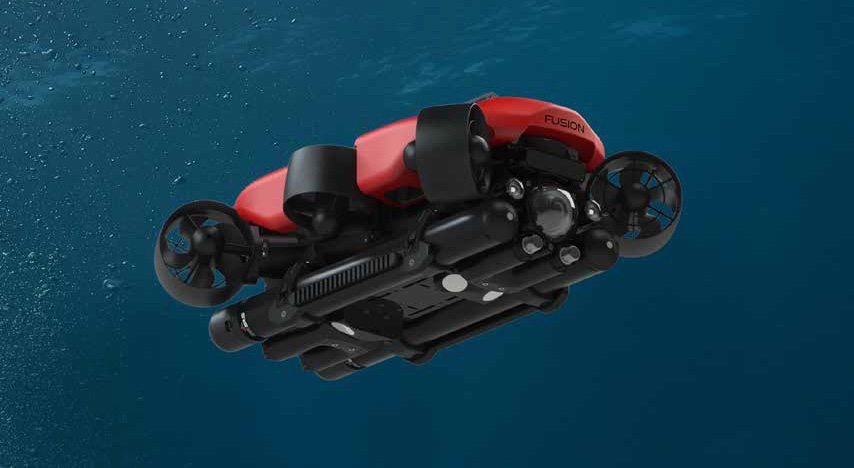
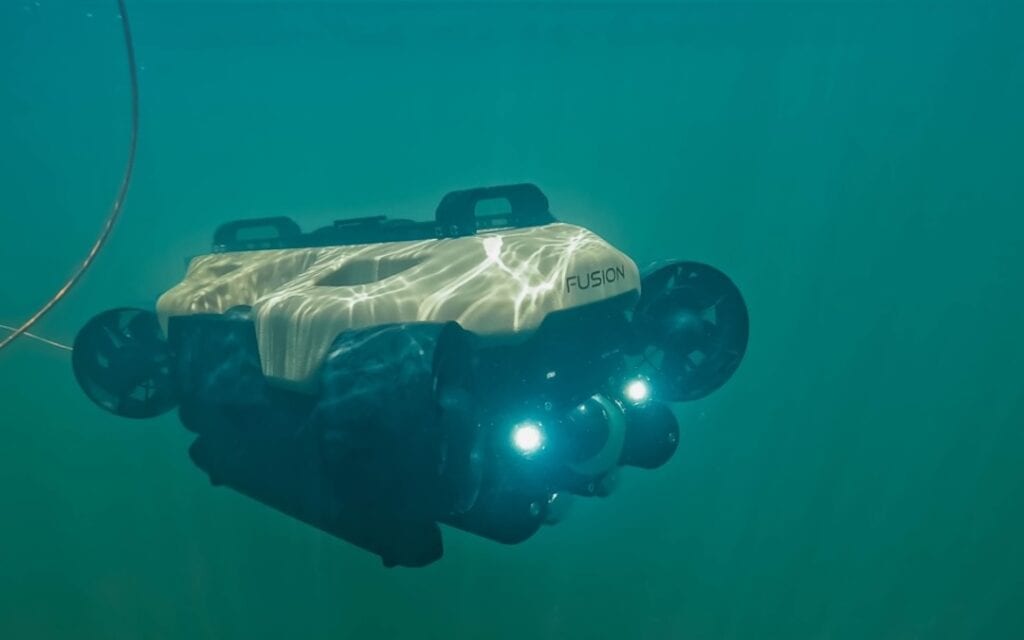
SRS’s FUSION system was designed around this workflow. It carries an integrated Zero Point TiTAN EOD disruptor, a 4K camera, forward-looking multi-beam sonar, side-scan sonar, DVL, and AHRS, enabling the system to find, identify, and neutralize an underwater mine without a human in the water. Its expeditionary form factor is compact enough to deploy from a small vessel or check as baggage, allowing it to reach operational areas quickly without requiring a large support footprint. In MCM operations, rapid response to emerging threats is often as important as raw capability.
Hybrid underwater vehicles do not eliminate the role of trained EOD and MCM divers, who remain essential for tasks requiring human judgment, dexterity, and adaptability in complex, unstructured environments. Instead, systems such as FUSION remove the requirement for divers to enter the most dangerous phases of an MCM operation, allowing them to spend less time in harm’s way while making decisions from a position of safety and situational awareness. As battery endurance, acoustic communication, and autonomy improve, the operational envelope will continue to expand.
Read ‘How Hybrid Underwater Vehicles Are Replacing Divers in Mine Countermeasures’ for more information.