Showcase your capabilities
If you design, build or supply Underwater Gliders, create a profile to showcase your capabilities and connect with visitors who have an active requirement for your solutions.


Source underwater glider USVs from specialist suppliers and manufacturers. These buoyancy-driven vehicles glide without propellers, delivering long-duration missions for research, monitoring, and defense.
Read the Technology Overview
High-Tech Autonomous Underwater Gliders, Subsea Buoyancy Modules, and Oceanographic Survey Services

High-Performance Instruments, Sensors & Technologies for Exploring & Monitoring Subsea Environments

If you design, build or supply Underwater Gliders, create a profile to showcase your capabilities and connect with visitors who have an active requirement for your solutions.

Underwater gliders are buoyancy-driven AUVs designed for long-duration, energy-efficient ocean data collection. Using an internal buoyancy engine to alter density, they ascend and descend through the water column, with wings converting this motion into forward glide paths. The result is a low-power, sawtooth trajectory ideal for wide-area environmental monitoring, inspection, and maritime intelligence.
Their modular architecture supports specialized payloads, including hydrophone arrays, additional battery packs, and energy-harvesting modules. Most platforms rely on lithium-ion battery systems, with onboard computers controlling stability and mission logic. Inertial navigation systems (INS) guide the vehicle between waypoints, while acoustic modems enable subsea communication and data transfer. This combination makes underwater gliders adaptable for scientific research, infrastructure monitoring, and defense operations without continuous propulsion demand.
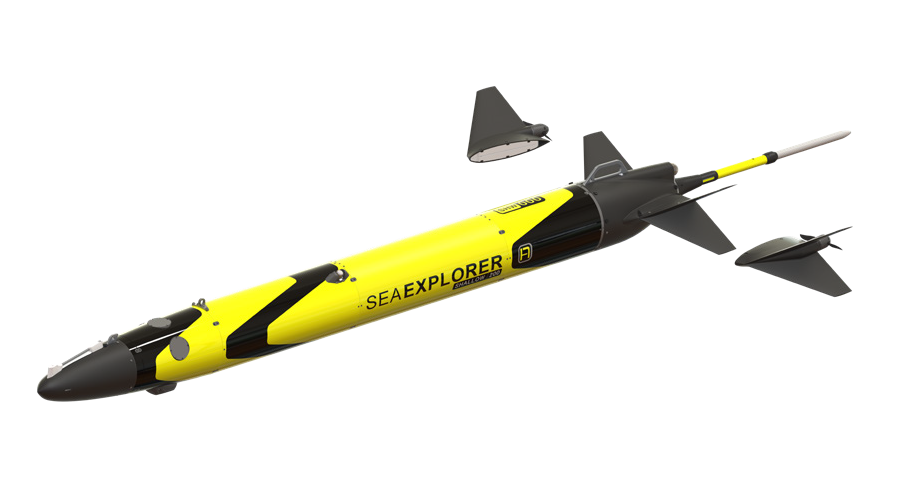
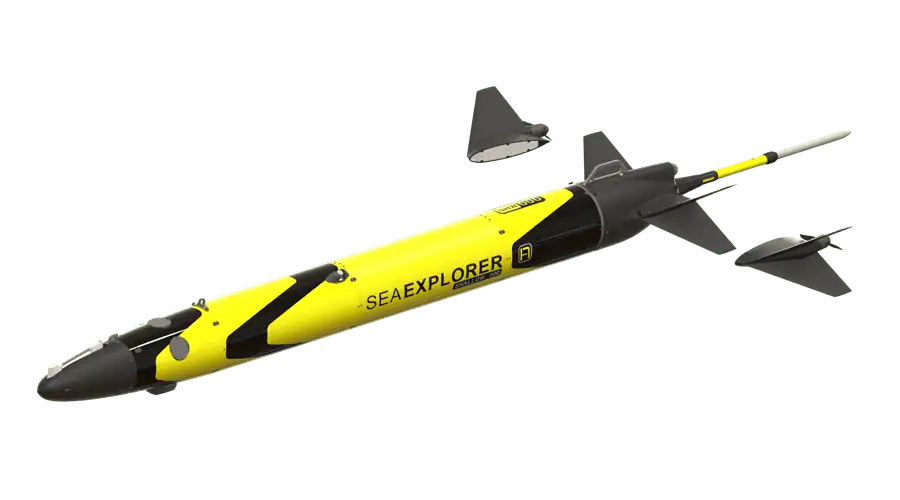
SEAEXPLORER 200 by ALSEAMAR – Underwater glider for scientific and commercial applications
Oceanographic institutions widely use underwater gliders for environmental monitoring, research, and seabed mapping. They are deployed to collect data on ocean temperature, salinity, currents, and biogeochemical properties across vast areas. The ability to operate autonomously for weeks or months makes them ideal for tracking seasonal and long-term changes in marine ecosystems.
Scientific payloads may include hydrophone arrays, sensor suites for dissolved gases, and telemetry systems for real-time data transmission. These tools are valuable for climate modeling, biodiversity assessments, and marine resource management.
In commercial sectors, underwater gliders are employed in infrastructure inspection, particularly for pipelines, subsea cables, and offshore energy platforms. Their long range and endurance allow for continuous monitoring of critical assets without frequent retrieval.
Industrial applications also include support for underwater construction and exploration, where gliders assist in site characterization and environmental compliance monitoring. Telemetry systems and onboard computers ensure seamless integration with data analytics and asset management platforms.
Underwater gliders are vital in military operations, particularly in intelligence, surveillance, and reconnaissance (ISR) missions. Their silent operation and long endurance make them well-suited for marine surveillance, mine countermeasures, and persistent situational awareness in littoral and open ocean environments.
Payload bays may be customized to include ISR-specific equipment, including acoustic sensors, specialized communication modules, and stealth-optimized propulsion systems. Integration with satellite communication networks enables real-time updates and mission re-tasking.
Glider models vary by range, endurance, payload capacity, and operational depth. Common variants include:
Each model features a modular payload bay, buoyancy chamber, and configurable telemetry and navigation systems, allowing mission-specific customization.
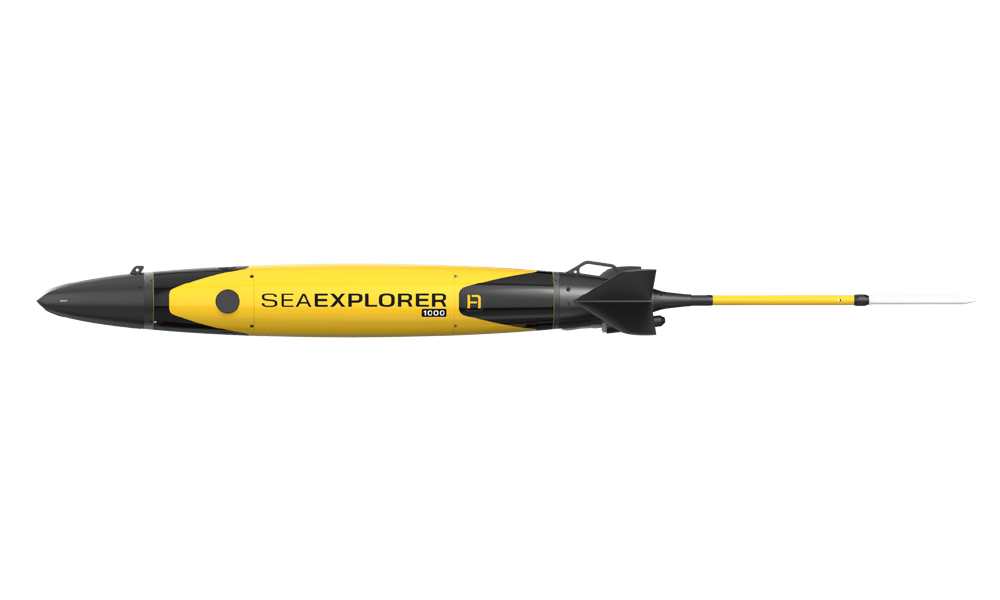
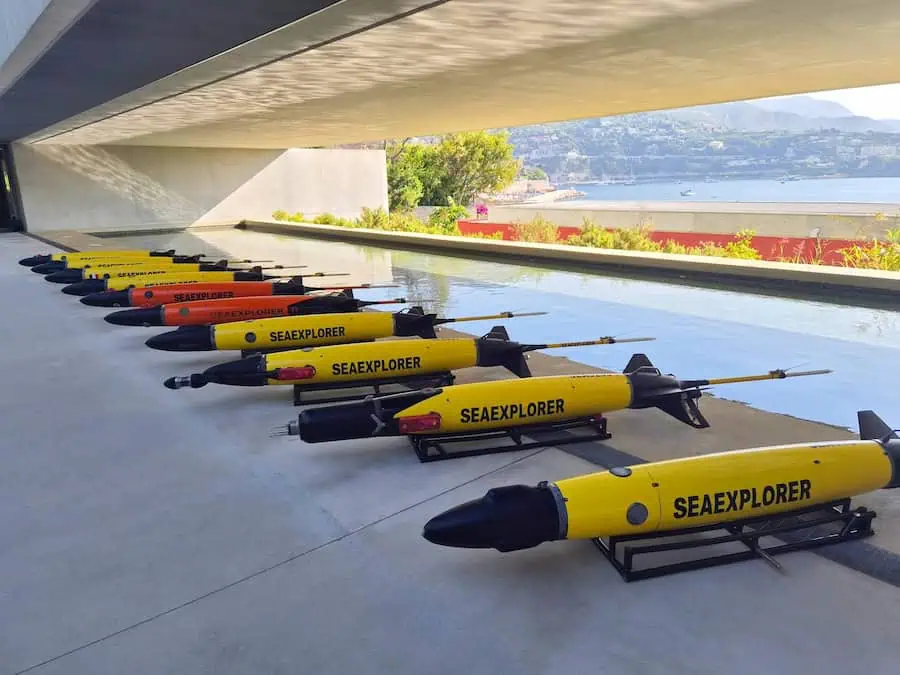
SEAEXPLORER 1000 by ALSEAMAR
Underwater gliders often adhere to defense and marine industry standards to ensure operational compatibility and mission safety. Commonly applied standards include:
Compliance with these standards ensures system robustness, especially in joint military and scientific missions requiring multi-platform coordination.
Unlike torpedo-shaped AUVs that rely on continuous propulsion, underwater gliders emphasize endurance over speed. They are ideal for broad-area sensing and persistent presence but are less suited for rapid response or payload-heavy missions. Gliders typically operate at slower speeds, but their energy efficiency allows missions lasting several months, a significant advantage for long-term monitoring.
| Feature | Underwater Gliders | Propeller-Driven AUVs |
| Propulsion Method | Buoyancy and wings | Electric or fuel propulsion |
| Endurance | Weeks to months | Hours to days |
| Mission Profile | Persistent sensing | Rapid survey or intervention |
| Energy Source | Batteries, solar, harvesters | Batteries, fuel cells |
| Navigation | INS, acoustic, GPS-surfaced | INS, DVL, GPS |
Innovations in underwater gliders include the development of AI-enhanced navigation algorithms, multi-glider swarm deployments, and improved energy harvesting systems. Enhanced communication protocols and miniaturization of components also allow for more compact designs without sacrificing performance.
These advances are expanding the operational envelope of underwater gliders into deeper, more complex, and more data-intensive missions across defense, commercial, and environmental sectors.
 Searching Companies & Products