






Showcase your capabilities
If you design, build or supply Profiling Sonar, create a profile to showcase your capabilities and connect with visitors who have an active requirement for your solutions.


Profiling sonar systems use acoustic pulses to measure vertical structure and depth within underwater environments, delivering precise data for subsea mapping and inspection. Designed for deployment on AUVs, ROVs, USVs, and fixed platforms, these systems support bathymetric surveys, sediment analysis, pipeline inspection, and environmental monitoring.
This page showcases profiling sonar suppliers and manufacturers of subsea profiling systems designed for accurate underwater measurement, mapping, and inspection tasks.
Read the Technology Overview
High-Performance Instruments, Sensors & Technologies for Exploring & Monitoring Subsea Environments


Industry-Leading Underwater Imaging and Power Solutions for Demanding Professional Survey Applications

Innovative, High-Performance Underwater Sensing Technologies for the Marine Industry

Innovative Subsea & Marine Navigation, Positioning & Survey Solutions

If you design, build or supply Profiling Sonar, create a profile to showcase your capabilities and connect with visitors who have an active requirement for your solutions.

Profiling sonar is an advanced acoustic technology designed to measure the contours, depth, and characteristics of underwater environments. By emitting sound pulses and analyzing their echoes, these profiling systems deliver precise vertical data, making them invaluable for tasks like seabed mapping, sediment analysis, and pipeline inspection.
Profiling sonar and imaging sonar serve complementary roles in underwater technology but differ in their core functionalities:
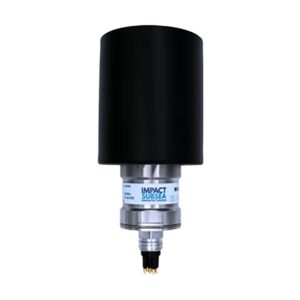
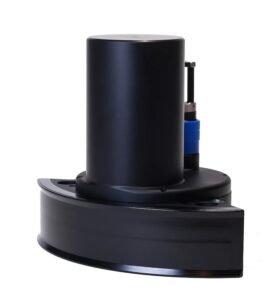
ISP360 Profiling Sonar by Impact Subsea
Primarily used for collecting vertical profiles of the seabed or other underwater features. It is ideal for applications requiring depth measurement and structural analysis.
Imaging sonar and its associated technologies focus on creating visual, often photographic-quality images of underwater objects and areas, making it more suitable for tasks like underwater archaeology or infrastructure inspections.
While imaging sonar offers a broader field of view, profiling sonar provides unparalleled accuracy in measuring specific points or transects, making it indispensable for bathymetric and hydrographic surveys.
Different types of profiling sonar systems are tailored for specific applications, each leveraging unique features to optimize performance:
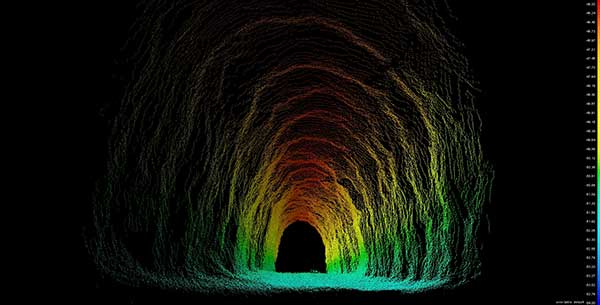
Profiling sonar is a versatile technology with diverse applications across industries:
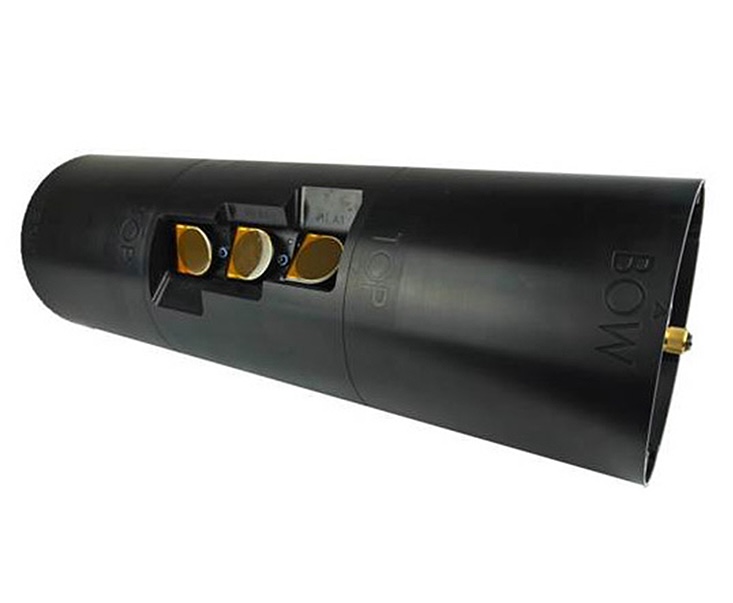
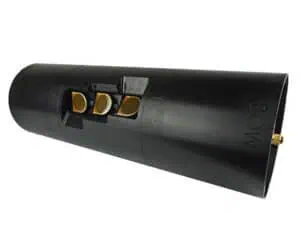
BlueView T2250-360 Tunnel Profiler for Subsurface Inspection by Teledyne Marine
Profiling sonar is a cornerstone of accurate underwater mapping. It offers detailed data for creating bathymetric charts, which are essential for navigation, dredging operations, and harbor maintenance.
This technology is critical for monitoring aquatic ecosystems, assessing coastal erosion, and conducting flood risk assessments. Sonar profiles help researchers track sediment movement and evaluate habitat changes.
Pipe profiling sonar systems are integral to offshore wind farm surveys, pipeline inspection, and seabed profiling for oil and gas exploration. By identifying seabed conditions and potential hazards, they ensure safe and efficient operations.
Marine biologists and fisheries managers use sonar profiler technology to study fish populations, assess aquaculture environments, and optimize sustainable practices.
Profiling sonar aids archaeologists in locating and studying submerged artifacts, while engineers rely on it to inspect underwater structures such as bridges, dams, and offshore platforms.
Advancements in sonar technology and subsea profiling systems continue to enhance the capabilities of profiling systems. From integrating low-frequency sonar for deeper penetration to deploying sonar-equipped drones for rapid data collection, the evolution of profiling sonar is expanding its impact on scientific and industrial fields.
Profiling sonar represents a critical advancement in underwater technology. It offers unmatched precision and reliability for vertical measurements and structural analysis. Its versatility spans industries, supporting applications from seabed mapping to environmental monitoring. By distinguishing itself from imaging sonar, profiling sonar delivers the depth and accuracy needed to address complex underwater challenges.
 Searching Companies & Products