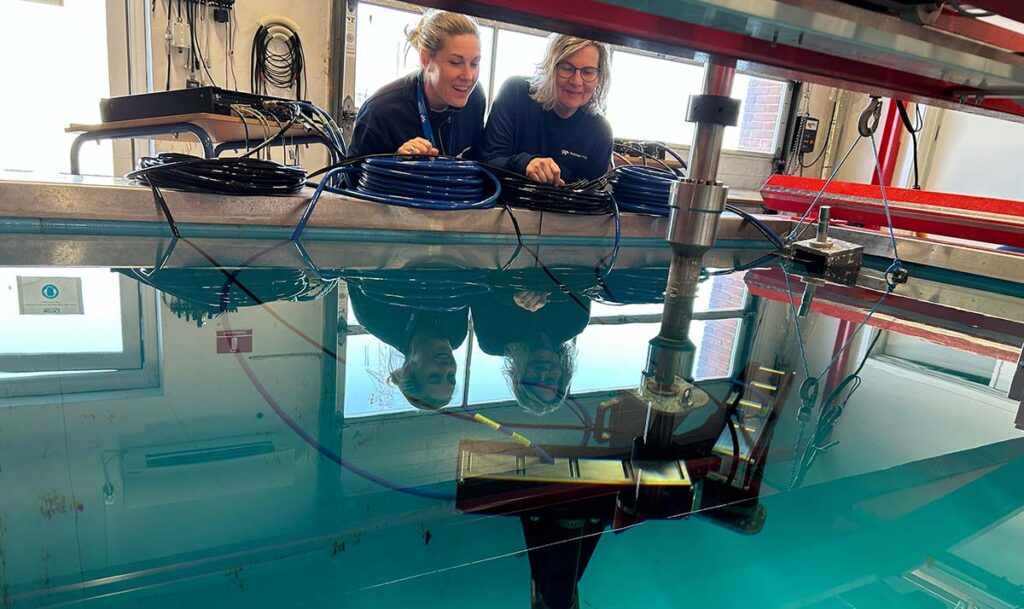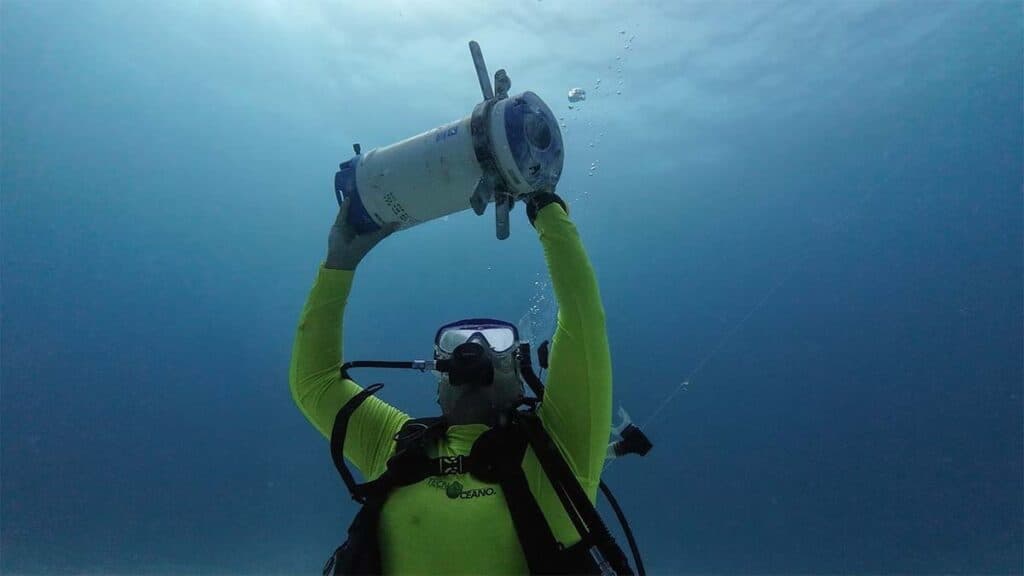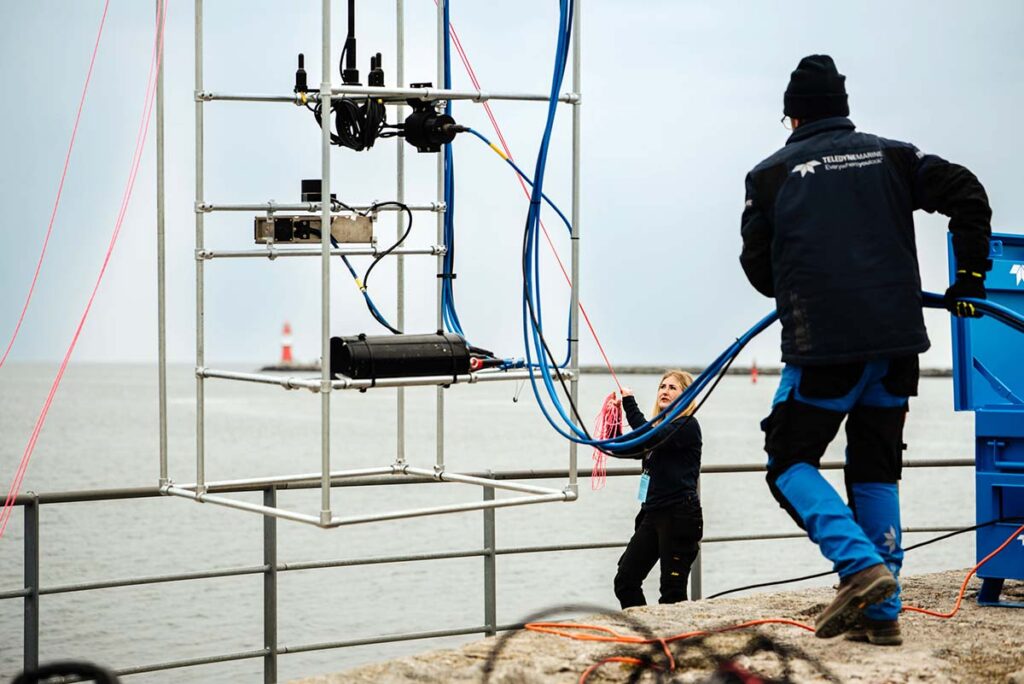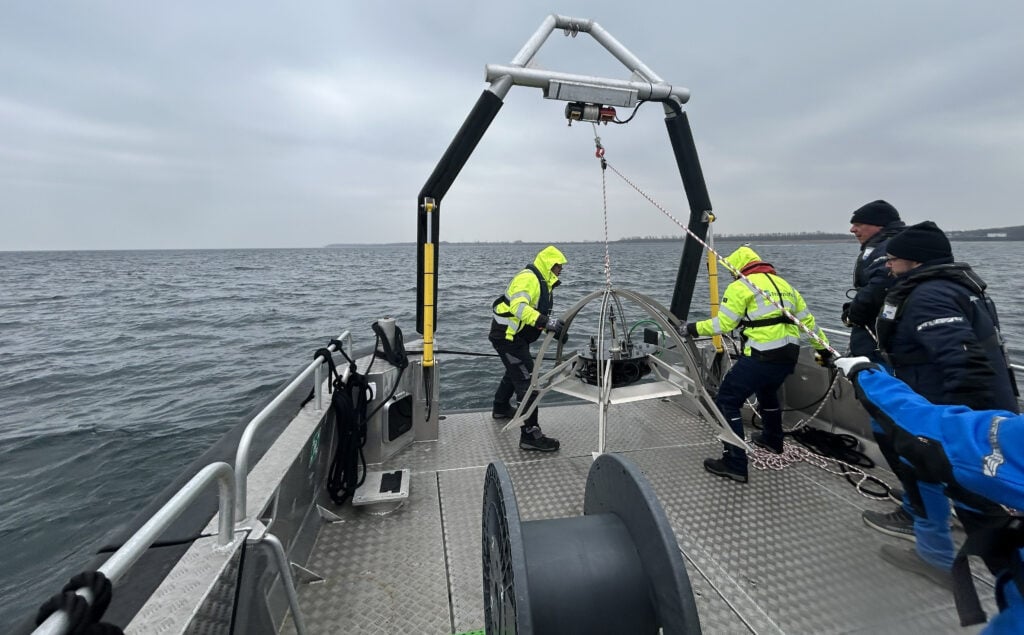



Teledyne Marine explains how Acoustic Doppler Current Profilers (ADCPs) and other ocean observation systems support safe and efficient offshore seismic operations by providing detailed insights into dynamic ocean conditions. Read more >>
Oil and gas exploration is expanding into increasingly complex and deeper marine environments, driving the need for precise understanding of ocean conditions.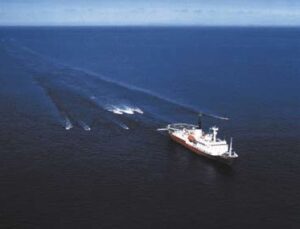
Modern seismic operations rely on advanced technologies such as longer towed streamers, higher streamer counts, tighter spacing, ocean-bottom seismic systems and electromagnetic sensing. These technologies are often deployed in areas affected by highly variable surface and subsurface currents, making real-time environmental awareness essential for safe and efficient operations.
Impact of Ocean Currents
Powerful ocean currents can disrupt seismic surveys in several costly ways. Streamer arrays, now reaching towable footprints exceeding ten square kilometers, are highly sensitive to lateral drift caused by surface and near-surface currents. This is called streamer feathering.
Without real-time correction, this drift can create data gaps that require expensive infill or, in severe cases, lead to streamer tangling and operational downtime. However, with knowledge of the currents, surveyors can adjust the course in real time to correct for drift.
Currents also exert significant force on streamer cables and winches during deployment and recovery, increasing the risk of tangling, equipment damage and potential hazards to crew. Understanding these forces allows operations to be timed during low-flow conditions or positioned in more favorable conditions.
In Ocean-Bottom Seismic (OBS) operations, currents influence the horizontal travel of cables and seafloor instruments during deployment and recovery, making accurate information of current data vital for precise placement and efficient retrieval.
Data Collection Solution
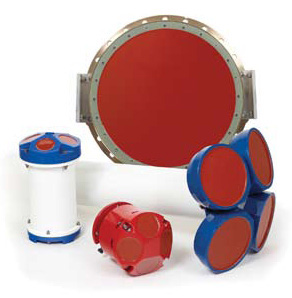
Sonar ADCPs have become a key solution onboard survey vessels for monitoring real time water current speed and direction.
An ADCP transmits acoustic pulses into the water, which reflect off suspended particles carried by currents. By measuring the Doppler shift of these echoes at different depths, the ADCP creates a vertical profile of current speed and direction, providing a detailed view of water column dynamics. Current velocities can be profiled at up to 128 depth points over ranges of up to 1,000 meters.
Teledyne RD Instruments, which introduced the first ADCP in 1982, has since delivered nearly 15,000 instruments for a wide range of current-profiling applications. Its vessel-mounted systems generate detailed maps of current distribution along a ship’s path, supporting immediate decision-making during seismic operations.
Fugro Global Environmental & Ocean Sciences (GEOS), a major provider of turnkey current-monitoring systems for seismic vessels, integrates Teledyne RDI ADCPs with its custom SeisADCP software package.
This SeisADCP system operates the ADCP and displays real-time surface current data in formats tailored for seismic navigators. The displays help operators recognize rapid changes in current velocity, assess longer-term current behavior, and understand current shear with depth, factors essential to line-shooting, streamer management and ocean-bottom equipment operations.
Strong and dynamic ocean currents remain a fundamental challenge for seismic survey operators. Teledyne RDI Broadband ADCPs offer a proven means of understanding these physical ocean characteristics, enabling operators to adapt survey plans and work effectively with the marine environment rather than against it.
To find out more information, read ‘Measuring Ocean Currents for Efficient Seismic Surveys’ here >>