Showcase your capabilities
If you design, build or supply Rugged Data Acquisition, create a profile to showcase your capabilities and connect with visitors who have an active requirement for your solutions.



Select manufacturers and suppliers of high-reliability rugged data acquisition hardware for marine environments, supporting monitoring, control, and instrumentation across vessels, subsea systems, and offshore platforms.
Read the Technology Overview
Bespoke Multiparametric Data Acquisition Platforms for Challenging Subsea Operations

Rugged Data Acquisition, Monitoring & Control Hardware Solutions for Marine & Subsea Applications

Marine Vehicle Management Technologies: Marine Autopilots, Remote Control Systems, and Simulation Solutions

If you design, build or supply Rugged Data Acquisition, create a profile to showcase your capabilities and connect with visitors who have an active requirement for your solutions.

A rugged DAQ system is not a single device but a system-level architecture comprising chassis, I/O modules, embedded processing, and communication interfaces. This modular approach supports flexible system integration across marine environments, allowing engineers to configure data acquisition systems based on channel count, sensor type, and deployment constraints.
At the hardware level, rugged DAQ systems are built around modular subsystems including data acquisition modules, I/O boards, signal conditioning modules, and communication interfaces. These components interface directly with sensors, transducers, and sensor networks to ensure high measurement accuracy during survey operations and long-duration monitoring.
I/O modules form the primary interface for sensor data acquisition, supporting analog input modules, digital input modules, and analog output modules. These modules integrate signal conditioning and enable high-fidelity measurement across distributed monitoring systems.
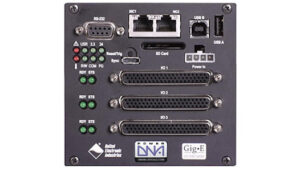
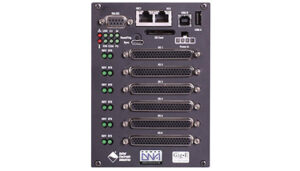
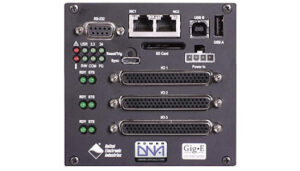
3-Slot Programmable Automation Controller rugged DAQ system by United Electronic Industries.
DAQ modules aggregate multiple input/output channels into compact subsystems, supporting scalable data acquisition systems. These modules are designed for interoperability with fieldbus protocols and marine control systems.
Signal conditioning modules ensure measurement accuracy by filtering, amplifying, and isolating sensor signals in harsh environmental conditions. These are critical for oceanographic instrumentation and environmental monitoring.
Communication interfaces such as RS485, RS232, CAN bus, and Ethernet interfaces enable reliable data transmission between subsystems, gateways, and centralized monitoring systems. These interfaces support integration with industrial IoT and marine IoT architectures.
Embedded control systems using microcontrollers, embedded processors, and programmable automation controllers provide real-time control and data processing. These operate under RTOS environments to support deterministic performance in marine applications.
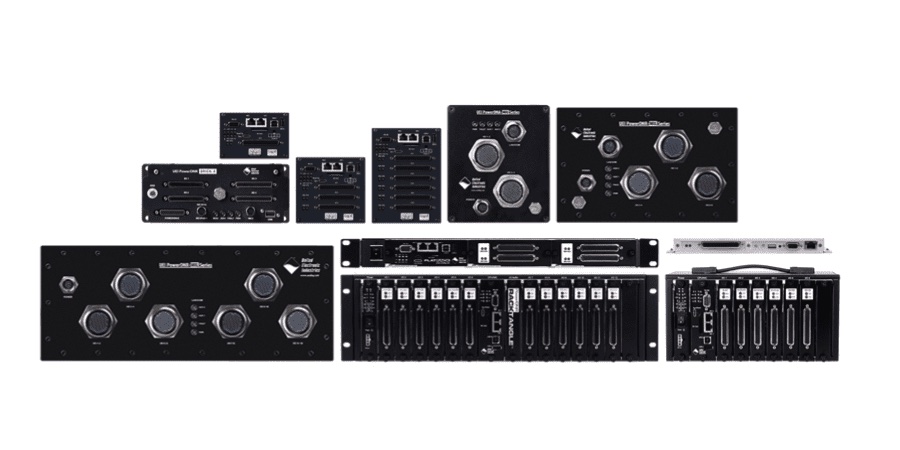
Rugged DAQ hardware is deployed within multiple chassis architectures designed to meet different environmental conditions, SWaP constraints, and installation requirements.
Cube-based and compact systems provide high channel density within small form factors, ideal for unmanned underwater vehicles and portable systems. These systems support modular data acquisition systems where space and power are constrained.
Rack-mounted systems are designed for integration into control panels and onboard data centers, supporting centralized monitoring. These systems provide scalability and high availability for vessel and offshore platform monitoring.
MIL-SPEC chassis are engineered for extreme environmental conditions, offering shock, vibration, and corrosion resistance. Sealed and waterproof enclosures ensure reliable operation in subsea monitoring systems and offshore deployments.
Distributed DAQ systems utilize decentralized chassis connected through gateways and telemetry systems. These support edge computing systems and remote telemetry for large-scale marine monitoring systems.
These chassis types enable flexible deployment across marine environments, from subsea installations to topside vessel systems, while maintaining system integration and measurement accuracy.
Rugged data acquisition systems enable vessel performance monitoring by collecting real-time data from propulsion, fuel systems, and onboard sensors. This supports optimization of operational efficiency and compliance with environmental conditions.
Deployed in subsea monitoring systems, rugged DAQ units support long-term data acquisition from oceanographic sensors and subsea instrumentation. These systems are critical for environmental monitoring and offshore asset integrity.
In ROV control and autonomous vehicle operations, rugged DAQ hardware enables sensor data acquisition and control system feedback. This ensures precise navigation and positioning in dynamic marine environments.
Rugged data acquisition systems support offshore platform monitoring by integrating sensor networks for structural health monitoring, pipeline monitoring, and safety monitoring systems. Continuous data acquisition ensures operational safety and reliability.
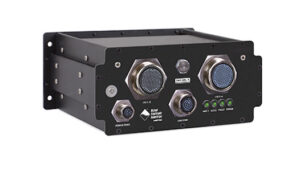
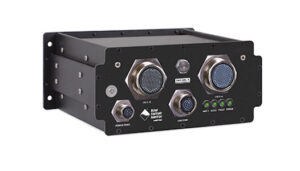
4-Slot Military-Grade I/O Chassis rugged DAQ hardware by United Electronic Industries.
Used in hydrographic surveying and seabed mapping, rugged DAQ systems provide high measurement accuracy for bathymetric surveying and underwater exploration. These systems integrate with GNSS modules and acoustic sensors for precise data acquisition.
Modular data acquisition systems consist of scalable DAQ and I/O modules, enabling flexible configuration to meet deployment requirements. These systems support distributed systems and marine IoT integration.
Embedded systems integrate data acquisition functionality within compact, low-power systems using embedded processors. These are suited for SWaP-constrained platforms such as UUVs and edge systems.
Distributed control systems enable decentralized data acquisition across sensor networks and remote telemetry systems. These systems are optimized for offshore monitoring systems and large-scale deployments.
Portable rugged data acquisition systems provide flexible deployment for temporary survey operations and marine research campaigns. These systems are used in environmental monitoring and field data acquisition.
Rugged data acquisition systems differ from basic data loggers by enabling real-time monitoring and control through embedded control systems and communication interfaces. Data loggers typically lack integration with distributed control systems and real-time systems.
Compared to programmable logic controllers, rugged DAQ systems provide greater flexibility in sensor data acquisition and compatibility with diverse I/O modules and communication interfaces. PLC systems are optimized for fixed industrial automation rather than for scalable data acquisition.
Compared with traditional industrial monitoring systems and telemetry, rugged DAQ systems offer deeper integration at the subsystem level, including signal conditioning modules, sensor modules, and communication interfaces. This enables higher measurement accuracy and system integration across marine environments.
Rugged data acquisition systems are engineered to meet a range of environmental and industrial standards depending on deployment requirements, rather than a single compliance framework. In marine environments, system selection is typically driven by environmental conditions, measurement accuracy requirements, and long-duration reliability.
Ingress protection ratings such as IP67 and IP68 define resistance to water and particulate ingress, supporting deployment in subsea monitoring systems, offshore platforms, and exposed vessel installations. These ratings are critical for maintaining consistent data acquisition performance in harsh marine environments.
Marine and offshore compliance frameworks, such as IEC standards and classification society requirements, support integration into regulated offshore infrastructure and survey operations. These standards address vibration tolerance, thermal performance, and corrosion resistance under sustained environmental conditions.
Communication standards, including Modbus, CAN bus, RS485, and Ethernet interfaces, ensure interoperability across distributed monitoring systems, sensor networks, and marine control systems. These protocols enable consistent data acquisition and system integration across heterogeneous platforms.
For high-reliability deployments, systems may incorporate fault-tolerant architectures, redundant power supply units, and high-availability systems to ensure continuous operation in remote or inaccessible environments. This is particularly relevant for subsea monitoring systems and offshore asset monitoring, where maintenance access is limited.
Where required, rugged data acquisition hardware can be specified to meet defense-oriented standards, but in ocean science and offshore applications, compliance is more commonly aligned with environmental protection, measurement accuracy, and long-term operational stability rather than mission-specific military requirements.
 Searching Companies & Products