Showcase your capabilities
If you design, build or supply Man-Portable AUV, create a profile to showcase your capabilities and connect with visitors who have an active requirement for your solutions.

Man-portable AUVs (Autonomous Underwater Vehicles) are compact, self-propelled underwater robots designed for autonomous surveying, inspection, and reconnaissance with minimal deployment infrastructure. Their lightweight construction enables rapid deployment from small vessels, shorelines, and remote locations where larger underwater systems may be impractical.
This page showcases suppliers of portable AUVs supporting mine countermeasures, hydrographic surveying, maritime security, environmental monitoring, and underwater search operations.
Read the Technology Overview
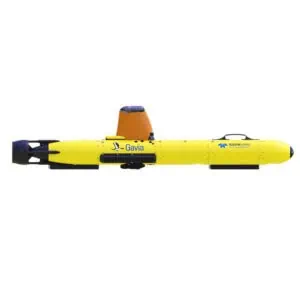
High-Performance Instruments, Sensors & Technologies for Exploring & Monitoring Subsea Environments

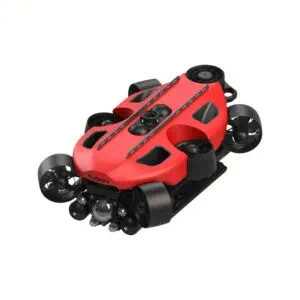
Hybrid Underwater Robotic Vehicle Systems for Multi-Mission Subsea Operations Across Civilian, Security & Defense Sectors


Cutting-Edge Autonomous Underwater Vehicles (AUVs), Underwater Resident Vehicles and Remotely Operated Vehicles (ROVs)

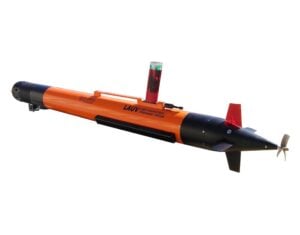
Portable AUVs for Oceanographic Research, Hydrographic Surveying & Environmental Monitoring

| Overview | Products | Link | ||
|---|---|---|---|---|
| Teledyne Marine | Denmark | High-Performance Instruments, Sensors & Technologies for Exploring & Monitoring Subsea Environments |
|
View Profile |
| Boxfish Robotics | New Zealand | Cutting-Edge Autonomous Underwater Vehicles (AUVs), Underwater Resident Vehicles and Remotely Operated Vehicles (ROVs) |
|
View Profile |
| Strategic Robotic Systems | United States of America | Hybrid Underwater Robotic Vehicle Systems for Multi-Mission Subsea Operations Across Civilian, Security & Defense Sectors |
|
View Profile |
| OceanScan-MST | Portugal | Portable AUVs for Oceanographic Research, Hydrographic Surveying & Environmental Monitoring |
|
View Profile |
If you design, build or supply Man-Portable AUV, create a profile to showcase your capabilities and connect with visitors who have an active requirement for your solutions.

Man-portable Autonomous Underwater Vehicles (AUVs) are compact, self-propelled underwater robots designed for deployment without the extensive handling equipment typically required by larger subsea platforms. Combining autonomous navigation, onboard sensors, and integrated power systems, these vehicles conduct underwater surveys, inspections, and reconnaissance missions with minimal surface support. Lightweight AUVs are particularly suited to operations where vessel access, deck space, and deployment infrastructure are limited.
Small AUVs are used for hydrographic surveying, environmental monitoring, maritime security, and underwater search operations. Their compact dimensions enable deployment from small boats, shorelines, piers, and remote field locations, often by one or two operators. Depending on their configuration, these vehicles can carry acoustic, optical, and environmental sensors while autonomously following predefined routes, maintaining survey altitude, or inspecting submerged structures.
Portable AUVs are available in several configurations, with differences in hull design, maneuverability, payload capacity, and operational capabilities. Common types include:
Vehicle architecture influences deployment requirements and mission capabilities, particularly where portability must be balanced against endurance, maneuverability, and sensor performance.
Compact AUVs incorporate design features that simplify transportation, preparation, and operation while maintaining the functionality required for underwater missions. Important characteristics include:
These features make man-portable AUVs practical for distributed field operations, particularly where rapid deployment or limited infrastructure would otherwise restrict underwater access. During submerged missions, navigation systems may combine inertial sensors, depth measurements, and Doppler Velocity Logs (DVLs) to estimate vehicle movement, with acoustic positioning providing additional corrections where available.
Portable AUVs equipped with suitable imaging sonar and navigation systems support mine countermeasures by surveying shallow coastal waters, detecting suspicious underwater objects, and collecting acoustic imagery for further assessment. Their compact dimensions are particularly useful in restricted areas where larger underwater vehicles face maneuvering or deployment limitations. In EOD operations, these vehicles primarily support reconnaissance, localization, and identification, while physical intervention requires appropriately equipped systems.
Lightweight AUVs support rapid environmental assessment and coastal reconnaissance by gathering bathymetric, seabed, and water-column information ahead of maritime operations. Equipped with acoustic and oceanographic sensors, they can survey nearshore approaches, characterize seabed conditions, and identify underwater obstacles. Their portable construction enables field teams to conduct reconnaissance from small vessels or accessible shore locations without extensive launch infrastructure.
Compact hovering AUVs can inspect harbor infrastructure, pier foundations, submerged vessel surfaces, and other restricted underwater environments. Configurations incorporating imaging sonar, cameras, and obstacle-avoidance systems are well suited to examining structures where visibility is limited or maneuvering space is restricted. Autonomous inspection routes support repeatable coverage, while precise station keeping allows closer examination of selected areas.
Small autonomous underwater vehicles support surveys of nearshore cable routes, pipeline approaches, and marine outfalls, particularly in shallow areas that are difficult for larger survey platforms to access. Equipped with suitable side-scan sonar, multibeam echosounders, or optical imaging payloads, they can map seabed conditions, examine exposed infrastructure, and identify potential obstructions. Compact systems also enable repeated surveys to monitor sediment movement and changes around coastal installations.
Portable AUVs enable scientific measurements in remote lakes, reservoirs, alpine waters, and polar environments where transporting conventional underwater survey equipment can be challenging. Depending on their payloads, they can collect temperature, conductivity, depth, dissolved oxygen, and other water-quality measurements alongside acoustic survey data. Under-ice missions require specialized navigation, reliable recovery arrangements, and sufficient endurance to operate without routine access to the surface.
Man-portable AUVs support underwater search operations by autonomously surveying defined areas for submerged objects, missing equipment, and potential evidence. Imaging sonar enables systematic searches in turbid or low-visibility water, while optical sensors can provide additional detail at close range. Their compact size allows deployment from small boats or accessible shorelines, with recorded position and sensor data supporting subsequent investigation, diver inspection, or recovery operations.
Advances in miniaturized electronics, autonomous navigation, and modular underwater systems are expanding the capabilities of portable AUVs while reducing the equipment required for field deployment. Key developments include:
Continued development is enabling more sophisticated autonomous underwater surveys and scientific missions using smaller platforms that are easier to transport and deploy.
 Searching Companies & Products