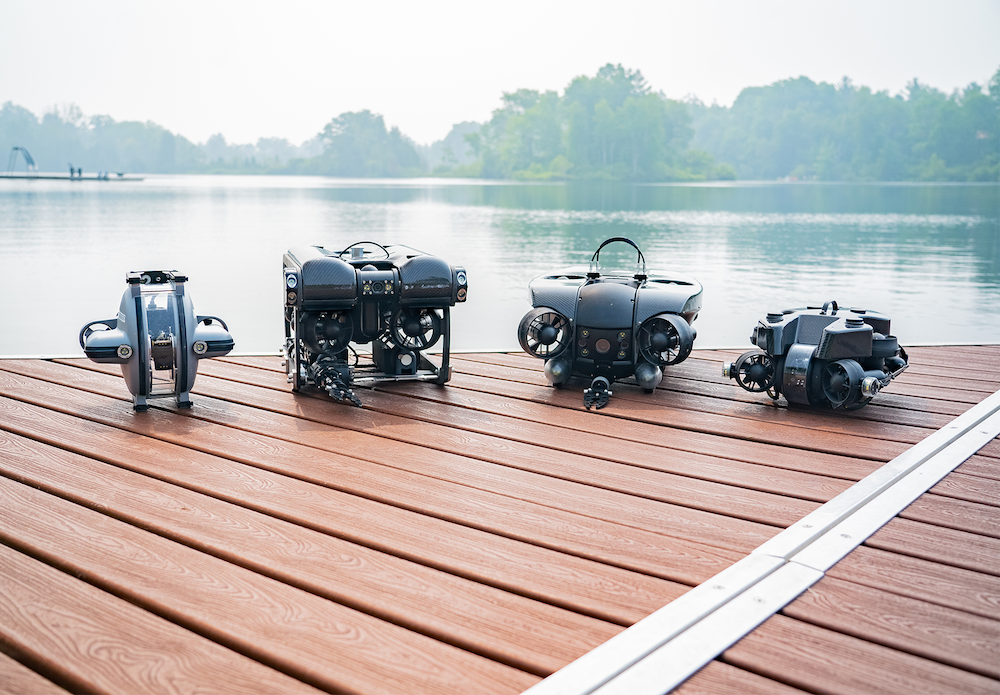


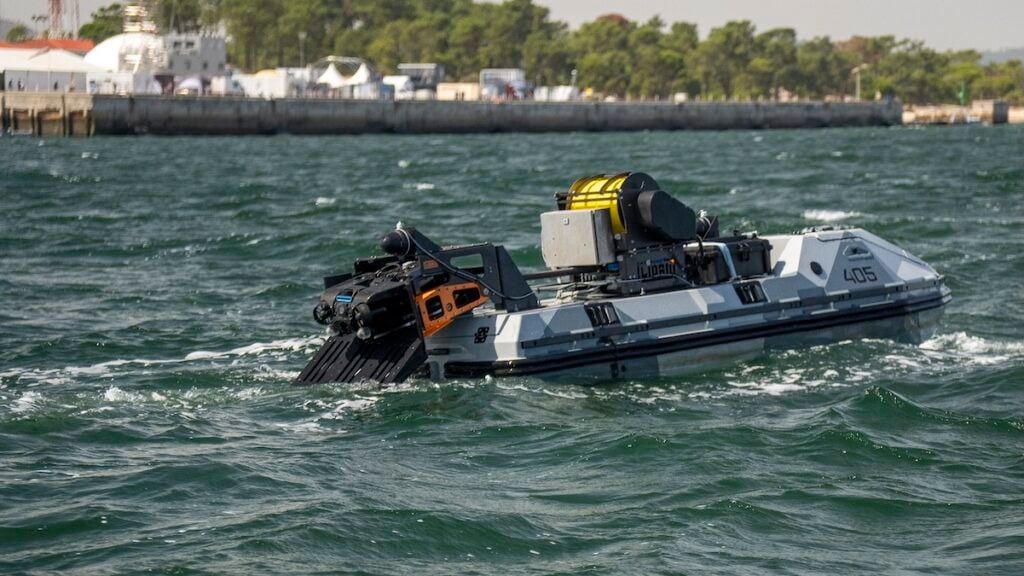
Deep Trekker demonstrated the use of a remotely operated vehicle (ROV) deployed from an uncrewed surface vessel (USV) for mine countermeasures (MCM) operations at REPMUS 2026, successfully reacquiring and identifying an exercise mine without personnel aboard the surface platform. Read more >>
The trial combined remote vessel operation, integrated launch and recovery equipment, and real-time underwater inspection to evaluate an alternative approach to mine identification.
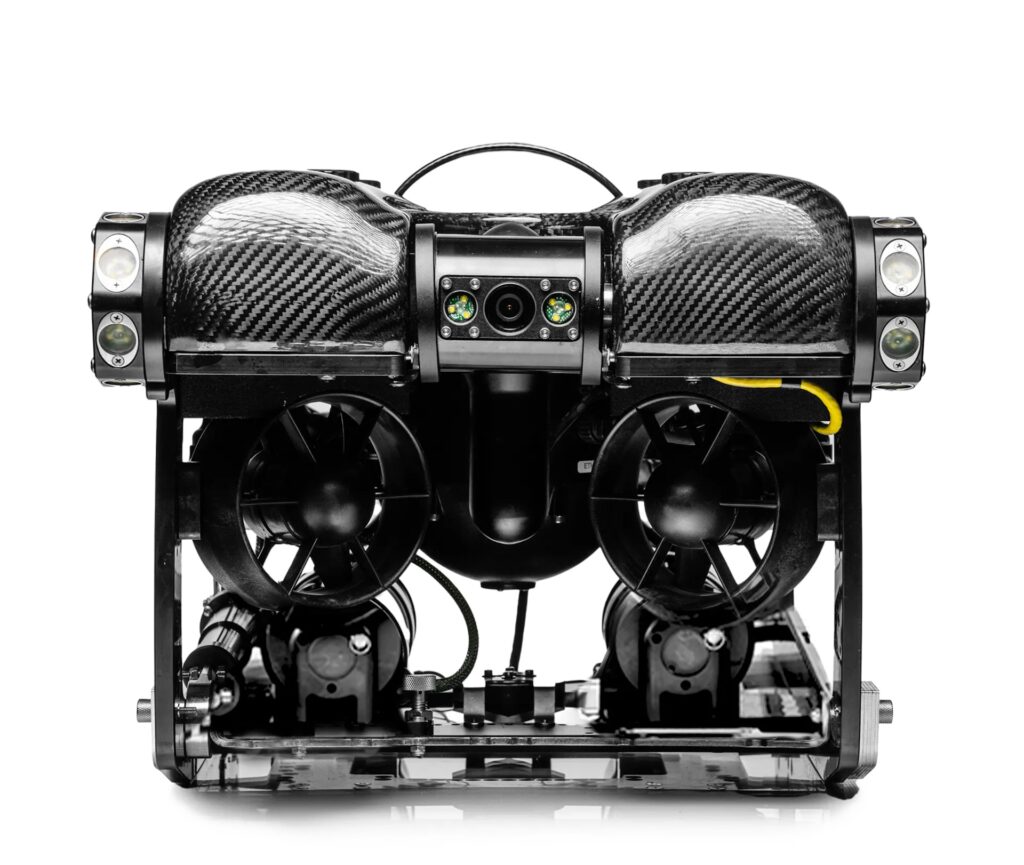
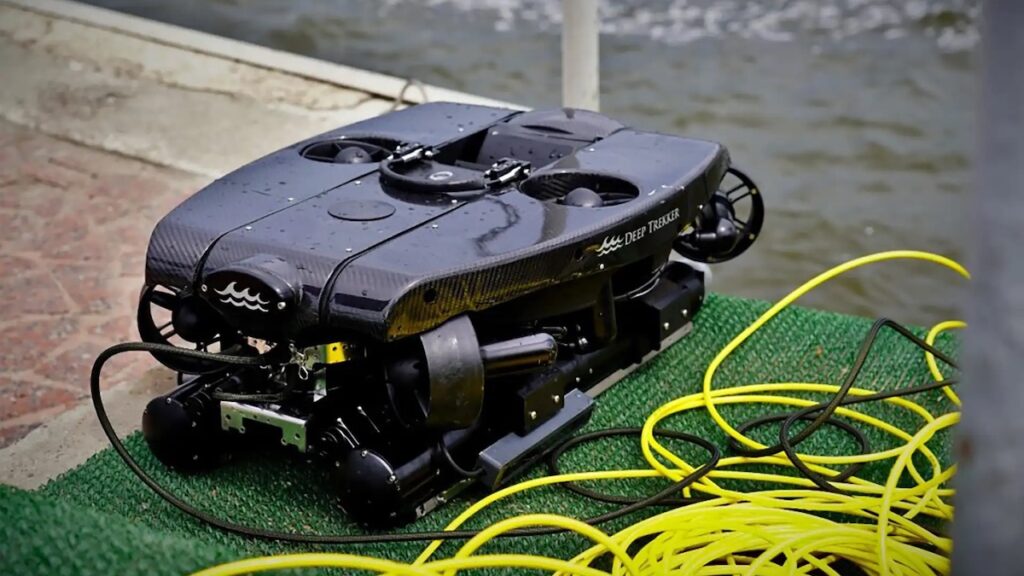
The REVOLUTION ROV completed the task on the first day of USV testing, using imaging sonar and live ultra-high-definition (UHD) video to inspect a previously detected contact while the operator remained at a safe stand-off position.
The demonstration formed part of a wider program examining ROV applications across mine detection, classification, identification, and disposal, alongside developments in underwater positioning, 3D sonar mapping, and diver-controlled operations.
Maritime Robotics Testing at REPMUS 2026
Robotic Experimentation and Prototyping with Maritime Unmanned Systems (REPMUS) 2026 took place from August 31 to September 25 around Tróia and Sesimbra on Portugal’s Setúbal Peninsula.
Organized by the Portuguese Navy, NATO, the NATO Centre for Maritime Research and Experimentation (CMRE), the Faculty of Engineering of the University of Porto (FEUP), NATO JCGMUS, and the European Defence Agency (EDA), the exercise brought together 19 navies.
Thirteen deployed units on the water, including the Portuguese, United States, Swedish, Dutch, Spanish, Norwegian, Canadian, French, Belgian, Turkish, Greek, Polish, and Bulgarian navies. The Royal Navy, German Navy, Royal Danish Navy, Italian Navy, Royal Australian Navy, and Romanian Naval Forces attended through staff or observer participation.
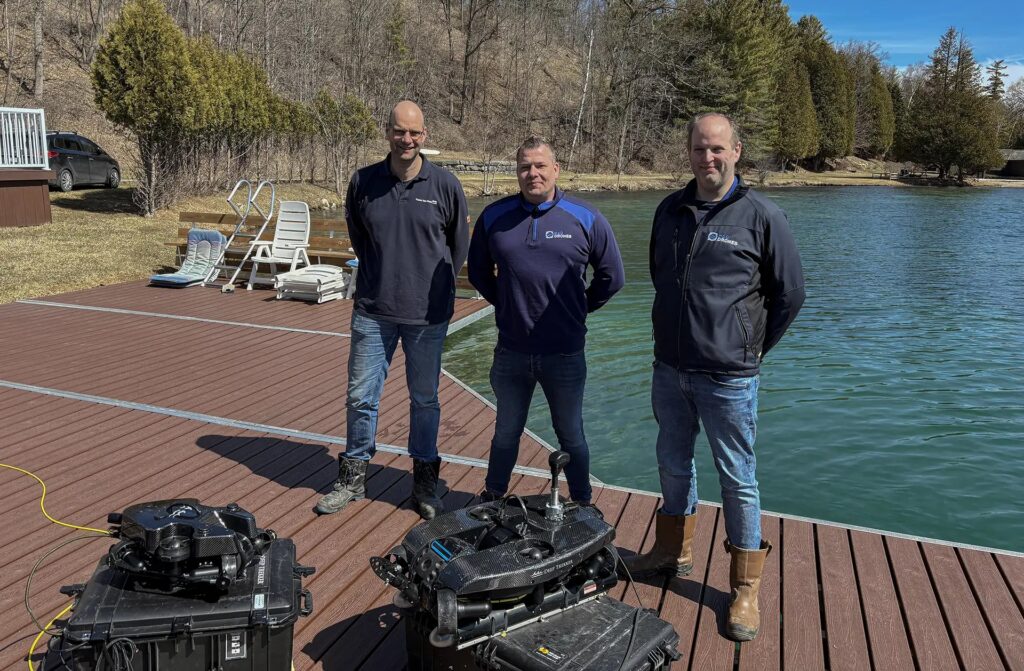
Deep Trekker personnel worked alongside MCM and explosive ordnance disposal (EOD) units for almost four weeks, conducting USV-hosted ROV trials, RHIB-based missions, and demonstrations involving the SPECTRA ROV and Blueprint Subsea’s Artemis diver controller.
The activities built on REPMUS 2025, when the company tested individual technologies from a crewed rigid-hulled inflatable boat (RHIB). These included ELWAVE passive electric-field detection, Viper MDS integration with REVOLUTION and PIVOT ROVs, and Voyis stereo imaging.
The 2026 program focused on combining these types of capabilities into integrated operational workflows.
Integrating a USV With ROV Launch and Recovery
The mine identification trial involved three companies: Nautrik and Lidan Marine of Sweden, and Canadian ROV manufacturer Deep Trekker.
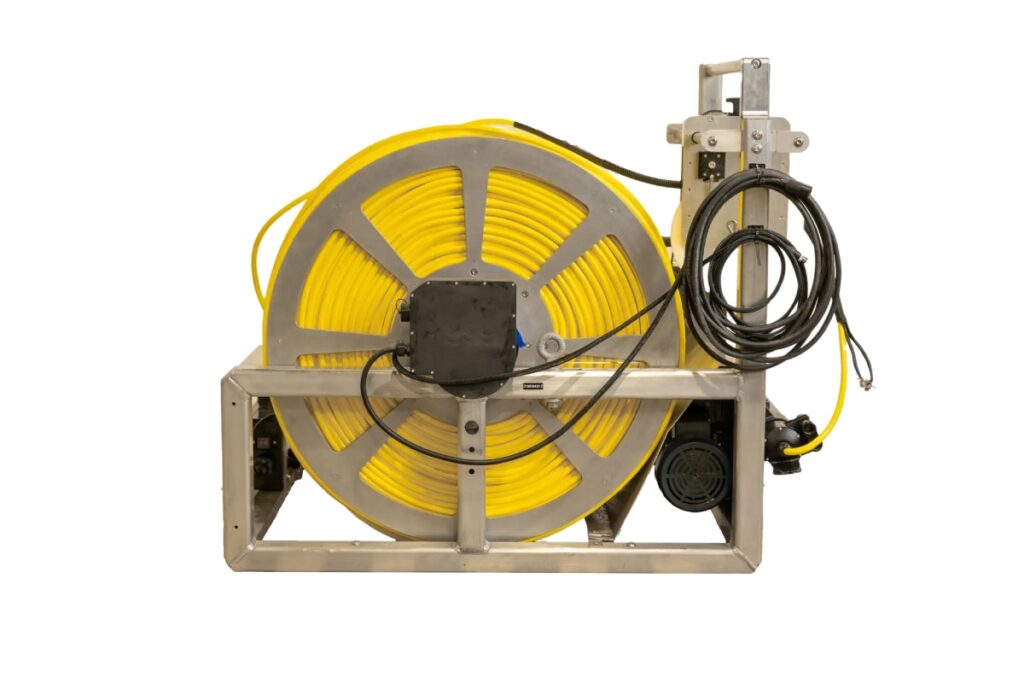
Nautrik supplied and remotely operated a compact, trailerable USV using 5G and satellite connectivity. The platform carried the REVOLUTION ROV in Lidan Marine’s SKARV launch and recovery system (LARS).
Designed for observation-class vehicles, SKARV uses splash-proof aluminum and plastic construction, a driven, two-sided rubber tether feed, and a tilting garage. The garage lowers to release the ROV, while an integrated winch manages tether deployment and recovery.
The REVOLUTION provided the subsea capabilities required for sonar search, positioning, visual inspection, and identification. Before REPMUS, the partners completed an on-water trial covering deployment, seafloor operations, and recovery aboard the USV.
During the exercise, the system successfully completed its first mine identification test.
Riccardo Caponi, Account Executive, Military Sales EU and Middle East at Deep Trekker, stated, “The very first day, on the very first test, we were able not only to make the system work, but to go into the area, find the mine and inspect it.”
Mine Reacquisition and Identification Workflow
The mission began with coordinates obtained during the exercise’s detection phase. Nautrik remotely navigated the USV to the designated area, where the vessel held position near the contact.
SKARV lowered its garage and released the REVOLUTION, paying out tether as the ROV began its search.
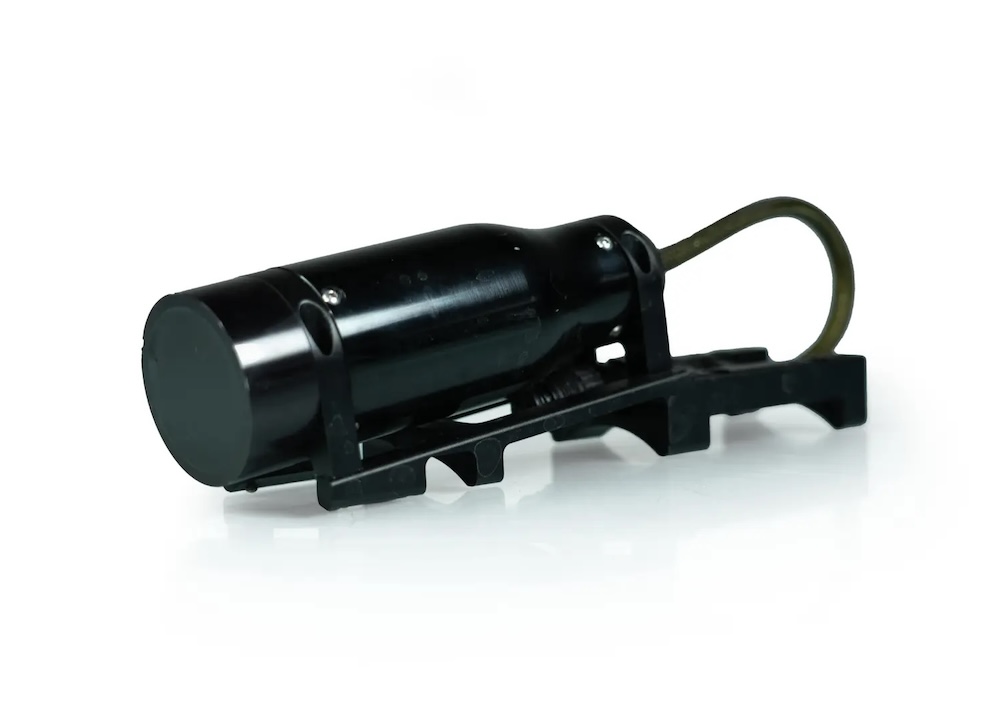
Using a Blueprint Subsea Oculus imaging sonar with an effective detection range of approximately 30 to 40 m (98 to 131 ft), the operator reacquired the contact before approaching for visual identification.
Live UHD video provided a closer view of the object, while the ROV’s laser scaler supported dimensional assessment.
After inspection, the vehicle returned to the USV, where SKARV recovered it into the garage and spooled the tether. The surface vessel then returned to the safe area.
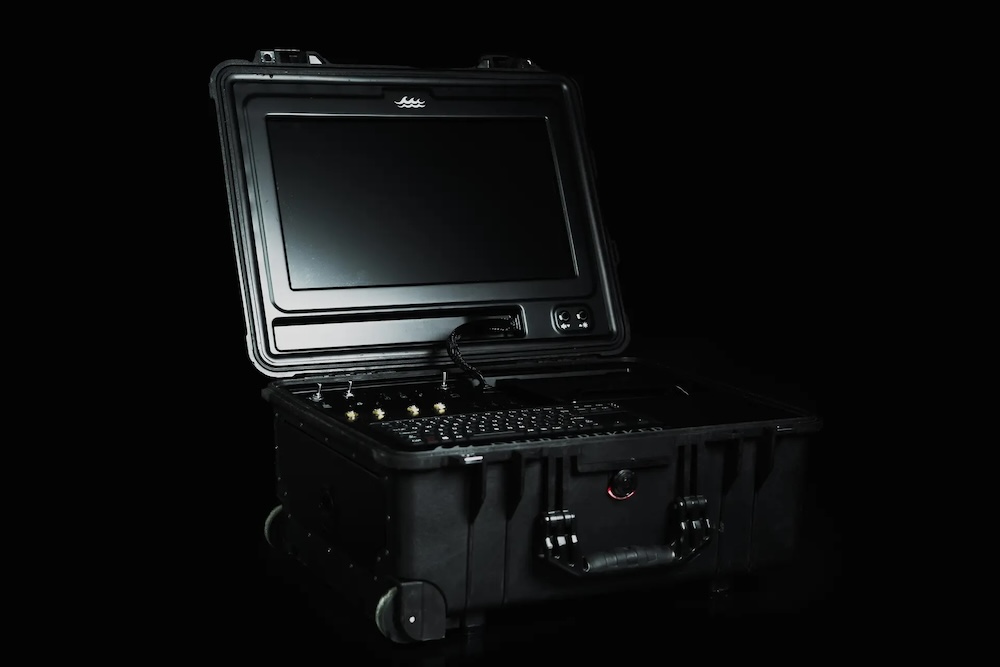
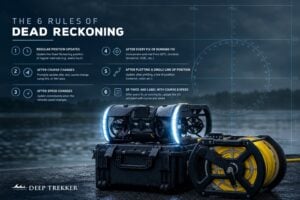
For underwater positioning, the team fed the USV’s GPS coordinates into the REVOLUTION control interface. The operator moved the ROV beneath the vessel, reset its position, and continued navigation using Dead Reckoning.
Software modifications made during the exercise also allowed sonar data to be embedded in recorded video.
Tether Management in Uncrewed Operations
Managing the tether without personnel aboard the surface vessel was a significant consideration, particularly the risks of entanglement and the USV drifting toward the submerged ROV.
SKARV managed deployment, operation, and recovery during testing in sea state 2 to 3.
Lidan Marine’s experience manufacturing marine cranes and winches, including equipment for work-class ROVs, autonomous underwater vehicles (AUVs), and towed sonar systems, informed the launch and recovery arrangement.
The results highlighted the importance of reliable tether handling and mechanical integration in remotely operated surface and subsea systems.
Comparing USV-Hosted ROVs With AUV Survey Operations
The REPMUS trials also illustrated differences between real-time ROV inspection and AUV-based mine survey workflows.
AUV sonar can reach approximately 60 to 100 m (197 to 328 ft), compared with the 30 to 40 m (98 to 131 ft) effective range used during the REVOLUTION trials. However, AUV sonar datasets may require 24 hours or more of analysis after collection.
Even with synthetic aperture sonar and onboard target recognition, the resulting imagery may indicate a possible mine without providing sufficient information for identification. A subsequent inspection using a crewed RHIB and ROV may therefore still be necessary.
A USV-hosted ROV provides a different workflow, allowing operators to examine sonar contacts and approach them for camera-based identification during the same mission.
Acquisition costs also differ. According to Deep Trekker, a USV and ROV combination costs a fraction of a typical AUV, while individual AUV platforms can cost millions of dollars.
Personnel requirements are another consideration. Conventional RHIB-based ROV missions may involve a boat driver, tether handler, and ROV pilot aboard the vessel, with missions lasting up to approximately three hours.
A USV removes the need for personnel aboard the vessel operating above the target. Further development is intended to support longer-duration operations, potentially allowing systems to remain offshore for days while operators work in shifts from shore.
Caponi added, “You can keep the system offshore for days. The operators work in shifts from shore, they look at the seabed in real time, and if they have a doubt they simply go closer and look with the camera.”
Similar remotely deployable inspection arrangements may be applicable to ports, harbors, offshore energy installations, and remote subsea infrastructure, where vessel mobilization, crew requirements, and recurring inspections influence operational costs.
Development Priorities for Integrated USV and ROV Control
Although the integrated system completed its intended exercise mission, operators currently work across separate control interfaces for the USV, LARS, and ROV.
Further development aims to coordinate these functions through a single operator position.
The trials identified several areas requiring additional work:
- System reliability and operational procedures.
- Combined USV and ROV control from a single station.
- Data link bandwidth and latency for transmitting live UHD video through the USV.
- Automated transects coordinated between the USV and ROV, including tether management.
- Operations in GPS-denied and radio-denied environments, potentially using expendable fiber optic links.
These remain development objectives rather than capabilities demonstrated during the integrated mine identification trial.
Sonar Search and Dead Reckoning Trials
Alongside the USV testing, Deep Trekker conducted RHIB-based missions using exercise mines and mine-like objects (MLOs) positioned using AUV survey data.
The Deep Trekker Challenge returned as a reacquisition and identification exercise for allied naval teams. Participants searched for targets without receiving their coordinates, although positions were provided if a team had not located its assigned object within the allocated time.
In the area designated Mike Whiskey Alpha, Deep Trekker and Belgian Navy crews operated RHIBs alongside one another in a competition to locate an exercise mine.
Missions followed a conventional arrangement involving a boat driver, tether handler, and ROV pilot. Water space management procedures restricted operations to assigned sub-areas because divers could be working nearby.
During one windy return transit, the crew and ROV controller were exposed to substantial water. The controller continued operating despite the exposure.
Sonar Configuration and Search Patterns
Testing with a REVOLUTION fitted with a Blueprint Subsea Oculus M750d sonar provided several observations relevant to mine reacquisition.
Under the exercise conditions, camera visibility extended to approximately 10 m (33 ft), while sonar detection reached approximately 40 m (131 ft).
The team found that sonar ranges of 30 to 40 m (98 to 131 ft) performed better than the maximum scale.
ROV altitude was maintained at approximately 10% of the selected sonar range, corresponding to around 4 m (13 ft) when operating at 40 m (131 ft), with the sonar tilted downward.
Search transects conducted from shallow toward deeper water produced larger acoustic shadows and improved detection range.
Operators also surfaced the ROV at the end of each transect to obtain a GPS fix before continuing underwater using Dead Reckoning.
Underwater Positioning Without USBL
REVOLUTION’s Dead Reckoning functionality provided an alternative workflow to systems requiring ultra-short baseline (USBL) positioning equipment.
The operator surfaces the ROV to obtain a GPS fix, then submerges and continues navigation without deploying or calibrating a USBL system.
This can reduce preparation time during shallow-water missions.
Navy personnel familiar with earlier-generation Deep Trekker systems using USBL positioning were introduced to the Dead Reckoning workflow and additional REVOLUTION functions during the exercise.
ROV Integration for Mine Disposal
REVOLUTION also supports detection, classification, identification, and disposal within the mine countermeasures process.
For disposal tasks, the vehicle can carry three disruptors: Viper MDS, ADAPTOS TiTAN, and Alford Vulcan.
Because REPMUS does not permit live firing, the team demonstrated integration and handling using Viper MDS and Alford-supplied Vulcan mock-ups.
Viper MDS was first integrated and field-tested on REVOLUTION at REPMUS 2025. Subsequent testing included firing TiTAN from REVOLUTION, while Vulcan was fired during trials in Bristol.
Different mine types and environmental conditions influence the selection of disposal equipment.
Older mines carry approximately three sensors, while modern mines can incorporate 10 or more and may target ships, divers, or ROVs.
Operating conditions also vary. REPMUS provided visibility exceeding 10 m (33 ft) over sandy seabed areas, whereas MCM teams may encounter zero visibility, strong currents, and rocky terrain.
Caponi stated, “The only way to cope with a constantly changing environment with a lot of variables is to have a lot of tools and use the right one adapted to the right situation.”
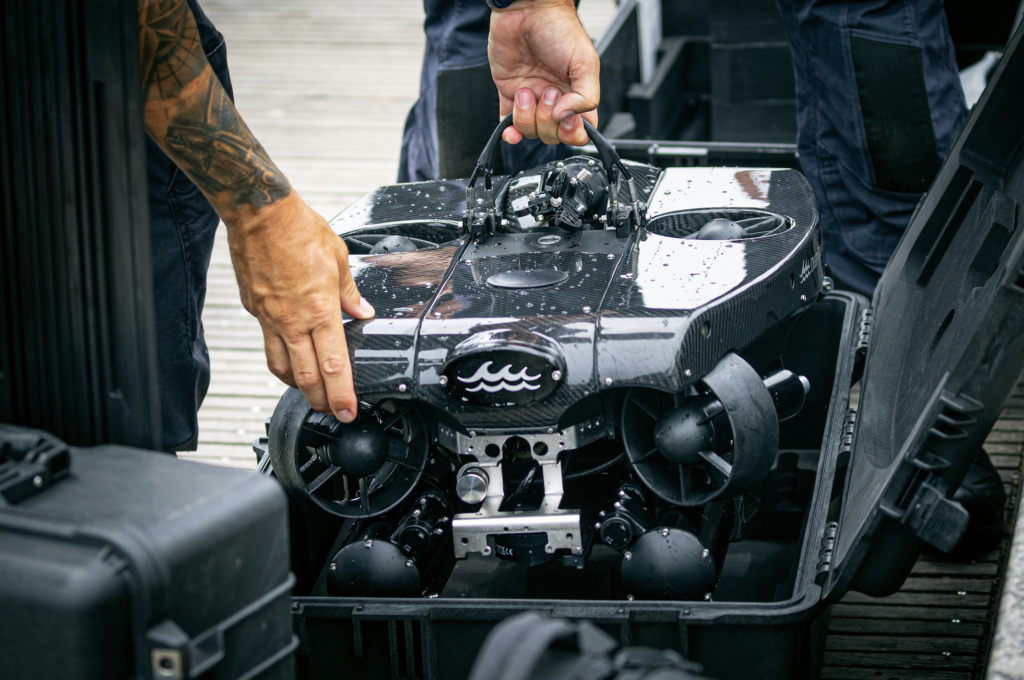
REVOLUTION can be re-trimmed for different disruptors and operating environments using ballast, mounting plates, and smaller accessories, allowing its configuration to be adjusted for specific disposal tasks.
SPECTRA Demonstrates Real-Time 3D Sonar SLAM
Deep Trekker also showcased its SPECTRA ROV during pier-based demonstrations at REPMUS 2026.
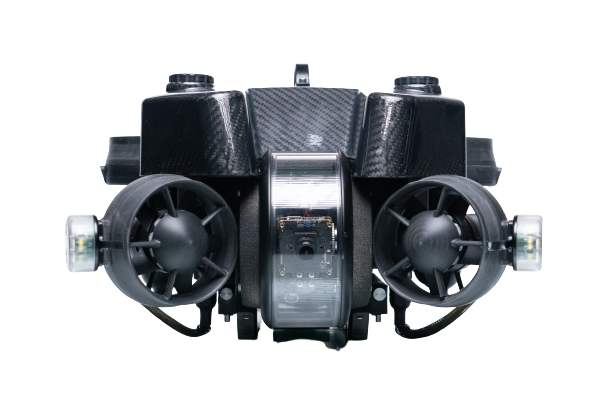
SPECTRA combines a factory-calibrated 4K stereo camera with onboard 3D sonar simultaneous localization and mapping (SLAM), generating a live three-dimensional representation of its surroundings, including in turbid or zero-visibility conditions.
The system processes stereo imaging and 3D sonar SLAM data in real time using its internal computer, without requiring bulky topside processing equipment.
Its symmetrical seven-thruster configuration supports station holding in currents up to 2.3 knots and forward speeds of up to 3.5 knots.
The demonstrations followed imaging trials conducted during REPMUS 2025, when a Voyis stereo camera on REVOLUTION generated 3D datasets for photogrammetry and digital twin applications.
That approach depended on underwater visibility and post-processing, whereas SPECTRA incorporates real-time onboard processing.
For port and harbor security applications, SPECTRA can provide operators with three-dimensional information about hulls, quay walls, and seabed structures during inspection.
This can support faster assessment of whether an object is foreign or part of the existing structure.
Underwater ROV Control With Blueprint Subsea Artemis
The exercise also included demonstrations of diver-controlled ROV operations using the Artemis system developed by Blueprint Subsea.
Artemis is a modular diver console integrating diver propulsion, USBL, and sonar functionality. Blueprint Subsea developed a version capable of communicating directly with Deep Trekker ROVs.
Using a handheld underwater console, a diver can operate the ROV from a safe stand-off distance and send it toward a target for closer inspection.
Live camera imagery appears on the diver’s display, allowing identification without requiring the diver to approach the object directly.
With no topside signature, the approach is suited to missions where remaining undetected is important.
Divers can deploy the ROV underwater, including from a swimmer delivery vehicle (SDV), to inspect suspicious contacts or ship hulls without exposing themselves at the target.
The ROV can conduct an initial inspection before the diver determines whether closer intervention is necessary.
Deep Trekker has supported diver-controlled ROV operations since 2015, and the Artemis demonstrations attracted interest from participating special operations units.
Subsea Cable Tracking in Low Visibility
A separate REVOLUTION mission examined subsea cable tracking using the vehicle’s camera and onboard imaging functions.
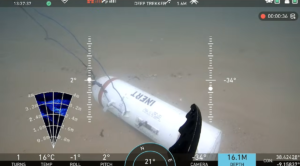
Operators followed a cable while switching between normal video and the turbidity filter as sections became obscured by underwater vegetation.
When the team began following an incorrect cable, the ROV’s zoom camera allowed the operator to read the manufacturer’s marking on the cable sheath and return to the intended route.
After the mission, GPS fixes collected at the surface provided ground truth for correcting the Dead Reckoning track.
The activity demonstrated the use of visual identification and navigation data during subsea infrastructure inspection.
Operational Findings and Next Steps
REPMUS 2026 demonstrated that a USV-hosted REVOLUTION ROV could reacquire and identify an exercise mine while keeping personnel off the surface vessel operating above the target.
The trial also identified areas for further development, particularly coordinated control, communications, automated mission procedures, and integration between the surface platform, launch and recovery equipment, and ROV.
Additional testing involving sonar search, Dead Reckoning, mine disposal equipment, SPECTRA, diver-controlled operations, and cable tracking examined the use of different ROV configurations across maritime inspection and intervention tasks.
The progression from individual technology trials in 2025 to an integrated USV and ROV mine identification test in 2026 provides a basis for continued development of remotely operated mine countermeasures systems.