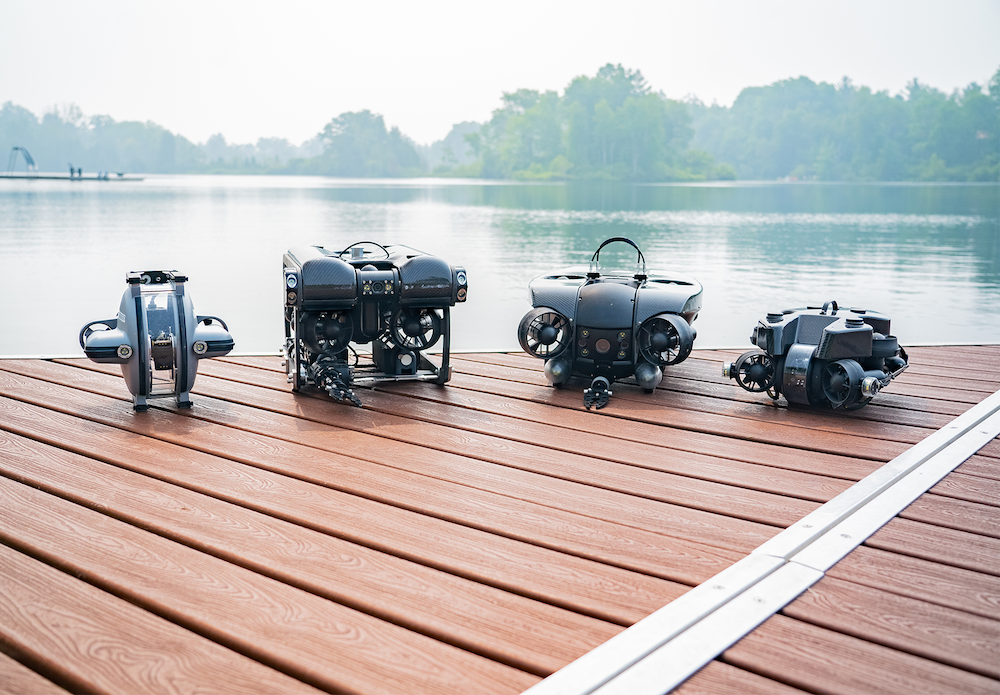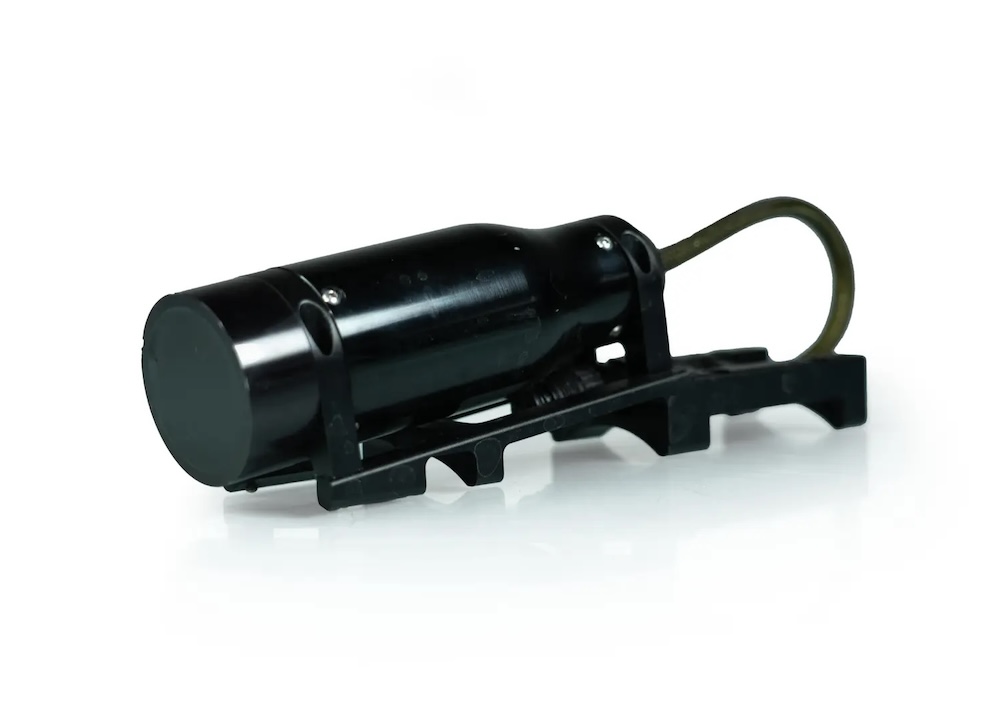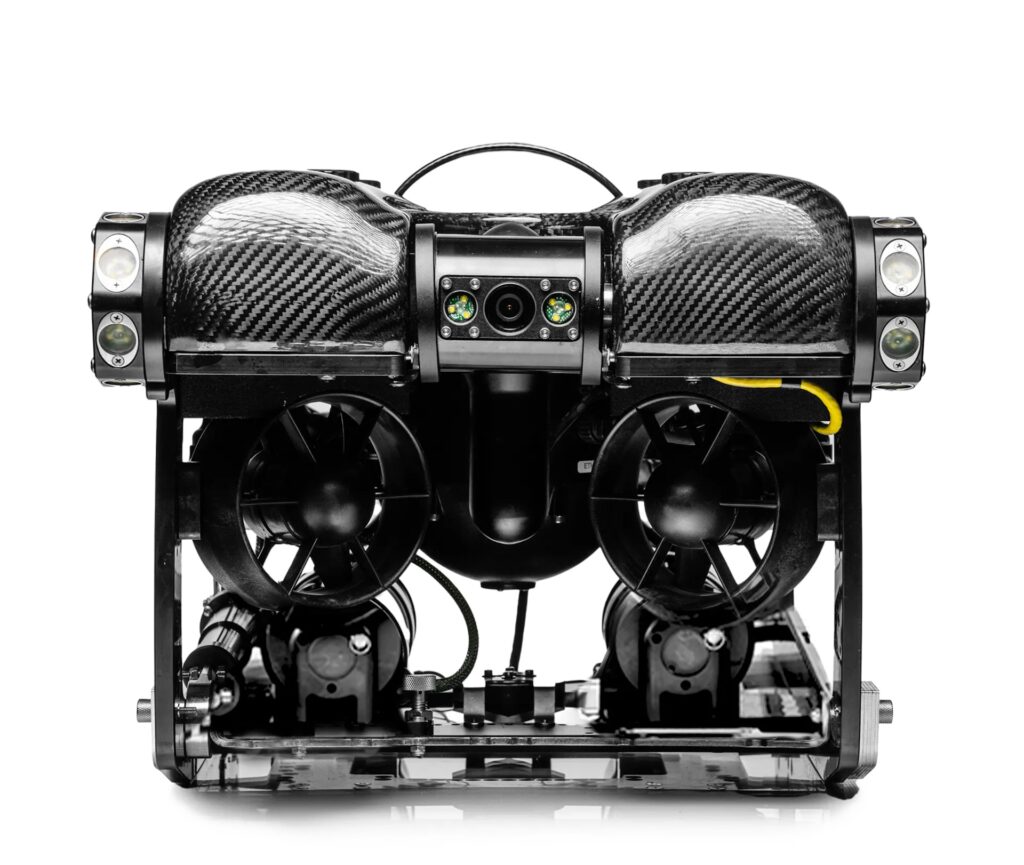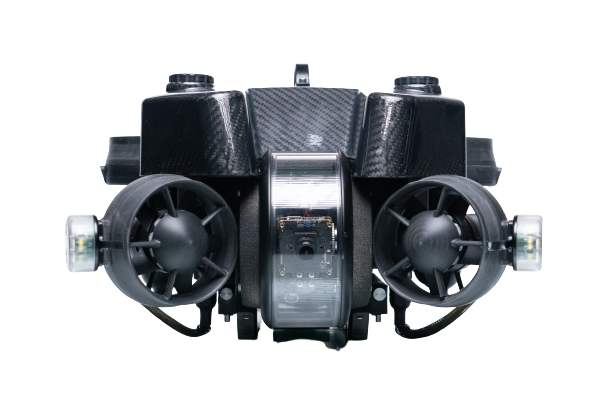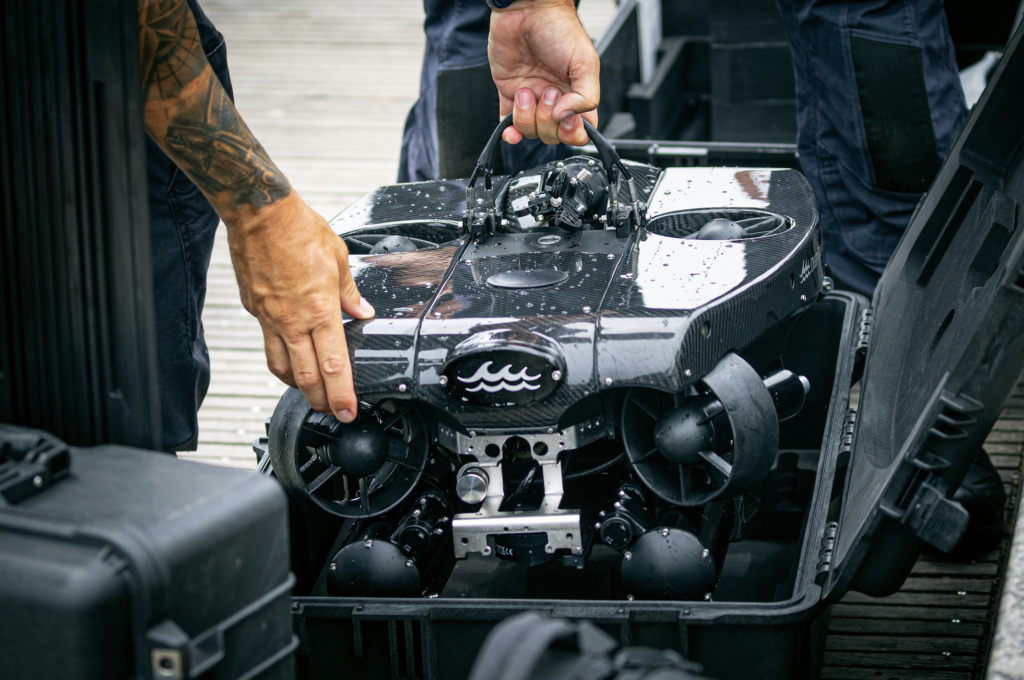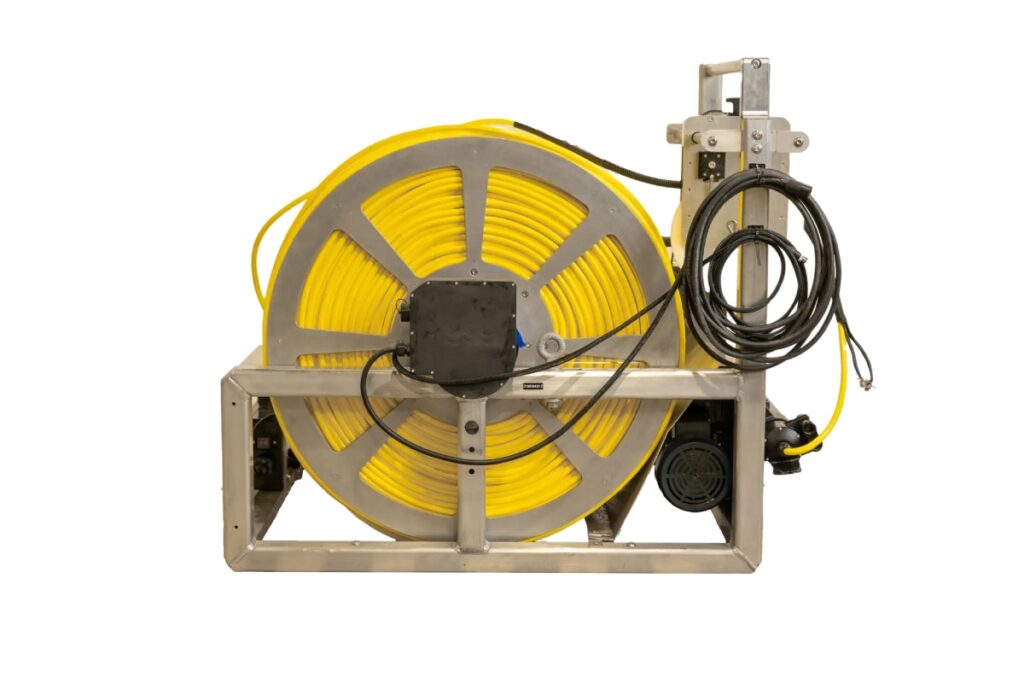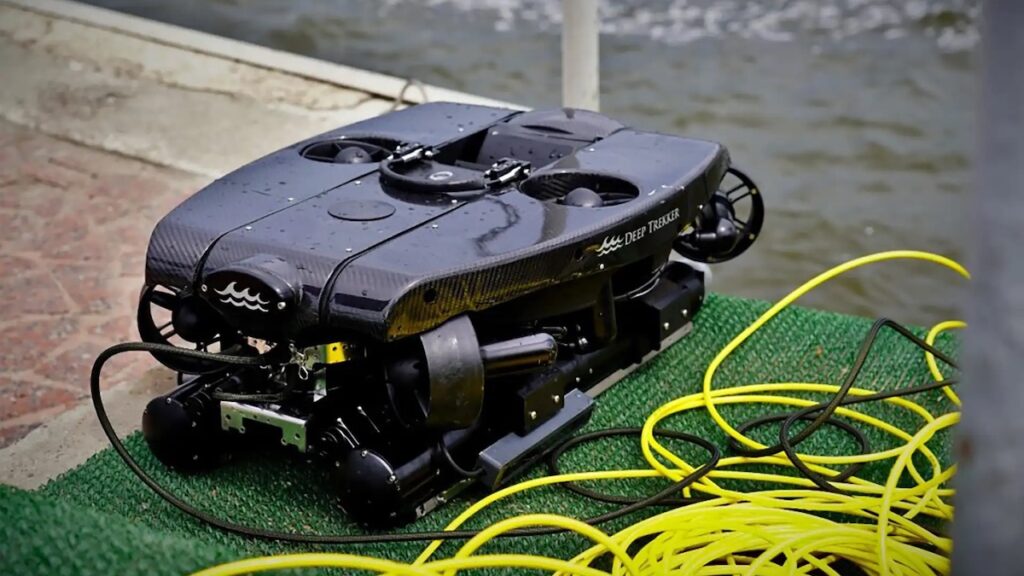

The integration of 15 Deep Trekker PIVOT remotely operated vehicles (ROVs) into the fleet of UK-based Underwater Contracting Limited (UCO) is expanding the use of compact subsea systems across aquaculture, offshore energy, and marine inspection operations. Combining observation-class PIVOT ROVs with purpose-developed tooling, UCO is extending the range of tasks that can be carried out remotely, from routine inspections and seabed surveys to net repairs, equipment retrieval, and other subsea maintenance activities.
The fleet expansion reflects growing demand for ROV systems that can be deployed from smaller vessels, operated without extensive specialist training, and adapted to different underwater applications. Through its collaboration with Deep Trekker, UCO has also developed tooling that broadens the operational scope of the PIVOT platform.
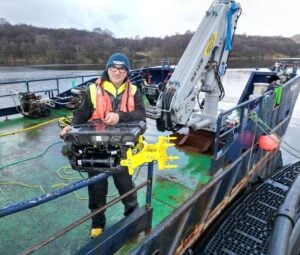
Kate Archer, business and marketing lead at UCO, has outlined how the company’s use of these systems has evolved alongside changing requirements in aquaculture and offshore energy.
From Commercial Diving to ROV-Based Aquaculture Operations
Founded in 2017, UCO initially focused on aquaculture before expanding its subsea services into offshore energy. Its operations encompass ROV rental, subsea tooling, and inspection services, with equipment developed in response to requirements encountered in the field.
The company’s origins are closely connected to the commercial diving experience of its managing director, Mick, who identified an opportunity to introduce ROV technology into aquaculture while conducting fish farm diving operations in Shetland, off the north coast of Scotland.
At the time, work such as fish mortality removal was largely undertaken by divers. Drawing on experience with ROV systems in the oil and gas sector, UCO began examining how similar technology could be applied to fish farm operations.
This led to the development of the company’s first mortality removal system, followed by further investment in ROV equipment and the design of dedicated subsea tooling.
As operational requirements expanded, UCO began applying compact ROV technology to a wider range of inspection, maintenance, and intervention tasks across aquaculture and energy infrastructure.
Introducing the Deep Trekker PIVOT into Subsea Operations
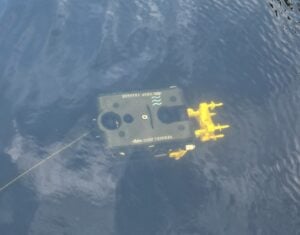 UCO’s relationship with Deep Trekker began at Aquaculture UK, where the ROV manufacturer’s equipment was being exhibited.
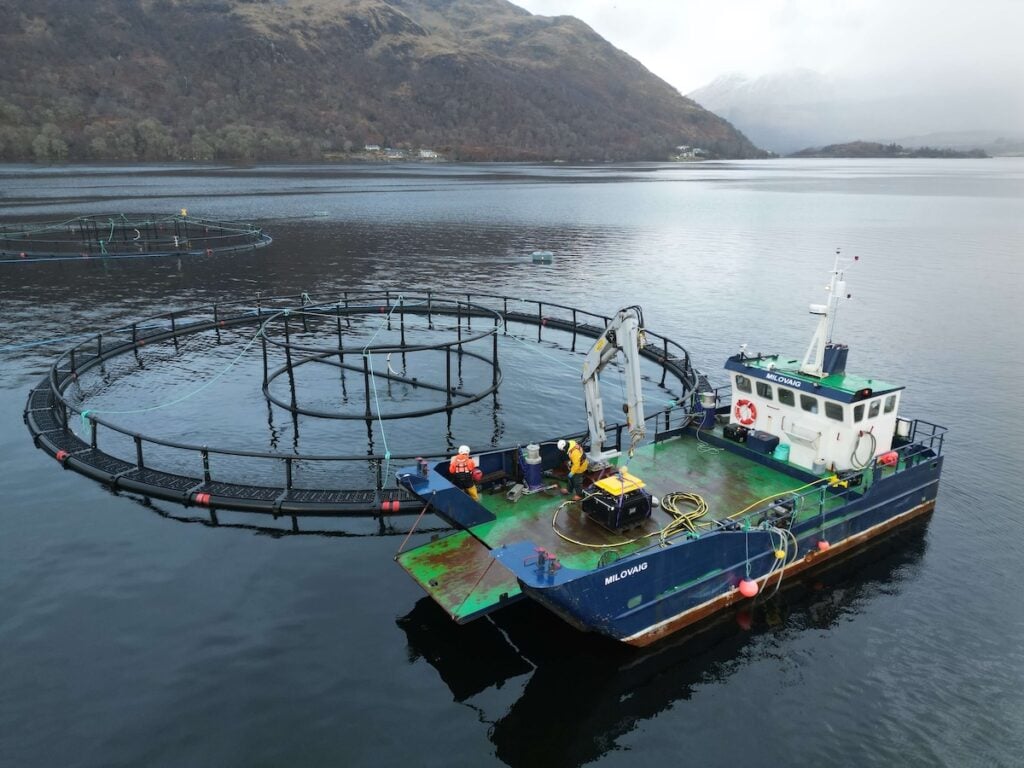
The PIVOT attracted attention because of its compact design, robustness, and deployment characteristics. These features were particularly relevant to aquaculture operations, where vessels may have limited deck space, lifting equipment, and electrical power.
The battery-powered PIVOT can be launched from a small boat or quay without requiring a crane or an external tethered power supply. Its operation also makes it accessible to personnel who may not have formal ROV pilot training.
Kate Archer, business and marketing lead at UCO, “Mick immediately was impressed by the design, the robustness, the ease of use, the mobilisation. In aquaculture, you don’t usually have trained ROV pilots… giving them something really complex to use was going to be a real struggle.”
Early adoption nevertheless required UCO to address concerns among aquaculture operators about equipment cost, reliability, operational complexity, and whether ROVs would be used regularly enough to justify their introduction.
Demonstrating practical applications became an important part of that process. The initial focus on underwater observation and mortality-related work gradually expanded as operators became familiar with the PIVOT’s capabilities.
UCO’s investment followed a similar progression. After acquiring individual vehicles and evaluating their operational performance, the company made a larger purchase of five ROVs. Its fleet expansion has since reached 15 Deep Trekker PIVOT systems.
Reducing Deployment Constraints at Remote Sites
Remote aquaculture facilities present particular challenges for subsea work. Fish farms may be located several miles from operational bases, with access dependent on weather, vessel availability, and the mobilization of personnel and equipment.
Some sites require journeys of six to eight miles, while smaller boats and limited power infrastructure can make larger ROV systems difficult to accommodate.
The PIVOT’s compact dimensions and battery-powered operation address several of these constraints. The system does not require the lifting infrastructure or external power arrangements associated with larger ROVs, allowing operators to deploy it directly from boats or quays.
For aquaculture operators, having an ROV available on site can reduce delays associated with arranging diver attendance for inspection and other suitable underwater tasks.
This is particularly relevant in Scotland and other regions where fish farms are distributed across remote coastal areas and islands.
Archer also identifies workforce availability as a factor influencing ROV adoption. The UK’s commercial diving workforce is aging, with fewer younger personnel entering the profession. Diving costs, safety requirements, travel, and weather can further complicate deployment.
ROVs do not eliminate the need for commercial divers, but they can reduce the number of tasks requiring direct diver intervention and support personnel carrying out work underwater.
The equipment can also allow divers to undertake some operations remotely between dives, extending the range of activities available to a team during a site visit.
Inspection Performance in Confined and Low-Visibility Environments
Beyond aquaculture, UCO has applied the PIVOT to underwater inspection tasks involving vessel hulls, propellers, thrusters, and areas with restricted access.
The vehicle’s maneuverability and stability have been important in these applications, particularly in tidal waters where smaller underwater systems may be affected by current.
ROV inspection can provide an initial assessment of an underwater problem before divers are deployed, helping teams identify the location and nature of an obstruction or defect.
One example involved a hull inspection at North Harbour in Aberdeen, where a PIVOT identified rope entangled in a vessel’s propellers.
The ROV transmitted images of the obstruction, allowing the information to be shared with the relevant company and enabling divers to proceed directly to the affected area. The team could then inspect the surrounding equipment and address the problem through targeted intervention.
The PIVOT’s low-visibility mode was particularly useful during this operation, given the challenging underwater conditions.
A separate example occurred in Aberdeen during the Tall Ships event, when several vessels required hull inspections before continuing their journeys.
Poor visibility and debris in the harbor complicated the underwater work, but UCO reported obtaining clear inspection images using its ROV equipment.
These applications illustrate how compact observation-class systems can support preliminary fault identification and inspection work without requiring every assessment to begin with a diver deployment.
They may also help reduce the need for more extensive inspection arrangements, including dry-docking where an underwater assessment can provide the necessary information.
Extending ROV Functions Through Subsea Tooling
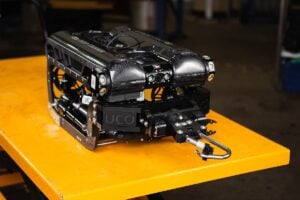
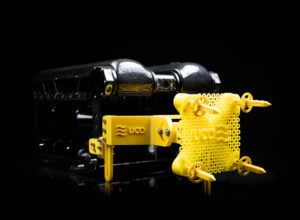
A central part of UCO’s use of the PIVOT has been the development of its own range of subsea tools.
While observation-class ROVs are commonly associated with visual inspection and survey operations, UCO has incorporated attachments that allow the vehicles to undertake additional maintenance, sampling, and retrieval tasks.
The tooling range includes:
- Net patching systems using patches and pegs
- Rope cutters with rotational heads
- Standard rope hooks and hooks incorporating cutters
- Sediment and water samplers
- Grabbers, carabiners, and other retrieval attachments
- Tools for cutting center lines, attaching center weights, and handling net-related work
- Root loopers and knife hooks
Depending on the attachment fitted, a single PIVOT can be used for approximately 15 to 20 different tasks, compared with the more limited inspection, survey, and sampling functions associated with its earlier deployment.
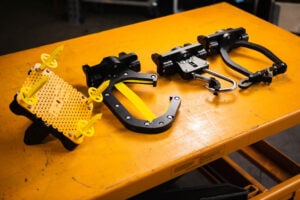
This expansion has changed how UCO presents the equipment to clients, with tooling increasingly regarded as an integral part of the ROV rental package rather than an optional addition.
The attachments allow operators to move between different activities through relatively simple changes to the tooling head.
A key characteristic of UCO’s tooling approach is that the attachments do not require separate mechanical actuation. Instead, their functions are driven by movement of the vehicle itself.
For example, installing a net patch involves maneuvering the ROV forward into the net and then reversing to release the patch.
Kate Archer, business and marketing lead at UCO, “For example, with the net patch, the operator simply flies the Pivot forward into the net and then reverses to release it.”
This approach limits the additional operating complexity associated with the attachments, making them accessible to users without formal diving or ROV pilot qualifications.
The ability to operate multiple tools through the same vehicle also allows UCO to broaden the services available through its short-term equipment hire operations.
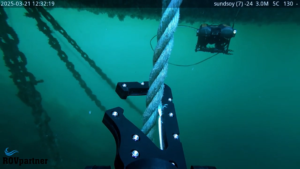
NetFix Net Patch System Supports Underwater Repairs
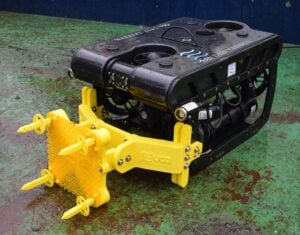
One of UCO’s tooling developments is the NetFix Net Patch system, which can be integrated with the PIVOT to carry out repairs to damaged aquaculture nets.
The system uses patches and pegs to provide immediate, on-site repairs without requiring diver intervention for the patching operation.
These patches provide a semi-permanent repair intended to help prevent fish escaping through damaged sections of netting.
The patches are also reusable, an approach UCO identifies as a way of reducing environmental impact.
For aquaculture operators, the system offers an alternative to waiting for a dive team to attend a site before addressing certain types of net damage.
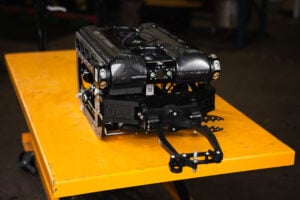
By combining visual inspection and patch installation within one ROV deployment, personnel can identify a problem and carry out an appropriate repair using the same underwater platform.
Net repair is part of a wider range of aquaculture applications now supported by the company’s equipment, including cage inspection, mortality-related operations, seabed surveys, water sampling, and stock monitoring.
UCO is also designing and testing its tooling for compatibility with the Deep Trekker PHOTON ROV, with the aim of extending its use across additional vehicle platforms.
Expanding the Scope of Underwater Maintenance and Retrieval
The combination of maneuverability and interchangeable tooling has enabled UCO to undertake tasks beyond conventional inspection work.
In addition to repairs and sampling, the systems have been used to retrieve objects lost underwater.
Archer described an incident in which a crew member accidentally dropped a mobile phone overboard during a net inspection.
With a Deep Trekker vehicle already deployed, the team directed the ROV to the seabed at a depth of 50 meters, located the phone, secured it using the grabber attachment, and recovered it to the surface.
Although a relatively small retrieval task, the example demonstrates how an ROV already on site can be reassigned to an unexpected requirement without mobilizing a separate recovery team.
The availability of tools for cutting, hooking, grabbing, and sampling provides similar flexibility during planned maintenance and survey activities.
For customers operating in remote areas, this can expand the range of tasks completed during a single visit, subject to the operating conditions and capabilities of the deployed equipment.
Changing Requirements in Aquaculture and Offshore Energy
UCO has observed a substantial change in how aquaculture operators regard ROV technology since the company entered the sector.
Where ROV use was initially unfamiliar and sometimes met with concerns about cost or complexity, customers are increasingly requesting the equipment as part of routine operations.
Kate Archer, business and marketing lead at UCO, “The benefits of these machines have become clear. They’ve seen what can be achieved with them, and adoption is increasing. ROV technology is gradually becoming standard on farms, whereas previously it was the exception.”
The ability to undertake more frequent net inspections, cage assessments, and seabed surveys has contributed to this shift.
Additional functions provided through tooling have also expanded the equipment’s relevance to day-to-day fish farm activities.
In offshore energy, UCO is observing growing interest in smaller observation-class ROVs as alternatives to larger work-class systems for tasks that do not require heavy-duty intervention or deep-operating capabilities.
The acquisition, operation, and maintenance costs associated with larger systems are among the factors influencing this change.
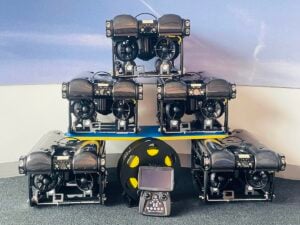 Compact ROVs fitted with appropriate tooling can provide a different operational option for inspection and selected maintenance tasks, without replacing the capabilities of larger systems where these remain necessary.
For diving contractors, such equipment can also complement existing services. Personnel can conduct required dives while using ROVs for other suitable activities, reducing some of the operational constraints associated with diver availability and underwater working time.
Wider Adoption Across European and Canadian Markets
The development of UCO’s ROV services has been accompanied by increasing interest across international aquaculture markets.
According to Archer, the UK was an early adopter of these systems, followed by Ireland. Norway remains at the forefront of aquaculture ROV adoption, while Canada and the UK are described as being somewhat behind the Norwegian market.
The Mediterranean and Baltic regions are also showing increasing interest in ROV-based operations, although adoption has developed at different rates.
This geographic expansion has created opportunities for UCO’s combination of Deep Trekker vehicles and specialized tooling.
In Norway, interest in the tooling range has contributed to new service opportunities, while Canadian aquaculture operators are beginning to demonstrate similar demand for the PIVOT and its attachments.
The partnership between UCO and Deep Trekker has supported this expansion through complementary vehicle and tooling offerings, collaborative market development, and attention to regional operating requirements.
UCO has also reported growing demand for ROV rental services as operators gain greater familiarity with the equipment and the tasks it can perform.
Further Applications in Renewable Energy and Confined Spaces
Looking ahead, UCO plans to continue expanding its ROV fleet, tooling, and subsea applications across aquaculture and offshore energy.
Alongside the PIVOT, the company is considering additional Deep Trekker platforms, including the SPECTRA, REVOLUTION, and PHOTON.
Further research and development will focus on tooling compatibility, new attachments, and techniques that broaden the applications available through compact ROV systems.
Renewable energy is a particular area of interest, including offshore wind operations associated with Aberdeen’s expanding renewable energy sector.
UCO is also examining confined-space inspection requirements, including potential applications within wind turbine foundations, where access restrictions can make compact underwater vehicles relevant.
Aquaculture remains a core market, with continued fleet deployment and tooling development expected as operators integrate ROVs into more routine inspection and maintenance activities.
The company’s approach is based on retaining the PIVOT and its associated tooling as central components of its ROV offering while assessing additional platforms and operational requirements.
Compact ROVs Support a Broader Range of Subsea Tasks
UCO’s acquisition of 15 Deep Trekker PIVOT ROVs illustrates how observation-class underwater vehicles are being applied beyond their original inspection and survey functions.
Their use across aquaculture, vessel inspection, and offshore energy has been supported by battery-powered deployment, maneuverability in challenging conditions, and the availability of task-specific tools.
UCO’s development of net repair, cutting, sampling, and retrieval attachments has increased the number of operations that can be undertaken using a single vehicle platform.
The resulting applications include work that would otherwise require diver mobilization, as well as inspections that can help divers identify and address underwater problems more efficiently.
With further development planned for the PHOTON and potential expansion into offshore wind and confined-space inspection, the UCO and Deep Trekker collaboration provides an example of how compact ROV systems and specialized tooling can be combined to address evolving subsea operational requirements.
Read UCO Expands Subsea Capabilities with 15 Deep Trekker ROVs on the Deep Trekker website.