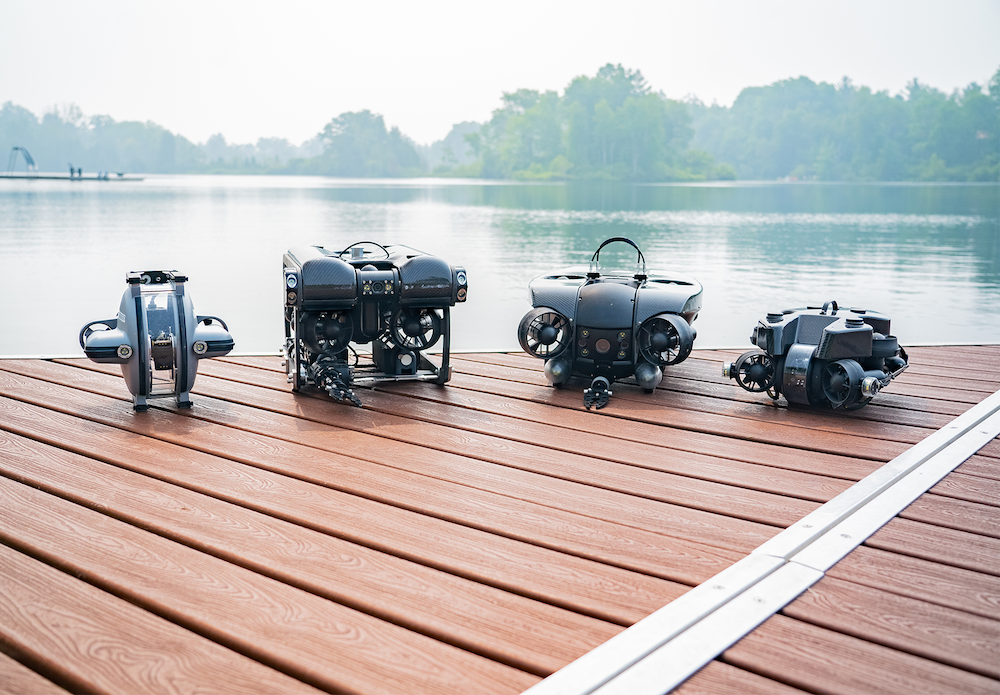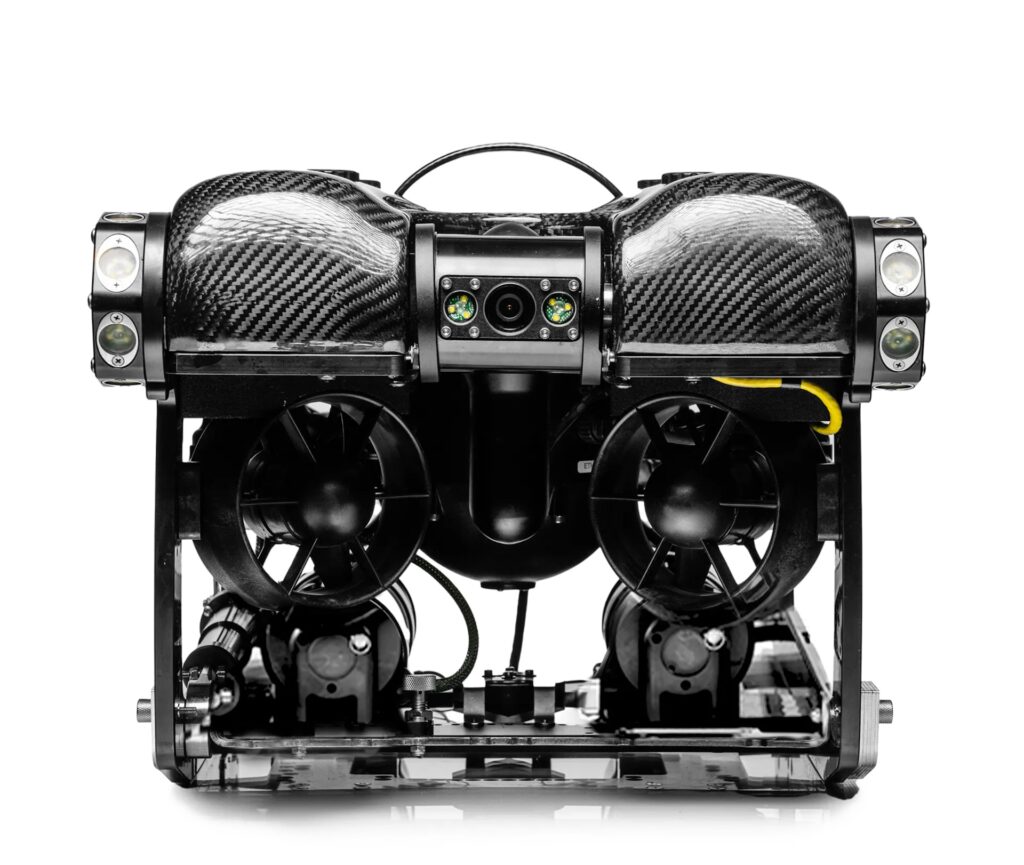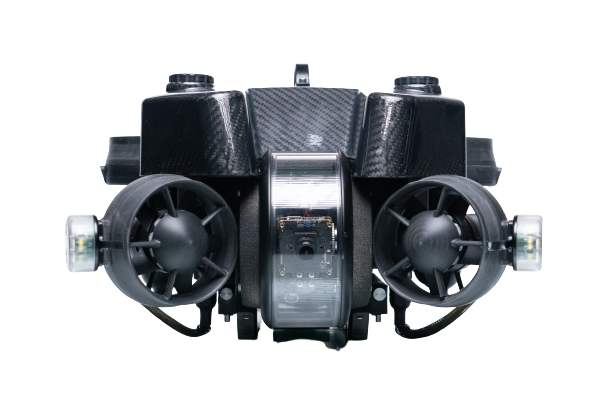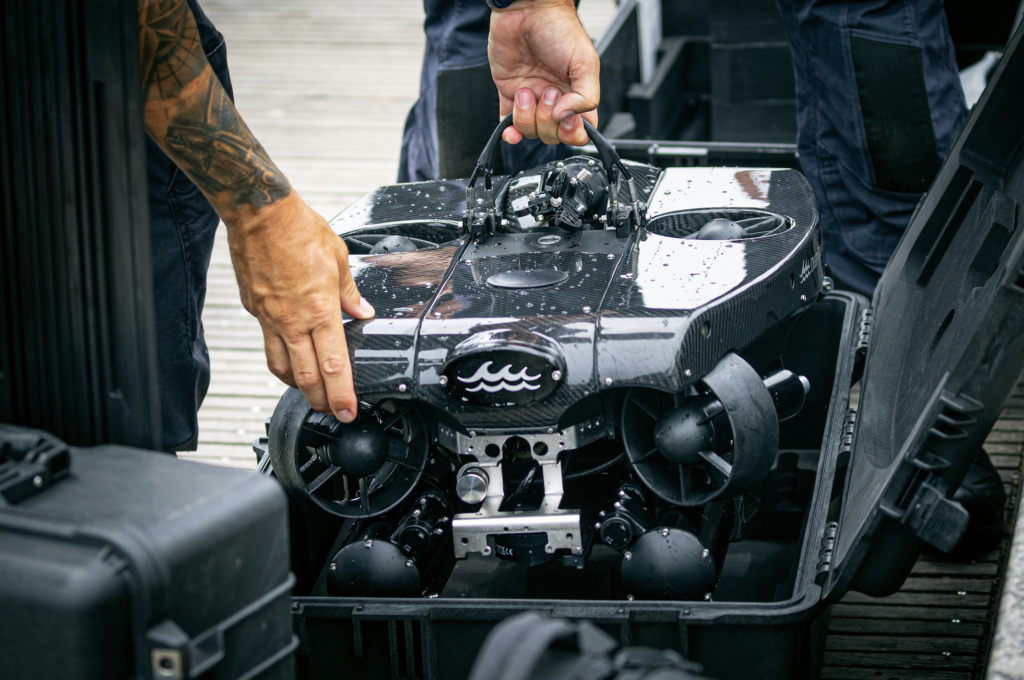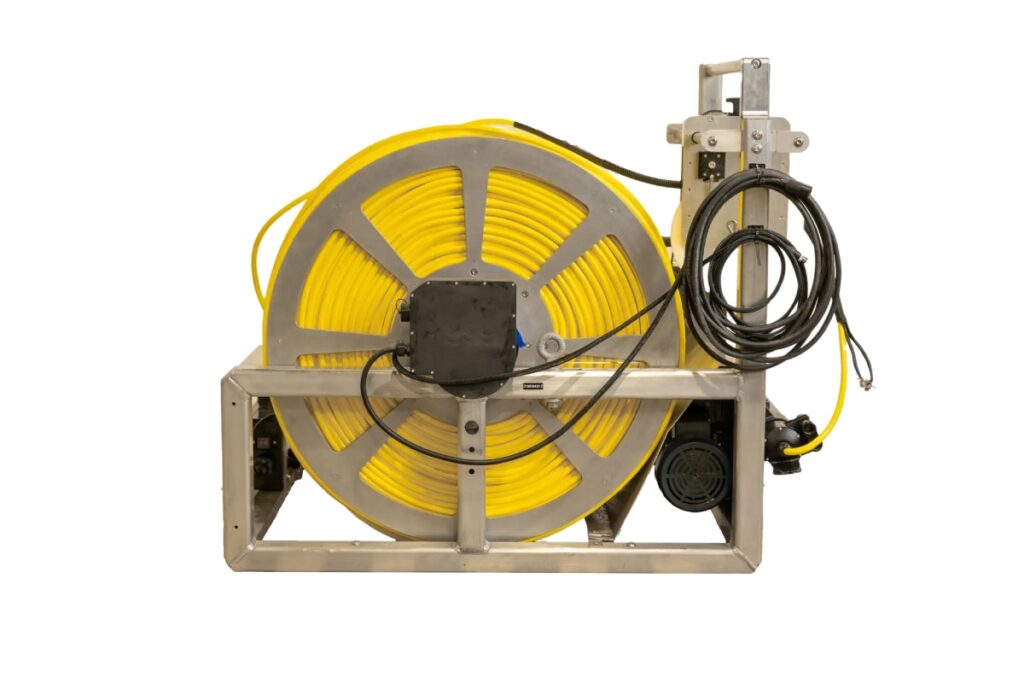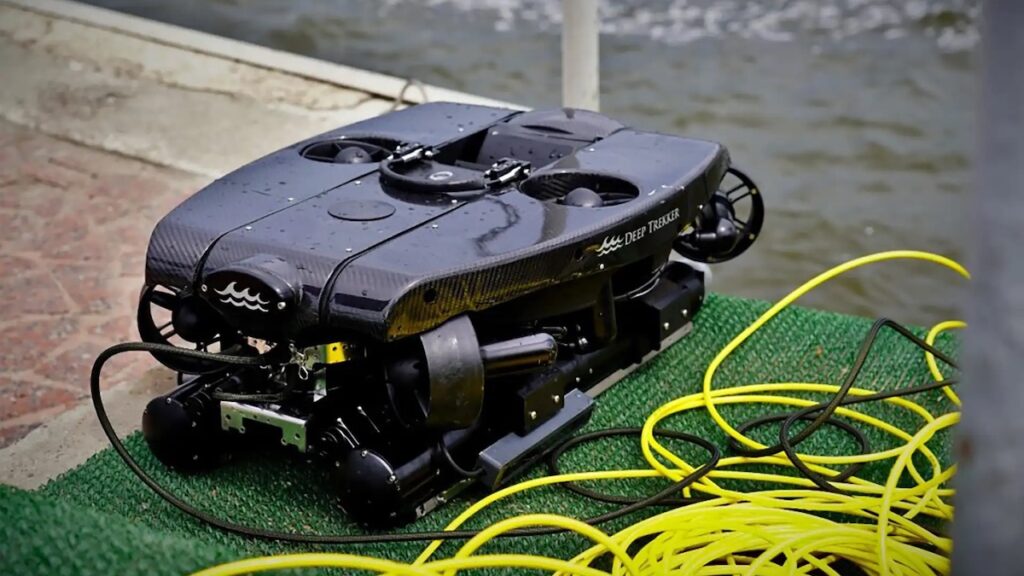


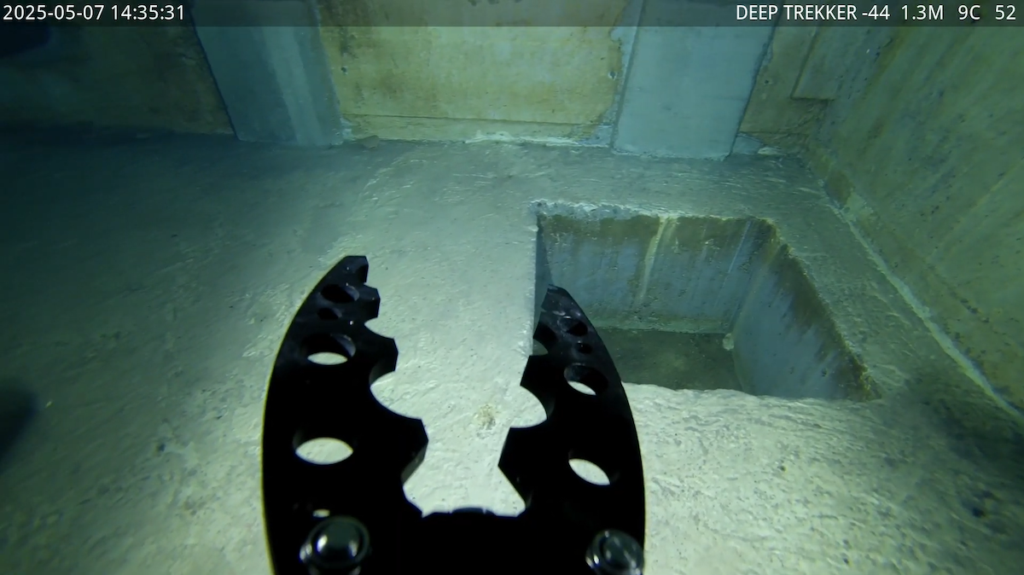
Remotely operated vehicles (ROVs) are helping water utilities assess infrastructure conditions without relying on conventional diver-based inspections. At SaskWater, Saskatchewan’s commercial Crown water utility, Deep Trekker ROV systems are being used to inspect potable water assets, reduce inspection times, limit operational disruptions, and support maintenance decisions based on observed asset conditions.
The technology enables SaskWater personnel to examine submerged infrastructure in real time, providing direct visibility into structural integrity, internal piping, sediment accumulation, and potential maintenance requirements. This approach also reduces the need for personnel to enter confined spaces and can help utilities avoid unnecessary draining and cleaning operations.
Inspecting Potable Water Infrastructure with ROVs
SaskWater uses Deep Trekker ROVs across its clean water systems, including clear wells, pump wells, and transfer chambers. Inspections focus on the condition of walls, baffles, protective coatings, internal piping, and other submerged infrastructure.
Mitchell Markel, Senior Technologist and Lead ROV Operator at SaskWater, explains how the equipment is used to assess these assets, “The Deep Trekker unit, we use that for all of our clean water systems. We go into clear wells, pump wells, stuff like that, transfer chambers, and we inspect the walls. We make sure everything, all of our piping that’s inside of there is where it’s supposed to be. We make sure the integrity is good.”
In addition to structural inspections, the ROVs allow operators to identify sediment accumulation and potential contamination concerns. The resulting visual information helps determine whether further investigation, maintenance, or cleaning is required.
Reducing Inspection Times and Supporting Real-Time Assessment
One of the principal operational differences between ROV and diver-based inspections is the time required to assess individual assets.
According to Markel, a typical clear well inspection using a Deep Trekker ROV can be completed in approximately 10 minutes, compared with one to two hours for a diver-based inspection.
Conventional diving operations require preparation that includes equipment setup, safety orientation, tethering, and procedures to reduce the risk of introducing contaminants into potable water. ROV deployment reduces the preparation associated with placing personnel underwater.
The shorter inspection process also provides scheduling benefits when multiple assets require assessment.
Beyond deployment time, the availability of live video allows operators to investigate potential defects as they are identified rather than relying solely on footage reviewed after the inspection.
Markel commented, “What’s useful about the Deep Trekker is you’re able to inspect it live. If you have a diver in there, you’re just relying on the footage afterwards. Then you have to ask them where things are. With the Deep Trekker, you’re able to look at it in real time. ‘Oh, this is right over here. We can see it right now in real time.’”
This direct visual feedback allows operators to examine areas of concern more closely, including displaced baffles or other components that appear out of position.
It also reduces the potential for communication difficulties between personnel directing an inspection and divers conducting the assessment. Instead of identifying an issue during a subsequent footage review, operators can adjust the inspection while the ROV remains inside the asset.
Reducing Confined Space Entry and Water Contamination Risks
Personnel safety has been a primary consideration in SaskWater’s adoption of underwater robotic inspection systems.
Using an ROV reduces the need to send divers or other personnel into confined or potentially hazardous environments for routine visual assessments.
“Safety is the big one. We’re not having a person going into a high-risk confined space sort of situation. There’s also the potential of contaminating the water, which is another safety concern,” said Markel.
For potable water infrastructure, minimizing the potential introduction of contaminants is an additional operational consideration.
SaskWater works with Saskatchewan’s Water Security Agency, the regulatory body responsible for establishing the requirements governing these activities.
According to Markel, inspections involving an ROV remain subject to water quality precautions, including increasing chlorine levels and reporting hourly while the vehicle is submerged.
These requirements are similar to those applied during diver inspections. However, Markel identifies the smaller physical footprint of an ROV as an advantage when operating in potable water environments.
A diver presents a larger surface area and has greater potential to disturb accumulated material, potentially affecting water conditions and chlorine levels. Markel reports that the ROV produces substantially less disturbance during inspections.
The use of robotic equipment therefore provides a way to conduct underwater visual assessments while reducing personnel exposure and limiting disturbance inside the water system. It does not eliminate the need for disinfection procedures or regulatory compliance.
Using Inspection Data to Avoid Unnecessary Dewatering
ROV inspections also help SaskWater determine whether an asset requires cleaning or more extensive intervention before committing to draining operations.
Without direct visibility into a clear well, maintenance teams may need to make decisions based on suspected sediment accumulation or other potential problems. Depending on the site, conventional approaches can involve dewatering the structure and sending personnel inside to perform cleaning.
Emptying a water storage asset can require substantial time and expense, particularly when the inspection subsequently reveals that cleaning was unnecessary.
By deploying an ROV, SaskWater can assess internal conditions while the asset remains filled, reducing uncertainty about whether a cleaning operation is needed.
“A drone will go in there and tell you, oh, you actually don’t need to clean it,” added Markel.
The ability to verify conditions before draining an asset supports more targeted maintenance decisions and reduces the potential for unnecessary service disruptions.
Markel also notes that ROV inspections can remove the need to deploy divers simply to establish whether a suspected problem requires further attention.
These benefits extend beyond individual inspections, as utilities can use visual assessments to determine when more resource-intensive maintenance work is justified.
Supporting Preventative Maintenance and Asset Planning
SaskWater uses ROV inspection findings to inform preventative maintenance across its water infrastructure.
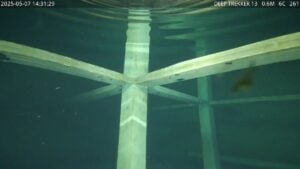
During inspections, operators examine pump integrity, including wall conditions and evidence of rust, corrosion, or crustacean buildup. Observations can be used to recommend maintenance activities, such as scheduling a pump pull within a defined timeframe when developing conditions indicate that intervention may be required.
Clear well inspections similarly provide information about sediment accumulation and other material collecting at the bottom of tanks.
Assessing these conditions allows cleaning schedules to be developed according to observed requirements rather than assumptions about the state of an asset.
Markel explained, “Preventative maintenance also applies to cleaning the clear well, where I assess sediment buildup and other material accumulating in the tank. You look at all the sediment buildup… then you’re able to actually pre-plan.”
The ability to inspect an asset without first draining it can help establish whether cleaning should proceed immediately or can be deferred.
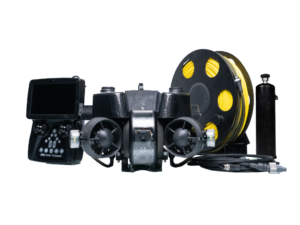
Markel describes how the Deep Trekker PHOTON can be deployed to assess internal conditions and determine whether a clear well may remain in service for another year or two before cleaning is required.
Where inspection findings support deferral, maintenance teams can schedule work further in advance and extend the interval between cleaning operations.
This approach provides greater flexibility in allocating maintenance resources while retaining direct visibility into asset conditions.
Field Deployment, Operator Training, and Tether Management
The practicality of deploying an ROV across multiple facilities is another consideration for SaskWater’s inspection program.
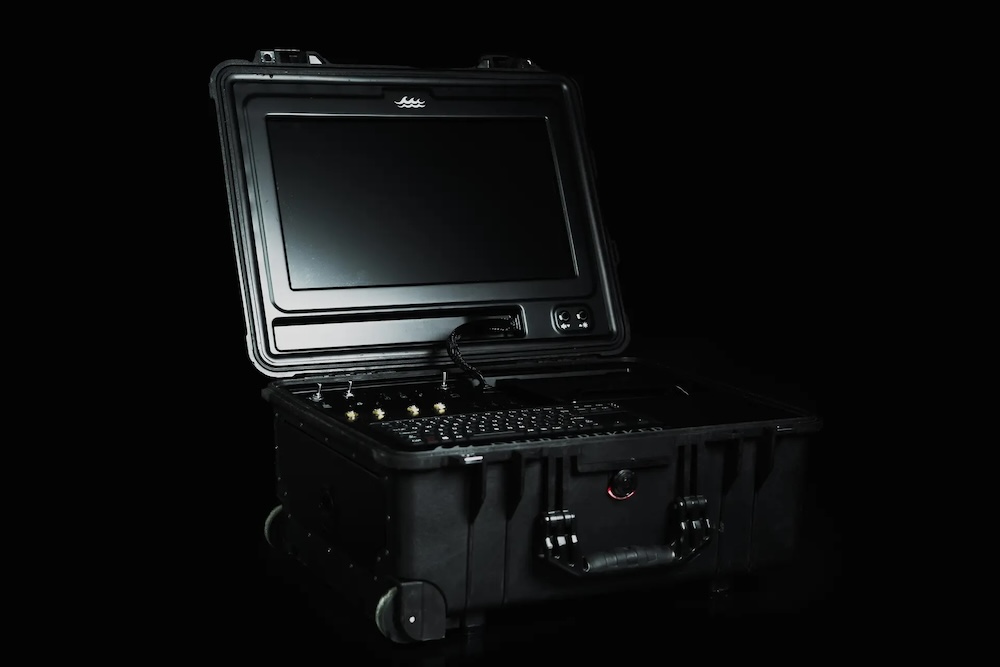
The Deep Trekker equipment can be transported in a single case, allowing operators to carry the system between sites using a truck.
At each facility, personnel complete the necessary safety procedures before disinfecting the ROV with chlorine immediately prior to deployment. The vehicle is then lowered into the water to conduct the inspection.
According to Markel, the handheld controller has also been straightforward for personnel to learn, including operators with different levels of experience using similar controls, “The Deep Trekker system’s controls are intuitive and easy to use. I’ve grown up playing video games, so using the controller came naturally to me. It was very easy to get up and running. Even some of our older staff who didn’t grow up playing video games adapted to the controller quickly. They were trained up in a short period and became comfortable using it.”
Maneuverability and tether management remain important when navigating tanks containing submerged equipment.
Although many of SaskWater’s inspected structures have relatively straightforward layouts, certain locations contain operating aeration pumps and other infrastructure that require additional attention when managing the vehicle’s tether.
Markel reports that the Deep Trekker tether is easy to track and manage, helping operators maintain awareness of its position while maneuvering around submerged equipment.
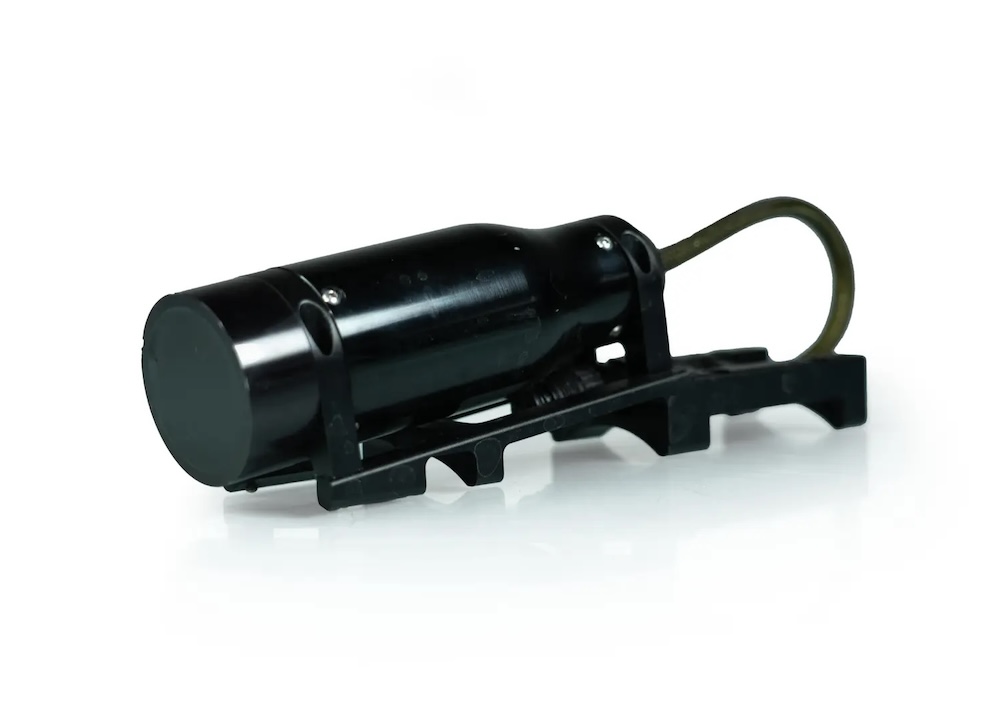
For current inspection work, the most frequently used system features include the onboard camera, lighting, live video feed, and compact deployment configuration.
Together, these provide the visual information and operational control needed for routine infrastructure assessments.
Expanding ROV Applications Beyond Visual Inspection
While SaskWater currently uses its ROV equipment primarily for video inspections and recording footage, additional tooling is being considered to extend its underwater capabilities.
The utility has recently added a grabber claw attachment, which could be useful when small objects or obstructions need to be physically removed.
Markel describes an earlier inspection in which roots had penetrated cracks inside a clear well. The grabber attachment was not available at the time, so a diver had to be deployed to remove the roots.
The incident demonstrated a potential application for the attachment during similar maintenance situations.
SaskWater is also discussing the addition of the Deep Trekker VAC Utility crawler to support sediment removal from the bottom of water storage structures.
Markel commented,“We’re discussing adding the Deep Trekker VAC Utility crawler to be able to clean up sediment on the bottom. That will likely be part of our next ROV line up, and it will be a major capability increase.”
This remains a prospective addition rather than an existing part of SaskWater’s described inspection and maintenance process.
Another potential upgrade concerns raw water inspections, where operating conditions differ from those encountered inside clear wells and enclosed potable water structures.
SaskWater is considering a Deep Trekker system equipped with Doppler Velocity Log (DVL) and station-holding capability for work in lakes and other raw water environments.
The utility does not currently identify a significant requirement for these capabilities inside its clear wells, where water movement is limited.
For raw water applications, however, the proposed upgrade would support SaskWater’s objective of more accurately identifying the locations of pipelines and associated underwater infrastructure.
These proposed additions reflect two distinct areas of interest: expanding physical intervention capabilities within water storage assets and improving positioning during open-water infrastructure inspections.
Enabling More Flexible Inspection Scheduling
The availability of an internally operated ROV also changes how SaskWater responds to requests for infrastructure inspections.
Rather than organizing a diver deployment for every underwater assessment, operators can conduct inspections as requirements arise, subject to the necessary site safety and water quality procedures.
Markel said, “We can now do inspections whenever we feel like. If anybody ever asks me, ‘Hey, can you come inspect this?’ Oh, yeah, no problem. We’ll come out and do a quick inspection on whatever they need done right away.”
This flexibility reduces dependency on external diver scheduling and allows the utility to investigate potential issues more promptly.
It also supports more proactive inspection activity, as assessments can be conducted without the same level of preparation and coordination required for conventional diving operations.
The practical benefits include shorter individual inspections, more immediate access to visual information, and greater flexibility in scheduling preventative maintenance.
Operational Benefits of ROV-Based Water Infrastructure Inspections
SaskWater’s use of Deep Trekker ROVs illustrates how underwater robotic inspection can support condition-based maintenance across potable water infrastructure.
The reported reduction from one or two hours of on-site diver inspection activity to approximately 10 minutes of ROV inspection time for a clear well represents a substantial difference in the time required per asset.
Additional benefits include reduced reliance on diver deployment, less exposure to confined-space hazards, lower potential for disturbance inside potable water systems, and the ability to assess cleaning requirements without first emptying an asset.
For maintenance planning, live visual inspections provide information that can be used to prioritize repairs, identify developing issues, and determine whether cleaning intervals can be extended.
The resulting operational value is not limited to faster inspections. Direct assessment of submerged infrastructure allows maintenance decisions to be based on observed conditions rather than uncertainty, helping SaskWater avoid unnecessary work and plan interventions further in advance.
As the utility considers additional tools for sediment removal and raw water positioning, its ROV program may also expand beyond routine visual assessment into a broader range of underwater maintenance and inspection activities.
Read SaskWater Utility Improves Water Tank Inspections Using ROVs on the Deep Trekker website.