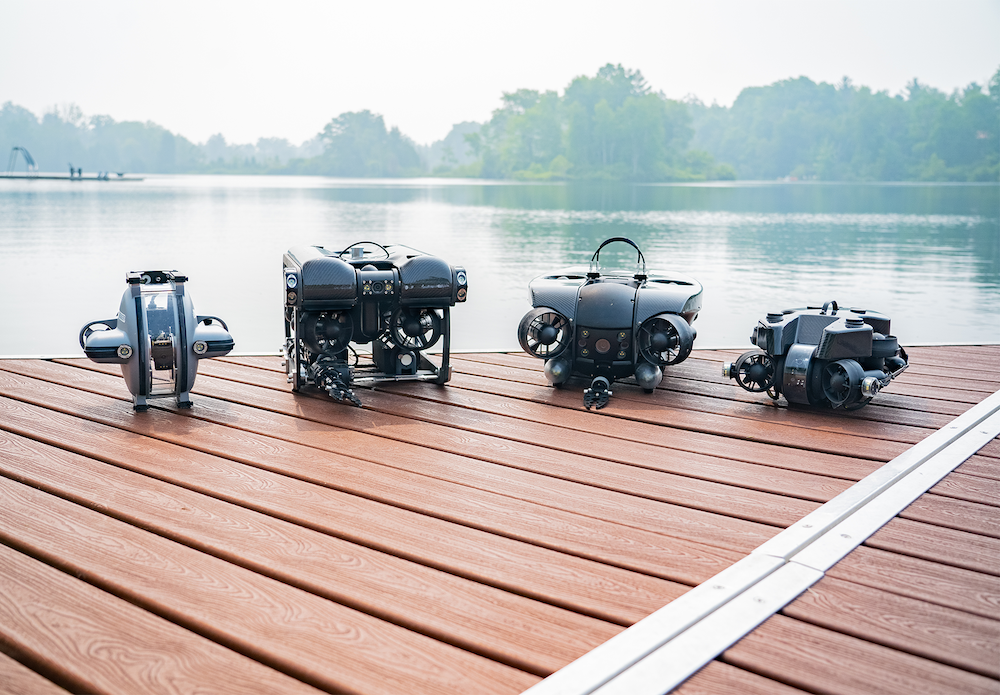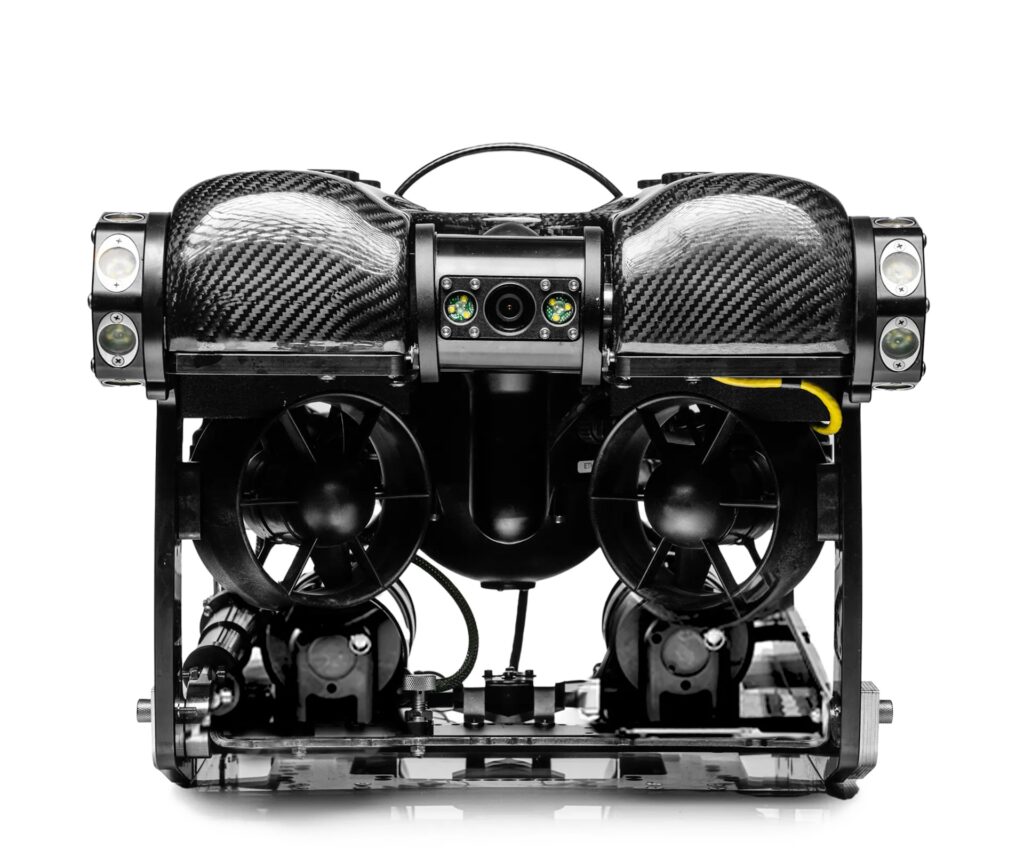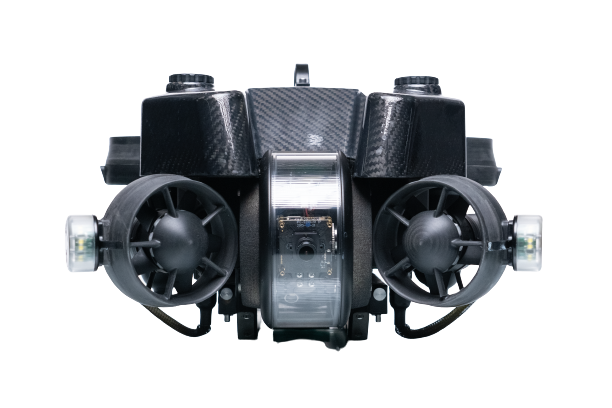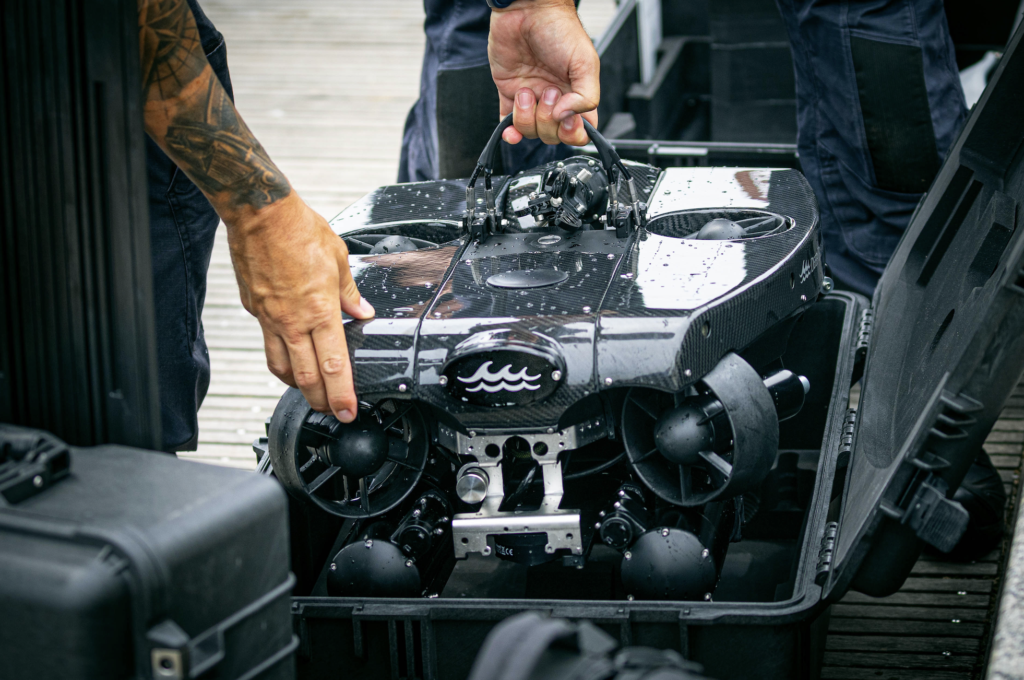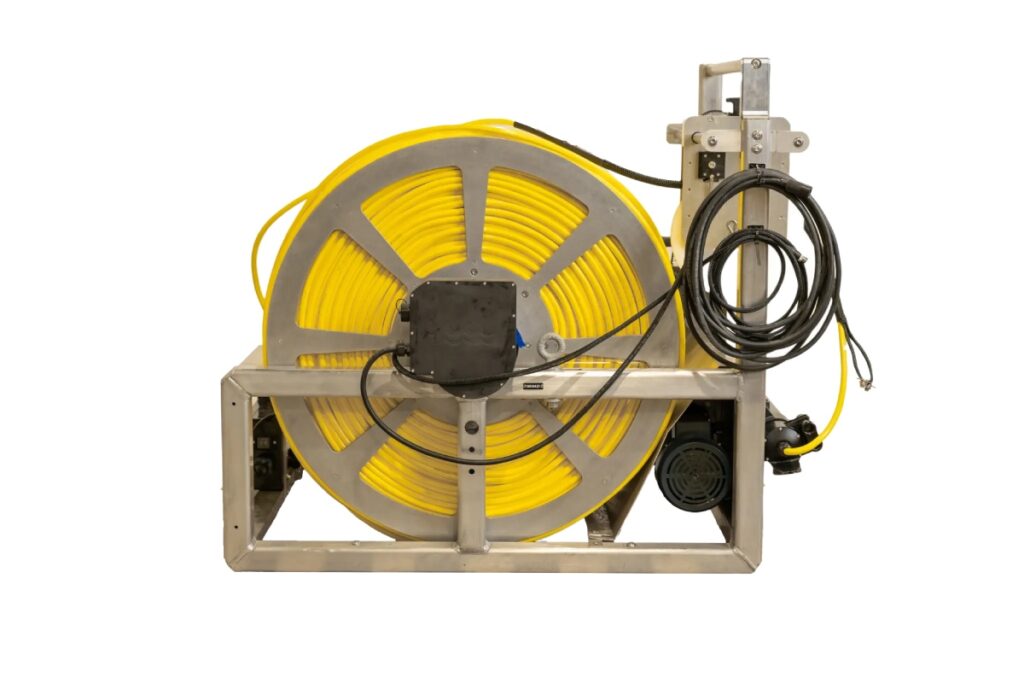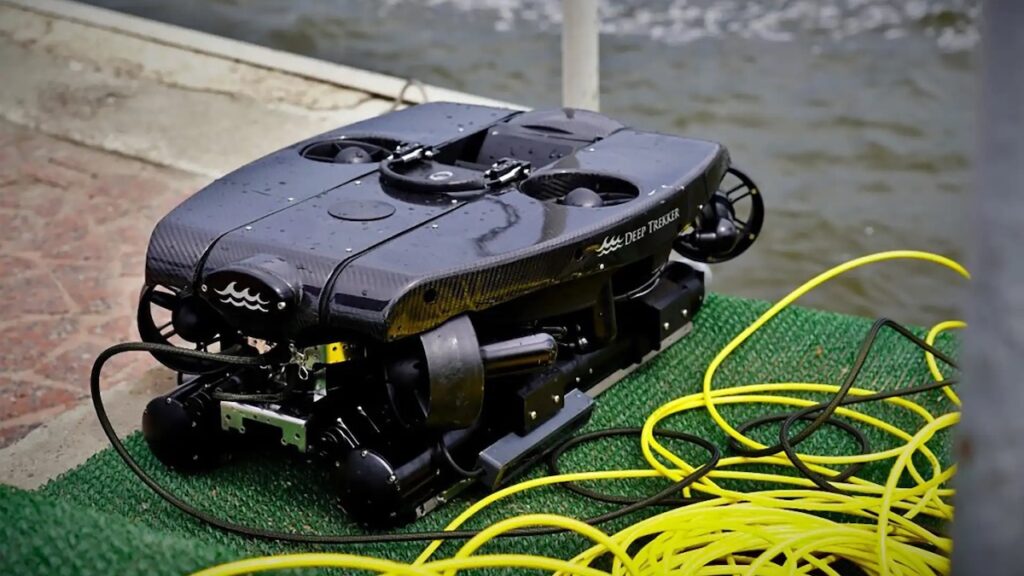

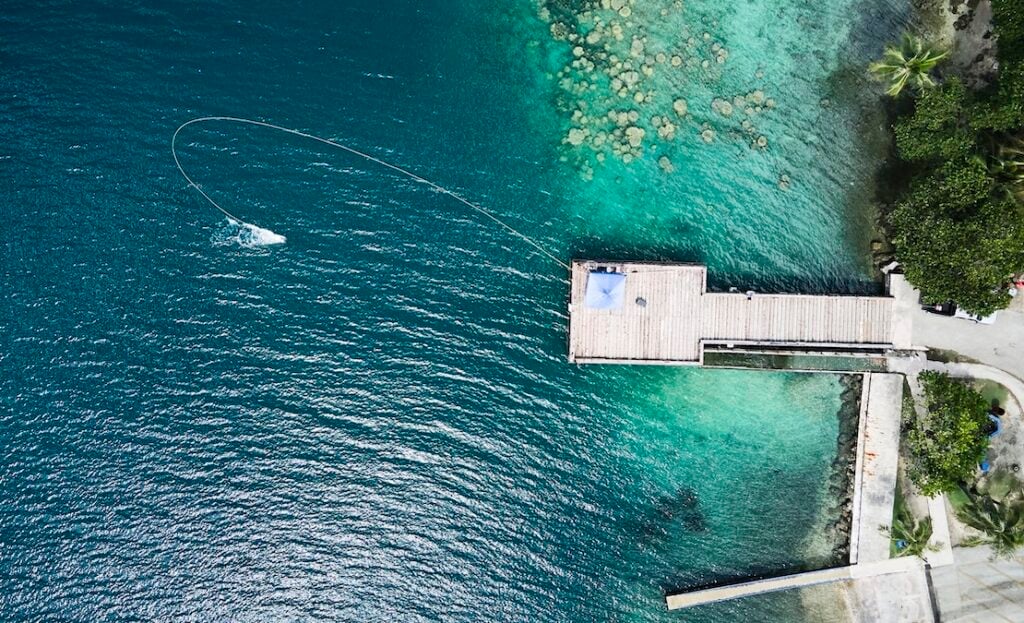
During a project on the west coast of Guam, a Deep Trekker PIVOT ROV was used to monitor horizontal directional drilling (HDD) punch-out in real time at a designated sandy seabed location seaward of a protected coral reef, providing direct visual confirmation of the cutterhead emerging at a depth of more than 100 feet. Read more >>
The operation addressed the need for tight control over where subsea cable infrastructure reaches the seabed in environmentally sensitive coastal areas.
The PIVOT ROV was positioned near the planned punch-out location while the team coordinated with the HDD drill operator onshore. Minutes before the cutterhead appeared, the team identified a swirling sediment plume approximately 50 feet from the ROV and moved toward the disturbance. Within approximately one minute, the cutterhead emerged from the seabed, enabling the team to provide the drill operator with real-time information on its position and orientation rather than relying on a later diver inspection.
That real-time feedback proved particularly significant when the cutterhead required repositioning. The drill operator was able to retract it several feet to achieve the correct exit placement while operations were underway.
Ultimately, all six conduits were placed within the designated sandy seabed zone with no direct disturbance to the adjacent coral reef zone and no rework required, demonstrating the application of real-time ROV observation for positional verification during HDD subsea cable landing operations.
Read the full article, Real-Time ROV Monitoring of HDD Punch-Out During Subsea Cable Landing on Guam, on Deep Trekker’s website to explore the project, monitoring process, and results in detail.