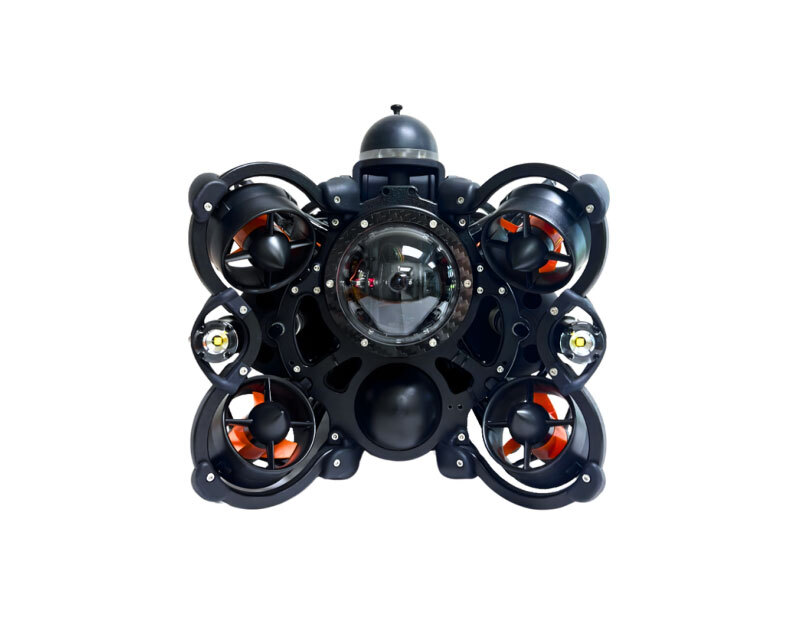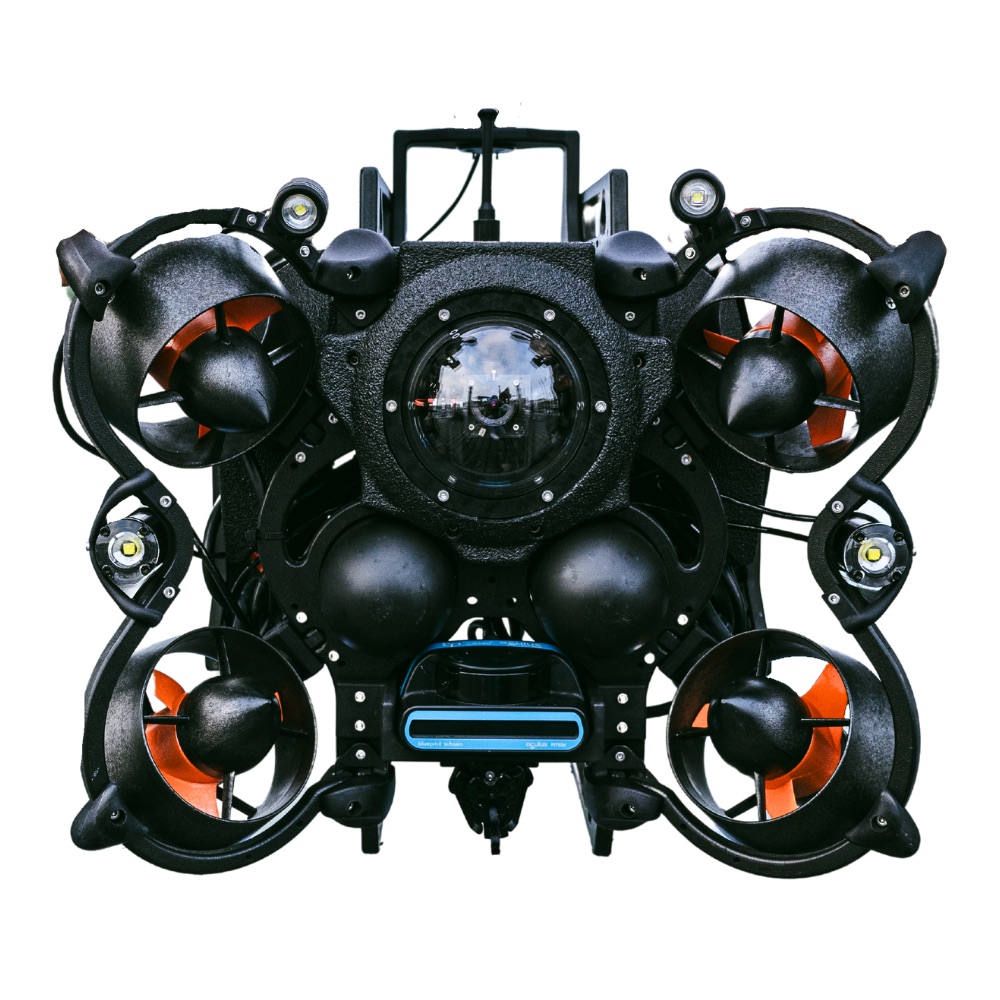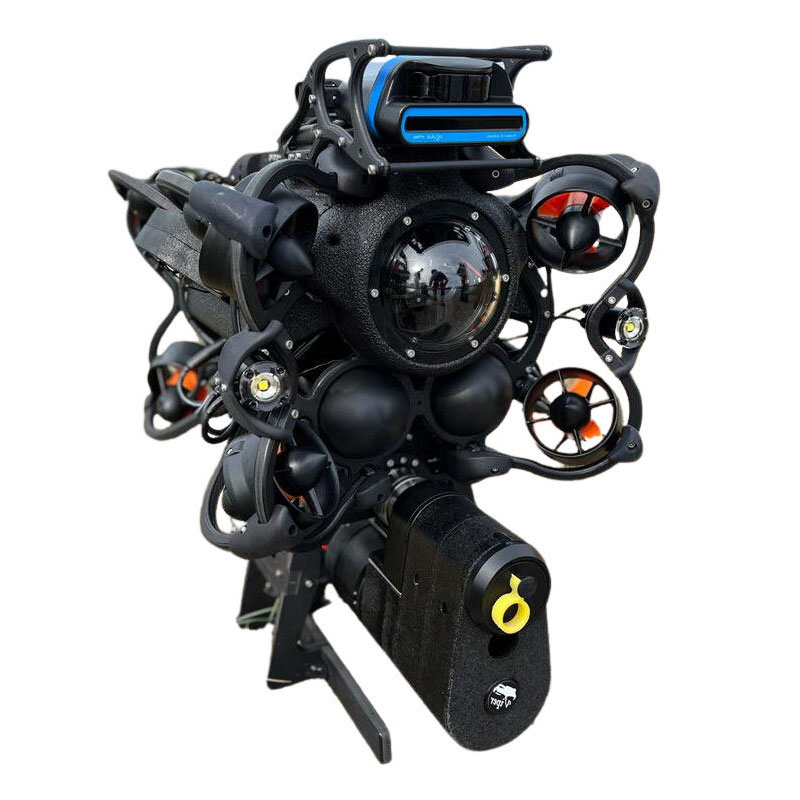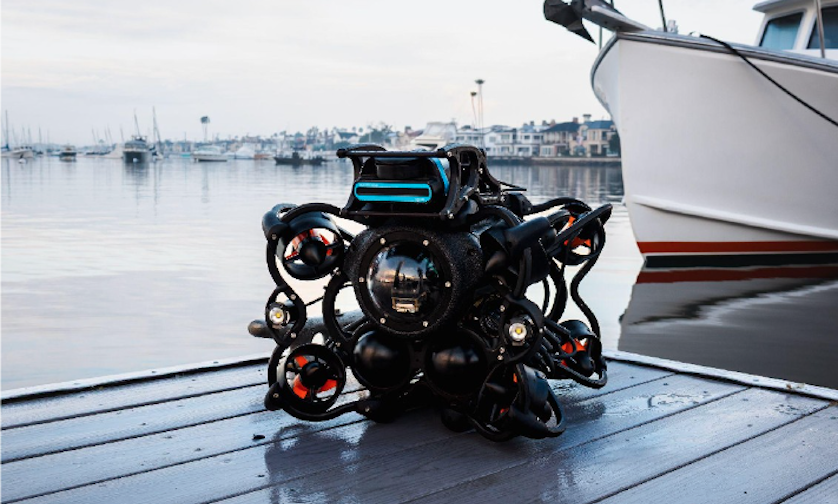

Oceanbotics’ SRV-8 Series provides different ROV configurations for subsea missions where operating depth, environmental conditions and payload requirements are key considerations. Read more >>
Whether supporting shallow infrastructure inspections, mid-depth intervention tasks or deeper survey operations, these factors influence the vehicle configuration required for a specific application.
For operators planning subsea activities, identifying the appropriate remotely operated vehicle (ROV) involves understanding the operational environment and the type of work to be performed. Depth requirements define the vehicle’s operating range, while current conditions influence station-keeping capability. Payload requirements determine whether the mission requires observation, light intervention or more complex survey and manipulation functions.
Assessing Operating Depth
Operating depth is one of the primary considerations when evaluating an ROV platform.

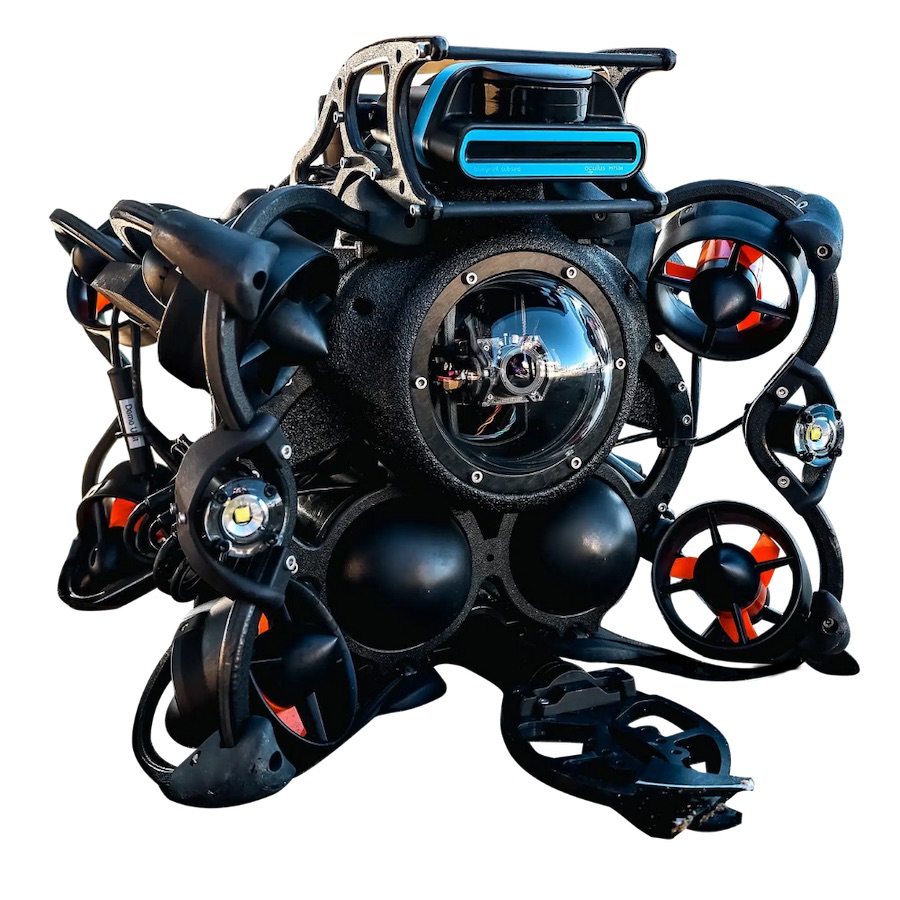
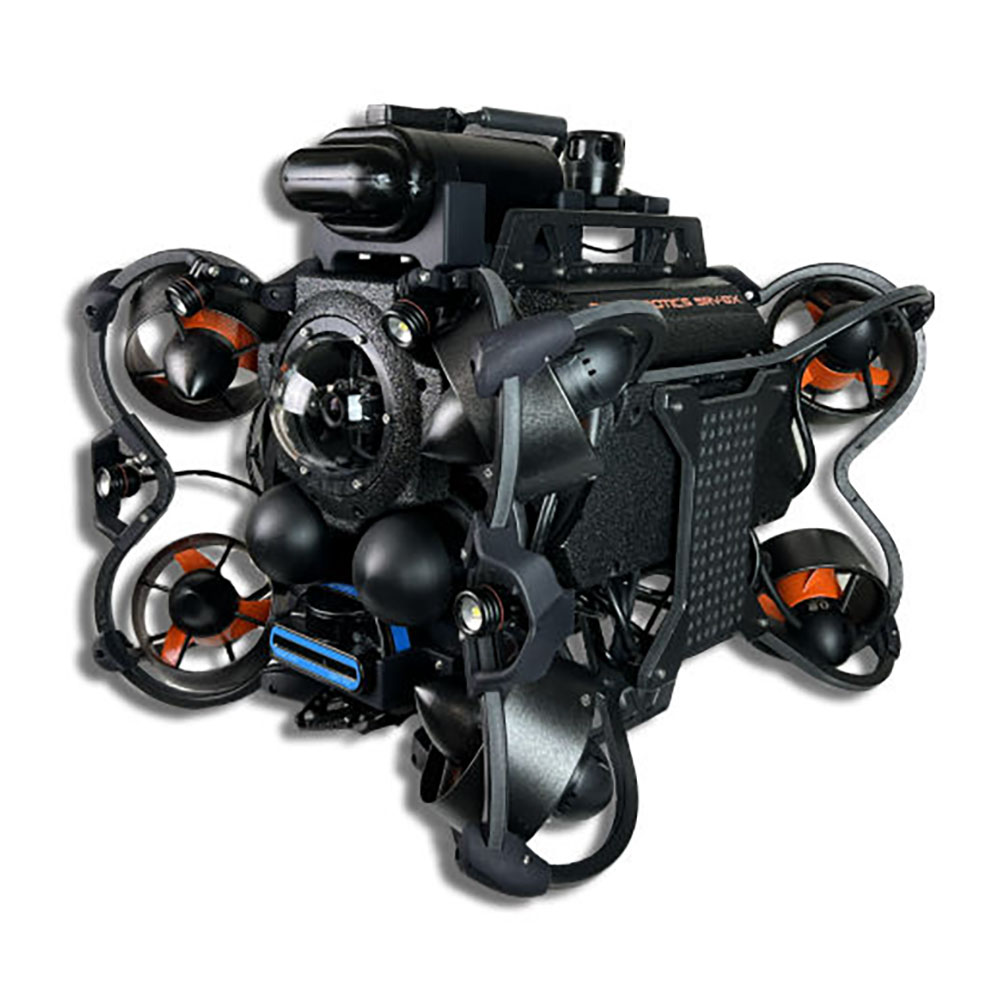
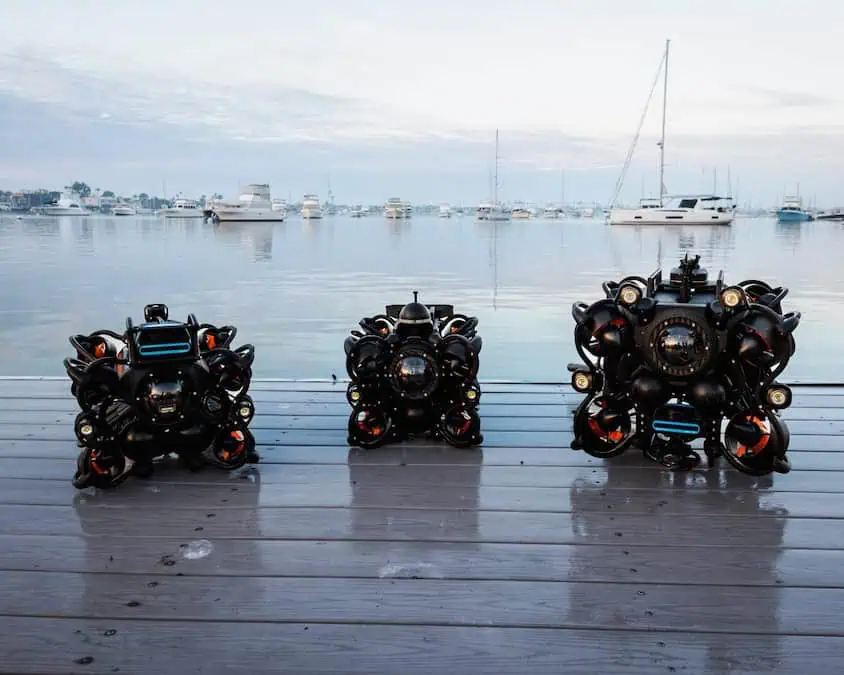
SRV-8 Series from left to right: SRV-8, SRV-8C, and SRV-8X.
Shallow-water missions between 0 and 100m can include ship hull inspections, submerged object assessments, dock piling surveys and harbour infrastructure inspections.
Mid-depth operations between 100 and 500m may involve access to pipelines, culverts, bridge footings and submerged intake pipes, requiring a vehicle capable of operating in more demanding underwater environments.
For deeper missions between 500 and 1,200m, ROV capability can support applications including subsea pipeline inspection, oceanographic research and deeper survey activities.
Considering Environmental Conditions
Water conditions play an important role in determining the level of vehicle control and station-keeping capability required.
Operations in sheltered marinas, lakes and reservoirs typically involve calm conditions with limited current effects. Coastal environments, tidal areas and river systems can introduce additional stabilisation requirements, while offshore structures and open-ocean operations may require increased station-keeping capability to maintain position in stronger currents.
Low-temperature operations are among the conditions identified as requiring increased station-keeping capability.
Matching Payload Capability to the Mission
The intended operational task determines the type of payload capability required from an ROV.
Observation-focused missions may involve visual assessments, security inspections and high-definition video surveillance. Light intervention activities can include object recovery, manipulation tasks, basic site mapping and localised investigations.
More complex operations may require advanced survey capability, multiple sensor integration and manipulation functions for demanding subsea tasks.
The Oceanbotics SRV-8 Series
Oceanbotics’ SRV-8 Series includes three ROV configurations: the SRV-8C, SRV-8 and SRV-8X. Each model provides different operating characteristics, portability options and payload capabilities for different subsea applications.
The SRV-8C operates to depths of up to 350m and provides a compact configuration for inspection-focused missions. The system can be transported in a single compact case, supporting single-operator transport and setup. Applications include ship hull inspections, shallow dock piling assessments, evidence recovery and rapid visual observations.
The SRV-8 also operates to depths of up to 350m and provides enhanced station-keeping capability. The vehicle supports integration of equipment such as imaging sonar and robotic grabbers, enabling applications including dam inspections, bridge footing assessments, pipe maintenance and mid-depth search and recovery operations.
The SRV-8X extends operating depth capability to 1,200m and provides maximum station-keeping capability within the series. The vehicle is listed with an extreme multisensor payload capability and expanded payload capacity for applications including subsea energy infrastructure inspection, multi-beam sonar surveying, USBL tracking and heavy deep-water manipulation.
Aligning Vehicle Capability with Subsea Objectives
ROV selection requires a clear understanding of the relationship between vehicle capability and mission objectives. Depth rating, environmental conditions and payload requirements all contribute to determining the most suitable platform configuration for a subsea operation.
By assessing these factors before deployment, operators can align ROV capability with the technical demands of activities ranging from rapid inspections to deeper survey and intervention missions.