Showcase your capabilities
If you design, build or supply Multiparameter Sondes, create a profile to showcase your capabilities and connect with visitors who have an active requirement for your solutions.
Multiparameter sondes are integrated water quality monitoring instruments that measure multiple physical, chemical, and biological parameters simultaneously. These systems integrate sensors that measure temperature, conductivity, salinity, dissolved oxygen, pH, turbidity, and chlorophyll, supporting oceanographic research, coastal monitoring, and aquaculture operations.
This page features suppliers of multiparameter water quality sondes for deployment from research vessels, installation on buoys and fixed monitoring stations, and integration with autonomous marine platforms.
Read the Technology Overview
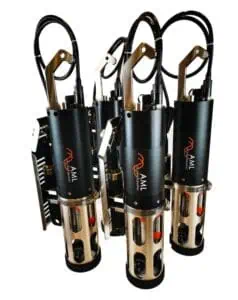
Modular Hydrographic & Oceanographic Instrumentation for Survey, Research & Autonomous Marine Operations

If you design, build or supply Multiparameter Sondes, create a profile to showcase your capabilities and connect with visitors who have an active requirement for your solutions.

Multiparameter sondes are instruments designed to measure several physical, chemical, and biological water quality parameters using an integrated array of sensors. A multiparameter water quality sonde typically measures temperature, conductivity, pH, dissolved oxygen, and turbidity, with additional sensors available for depth, chlorophyll, and other environmental variables. Compatible sensors connect to onboard electronics that process measurements for simultaneous recording, transmission, or display during oceanographic research and environmental monitoring.
Water quality sondes can be deployed from research vessels, installed on buoys and fixed monitoring stations, or integrated with autonomous marine platforms. Depending on their configuration, they support real-time data transmission, autonomous logging, and vertical water column profiling. Multiparameter sondes are particularly useful for monitoring changing marine conditions and collecting consistent datasets during long-term deployments.
Multiparameter sondes combine multiple sensor technologies within a single instrument, enabling simultaneous measurement of water quality parameters. The available measurements depend on the installed sensors and their compatibility with the sonde platform.
| Sensor | Measurement Function |
| Temperature | Measures water temperature to characterize thermal conditions, assess stratification, and support compensation of other sensor readings. |
| Conductivity and Salinity | Measures electrical conductivity and calculates salinity using conductivity, temperature, and, where applicable, pressure data. |
| Depth and Pressure | Uses pressure sensors to measure water pressure, estimate deployment depth, and support vertical profiling throughout the water column. |
| Dissolved Oxygen | Measures dissolved oxygen concentration or saturation using optical or electrochemical sensors to assess oxygen availability. |
| pH and Oxidation-Reduction Potential (ORP) | Measures acidity and oxidation-reduction conditions to characterize water chemistry and identify environmental changes. |
| Turbidity | Uses optical sensors to measure light scattering from suspended particles, providing an indication of water clarity and changes in suspended material. |
| Chlorophyll and Fluorescence | Uses fluorometers to estimate chlorophyll-a concentrations and detect fluorescent substances such as Colored Dissolved Organic Matter (CDOM). |
| Nutrients and Additional Parameters | Compatible sensors may measure nitrate, ammonium, and other chemical parameters, depending on sensor technology, salinity compatibility, and deployment conditions. |
Integrated temperature and conductivity measurements also allow suitably equipped sondes with pressure sensors to provide Conductivity, Temperature, and Depth (CTD) data alongside additional water quality parameters.
Multiparameter sondes support physical oceanographic studies by measuring temperature, salinity, and depth throughout the water column. Vertical profiles help researchers identify thermoclines, haloclines, and changes in water mass characteristics. Profiling sondes can be lowered from research vessels or integrated with Autonomous Underwater Vehicles (AUVs) and other mobile platforms to collect spatially distributed measurements. These datasets support investigations into water column structure, stratification, mixing, and coastal circulation.
Water quality sondes equipped with dissolved oxygen, pH, and other compatible chemical sensors support marine biogeochemical research. Dissolved oxygen measurements help identify oxygen-depleted waters, track hypoxic conditions, and investigate changes associated with biological activity and water mass movement. Combined with temperature and salinity measurements, these observations provide context for understanding oxygen distribution, environmental variability, and processes affecting marine ecosystems.
Multiparameter water quality sondes are used to monitor changing conditions in coastal waters, estuaries, harbors, and other marine environments. Measurements of conductivity, turbidity, pH, dissolved oxygen, and temperature help characterize freshwater mixing, sediment movement, and changes in water quality. Continuous monitoring installations can identify unusual readings and support pollution monitoring and environmental assessments, although identifying specific contaminants generally requires dedicated sensors or laboratory analysis.
Multiparameter sondes support the investigation of Harmful Algal Blooms (HABs) and eutrophication by combining chlorophyll fluorescence, dissolved oxygen, turbidity, and other environmental measurements. Chlorophyll sensors provide estimates of phytoplankton biomass, while compatible fluorescence sensors may detect pigments associated with particular algal groups. Changes in dissolved oxygen and pH can provide additional evidence of biological activity. These measurements help identify conditions associated with algal growth, although confirmation of harmful species or toxins requires appropriate analytical methods.
Aquaculture operators use water quality sondes to monitor conditions affecting finfish, shellfish, and other cultivated marine organisms. Dissolved oxygen and temperature measurements help identify potentially stressful environmental conditions, while salinity, pH, and turbidity data support broader water quality assessments. Fixed sondes can provide continuous monitoring around fish cages, shellfish growing areas, and coastal aquaculture installations. When integrated with telemetry and monitoring software, measurements can support operational alerts and environmental management decisions.
Marine biofouling occurs when microorganisms, algae, and other organisms accumulate on exposed sensor surfaces. Fouling can obstruct optical windows, alter sensor response, and reduce measurement accuracy during extended deployments. Multiparameter sondes operating in biologically active coastal environments are particularly susceptible, making antifouling protection and routine inspection important for maintaining reliable datasets.
Some multiparameter sondes incorporate mechanical wipers that periodically clean optical sensor windows and other compatible measurement surfaces. Automated wiping reduces the accumulation of biological films and sediment, potentially extending the period between manual servicing operations. Cleaning effectiveness depends on the sensor arrangement, wiper design, deployment conditions, and type of fouling present. Mechanical systems may be combined with additional antifouling measures for longer deployments.
Copper-based sensor guards, housings, and protective components can inhibit biological growth around exposed measurement surfaces. Copper alloys and other copper-containing components are used in marine monitoring installations where long-term fouling resistance is required. Their effectiveness varies with environmental conditions and component design, and they do not eliminate the need for cleaning. Material compatibility and potential effects on sensitive chemical measurements should also be considered.
Maintenance requirements depend on water conditions, deployment duration, sensor technology, and the availability of automated cleaning. Turbid or biologically productive environments may require more frequent inspection and servicing than cleaner offshore waters. Routine maintenance typically includes cleaning sensor surfaces, checking calibration, inspecting seals and connectors, and verifying measurement performance. Appropriate maintenance intervals should be established using manufacturer guidance and field observations.
Modular multiparameter sondes allow compatible sensors to be replaced or exchanged according to monitoring requirements. Certain electrochemical sensors require maintenance or replacement of electrodes, reference solutions, membranes, or electrolytes, while other sensor technologies have different consumable and servicing requirements. Replaceable sensor modules can simplify maintenance and reduce instrument downtime. Operators should also account for calibration materials, batteries, sealing components, and spare parts when planning deployments.
Long-term monitoring requires stable sensor performance, effective fouling protection, dependable power, and sufficient data storage or communications capacity. Sensor drift, sediment accumulation, corrosion, and mechanical damage can compromise measurements if left undetected. Regular calibration verification, inspection, and data quality checks help identify problems before substantial data loss occurs. Reliable unattended operation depends on matching the sonde configuration and maintenance strategy to the deployment environment.
Multiparameter sondes used in environmental monitoring programs may need to support established measurement methods, calibration procedures, and data quality requirements. Relevant standards published by the International Organization for Standardization (ISO) include:
Compliance with a particular standard depends on the measurement method, instrument configuration, and monitoring program requirements. Calibration records, measurement traceability, quality assurance procedures, and documented maintenance are also important for producing reliable and defensible environmental datasets.
Developments in sensor miniaturization, optical measurement technology, and automated monitoring are expanding the capabilities of multiparameter water quality sondes. Key areas of development include:
These developments support more compact instrument configurations, extended monitoring periods, and improved management of water quality datasets across oceanographic, environmental, and aquaculture applications.
 Searching Companies & Products