


Cetasol Visible Onshore

US Navy Selects Charles River Analytics to Advance AI in Mission Planning

Charles River Analytics has secured a US Navy contract to enhance mission planning by integrating human-AI teaming concepts, improving collaboration, decision-making, and operational effectiveness in military environments By Summer James / 23 Dec 2024

Maritime Collision Avoidance System

Discover cutting-edge solutions from 8 leading global suppliers
SUPPLIER SPOTLIGHT
US Navy Selects Charles River Analytics to Advance AI in Mission Planning
Follow OS&T

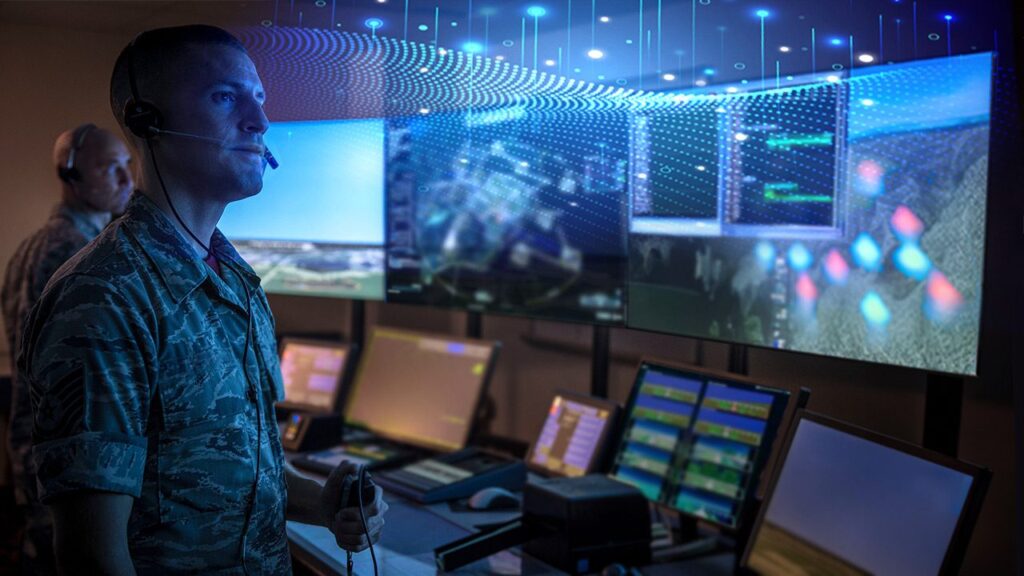
The U.S. Navy awarded Charles River Analytics a Small Business Technology Transfer (STTR) Phase II contract for the integration of human-AI teaming approaches into Navy operations.

Joint User-centered Planning Artificial Intelligence Tools for Effective Mission Reasoning (JUPITER), funded by the Naval Air Systems Command (NAVAIR), is an AI-based mission planning framework focused on the effective use of AI across Navy workflows and operational contexts.

Charles River Analytics explains that AI holds great promise, but must be thoughtfully integrated into operational workflows to reach its full potential. Simply applying off-the-shelf AI solutions to mission-critical problems can be ineffective and even counterproductive.

Integrating AI into workflows presents several challenges. End users need to understand when and how to distribute tasks across the human‑AI team, how AI reaches its decisions, and what is needed for effective coordination and execution.

While developing JUPITER, the team also focused on identifying potential operational scenarios for the Navy that are suitable for incorporating AI technologies, deriving requirements for human‑AI teaming within these scenarios, and developing methods to evaluate different AI solutions that might work within a human‑AI team.

Phase I of JUPITER involved understanding where and how AI would most significantly impact the mission planning process. The team established requirements for effective human‑AI collaboration in targeted operations and created lightweight simulation environments to evaluate concepts and simulate human‑AI interactions in realistic settings.

In Phase II, the JUPITER team built upon the prior success by identifying additional mission operations where human‑AI teaming could provide benefit to the Navy, and worked to develop, test, and validate these approaches. JUPITER is currently expanding in Phase II, focusing on transitioning the technology to target programs.

The key principles and innovative approaches developed under JUPITER for effective human‑AI teaming can translate to a number of commercial applications, especially as the interest in AI technologies (including generative AI) has continued to grow.

Stephanie Kane, Principal Scientist at Charles River Analytics and Principal Investigator on JUPITER, commented, “We need to take into account the human dimension when applying AI to critical problem spaces. For example, we must consider the capabilities and limitations of the AI technology, what the risks are, how it changes current workflows, where we should and should not use AI, and how the human and AI elements are going to effectively work together to accomplish overall goals.

“JUPITER is not just about identifying tasks that can be offloaded to AI. It also optimizes human‑AI interactions. The JUPITER framework considers the overall human‑AI team to cultivate effective interactions across the human end user and AI technologies. “It’s about evaluating their performance as a team and how the human’s work changes with the introduction of AI into the envisioned mission workflow.

“We’re deeply looking at the effective use of AI, especially considering the ultimate end users. The commercialization potential of JUPITER is immense, as human‑AI interaction is a fundamental challenge that numerous companies must address to leverage emerging and cutting-edge AI technologies effectively.”

Posted by Summer James Summer is an Editor & Copywriter at Ocean Science Technology. With a background in Creative Writing and English Literature, she joined in 2025 and brings a passion for subsea robotics, environmental monitoring, and ocean exploration. Her focus is on crafting engaging, accessible content that highlights the latest advances in marine technology. Connect

Latest Articles

Cambridge Pixel to Showcase USV Software Solutions at SMM Maritime Fair

Cambridge Pixel is demonstrating its technology for developers and integrators of uncrewed and autonomous surface vessels at the SMM 2026 maritime trade fair in Hamburg, Germany

Sep 02, 2026
Hybrid Underwater Vehicles for Mine Countermeasures

Strategic Robotic Systems (SRS) examines how hybrid underwater vehicles combine autonomous search with tethered control to support mine detection, inspection, and neutralization while reducing diver exposure during high-risk operations

Sep 02, 2026
New MEMS Accelerometer Targets Marine Applications

Silicon Sensing Systems Ltd has launched Zenith®, a closed-loop MEMS accelerometer delivering low-noise linear acceleration measurement for demanding surface and sub-surface marine applications, including heave measurement

Sep 01, 2026
Subsea Navigation Unified Across Vehicle Classes

Sonardyne has expanded its SPRINT-Nav technology into a scalable underwater navigation family built around a shared architecture and unified software suite for subsea vehicles of all sizes

Sep 01, 2026
Tulip Tech Extends Lobster Robotics Underwater Drone Endurance

Tulip Tech developed a high-density battery pack that gives Lobster Robotics approximately 60% more battery life without meaningfully increasing drone size

Sep 01, 2026
August’s Most Read: The Details That Do the Work

August’s most-read stories spotlight the precision behind marine autonomy, from high-voltage power and advanced sonar to autonomous surveying, inspection, and underwater imaging

Sep 01, 2026

Featured Content

New MEMS Accelerometer Targets Marine Applications

Silicon Sensing Systems Ltd has launched Zenith®, a closed-loop MEMS accelerometer delivering low-noise linear acceleration measurement for demanding surface and sub-surface marine applications, including heave measurement

Sep 01, 2026
Compact Sensor Enables Low-Power Air & Surface Water CO₂ Monitoring

Pro-Oceanus launches a dual-purpose CO₂ measurement system designed for autonomous platforms and distributed monitoring applications

Aug 27, 2026
Choosing the Right Underwater Laser

SubC Imaging outlines how underwater laser types support subsea measurement, surface profiling, photogrammetry, and inspection across different platforms, camera orientations, and environmental conditions

Aug 24, 2026