

Underwater Acoustic Modems
Discover cutting-edge solutions from leading global suppliers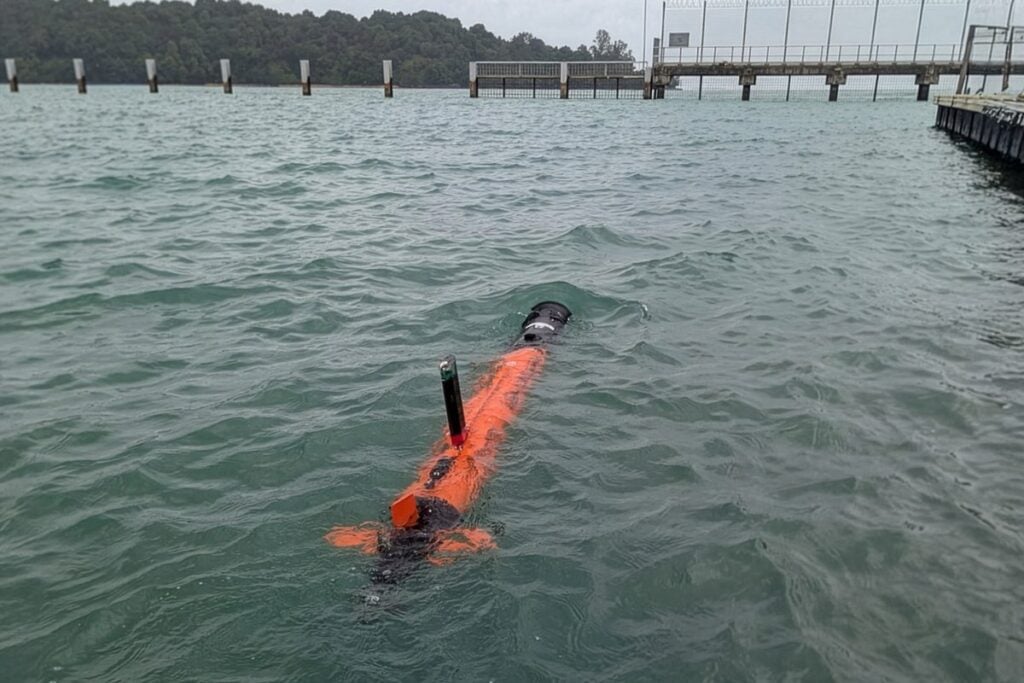
Subnero smart modems have been integrated into an OceanScan MST LAUV autonomous underwater vehicle (AUV) by the Acoustic Research Laboratory (ARL) at the National University of Singapore (NUS), providing reliable acoustic command and control without requiring modifications to the modem, vehicle or underlying software ecosystem.
For ARL, reliable communication is critical when operating an Autonomous Underwater Vehicle worth hundreds of thousands of dollars or more in demanding environments. The laboratory selected the OceanScan MST LAUV for projects in the shallow tropical waters around Singapore, where strong currents, heavy shipping traffic and challenging acoustic conditions can make underwater communication particularly difficult.
The challenge was that the LAUV operates within the Dune software ecosystem, with no existing integration for Subnero modems. Rather than requiring changes to either platform, ARL developed a small open-source software bridge running directly on the modem. OceanScan MST handled the mechanical and electrical integration, while the existing LAUV and Subnero systems remained unchanged.
Designed for challenging acoustic environments
Singapore’s waters present a particularly difficult environment for underwater acoustic communication. Shallow tropical waters are characterized by intense snapping-shrimp activity, with impulsive acoustic noise capable of significantly degrading receivers designed around conventional Gaussian noise assumptions.
Busy shipping lanes introduce further complications. Passing vessels and breaking waves generate bubbles in the water column, while smaller microbubbles can persist for hours and be transported by currents, creating a continuously changing acoustic environment.
Subnero’s modems were developed in these waters, with their communication technologies designed around real-world acoustic conditions and advanced networking capabilities suited to autonomous underwater operations.
The integration therefore addressed more than simply establishing a physical connection between two systems. It demonstrated that the Subnero modem could be incorporated into the LAUV architecture at the software level without requiring proprietary modifications or extensive development work.
More than a year of field operations
Since completing the integration, ARL has operated the LAUV and its Subnero acoustic link for more than a year in the same demanding conditions that motivated the project. The system has supported reliable field operations across shallow waters, strong currents and busy shipping channels.
For AUV operators, that communication capability provides greater visibility and control while a vehicle is submerged. Instead of waiting for an AUV to return to the surface before confirming its status, operators can maintain an acoustic link and monitor the vehicle during its mission.
The integration also demonstrates the value of open architectures. ARL completed the work as a third party using its own tools, without requiring Subnero to customize its modem or OceanScan MST to modify the LAUV software. The software bridge is open source, providing a basis for other users to build on.
Following the project, Subnero modems are available as a drop-in option for LAUV platforms, while OceanScan MST can support customers seeking to integrate Subnero acoustic communication into their vehicles.