
The Global Sourcing Hub for Marine, Subsea & Offshore Technology
Discover cutting-edge solutions from leading global suppliers
SubSea Craft’s development of a common digital control architecture is helping to streamline the integration of autonomous capabilities across multiple maritime platforms, building on technology first demonstrated during unmanned trials of VICTA in 2023. The system has since undergone continued refinement through testing, customer programs, and operational development, providing a shared technical foundation for subsequent platforms, including MARS.
The initial VICTA demonstration established more than the craft’s ability to operate without personnel onboard. It also validated the underlying digital control system responsible for managing vessel operation, navigation, and transitions between different mission states.
This provided a basis for extending the architecture beyond its original application, with the potential to reduce the engineering effort associated with developing additional systems.
Applying a Common Control Architecture to New Platforms
The development of MARS demonstrated how an established digital architecture could be applied to a dedicated uncrewed platform without requiring an entirely new control system.
Completed in just 100 days, the MARS development program drew on the same digital control foundation originally demonstrated through VICTA. Reusing this architecture allowed engineering efforts to concentrate on the requirements specific to MARS rather than recreating core control functionality.
This approach illustrates the role of reusable software and control systems in supporting shorter development cycles. By retaining an established technical foundation, SubSea Craft can address platform-specific requirements while drawing on knowledge and capabilities developed through earlier programs.
The relationship between VICTA and MARS also demonstrates how a common digital architecture can support different maritime systems while accommodating their individual operational requirements.
Refining the Digital Control Framework Through Testing
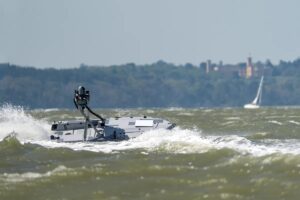
Since the 2023 unmanned demonstration, the original VICTA control system has undergone further development informed by extensive testing, customer engagement, and operational experience.
This process has expanded the architecture from a demonstrated capability into a more mature and adaptable framework supporting multiple systems within SubSea Craft’s portfolio.
Continued refinement has also created opportunities to apply technical lessons across programs. Improvements and knowledge gained during the development or testing of one platform can inform work on others, reducing the need to address common integration challenges independently.
For SubSea Craft, maintaining a shared control architecture provides a means of reducing integration effort and supporting the introduction of additional capabilities as operational requirements evolve.

Supporting the Development of Future Maritime Systems
The wider significance of VICTA’s 2023 unmanned trials lies in the subsequent application and evolution of the technology validated during those demonstrations.
Rather than remaining specific to VICTA, the digital control architecture has become a common foundation for multiple systems, with MARS providing an example of its reuse in a platform developed within a compressed timeframe.
This approach allows future development work to build upon an existing technical framework while accommodating the distinct requirements of individual platforms and customer programs.
As maritime autonomy requirements continue to develop, the ability to integrate and refine capabilities efficiently will remain an important consideration. SubSea Craft’s experience with VICTA and MARS demonstrates how a reusable digital control architecture can contribute to that process, supporting further system development while maintaining a focus on reliability and performance.
Read Developing the Digital Architecture Behind Next-Generation Maritime Autonomy on the SubSea Craft website.