

Cetasol Visible Onshore

Charles River Analytics Software to Advance Autonomous Vessel Escort Safety

Charles River Analytics’ PAVE system enhances naval escort operations by using AI-powered perception to improve safety, tracking, and threat detection in crowded harbors By Summer James / 10 Apr 2025

Maritime Collision Avoidance System

Discover cutting-edge solutions from 8 leading global suppliers
SUPPLIER SPOTLIGHT
Charles River Analytics Software to Advance Autonomous Vessel Escort Safety
Follow OS&T

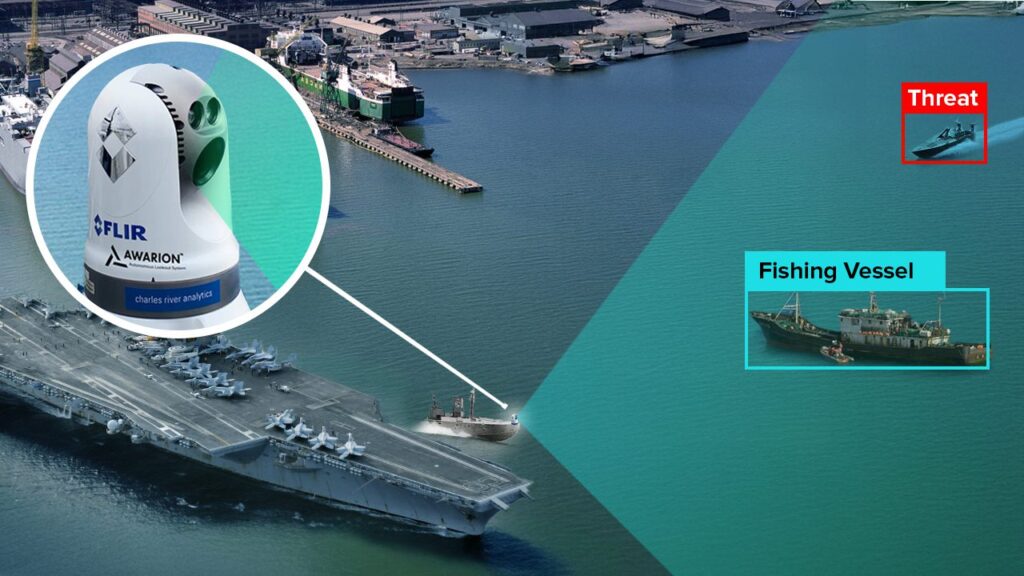
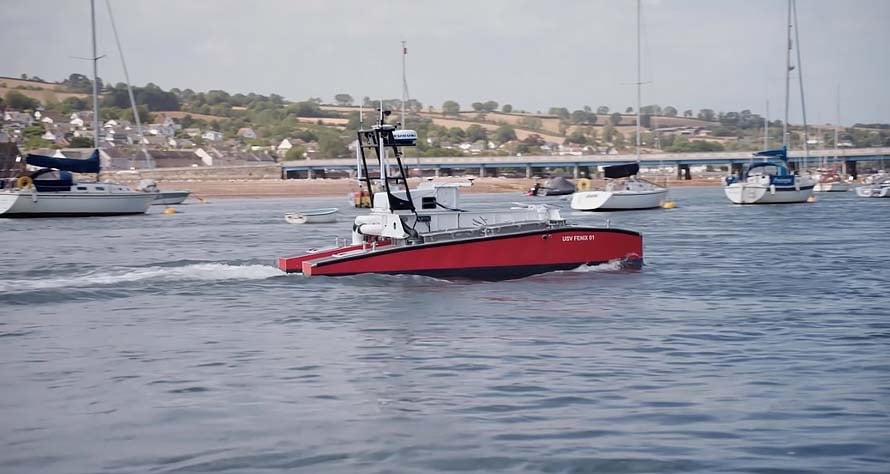
Charles River Analytics’ Perception Autonomy for Vessel Escorts (PAVE) system automates the escort of high-value naval assets, reducing personnel requirements and increasing speed and safety in crowded harbors.

This Small Business Innovation Research (SBIR) Phase II contract is sponsored by the Naval Sea Systems Command.

While PAVE is not the first of its kind, current perception software for uncrewed surface vessels (USVs) is generally unable to conduct precise tracking of small or fast-moving vehicles, particularly in crowded harbor environments. These systems also struggle to characterize potential threats effectively.

PAVE builds on Awarion®, Charles River Analytics’ artificial intelligence (AI)–powered autonomous lookout system, which complements and supports human watchstanders and marine radar systems for collision avoidance on the open seas.

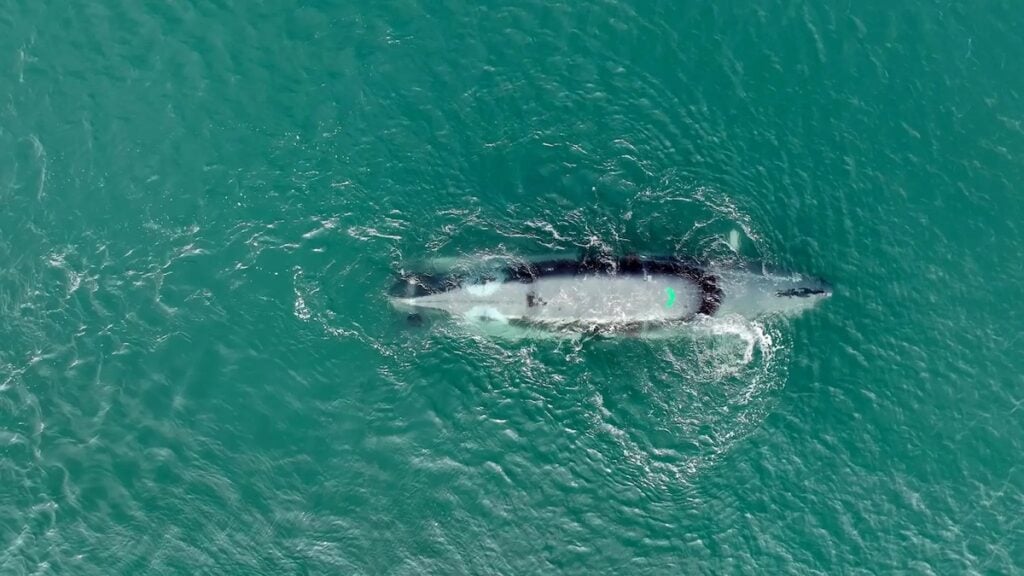
Ross Eaton, Principal Scientist, Director of Marine Systems, and Awarion product lead at Charles River, stated, “Awarion detects, analyzes, and reports on the presence of whales, vessels, and other maritime objects in the open ocean, but we can adapt it to perform well in more crowded harbor scenarios. With PAVE we can not only understand what and where something is, we can also make inferences about what that other boat might be doing so we can alert the appropriate personnel as needed.”

In addition, PAVE will be able to estimate the distance to the various objects it detects. It uses electro-optical (EO) and infrared (IR) detection technologies to “see” objects during both day and night.

In a busy harbor, there is often a great deal of activity in both the foreground and background. While humans can easily distinguish between objects such as buildings and boats, the abundance of signals can confuse algorithms. Achieving human-like perception in computer vision is a key challenge that PAVE aims to address. This is why, after successfully demonstrating the system’s feasibility in Phase I, Phase II will focus on providing PAVE with a broader set of harbor-specific learning data, including new categories such as piers and buildings.

Charles River expects that the full-scope, PAVE-enabled smart camera will provide immediate benefits for the Maritime Expeditionary Security Force (MESF), as they continue to develop their uncrewed escort capabilities.

Eaton continued, “We’re launching a more concerted effort to collect additional data that has more crowded backgrounds and congested scenes. Instead of having different people on different boats with all of them having only a partial view of the world, we’re building a cohesive picture, which will alert and issue warnings when something deserves a closer look. It makes the response more coordinated and faster.

We want to leverage the strength of the human and automation to make an overall system that is as efficient as possible. I’m especially excited about PAVE because it demonstrates that we can meet and address a specific customer need and we can provide it faster and more affordably than they otherwise might have been able to access.”

Posted by Summer James Summer is an Editor & Copywriter at Ocean Science Technology. With a background in Creative Writing and English Literature, she joined in 2025 and brings a passion for subsea robotics, environmental monitoring, and ocean exploration. Her focus is on crafting engaging, accessible content that highlights the latest advances in marine technology. Connect

Latest Articles

Cambridge Pixel to Showcase USV Software Solutions at SMM Maritime Fair

Cambridge Pixel is demonstrating its technology for developers and integrators of uncrewed and autonomous surface vessels at the SMM 2026 maritime trade fair in Hamburg, Germany

Sep 02, 2026
Hybrid Underwater Vehicles for Mine Countermeasures

Strategic Robotic Systems (SRS) examines how hybrid underwater vehicles combine autonomous search with tethered control to support mine detection, inspection, and neutralization while reducing diver exposure during high-risk operations

Sep 02, 2026
New MEMS Accelerometer Targets Marine Applications

Silicon Sensing Systems Ltd has launched Zenith®, a closed-loop MEMS accelerometer delivering low-noise linear acceleration measurement for demanding surface and sub-surface marine applications, including heave measurement

Sep 01, 2026
Subsea Navigation Unified Across Vehicle Classes

Sonardyne has expanded its SPRINT-Nav technology into a scalable underwater navigation family built around a shared architecture and unified software suite for subsea vehicles of all sizes

Sep 01, 2026
Tulip Tech Extends Lobster Robotics Underwater Drone Endurance

Tulip Tech developed a high-density battery pack that gives Lobster Robotics approximately 60% more battery life without meaningfully increasing drone size

Sep 01, 2026
August’s Most Read: The Details That Do the Work

August’s most-read stories spotlight the precision behind marine autonomy, from high-voltage power and advanced sonar to autonomous surveying, inspection, and underwater imaging

Sep 01, 2026

Featured Content

New MEMS Accelerometer Targets Marine Applications

Silicon Sensing Systems Ltd has launched Zenith®, a closed-loop MEMS accelerometer delivering low-noise linear acceleration measurement for demanding surface and sub-surface marine applications, including heave measurement

Sep 01, 2026
Compact Sensor Enables Low-Power Air & Surface Water CO₂ Monitoring

Pro-Oceanus launches a dual-purpose CO₂ measurement system designed for autonomous platforms and distributed monitoring applications

Aug 27, 2026
Choosing the Right Underwater Laser

SubC Imaging outlines how underwater laser types support subsea measurement, surface profiling, photogrammetry, and inspection across different platforms, camera orientations, and environmental conditions

Aug 24, 2026