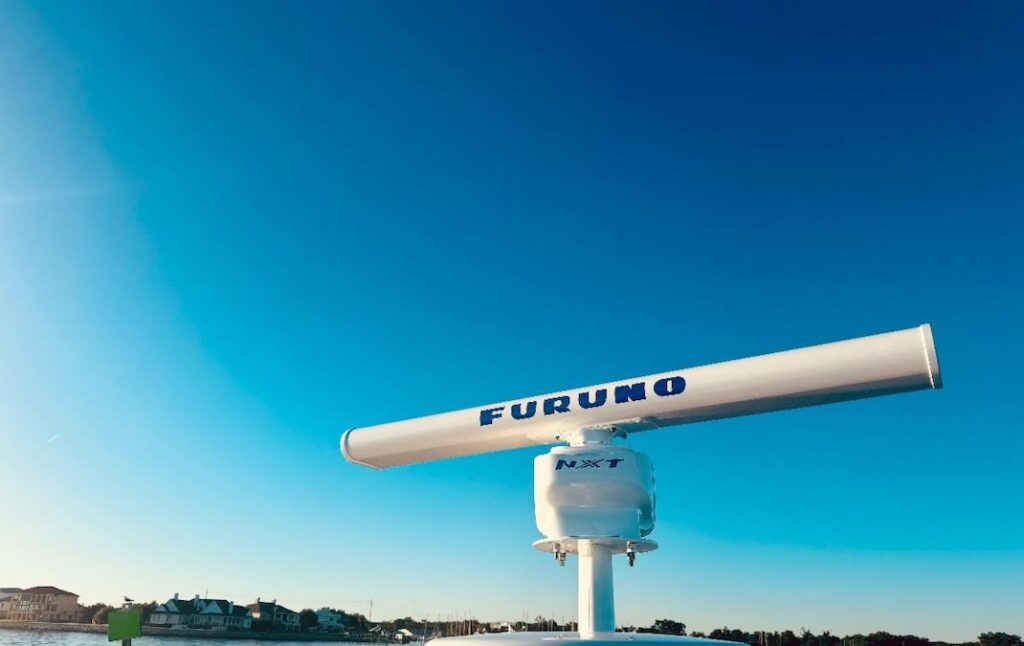
Tocaro Blue, a developer of machine learning software for marine radar systems, details how it is overcoming persistent radar perception challenges with its ProteusCore™ processing software.
Marine radar remains essential for safe navigation, but it is widely recognized as difficult to interpret. Operators must contend with slow scan rates, side lobes, multipath interference, and heavy sea clutter such as wake. When viewing a single radar frame, it can be extremely difficult to distinguish between a real target and noise.
Target separation presents another limitation. When a vessel approaches a navigation marker too closely, traditional radar processing can blur the two returns into a single target. Manual tuning is another common difficulty. If radar gain is set too high, targets can disappear in noise. If it is set too low, detections may be missed entirely. Changes in sea state or rain can then require re-tuning, placing a constant burden on the operator.
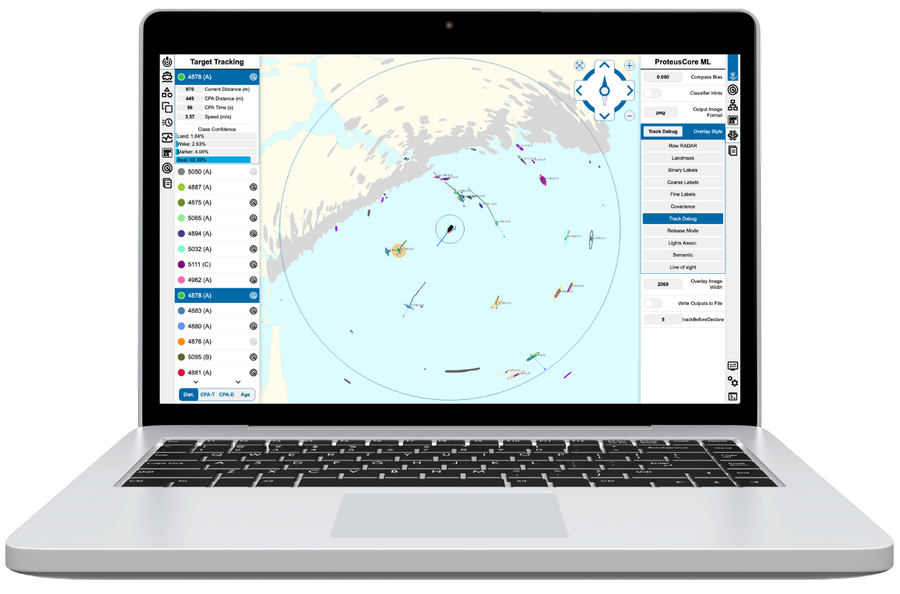
ProteusCore™ addresses these issues using machine learning trained on a proprietary dataset of more than three million labeled radar frames. Because there is no publicly available radar dataset comparable to those used in camera-based detections and classifications, Tocaro Blue has spent years building a large-scale marine radar training dataset to power its models.
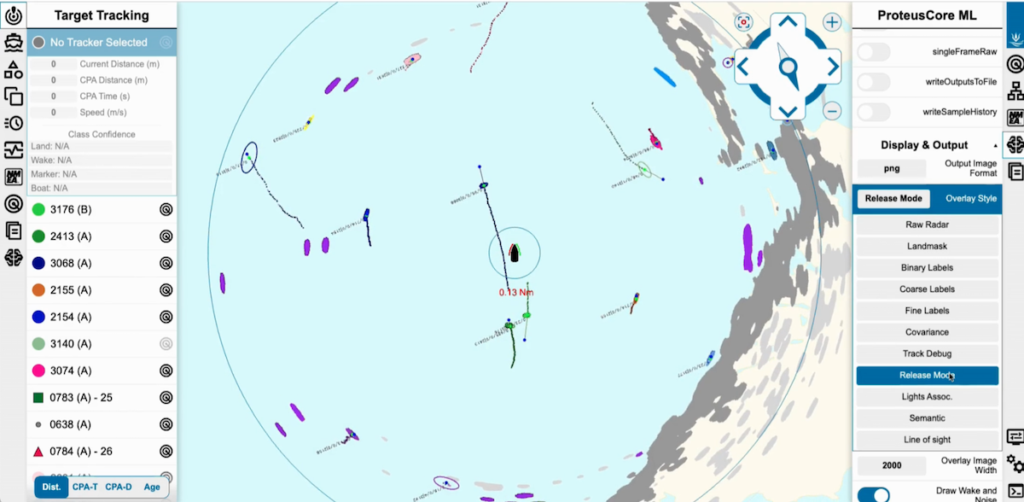
The radar processing software by Tocar Blue offers a patent-pending Autofocus feature that optimizes object detection based on environmental conditions, sea state, and proximity to land. Machine learning filters out clutter, including wake and unwanted returns over land, to reveal only real, relevant targets.
Beyond detection, ProteusCore classifies targets within approximately five scans, typically in 5–10 seconds. After detecting targets with the Radar, ProteusCore applies Tocaro Blue’s proprietary machine learning models to decipher the contents of the Radar images. The system can confidently distinguish between vessels, markers, land, and noise, providing more context than conventional radar processing or MARPA tracking.
ProteusCore also compensates for slow scan rates by predicting where targets are likely to move based on heading and speed. It maintains target separation as objects converge, enabling both contacts to be tracked independently rather than merging into a single return. The system automatically acquires, tracks, and discards targets in real time, reporting position, velocity, closest point of approach, and predicted trajectory, without requiring operator input.
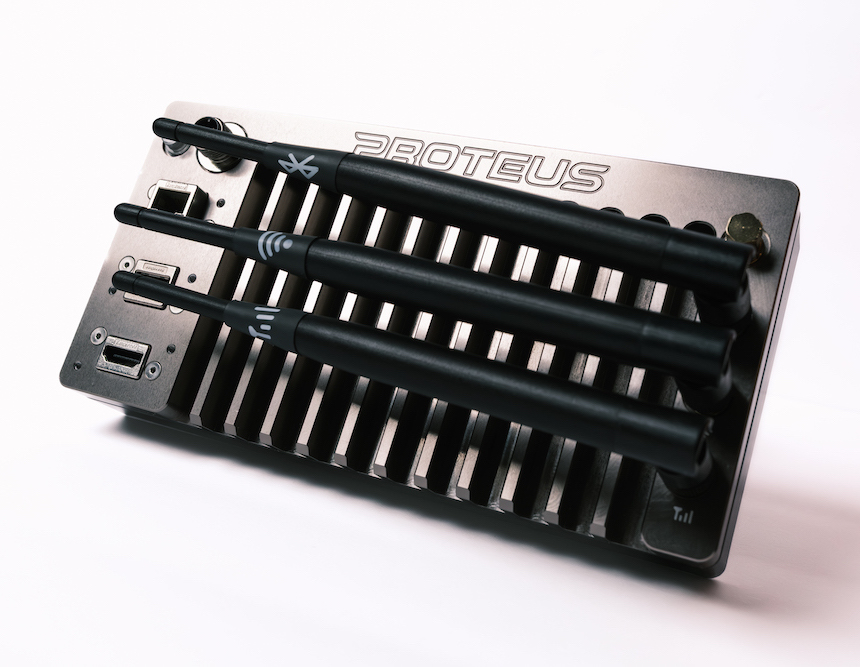
Designed to run on standard hardware, ProteusCore only requires CPU processing, meaning it can be a more cost effective solution to implement than EO/IR camera or LiDAR based solutions that require expensive hardware. It can be deployed via the ProteusCore App or SDK and integrated into navigation displays, Advanced Driver Assistance Systems (ADAS), or autonomous vessel control systems.
By combining large-scale radar training data, automated tuning, rapid classification, and advanced tracking, ProteusCore enhances conventional marine radar with intelligent perception capabilities while reducing operator workload and improving situational awareness.