

Teledyne Marine’s Acoustic Doppler Current Profiler (ADCP) technology has played a role in more than three decades of coastal research conducted by oceanographer Arnoldo Valle-Levinson. Read more >>
Beginning with early towed ADCP systems in the 1990s and continuing through successive generations of Teledyne RDI instruments, these technologies have provided measurement capabilities used to study circulation patterns across estuaries, fjords, and semi-enclosed coastal environments worldwide.
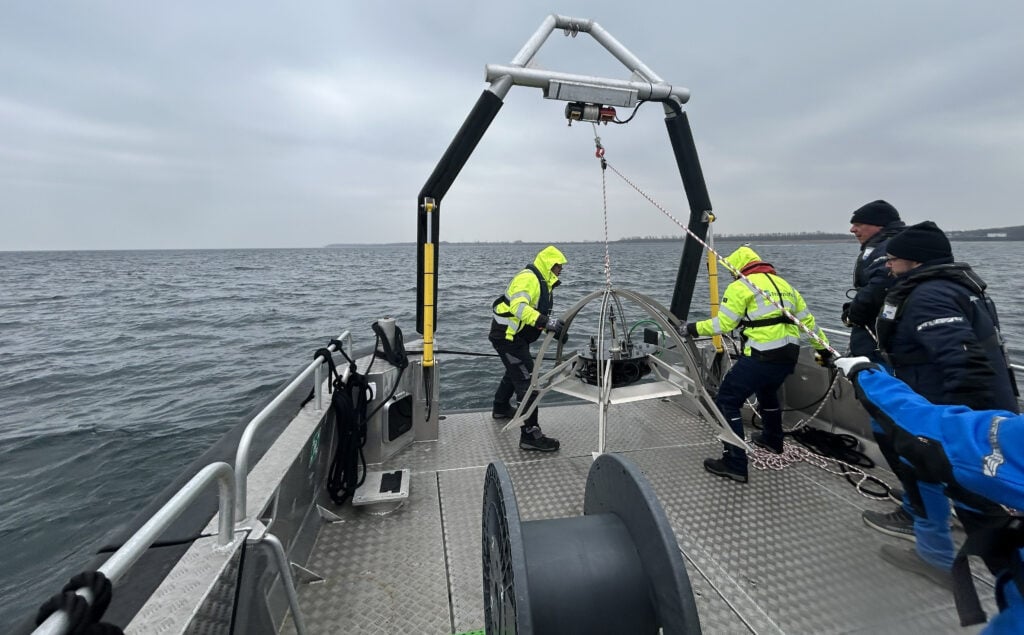
Valle-Levinson’s research career was shaped by the capabilities of ADCP systems, beginning with a 1993 study of water exchange at the mouth of Chesapeake Bay. The early instruments provided the required measurement capability but presented significant logistical challenges due to their size, weight, and deployment requirements. As Teledyne RDI developed more compact systems, including the Workhorse ADCP, Valle-Levinson’s research team gained greater flexibility to conduct surveys from smaller vessels and in more remote locations.
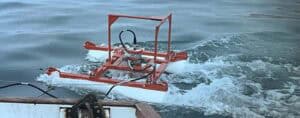
1998 – 600 kHz ADCP (early 1990s model) being towed off the coast of Sinaloa, Mexico. Photo by Arnoldo Valle-Levinson.
The evolution of Teledyne ADCP technology provided the observational foundation for Valle-Levinson’s work across coastal regions spanning multiple continents. By collecting comparable measurements from environments ranging from Chesapeake Bay and Chilean fjords to tropical lagoons in Mexico and glacial regions in Greenland, his research contributed to a broader understanding of how tides, wind, and river discharge influence circulation within estuaries and other coastal systems. These observations have supported studies involving pollutant transport, fisheries, and climate-related processes, including the movement of warm ocean water toward glacier fronts through fjord circulation.
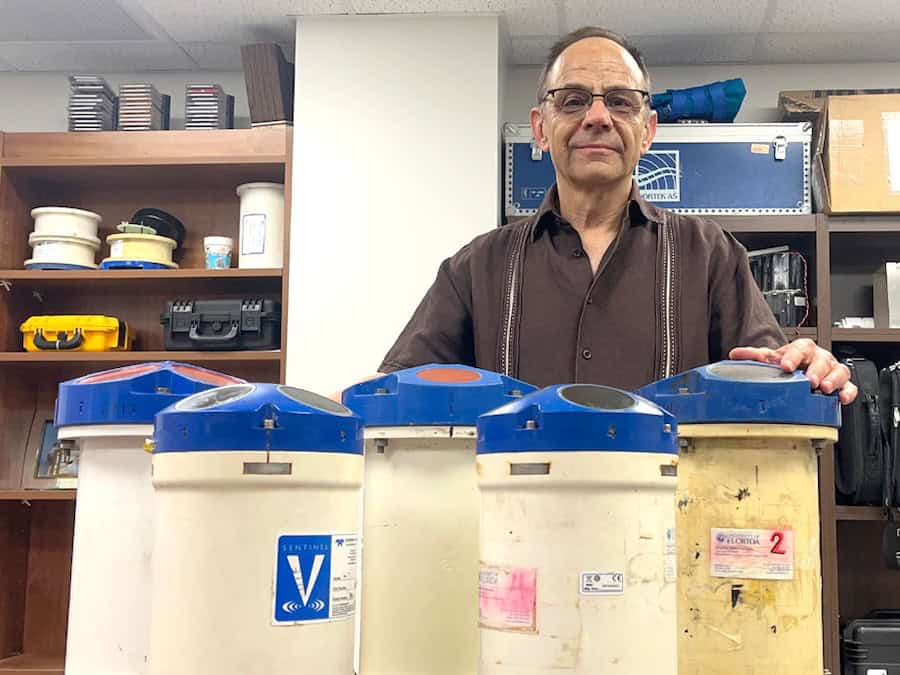
Later developments, including the Sentinel V and StreamPro ADCP systems, further expanded the range of environments accessible to researchers by improving measurement capabilities, portability, and shallow-water performance. According to Valle-Levinson, reliable bottom-track data, high-quality measurements, and customer service have been key factors in the long-term use of Teledyne RDI systems. The transition from larger early instruments to more compact platforms has allowed field teams to conduct detailed current measurements with fewer logistical constraints.
The full article explores Valle-Levinson’s three-decade journey using Teledyne Marine ADCP technology, from early large-scale deployments to modern portable systems, and examines how advances in current profiling have contributed to a deeper understanding of coastal dynamics around the world.