

Cetasol develops data-driven technologies designed to give vessel operators a clearer understanding of performance, fuel use, emissions, and machinery condition. Its approach combines onboard data collection, digital modeling, real-time guidance, and cloud-based analysis to support vessel operations.
At the center of this capability is iHelm, an AI-driven monitoring and decision-support system that connects with a vessel’s engine, GPS, and other sensors. The collected information is used to build a digital representation of how each vessel performs during actual operations, giving crews and shore-based teams visibility into vessel behavior in real time and over longer periods.
Rather than relying only on how a vessel was designed to perform, the system uses operational data to reflect how the vessel actually behaves in service.
Building an Operational Digital Twin
Engine signals, GPS information, and voyage history are used to create a digital twin for each vessel. The model is updated daily as new operational data becomes available.
iHelm by Cetasol
This digital model supports recommendations based on actual vessel behavior and can also be used to compare different speed or route scenarios before an operator commits to them.
For fleet managers, the same data provides visibility into metrics including fuel use per nautical mile, speed distribution, engine load, and other performance indicators. This makes it easier to compare vessels and identify differences in operational performance across a fleet.
Real-Time Guidance for Vessel Crews
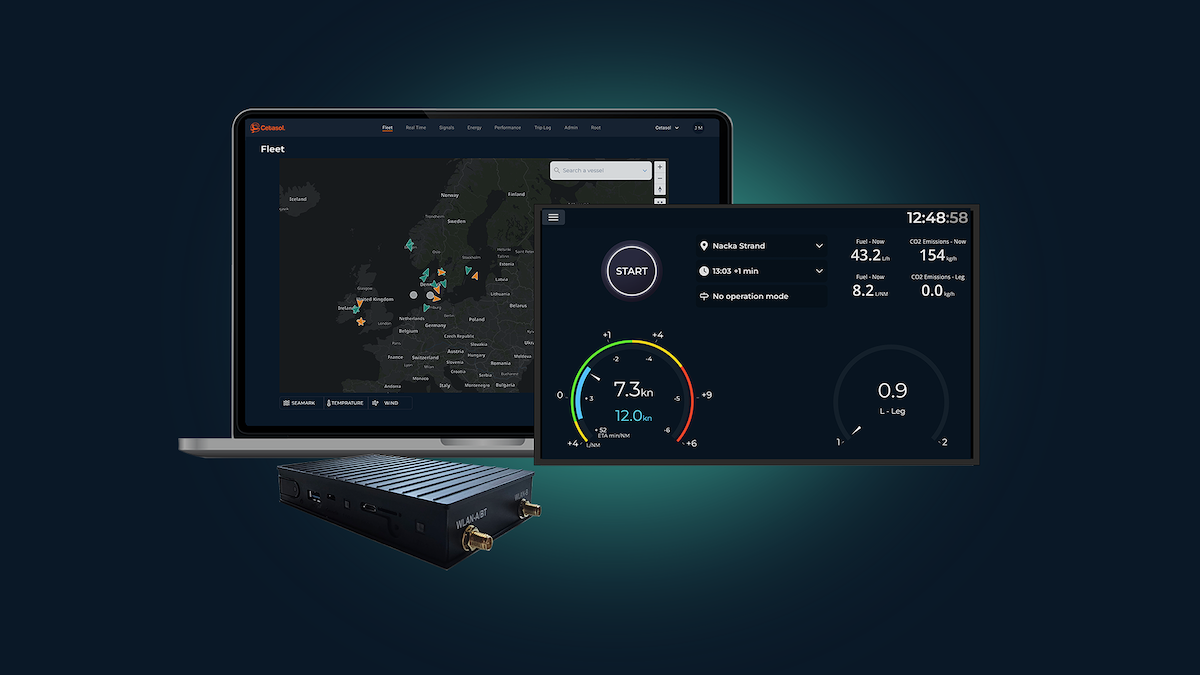
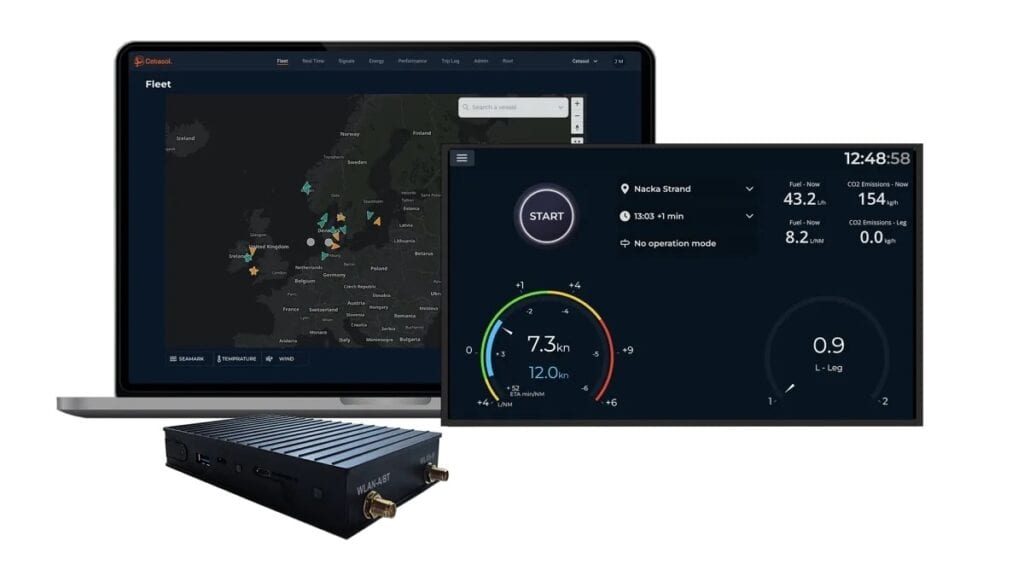
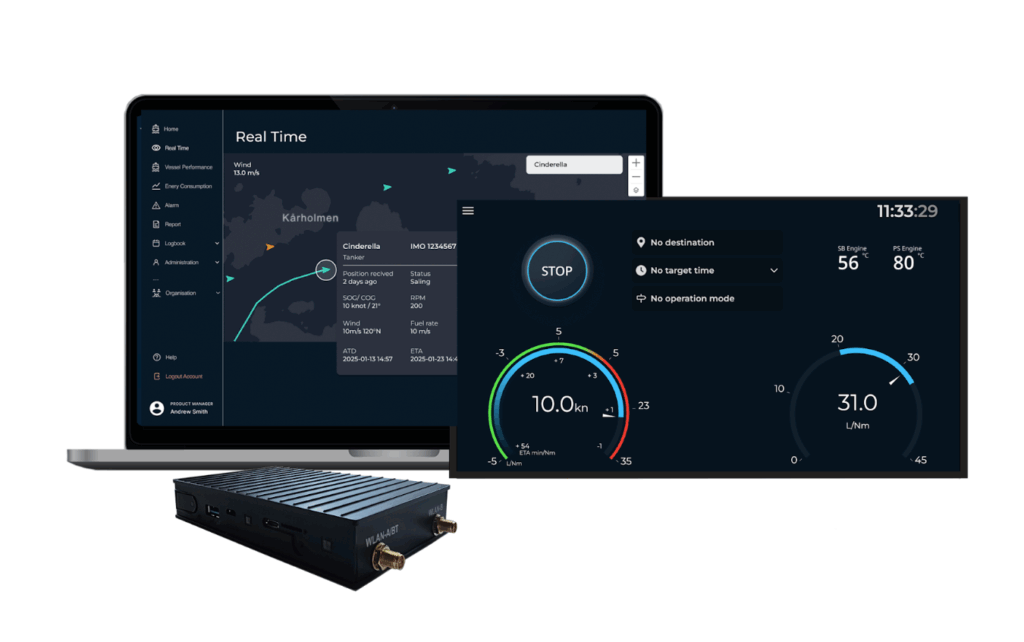
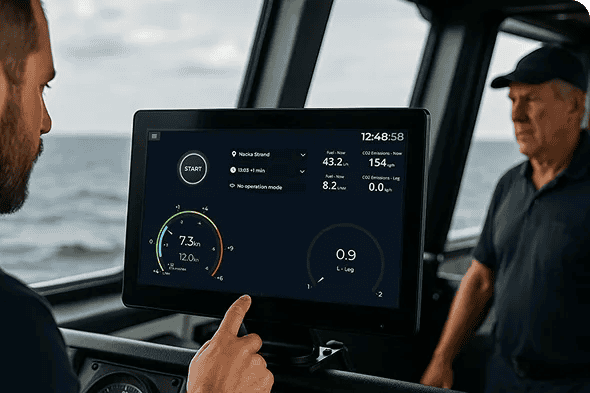
Operational information is presented directly to crews through the bridge-mounted Captain’s Display.
A Speed Gauge shows the vessel’s current speed alongside a recommended speed range for the current conditions. It also indicates how much fuel could be saved or lost by adjusting speed.
The Fuel Gauge compares real-time fuel consumption with the expected range for the operation, allowing crews to see when consumption differs from anticipated levels.
Using this combination of speed guidance and fuel feedback, Cetasol states that operators can reduce fuel consumption by 8 to 15% without sacrificing schedule. The Captain’s Display also provides voyage information and allows captains to set destinations and target times within the same interface.
Monitoring Engine Performance
The continuous collection of engine signals also supports predictive maintenance.
iHelm monitors those signals for unusual patterns that may indicate developing issues. These patterns can be flagged before they lead to breakdowns, giving technical teams information they can act on.
Earlier warnings can help reduce unplanned downtime while providing a clearer basis for investigating changes in engine behavior.
Connecting Vessel and Shore Operations
Data collection onboard is handled by the Cetasol Main Unit, or CMU, a compact computer connected to the engine, GPS, and other sensors. It is designed to continue operating if the vessel loses internet connectivity for several weeks. Information collected by the CMU is available through the iHelm Cloud Dashboard, where operators and fleet managers can review vessel and fleet performance.
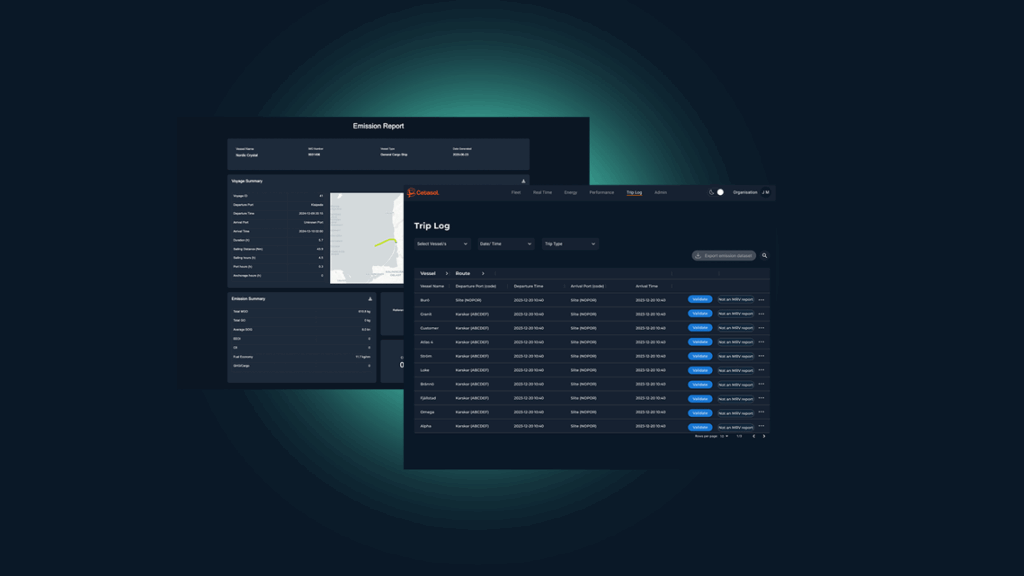
The dashboard brings together real-time and historical data, making it possible to compare vessels, identify trends, investigate incidents, and run compliance reports. Configurable dashboard cards include Fuel Now, CO2 Emissions Now, and CO2 Emissions per Leg, providing additional visibility into fuel use and emissions performance.
Using Operational Data for Compliance
The information collected for vessel monitoring also supports regulatory reporting.
iHelm handles reporting for EU MRV, IMO DCS, CII, and EU ETS automatically, reducing reliance on manual spreadsheet-based reporting.
This allows compliance information to be managed alongside the same operational data used for performance and emissions monitoring.
Virtual Fuel Flow Monitoring
Cetasol also applies its digital twin technology to vessels that do not have a physical mass flowmeter installed.
CetaFuel is a virtual mass flowmeter that monitors fuel usage without the expensive and complex installation associated with a physical mass flowmeter.
The approach avoids clogging risk, requires minimal installation, and is designed to work across fleets of different sizes. Cetasol states that CetaFuel delivers accuracy of 97 to 99.5%. By applying digital twin technology to fuel monitoring, CetaFuel provides a way to measure fuel usage without relying on a physical mass flowmeter installation.
Across these applications, Cetasol’s technology is focused on using operational vessel data to provide clearer insight into how vessels perform in service. Combining digital twins, live bridge guidance, engine monitoring, emissions information, compliance reporting, and cloud-based fleet analysis allows the same operational data to support both onboard decisions and longer-term fleet assessment.