


iHelm is a decision support for increased insights, money and time savings. Powered by advanced AI and daily-updated digital twins, iHelm transforms complex data into clear, actionable guidance for operators and fleet managers alike.
With iHelm you benefit from:
- Fuel savings
Reduce operational costs and emissions through intelligent real-time advice. By optimizing speed and consumption, iHelm helps operators save 10–25% in fuel use while maintaining safe and reliable operations. - Operational performance
Access full transparency across your fleet with detailed monitoring of fuel use and vessel performance indicators, enabling data-driven decisions that strengthen long-term efficiency. - Reporting and compliance
Automate and simplify mandatory reporting (EU MRV, IMO DCS) while generating tailored performance reports to easily share with stakeholders. - Engine health and uptime
Track critical signals, receive early warnings, and secure maximum reliability with predictive monitoring of engine conditions.
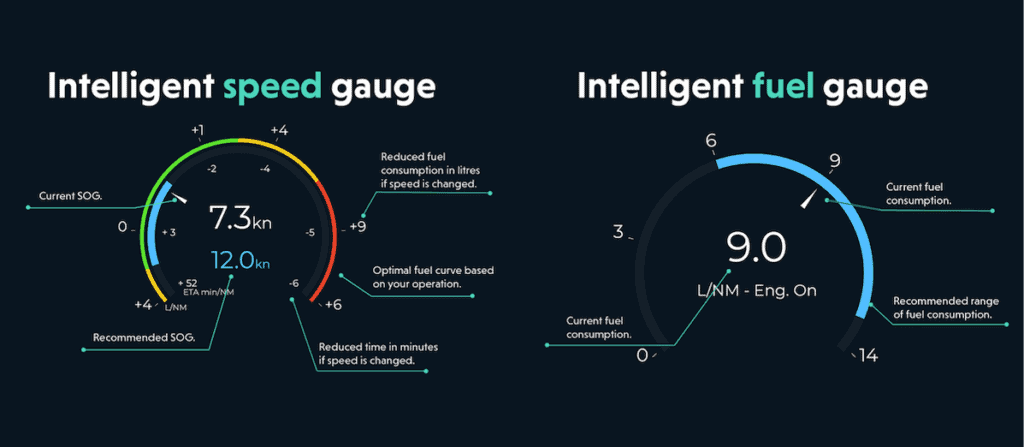
The onboard dashboard is built for clarity. Integrated tools such as the Speed Gauge and Fuel Gauge make it easy to visualize how operational choices affect efficiency. Customizable metric cards—including Fuel Now, CO₂ Emissions Now, and CO₂ per Voyage Leg—give crews and managers the insights they need, when they need them.
No matter the fleet size or propulsion type—diesel, hybrid, or electric—iHelm brings intelligence to every voyage, helping you cut costs, ensure compliance, and operate more sustainably.
How does it work?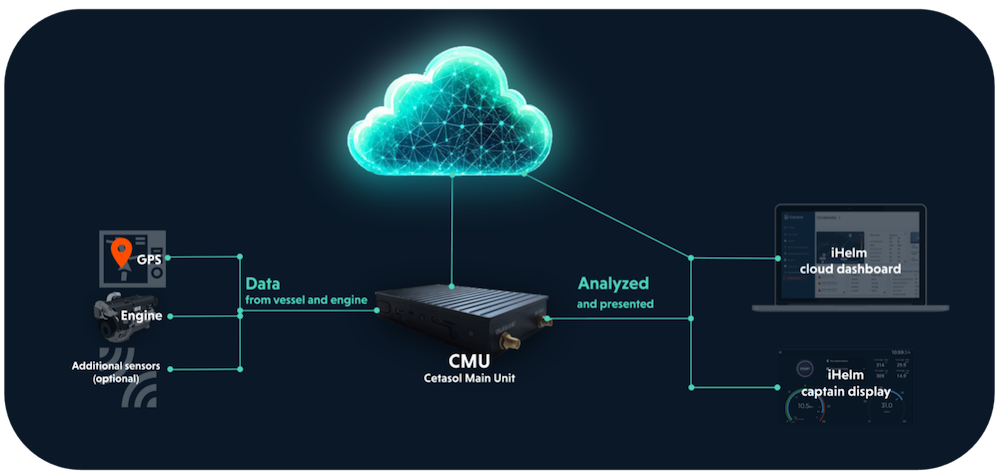
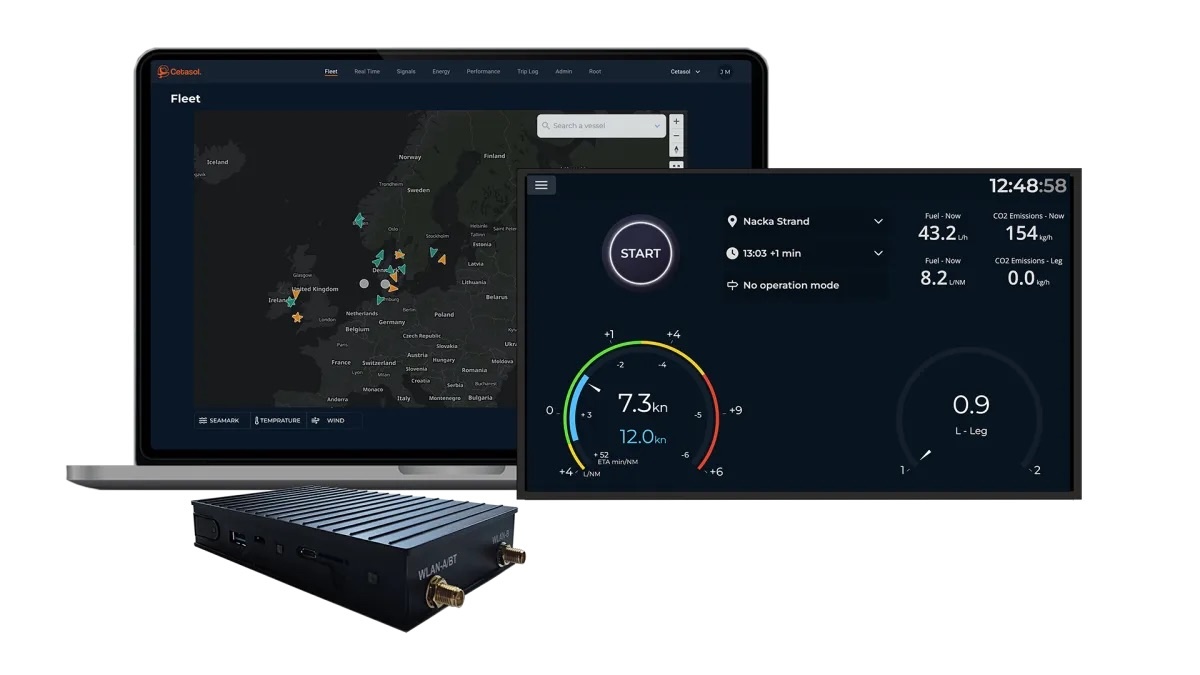
The iHelm system consists of three main components:
Cetasol Main Unit (CMU) – a compact but powerful PC that is installed on board the vessel and offers a variety of I/O capabilities for connecting to the engine, GPS receiver and additional sensors and equipment. It includes a SIM card and up to 128 GB of internal memory, and is capable of running independently of network connection for several weeks if required. The system creates the digital twin, processes data and delivers real-time results to the Captain display.
Captain’s Display – connected to the CMU and mounted in the bridge, this display provides the captain with an advanced marine dashboard for displaying vital up-to-the minute information. It includes an intelligent speed gauge that provides a recommended speed range for optimal fuel efficiency while dynamically displaying fuel consumption and the estimated time per nautical mile, enabling captains to make effective decisions in real time and strategically plan their voyage.
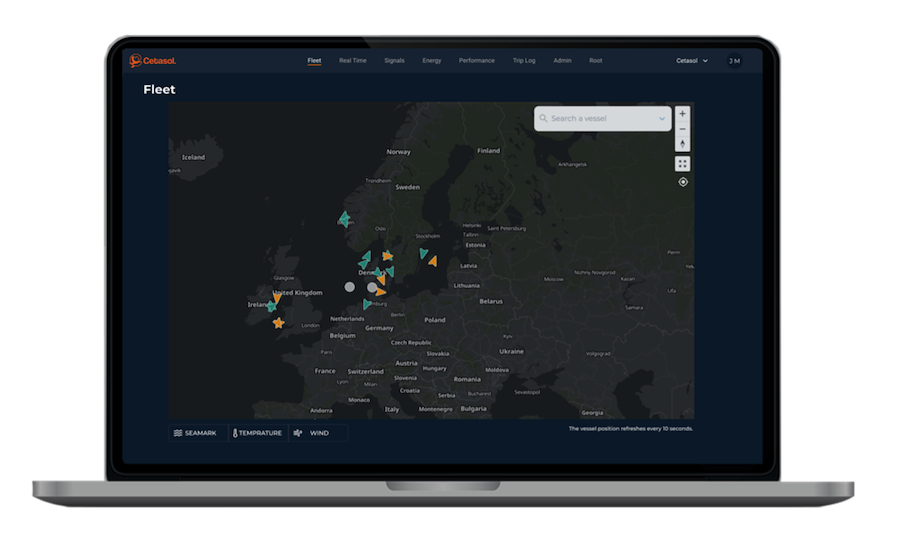
iHelm Cloud Dashboard – all data gathered by the CMU is delivered to a cloud-based dashboard that can be accessed from anywhere with an internet connection and allows operators and stakeholders to view both real-time and historical data. The powerful system automatically generates reports with a variety of analyses and calculations, including emissions and other essential statistics.
If you are missing a fuel reader we have an additional feature to iHelm, CetaFuel. Cetafuel is a virtual fuel reader that allows for fuel monitoring without complex and expensive installation.
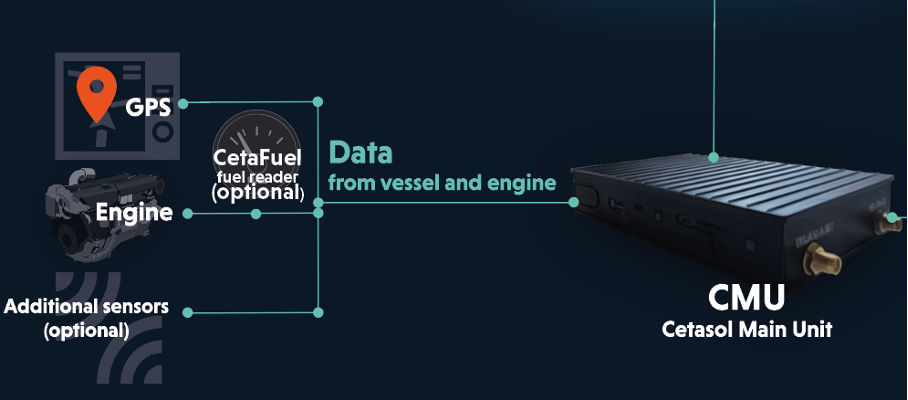
CetaFuel is a cost-effective and reliable virtual fuel reader that is ideal for vessels with older mechanical engines that lack built-in fuel monitoring. Designed to overcome the issues with expensive physical flow meters, it reduces the risk of clogging by doing away with the need for costly and time-consuming installations, requiring only minimal connections. Running on the Cetasol Main Unit edge processing hardware, it connects to the engines and other available signals such as RPM, pressure, and temperature, and provides fuel readings with 97 to 99.5% accuracy.