Additive manufacturing for offshore applications produces components directly from digital models using layer-by-layer manufacturing processes for low-volume parts, complex geometries, repairs, and replacement components. Offshore 3D printing can support valves, pumps, manifolds, heat exchangers, subsea housings, ROV and AUV components, renewable energy hardware, and specialized tooling.
This page features leading offshore additive manufacturing companies, supporting processes including powder bed fusion, directed energy deposition, wire arc AM, binder jetting, and polymer AM.
If you design, build or supply Offshore Additive Manufacturing, create a profile to showcase your capabilities and connect with visitors who have an active requirement for your solutions.
The Complete Guide to Additive Manufacturing for Offshore Applications
Overview by
William Mackenzie
Updated:
Introduction to Additive Manufacturing for Offshore Applications
Additive manufacturing for offshore applications enables components to be produced directly from digital models by building material in successive layers. For offshore operators and equipment manufacturers, Additive Manufacturing (AM) is particularly relevant to complex geometries, low-volume production, replacement parts, component repair, and situations where conventional manufacturing involves long tooling or supply-chain lead times.
Offshore 3D printing must nevertheless satisfy the same demanding service considerations as established manufacturing routes. Seawater exposure, cyclic loading, pressure, temperature, erosion, corrosive fluids, and inspection requirements all influence whether additive manufacturing is technically appropriate. AM-specific factors such as porosity, lack of fusion, residual stress, surface roughness, anisotropy, and build orientation can also affect fatigue, corrosion, and mechanical performance. As a result, successful adoption depends on controlling the complete manufacturing route rather than treating printing as an isolated production step.
Additive Manufacturing Workflow for Offshore Components
Producing qualified additive manufacturing for offshore components requires control from the original digital definition through final inspection.
Digital Design and Build Preparation: Engineers prepare the component model, establish tolerances and machining allowances, select build orientation, generate supports where required, and define validated machine parameters. Design preparation must also consider access for machining, inspection, support removal, and cleaning.
Layer-by-Layer Component Production: Metallic or polymer feedstock in powder, wire, filament, pellet, or other suitable form is deposited or consolidated according to the selected AM process, with process conditions and relevant build data controlled throughout production.
Post-Processing, Machining, and Finishing: Components may require support removal, heat treatment, Hot Isostatic Pressing (HIP), machining, surface finishing, or other operations to achieve specified material properties, surface condition, and dimensions.
Inspection and Final Component Qualification: Dimensional verification, material testing, Nondestructive Examination (NDE), pressure or leak testing where applicable, witness specimen evaluation, and documentation establish whether the finished component satisfies its acceptance criteria.
Traceability between these stages is especially important when parts are intended for pressure-containing, structural, or other critical offshore duties, as qualification normally applies to a controlled combination of design, feedstock, equipment, process parameters, orientation, and post-processing.
Offshore Additive Manufacturing Applications
Offshore AM is most valuable where geometric complexity, low production volume, repair requirements, or logistical constraints provide a clear advantage over conventional manufacturing.
Valves, Pumps, Manifolds, and Fluid-Handling Components
Additive processes can manufacture impellers, valve components, manifolds, and fluid passages with complex internal geometry. Designers can also consolidate assemblies or optimize flow paths, although sealing surfaces and other precision interfaces commonly require final machining.
Heat Exchangers and Thermal Management Components
Additive manufacturing can produce compact heat exchangers with intricate internal channels that are difficult to create using conventional fabrication. Qualification must consider pressure integrity, inspectability, fouling, corrosion, and the ability to clean or maintain internal passages, particularly where conventional inspection techniques have limited access.
Drilling, Production, Intervention, and Subsea Tooling
Specialized tooling is often produced in relatively small quantities and may require geometry tailored to a particular operation. AM can support rapid manufacture and design iteration while still requiring appropriate mechanical, fatigue, environmental, and functional qualification.
Subsea Housings, Structures, and ROV/AUV Components
Subsea additive manufacturing applications include instrument housings, brackets, structural fittings, sensor mounts, and components for Remotely Operated Vehicles (ROVs) and Autonomous Underwater Vehicles (AUVs). Weight reduction and part consolidation can be beneficial, but hydrostatic pressure, galvanic compatibility, fatigue, and seawater compatibility remain central design considerations.
Offshore Wind, Wave, Tidal, and Electrical Infrastructure
Offshore renewable energy systems can use AM for specialized mechanical parts, tooling, housings, replacement components, and selected electrical infrastructure hardware. The manufacturing route must reflect the fatigue, corrosion, accessibility, and maintenance requirements of the specific installation.
Low-Volume, Obsolete, and Replacement Parts for Remote Offshore Assets
Digital production is particularly attractive for discontinued or difficult-to-source components. Deploying 3D printing offshore or near an operating asset may reduce dependence on physical inventory, provided the digital design, approved material, production system, and qualification route remain controlled.
Additive Manufacturing Processes for Offshore Components
No single AM process suits every offshore component. Component size, material, required properties, surface condition, production volume, post-processing requirements, inspection capability, and certification route all influence process selection.
Laser Powder Bed Fusion: A laser selectively melts metal powder to produce detailed components with complex geometry and relatively high dimensional resolution. Electron-beam powder bed fusion can also be used for suitable metallic materials and applications.
Laser Directed Energy Deposition: Powder or wire is fed into a laser-generated melt pool, making the process useful for larger features, component repair, and adding material to existing parts. Repair applications also require control of the substrate condition and deposited-to-parent-material interface.
Wire Arc Additive Manufacturing: An electric arc melts wire feedstock, enabling relatively high deposition rates and the manufacture of larger metallic structures that can subsequently be machined. The process is commonly treated as Directed Energy Deposition-Arc (DED-Arc) within AM standards.
Binder Jetting: A binder selectively joins powder before subsequent debinding and sintering, allowing comparatively rapid production but requiring careful control of shrinkage, density, dimensional change, and final properties.
Polymer Additive Manufacturing: Polymer processes, including material extrusion and polymer powder bed fusion, can manufacture tooling, housings, protective components, prototypes, and selected end-use parts where their environmental and mechanical properties are suitable.
Hybrid Additive and Subtractive Manufacturing: Combining deposition with machining can provide near-net-shape production while achieving tighter tolerances and finished functional surfaces.
Process selection should therefore begin with the component’s service requirements rather than the capabilities of a particular printer, while also accounting for post-processing, inspection, qualification effort, and the total manufacturing route.
Materials for Offshore Additive Manufacturing
Offshore AM uses a broad range of metals and polymers, but the printed material must be evaluated as the product of a specific feedstock, machine, parameter set, orientation, build condition, and post-processing route.
Material group
Offshore considerations
Austenitic stainless steels
Useful where general corrosion resistance and established fabrication characteristics are required.
Duplex and super duplex stainless steels
Attractive for chloride environments, with strict control needed over microstructure, phase balance, heat treatment, and processing.
Nickel-based alloys
Suitable for demanding corrosion, temperature, and process-fluid environments where properly qualified.
Carbon and low-alloy steels
Relevant to larger structures and general engineering components, subject to corrosion protection and service requirements.
Titanium alloys
Provide high specific strength and seawater corrosion resistance for selected weight-sensitive components.
Aluminum alloys
Useful for selected lightweight housings, structures, and equipment where alloy-specific corrosion and fatigue performance are acceptable.
Copper-based alloys
Can suit specialized marine and thermal applications, depending on alloy, process, and operating environment.
Engineering polymers and polymer composites
Applicable to nonmetallic housings, tooling, ducts, covers, and other components when temperature, pressure, chemical exposure, and aging are acceptable.
Material selection should address seawater exposure, galvanic compatibility, fatigue, temperature, erosion, cathodic protection and associated hydrogen effects, sour-service conditions where applicable, and the effect of the AM process and post-processing route on resulting material properties.
Manufacturing Standards & Certification
Standards and classification requirements provide frameworks for controlling AM processes, materials, personnel, inspection, and production documentation.
DNV-ST-B203: The November 2025 edition provides requirements and guidance covering metallic and polymer AM products, including procurement, process and part qualification, quality management, production, testing, and inspection.
API Standard 20S: The second edition addresses qualification and production control for metallic AM components in petroleum and natural gas applications, including updated DED-Arc provisions and AM-specific NDT guidance.
API Standard 20T: The second edition covers qualification of polymer-based additive manufacturing processes and component production control for petroleum and natural gas applications, including production, marking, documentation, and applicable quality requirements.
ABS Requirements for Additive Manufacturing: ABS provides a qualification and certification framework for AM facilities and components used in marine and offshore applications, with emphasis on design, feedstock, build control, inspection, and testing.
ISO/ASTM 52920: This standard specifies qualification and quality-assurance requirements for industrial AM processes and production sites.
ISO/ASTM 52926 series: These standards address qualification of personnel operating metallic AM systems, including general and process-specific operator requirements.
ISO/ASTM 52928: This standard covers lifecycle management and quality assurance for metal powder feedstock used in powder-based AM.
Applicable sour-service material requirements: Components exposed to hydrogen sulfide environments may also need qualification against standards such as ISO 15156 and other applicable project or operator requirements.
The applicable qualification route ultimately depends on component function, criticality, operating environment, manufacturing process, contractual requirements, and the relevant regulatory or classification regime. Qualification of the AM process does not by itself remove the need to demonstrate that the finished component is fit for its intended service.
Integrating Additive Manufacturing into Offshore Supply Chains
Beyond component design, additive manufacturing can change how offshore organizations manage spares, production data, and manufacturing capacity.
Digital Inventories and On-Demand Spare Parts
Validated digital part files can reduce reliance on storing every low-demand spare physically. Production still requires configuration control so the correct design revision, material, process parameters, and qualification documentation remain linked, with file integrity and access control maintained throughout the digital workflow.
Distributed and Remote Manufacturing
Distributed AM can place manufacturing capacity closer to offshore operations, ports, shipyards, or regional service centers. Its value depends on ensuring that geographically separated facilities can reproduce qualified parts consistently. Offshore production may also require control of humidity, vibration, motion, power quality, ventilation, and other environmental conditions affecting equipment and feedstock.
Legacy and Hard-to-Source Component Production
AM can provide a route for replacing components whose tooling, supplier, or original production line no longer exists. Reverse engineering must be supported by sufficient design and service information to establish functional and material requirements, as reproducing external geometry alone does not establish equivalence to the original component.
Integration with Conventional Machining and Fabrication
Additive manufacturing commonly complements rather than replaces machining, welding, forming, and other established processes. Near-net-shape printing followed by precision machining can combine geometric flexibility with controlled sealing surfaces, bores, threads, and interfaces.
Part Traceability and Digital Configuration Control
Qualified production requires traceability across design revisions, feedstock batches, machine settings, build records, post-processing, inspections, witness specimens, and test results. Robust digital configuration control is therefore central to repeatable offshore AM production.
Feedstock Storage and Production Readiness
Metal powders, wires, and polymer feedstocks require suitable storage, identification, handling, and contamination control. Powder-based systems also require appropriate controls for inhalation, fire, combustible-dust, and handling hazards. For organizations considering remote production, maintaining qualified equipment, trained personnel, calibrated inspection capability, and controlled feedstock can be as important as having access to the printer itself.
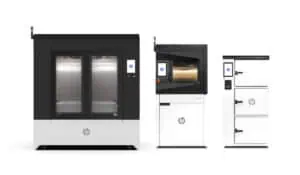
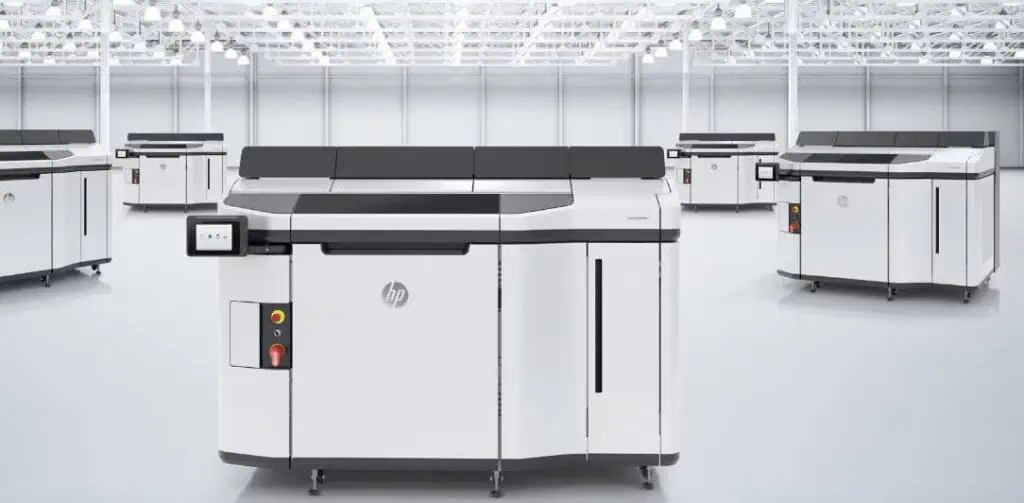
HP Additive Manufacturing Solutions delivers advanced industrial 3D printing technology for high-performance marine, subsea and offshore components, enabling rapid development, complex geometries and production-grade performance
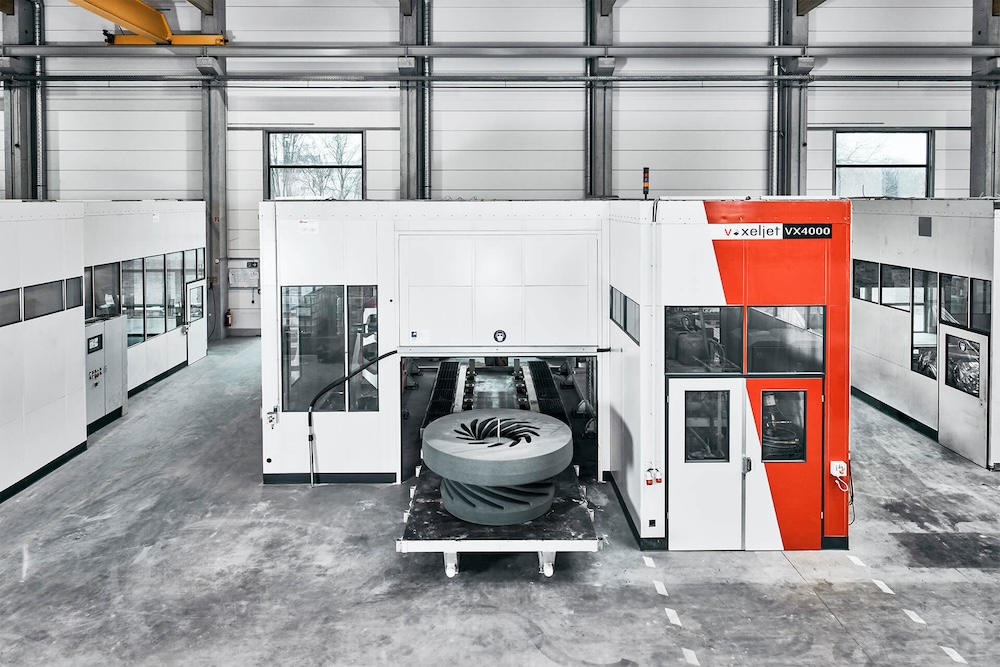
voxeljet is an innovative provider of advanced additive manufacturing and 3D printing systems, delivering on-demand metal castings and high-performance polymer components for complex marine and offshore environments
The latest offshore, subsea & marine technology news, straight to your inbox.
Get our weekly roundup of technology developments, new products and industry news.
THANK YOU FOR SIGNING UP
Thanks for joining us. Check your inbox.
We've sent you an email. Click the confirmation link to complete your subscription to the weekly eBrief. In the meantime, explore the latest news, suppliers and technologies.