Marine 3D Printing & Additive Manufacturing Services
Marine 3D printing encompasses additive manufacturing processes engineered for offshore, subsea, and shipboard environments where corrosion, cyclic loading, hydrostatic pressure, and limited maintenance access define performance requirements. These capabilities support low-volume, mission-specific components such as sensor mounts, manifolds, fairings, tooling, and replacement parts for ocean science, offshore energy, and maritime operations.
This page showcases leading marine 3D printing and additive manufacturing services including LPBF, DED, and WAAM as well as polymer, composite, and metal castings enabling lightweight, corrosion-resistant assemblies.
If you design, build or supply 3D Printing & Additive Manufacturing Services, create a profile to showcase your capabilities and connect with visitors who have an active requirement for your solutions.
Marine 3D Printing & Additive Manufacturing Services
Overview by
William Mackenzie
Updated:
Introduction to Marine 3D Printing Services
Marine 3D printing and maritime Additive Manufacturing (AM) services cover the design, manufacture, repair, and qualification of components for offshore, subsea, and shipboard use. Rather than being defined by a single production method, marine AM is shaped by the environment in which parts must operate. Components are required to tolerate salt exposure, full or partial immersion, cyclic mechanical loading, corrosion risk, and, in subsea applications, sustained hydrostatic pressure with restricted maintenance access.
Within ocean engineering, maritime 3D printers offer faster turnaround, greater geometric freedom, and improved supply chain resilience. Ocean science instruments and subsea tools are frequently low-volume and application-specific, making conventional tooling inefficient. Additive processes accelerate the design-to-test cycle for sensor mounts, internal flow paths, sampling interfaces, and hydrodynamic fairings. By consolidating multi-part assemblies into single components, AM reduces fasteners, seals, and galvanic interfaces, improving reliability where space, buoyancy margins, and physical access are limited.
Metal Additive Manufacturing
Laser Powder Bed Fusion (LPBF)
LPBF selectively melts thin layers of metal powder using a laser to produce high-resolution components. In marine engineering, it is suited to compact, complex parts such as manifolds, valve bodies, and sensor housings with integrated stiffening. Consolidating multi-piece assemblies reduces welds and seals that can become corrosion initiation sites.
Marine service requires strict porosity control, as internal defects can initiate fatigue cracking under cyclic loading. As-built LPBF surfaces are typically rough, which can accelerate localized corrosion and biofouling in seawater. Machining, polishing, or protective coatings are therefore commonly required.
Directed Energy Deposition (DED)
DED deposits material into a melt pool generated by a laser, electron beam, or arc source. It offers higher deposition rates than LPBF and is suitable for larger features. In marine environments, DED is particularly valuable for repair and remanufacture, including rebuilding worn journals, corroded areas, and damaged sealing lands.
DED components usually require finish machining. Machining allowances and datum strategies must be defined during design to ensure dimensional accuracy and functional performance.
Wire Arc Additive Manufacturing (WAAM)
WAAM is a form of DED that uses an electric arc and wire feedstock. It provides very high deposition rates and is well suited to large structural components such as brackets, frames, and stiffeners that might otherwise require marine-grade metal casting. For large offshore structures, WAAM offers scalability and material efficiency, with post-processing used to achieve final tolerances.
Polymer Additive Manufacturing
Fused Filament Fabrication (FFF)
FFF extrudes thermoplastic filament through a heated nozzle and is widely used for marine prototyping and low-volume production. Typical applications include fixtures, jigs, and protective covers for offshore maintenance operations.
FFF parts are anisotropic and may not be watertight without sealing. Some polymer components absorb moisture, which can affect dimensional stability and mechanical properties. These factors must be considered for marine service.
Selective Laser Sintering (SLS)
SLS and high-speed sintering fuse polymer powder in a heated bed without support structures, enabling complex geometries. In marine applications, SLS is suitable for ducting and sensor fairings where smooth forms improve hydrodynamic performance.
SLS parts can exhibit surface porosity. For immersion service, sealing or coatings are often required to prevent water ingress.
Stereolithography (SLA)
SLA uses light to cure photopolymer resin, producing excellent surface finish and fine detail. It is well suited to hydrodynamic prototypes and precision fixtures.
For harsh marine environments, resin durability is a limitation. Many photopolymers are brittle and susceptible to UV and chemical degradation. Long-term seawater exposure requires validated material selection and testing.
Composite & Fiber-Reinforced Printing
Continuous Fiber Reinforcement
Continuous fiber systems embed carbon or glass fibers within a thermoplastic matrix during printing. They provide high stiffness at low mass for AUV and ROV mounts and lightweight deck structures.
Although corrosion-resistant, interfaces with adjacent metals must be engineered to prevent galvanic effects in seawater.
Hybrid Manufacturing Approaches
Hybrid manufacturing combines additive processes with CNC machining or metal inserts. This approach is common in marine engineering, retaining geometric flexibility while ensuring that critical interfaces such as O-ring grooves, sealing lands, and alignment features meet strict tolerances.
Large-Format Manufacturing for Offshore Components
Structural and Hull Components
Large-format polymer printing and WAAM enable production of large fairings and hydrodynamic structures for surface and subsurface vehicles. At this scale, thermal gradients and distortion are primary concerns. Controlled environments and metrology are required to maintain dimensional accuracy.
Tooling and Mould Fabrication
Tooling is a major application of AM within maritime manufacturing. This includes composite moulds for hull sections and 3D printing for sand casting using binder jetting. AM tooling reduces lead times and can incorporate integrated vacuum channels or handling features to improve repeatability in offshore production environments.
Materials Used by Marine 3D Printing Companies
Corrosion-Resistant Metals
Stainless Steels (e.g., 316L): 316L provides general corrosion resistance and wide availability. It is suitable for brackets and housings in marine atmospheres and splash zones. However, pitting can occur in chloride-rich or stagnant seawater environments.
Duplex and Super Duplex Alloys: These alloys offer higher strength and improved resistance to pitting compared to austenitic stainless steels. They are well suited to offshore structures requiring both mechanical strength and corrosion resistance. Thermal history must be tightly controlled to achieve the required microstructure and performance.
Nickel-Based Alloys (e.g., Inconel): Nickel alloys are used in high-temperature or highly corrosive environments where stainless steels are inadequate. They are compatible with LPBF and DED processes but require controlled heat treatment and surface finishing.
Titanium Alloys for Subsea Applications
Titanium alloys such as Ti-6Al-4V provide excellent corrosion resistance and high strength-to-weight ratios. They are highly relevant for AUVs and subsea structures where mass affects buoyancy. When coupled with other metals in seawater, galvanic isolation must be engineered to protect less noble materials.
Marine-Grade Polymers
High-Performance Thermoplastics (PEEK, PEKK, ULTEM): These polymers provide higher temperature capability and improved mechanical properties compared to commodity plastics. They are used for sensor housings and structural brackets. Subsea deployment requires evaluation of long-term water absorption and creep under sustained load.
UV and Saltwater Resistant Materials: Above-water components must resist UV degradation and salt exposure. Protective coatings or overmoulding are often specified to extend service life.
Flame-Retardant Polymers for Offshore Use: Offshore platforms may require flame-retardant materials for components used in occupied spaces. Performance must be validated for the specific print process and build orientation.
AM additionally enables custom gaskets and vibration isolation mounts. Compression set resistance and long-term seawater stability must be validated before deployment.
Applications of Marine 3D Printing in Ocean Science & Offshore Industries
Subsea Systems and ROV/AUV Components
Subsea applications prioritize reliability under pressure. AM supports non-pressure structural components around pressure vessels and, where qualified, pressure boundary components. Sensor mounts, brackets, and hydrodynamic fairings benefit from rapid iteration and optimized geometry to reduce drag and vibration.
Offshore Energy (Oil, Gas, and Renewables)
AM supports offshore operations through replacement parts for legacy systems, reducing obsolescence risk. Jigs, fixtures, and maintenance tooling can be rapidly produced and updated. Cable management and connector housings can be tailored to installation constraints.
Marine Research and Instrumentation
Research campaigns benefit from rapid iteration. AM supports bespoke sampling devices, sediment and water interfaces, and sensor integration hardware, enabling faster development cycles during experimental programs.
Shipbuilding and Maritime Operations
Shipboard applications benefit from part consolidation and reduced spare inventory. Lightweight structural components contribute to fuel efficiency. Controlled onboard spare production may reduce stock requirements where materials and quality control are maintained.
Coastal and Environmental Monitoring Infrastructure
Buoy systems often require custom mechanical interfaces and lightweight structures. AM enables tailored sensor mounts, protective housings, and anchoring components designed for specific sealing and environmental requirements.
Design for Additive Manufacturing (DfAM) in Marine Contexts
DfAM in marine engineering requires alignment between structural loading, corrosion exposure, manufacturability, and inspection access:
Topology Optimization for Weight and Strength: Material is removed where structurally unnecessary to improve efficiency. In subsea vehicles, reduced mass directly affects buoyancy and endurance. Load cases must reflect hydrodynamic drag and fatigue spectra, not only static conditions.
Consolidation of Multi-Part Assemblies: Reducing fasteners limits vibration loosening and corrosion initiation sites. Designs must still allow replacement of wear or sacrificial components during maintenance.
Internal Channels and Complex Geometries: AM enables integrated cable routing and fluid channels. Designs must allow cleaning and inspection to prevent trapped moisture or debris.
Designing for Corrosion Resistance and Biofouling Mitigation: Geometry should minimize crevices and enable consistent coating application, reducing biofouling that can interfere with acoustic or optical sensors.
Digital Twin Integration and Simulation: Process simulation can predict distortion and residual stress. Linking field performance data to design models improves reliability and parameter control.
Environmental & Mechanical Challenges in Maritime 3D Printing
Marine deployment introduces environmental and mechanical stressors that must be addressed during material selection, design, and qualification:
Corrosion, Salt Spray, and Galvanic Effects: AM microstructures and surface roughness can increase susceptibility to localized corrosion. Mixed alloys require deliberate electrical isolation strategies.
Pressure and Depth Considerations for Subsea Use: Hydrostatic pressure imposes significant compressive loading and sealing challenges. Full density is often required, and processes such as hot isostatic pressing may be used to reduce internal porosity.
Fatigue and Cyclic Loading Offshore: Wave action and machinery vibration introduce cyclic stresses. Surface condition strongly influences fatigue performance.
Thermal Cycling and UV Exposure: Deck equipment experiences daily temperature variation and UV radiation. Polymers require UV-stable materials or protective coatings.
Shock and Vibration in Vessel and Platform Installations: Heavy sea states and propulsion systems introduce shock and resonance. Designs must avoid unsupported thin features and ensure robust mounting interfaces.
On-Demand Manufacturing & Digital Supply Chains
On-demand manufacturing reduces logistical risk by enabling qualified components to be produced in multiple approved locations to the same specification. This requires locked process parameters, validated post-processing procedures, and controlled material handling. When these controls are maintained, parts produced in different ports can achieve consistent mechanical performance and documentation standards.
Digital spare part libraries support this model by replacing physical inventory with controlled design files and manufacturing instructions. Operators maintain a validated digital catalogue rather than storing large volumes of infrequently used components. This reduces warehouse requirements and shortens lead times.
For high-value offshore assets, downtime often exceeds the cost of the component itself. Local or port-based production allows critical parts to be manufactured without dependence on international shipping schedules. Effective implementation depends on pre-qualified part lists, defined acceptance criteria, and centralized governance to ensure consistency across the manufacturing network.
Emerging Trends in Marine Additive Manufacturing
Ongoing development focuses on scalability, automation, and improved qualification for marine-critical components:
In-Situ Subsea and Offshore Printing: Near-term development focuses on topside DED repairs. Research continues into localized repair solutions suitable for submerged conditions.
AI-Driven Design Optimization: Advanced software tools support DfAM validation and distortion prediction, improving repeatability and long-term reliability.
Advanced Alloys and Functionally Graded Materials: These materials enable corrosion-resistant surfaces combined with structurally robust cores within a single component. Qualification maturity remains the primary barrier to widespread adoption.
Autonomous and Robotic Fabrication at Sea: Robotic fabrication supports digital shipyard initiatives and reduces personnel exposure in hazardous offshore environments.
Integration with Smart Ports and Digital Shipyards: Digital part libraries linked to maintenance planning systems enable fabrication aligned with dry-dock schedules.
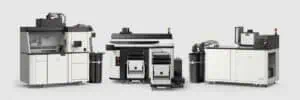
HP Additive Manufacturing Solutions delivers advanced industrial 3D printing technology for high-performance marine, subsea and offshore components, enabling rapid development, complex geometries and production-grade performance
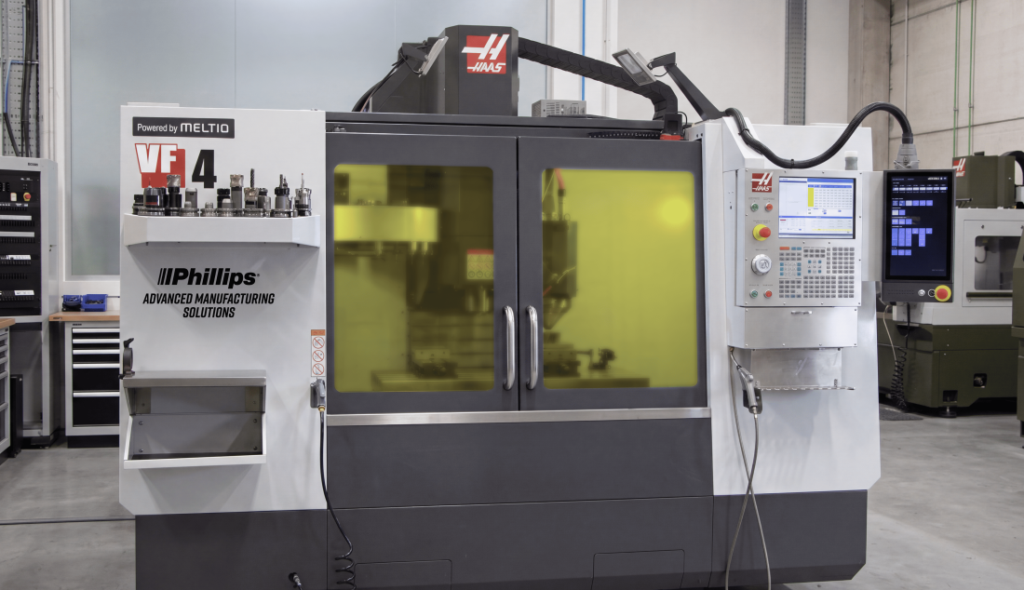
Phillips Federal and Meltio are supporting expanded U.S. Navy advanced manufacturing training with hybrid and additive systems designed to strengthen fleet readiness and sustainment capabilities
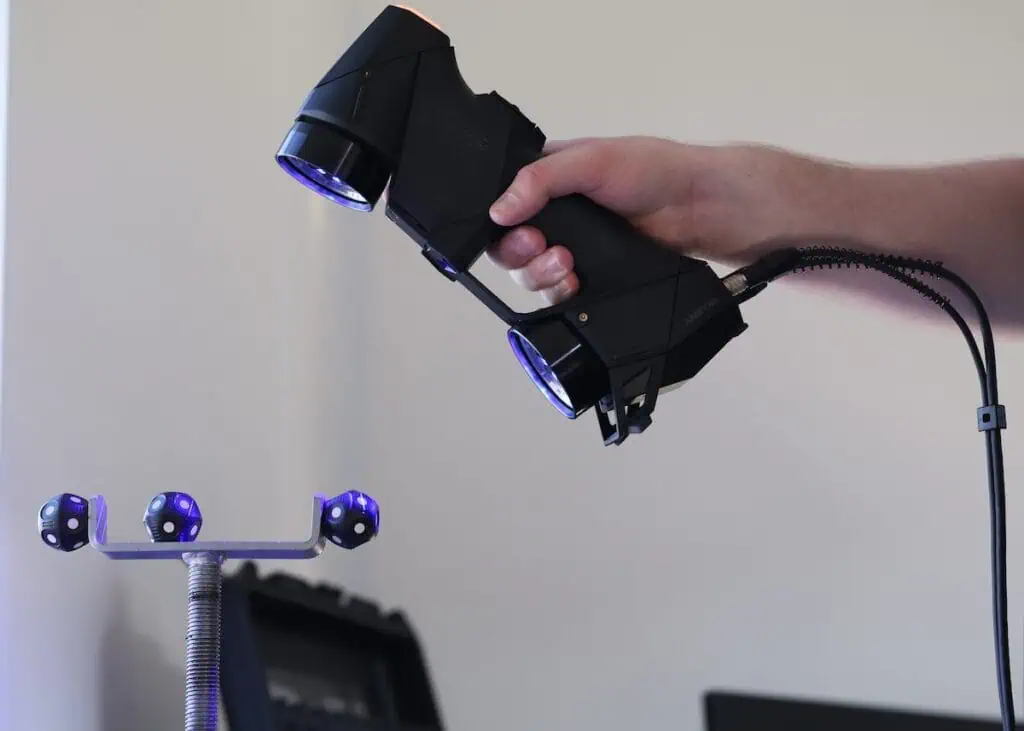
A new onsite additive manufacturing facility at HM Naval Base Clyde will enable QinetiQ and the Royal Navy to produce submarine components on demand, significantly accelerating critical fleet maintenance times
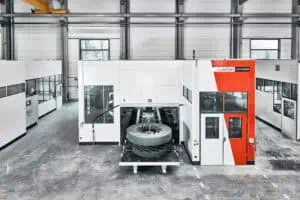
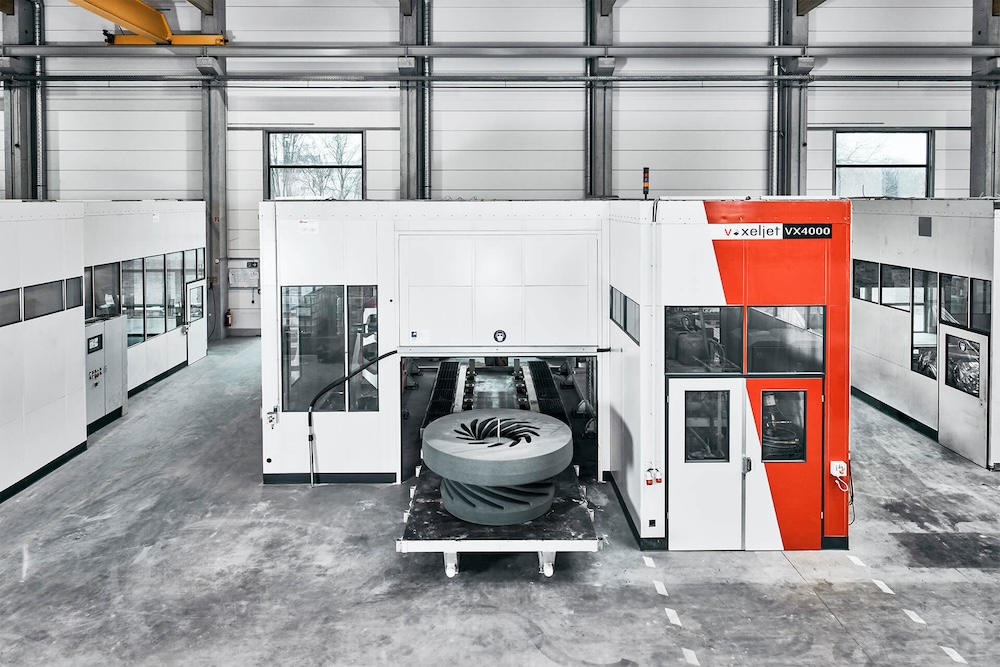
voxeljet outlines its industrial 3D sand printing solutions for casting molds and cores, showing how binder jetting technology enables tool-free production, scalable manufacturing, and integration with established foundry materials and processes
voxeljet is an innovative provider of advanced additive manufacturing and 3D printing systems, delivering on-demand metal castings and high-performance polymer components for complex marine and offshore environments
The latest offshore, subsea & marine technology news, straight to your inbox.
Get our weekly roundup of technology developments, new products and industry news.
THANK YOU FOR SIGNING UP
Thanks for joining us. Check your inbox.
We've sent you an email. Click the confirmation link to complete your subscription to the weekly eBrief. In the meantime, explore the latest news, suppliers and technologies.