A marine Battery Management System (BMS) is the control and protection layer that supervises energy storage for vessels, subsea equipment, and autonomous ocean platforms operating in harsh maritime environments. These systems monitor cell-level voltage, current, and temperature while estimating state of charge, health, and power to ensure safe, predictable operation over long deployments.
This category highlights leading marine BMS suppliers, supporting crewed and uncrewed platforms including research vessels, offshore infrastructure, AUVs, ROVs, and hybrid or electric ships.
If you design, build or supply Battery Management Systems (BMS), create a profile to showcase your capabilities and connect with visitors who have an active requirement for your solutions.
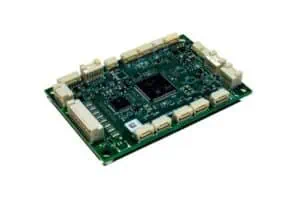
Distributed BMS systems with central & module controllers & a high-voltage monitor
Distributed BMS systems with central & module controllers & a high-voltage monitor
...he distributed BatteryManagementSystem(BMS) offering within the GuardIon-IQ™ platform. Its... ......p, enabling the system to open its contactors and enter a safe state when a critical fault...
The Complete Guide to Marine Battery Management Systems (BMS)
Overview by
William Mackenzie
Updated:
Introduction to Marine Battery Management Systems (BMS)
A Marine Battery Management System (BMS) serves as the primary intelligence and safety layer governing energy storage in harsh underwater environments. They function as a mission-critical supervisory controller that manages electrical, thermal, and operational parameters at both the cell and pack levels. In the subsea and maritime sectors, where power systems are often physically inaccessible or deployed in high-stakes offshore environments, the BMS ensures that energy assets remain safe, efficient, and predictable throughout their entire deployment lifecycle.
Marine BMS solutions must survive extreme hydrostatic pressures, saline corrosion, and long-duration autonomous missions where maintenance is impossible. Whether integrated into a deep-sea Autonomous Underwater Vehicle (AUV) or a large-scale offshore energy module, the BMS is the line of defense against catastrophic failure and the primary tool for maximizing mission endurance.
Core Functions of a Marine BMS
Precision Cell Monitoring
The foundation of any marine battery management system is the accurate measurement of voltage and current. In marine battery packs, which frequently utilize high-voltage series-connected strings, the system must monitor every individual cell to pinpoint imbalances or early signs of degradation.
Because marine power electronics and propulsion systems generate significant Electromagnetic Interference (EMI), a professional-grade BMS utilizes advanced analogue filtering and isolated sensing to ensure data integrity. High sampling rates are balanced against power consumption, which is a critical trade-off for subsea systems where every watt-hour counts.
Advanced State Estimation: SOC, SOH, and SOP
Raw data is useless without context. The BMS translates electrical signals into three vital metrics:
State of Charge (SOC): Informs the operator of the remaining energy. Marine systems require sophisticated algorithms that combine coulomb counting with model-based corrections to prevent drift during variable-load profiles.
State of Health (SOH): Tracks the long-term age of the battery. By monitoring capacity fade and internal resistance, the BMS allows engineering teams to predict end-of-life and plan maintenance before a failure occurs in the field.
State of Power (SOP): Predicts the maximum instantaneous current the battery can provide or absorb. This is essential for dynamic operations like AUV launch-and-recovery or heavy-load winch activations.
Protection and Fault Management
In the ocean, a battery fire or total power loss is not just a technical failure – it is a lost asset. The BMS enforces strict operating envelopes for voltage, current, and temperature. If these limits are breached, the system initiates an automated, controlled shutdown.
Crucially, marine systems integrate insulation monitoring and ground fault detection. In high-humidity or submerged environments, detecting the slightest breakdown in electrical insulation is vital to preventing electrolysis, corrosion, and progressive short-circuits.
Applications of Marine Battery Management Systems
GuardIon-IQ™ Marine Battery Management System by Eberspaecher Vecture
A marine battery management system serves as the central nervous system for power across a diverse range of maritime platforms, each presenting unique operational demands and environmental constraints.
Research Vessels and Oceanographic Instrumentation
Oceanographic research often involves long-term sensor deployments where energy must be conserved over months or years. In these applications, the BMS is optimized for ultra-low quiescent current draw, ensuring that the battery does not deplete itself while the system is in a standby or low-power logging state. Whether powering deep-sea landers or tethered sensor arrays, the BMS provides the reliability needed to ensure data is not lost due to unforeseen power failure.
Offshore Energy and Subsea Infrastructure
The offshore sector utilizes high-capacity energy storage for backup power, emergency shutdown systems, and load leveling on platforms and subsea production templates. These BMS units are designed for massive energy throughput and long-term residency. They often interface with subsea power grids, managing the charge cycles of large battery banks that provide a buffer between renewable energy sources—such as offshore wind—and the constant demand of subsea infrastructure.
Defense, Security, and Dual-Use Marine Platforms
Defense-grade marine BMS solutions prioritize fault tolerance and redundancy. In tactical environments, a battery failure can compromise both mission success and personnel safety. These systems often feature isolated architectures and multi-layered protection circuits to ensure that a single component failure does not lead to a total loss of power. Dual-use technologies also benefit from these high standards, providing civilian security and port authority vessels with military-grade reliability.
Commercial and Industrial Marine Systems
As the shipping industry moves toward decarbonization, commercial vessels—including passenger ferries, tugboats, and workboats—are increasingly adopting hybrid or all-electric propulsion. In these industrial settings, the BMS must manage high-current discharge during maneuvering and rapid-charging cycles during port calls. These systems are typically integrated into large-scale Power Management Systems (PMS) to coordinate energy use between generators, shore power, and the battery banks.
BMS for Uncrewed and Autonomous Marine Systems
Autonomous platforms represent the most complex frontier for battery management, as there is no human operator on-site to intervene during a power event.
AUV and ROV Battery Management: For AUVs and Remotely Operated Vehicles (ROVs), the BMS is critical for mission planning. Accurate State of Power (SOP) data allows the vehicle controller to determine if enough energy remains for a deep-sea ascent or to combat strong currents.
USVs and Underwater Gliders:Unmanned Surface Vessels (USVs) often utilize hybrid power strings involving solar or wind charging, requiring a BMS that can handle erratic charging profiles. Underwater gliders, which move by changing buoyancy, rely on the BMS to manage the small, precise bursts of energy required for their hydraulic pumps over deployments that can last for several months.
Communication Interfaces & System Integration
Marine and Industrial Communication Protocols
A marine battery management system rarely operates in isolation. They exchange data with higher-level systems using established marine and industrial communication protocols such as CAN, CANopen, Modbus, and Ethernet. Deterministic communication is particularly important when the BMS participates in closed-loop power, propulsion, or energy management control. Protocol selection is driven by overall system architecture, required data rates, environmental robustness, and compatibility with existing marine electronics.
Integration with Power Management and Vehicle Control
The BMS is a core component within a broader power and energy management architecture. It interfaces with power management systems, propulsion controllers, and vehicle or platform control computers. Clear definition of data ownership, authority, and control hierarchy is essential to prevent conflicting commands and to ensure predictable system behavior during both normal operation and fault conditions.
Remote Monitoring and Telemetry
For offshore platforms, surface vessels, and uncrewed systems, remote visibility into battery health is a key operational requirement. Marine BMS designs typically support extensive data logging, health reporting, and telemetry interfaces that allow operators to assess performance trends, predict maintenance needs, and respond to emerging issues without direct physical access to the battery system.
Subsea Environmental Challenges
Pressure and Ingress Protection
Battery management system hardware must be designed to survive either within pressure-compensated volumes or inside specialized 1-atmosphere housings. Beyond physical pressure, salt creep and humidity are constant threats. Professional marine BMS designs utilize conformal coatings, specialized connector interfaces, and corrosion-resistant materials to ensure the electronics outlast the cells they manage.
Mechanical Integrity: Vibration and Shock
Vessel motion and wave loading during surface transit subject electronics to constant fatigue. Furthermore, subsea deployment often involves significant shock during crane operations or bottom-landing. A robust BMS utilizes reinforced PCB mounting and ruggedized interconnects to maintain electrical continuity under heavy mechanical stress.
High Voltage Distributed Battery Management Systems by Eberspaecher Vecture
Battery Chemistries & Their Impact on BMS Design
Lithium-ion chemistries dominate modern marine energy storage, but the specific chemistry choice has a significant impact on battery management system design. Nickel manganese cobalt cells offer high energy density but require careful thermal and safety management. Lithium iron phosphate provides improved thermal stability and cycle life at the expense of lower energy density. Lithium titanate excels in fast charge capability and low-temperature performance but results in larger and heavier battery systems.
Emerging chemistries such as lithium-sulfur or solid-state batteries promise further gains in energy density or safety, but they introduce new monitoring requirements and uncertainty around long-term behavior. Subsea-specific cells, often optimized for pressure tolerance and extended life, further reinforce the need for adaptable and chemistry-aware BMS architectures.
COTS vs Custom Marine BMS Solutions
Commercial off-the-shelf (COTS) marine battery management platforms offer advantages in availability, cost, and development time, particularly for surface-level or relatively benign environments. However, they may lack the environmental robustness, configurability, or certification pedigree required for harsh or specialized marine applications.
Custom BMS or application-specific BMS designs are often selected for deep-sea, defense, and research systems where pressure tolerance, long-term reliability, or unique integration requirements dominate. While custom solutions involve higher non-recurring engineering effort, they allow optimization of form factor, sensing architecture, and control logic for the intended mission profile.
Emerging Technology Trends in Marine Battery Management
The field is moving beyond passive monitoring toward proactive and intelligent energy management. Key trends include:
Digital Twins and Predictive Maintenance: Real-time modeling of battery aging allows operators to run simulations of future missions based on current SOH data.
Pressure-Tolerant Electronics: Developing BMS components that can operate directly in oil-filled, pressure-compensated environments, eliminating the need for heavy pressure vessels at depths up to 6,000 meters.
AI-Driven Energy Optimization: Software layers that learn the specific load profiles of a vessel to adjust power limits dynamically, maximizing the lifespan of the cells.
Edge Computing in BMS: Moving complex data processing to the BMS unit itself, reducing the bandwidth required for telemetry while allowing for faster response to local faults.
Eberspaecher Vecture delivers high-performance battery management systems and end-to-end electronic manufacturing services tailored for autonomous marine systems and offshore energy applications
Denchi is showcasing its rugged energy storage solutions on OST, delivering advanced batteries and engineering support for UUVs, AUVs, and subsea missions