
Uncrewed surface vessels are increasingly used across all maritime sectors, but not all platforms are equally ready for sustained operations. As the supplier landscape expands, differences in autonomy maturity, integration effort, and long-term support can drive hidden costs and risk. Asking the right questions early is often the difference between selecting a capable operational asset and inheriting long-term program challenges.
1. How Operationally Mature Is the Platform?
Operational maturity is one of the most important differentiators between USV manufacturers. Buyers should look beyond prototype demonstrations and focus on evidence of sustained real-world operations.
Key questions include how many sea hours the platform has accumulated, the range of environments in which it has operated, and whether deployments were routine or limited to trials. Platforms that have operated for extended periods in high sea states, busy shipping lanes, or remote regions demonstrate a higher level of readiness than those validated only in controlled conditions.

DataXplorer™ METOC by Ocean Open Robotics
Suppliers should be able to provide data on reliability, mission success rates, and lessons learned from operational use. For scientific and industrial users, maturity directly affects data continuity and availability. For military USVs, it also reflects survivability, system resilience, and performance under degraded conditions.
View our list of USV Suppliers & Manufacturers here >>
2. What Level of Autonomy Is Delivered and How Is It Validated?
Autonomy claims vary widely across USV suppliers. Buyers should ask which functions are autonomous, which are remotely supervised, and how human operators interact with the system during normal and abnormal operations.
Navigation, collision avoidance, mission execution, and fault recovery should each be addressed individually. Evidence of detect-and-avoid performance, endurance testing, and behavior during communication loss is critical, particularly for operations in congested or regulated waters.
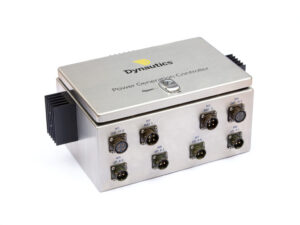
Power management systems by Dynautics
Validation processes matter as much as capability. Suppliers should explain how autonomy has been tested through simulation, hardware-in-the-loop testing, and live trials, and how the results inform a safety case or regulatory approval process.
3. How Easy Is Payload and System Integration?
Most USVs are procured as mission platforms rather than fixed configurations. Buyers should ask how payload integration is supported, including mechanical mounting, power distribution, data interfaces, and environmental protection.
Questions should also cover modularity and open architecture. Open systems simplify third-party integration, reduce vendor lock-in, and support future upgrades. Suppliers should be able to describe supported data standards, interface documentation, and application programming interfaces.
Interoperability with existing mission planning tools, command-and-control systems, and data-processing workflows is particularly important for organizations operating mixed fleets or expanding operations over time.
4. How Are Communications, Cybersecurity, and Data Managed?
Communications performance directly affects operational range and safety. Buyers should ask which radio communications and satellite communications options are supported, how bandwidth is managed, and how the platform behaves during partial or total link loss.
Cybersecurity and data security are critical across all maritime sectors. Questions should address system hardening, encryption, access control, and software update mechanisms. For government, research, and defense users, export controls and compliance with maritime cybersecurity guidance should be discussed early.
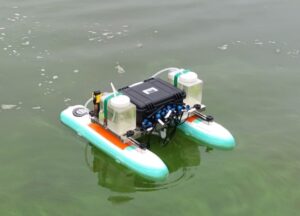
USVSTAR by AGISTAR
Data handling practices are equally important. Buyers should understand how data is stored onboard, how integrity is maintained, and how information is transferred to shore-based systems for analysis and archiving.
5. What Training and Operational Support Are Provided?
Even highly autonomous USVs depend on skilled personnel. Buyers should ask about operator training packages, commissioning support, and the quality of technical documentation.
Human factors considerations such as operator workload, alerting logic, and interface design can significantly influence safety and efficiency. Suppliers should be able to explain how these issues have been addressed through design and testing.
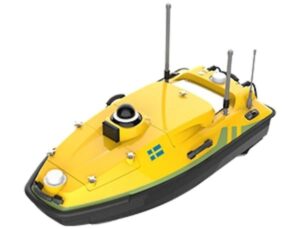
HydroBoat 1200 by SatLab Geosolutions
Operational support models vary widely. Questions should cover deployment support, field service availability, response times, and access to remote diagnostics. For long-term programs, the availability of refresher training and updated manuals is also relevant.
6. How Are Reliability, Maintenance, and Lifecycle Managed?
Lifecycle management often accounts for the majority of the total cost of ownership. Buyers should ask how reliability, availability, and maintainability analyses have informed the design and what health or condition-monitoring capabilities are included.
Spare parts availability, repair turnaround times, and logistics support should be clearly defined. Obsolescence management is particularly important for electronics, propulsion systems, and energy storage components.
Software lifecycle management deserves specific attention. Buyers should understand how firmware and software updates are delivered, validated, and supported over time, and how configuration management is maintained across a fleet.
7. What Acceptance, Testing, and Certification Processes Apply?
Formal acceptance processes protect both buyer and supplier. Buyers should ask how factory acceptance testing, sea trials, and acceptance testing are conducted, and what criteria must be met before final acceptance.
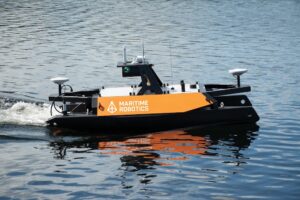
Otter Uncrewed Surface Vessel by Maritime Robotics
Responsibility for corrective action if requirements are not met should be clearly defined. Certification and standards compliance may include class approval, safety cases, or military standards such as MIL-STD and NATO STANAG, depending on the application.
Suppliers should be transparent about which standards are met, which are in progress, and how compliance evidence is documented.
8. How Is Long Term Commercial Risk and Sustainment Addressed?
Technical capability alone does not guarantee program success. Buyers should ask about delivery schedules, availability commitments, warranty terms, and service agreements.
Long-term sustainment models are particularly important for multi-year programs. Questions should address upgrade paths, product roadmaps, and through-life support options. Supplier financial stability, supply chain resilience, and export compliance obligations should also be considered in a broader risk assessment.
Clear visibility of long-term costs, including upgrades and support, allows buyers to make informed decisions that extend beyond the initial acquisition price.
View our list of USV Suppliers & Manufacturers here >>
Using Structured Questions to Improve USV Procurement Decisions
A disciplined, question-driven approach improves transparency and reduces risk when evaluating USV manufacturers and suppliers. By focusing on operational maturity, validated autonomy, integration readiness, and sustainable support models, buyers across commercial, industrial, scientific, and military maritime sectors can improve decision quality and long-term outcomes.