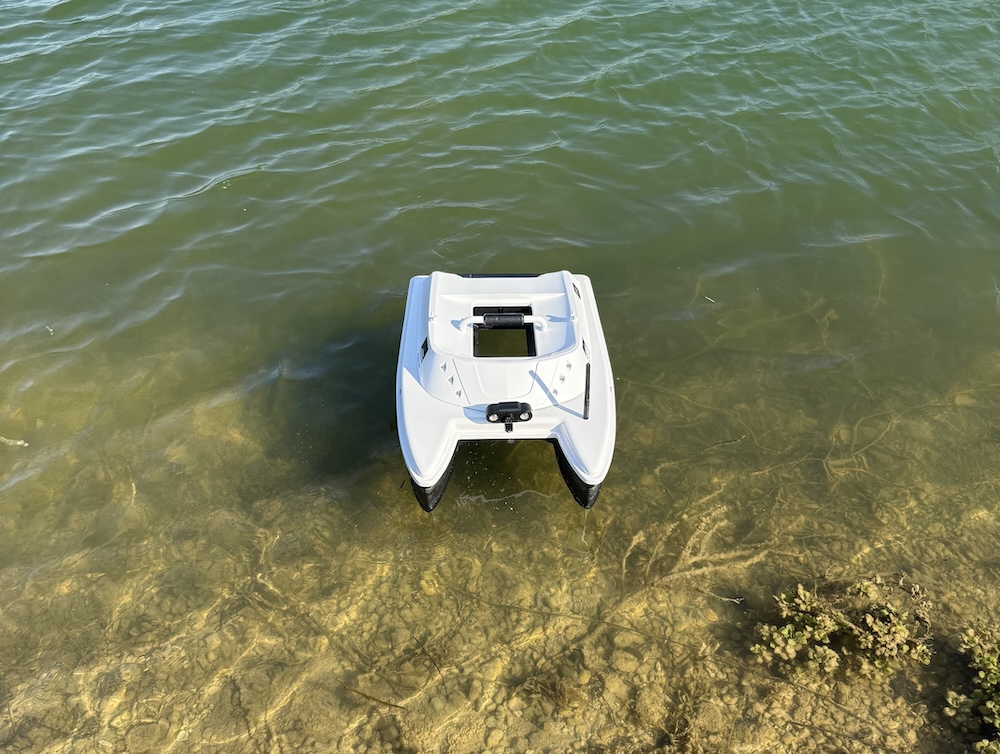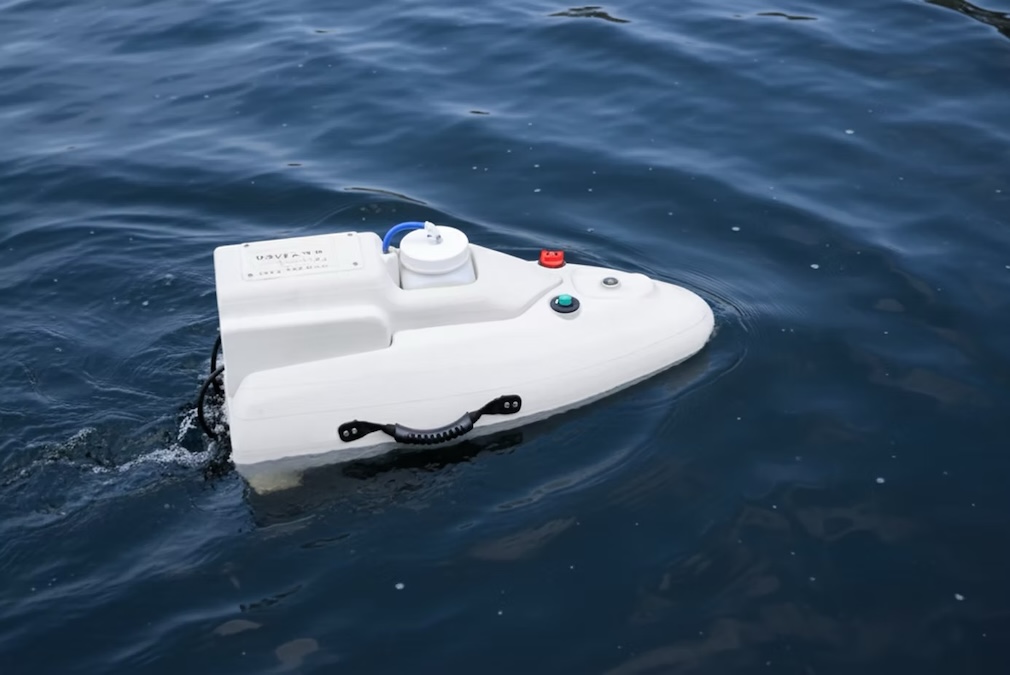


AGISTAR’s BX USV II is a configurable unmanned surface vehicle (USV) designed to accommodate the varying equipment and operational requirements of hydrographic surveying, environmental monitoring, underwater inspection, and scientific research.
With a portable catamaran-style structure, a payload capacity of up to 50 kg, and options for integrating specialized instrumentation, the platform can be adapted to different marine fieldwork applications.
The BX USV II allows customers to specify elements of the vehicle’s structure, propulsion, power supply, electronics, and onboard equipment rather than relying on a fixed platform configuration. Custom mechanical interfaces and software integration can also be incorporated according to project requirements.
Portable Catamaran Design for Field Deployment
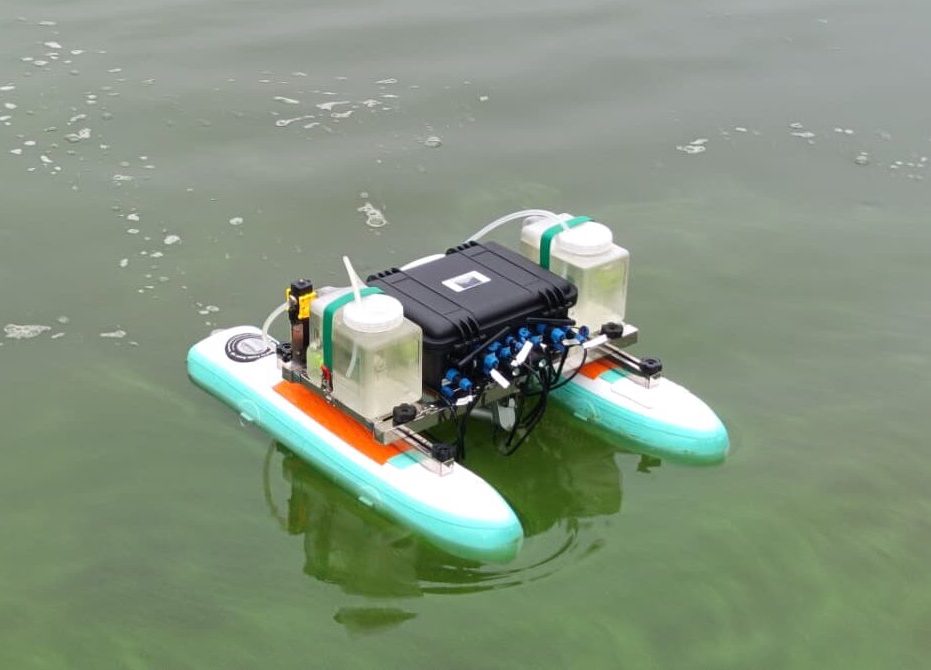
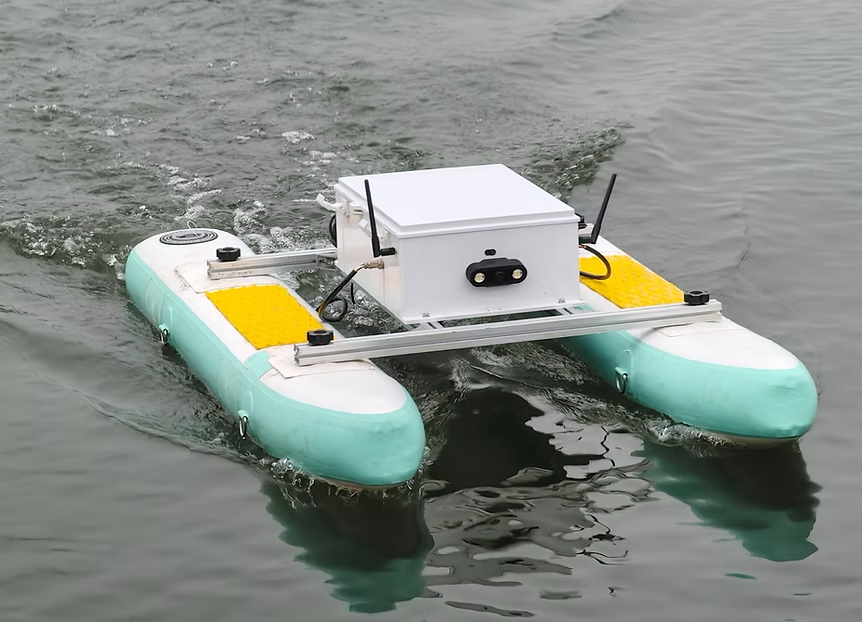
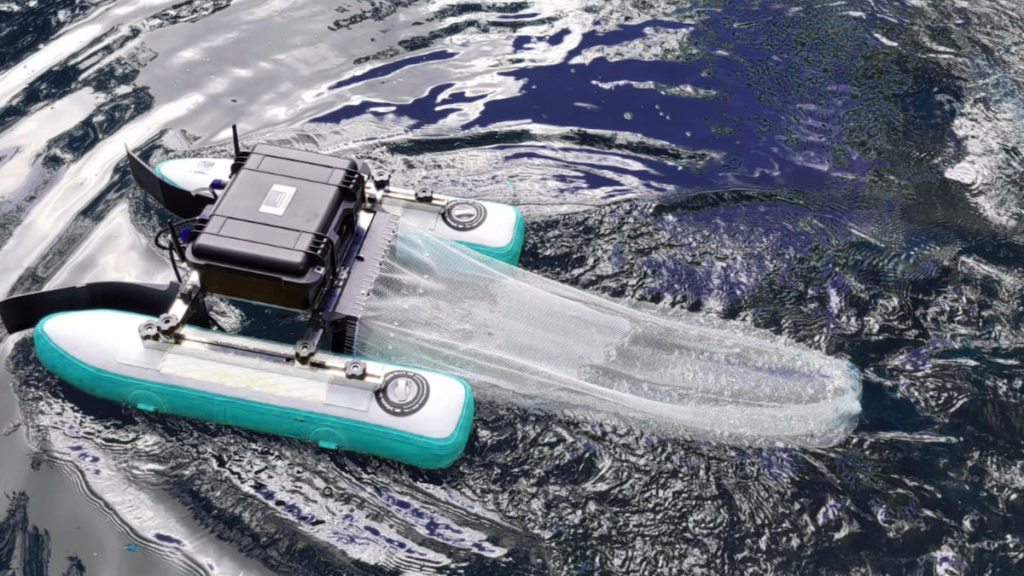
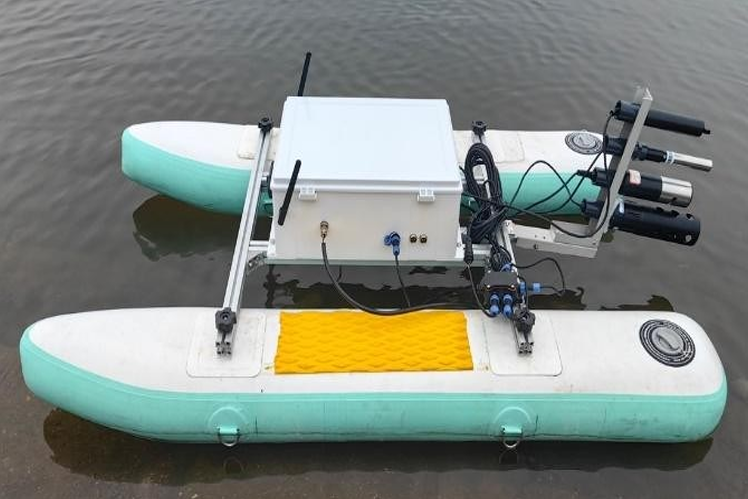
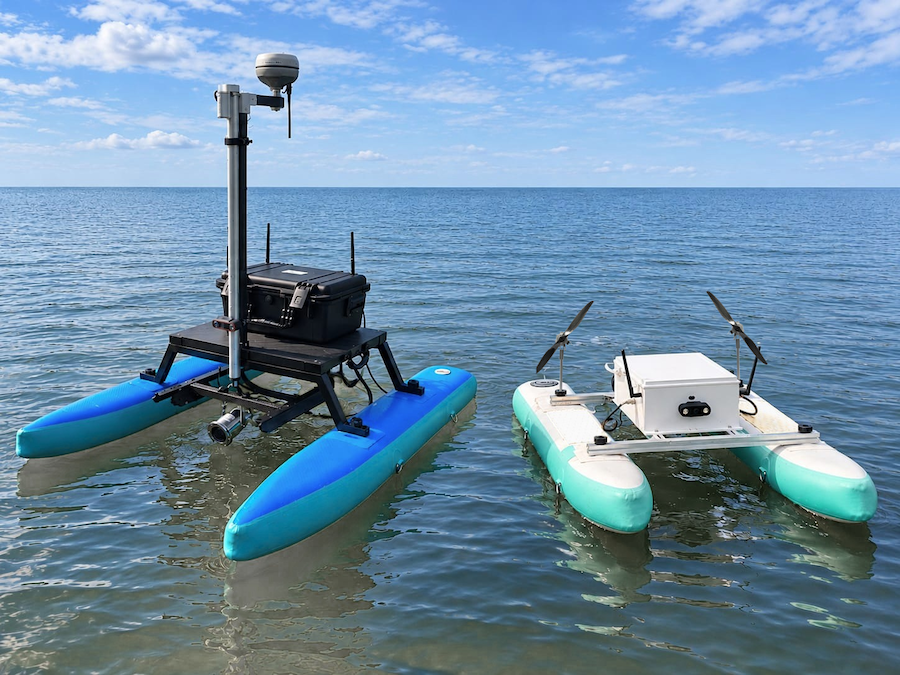
The BX USV II features a central equipment platform supported by two inflatable PVC side pontoons, combining buoyancy and equipment-carrying capacity with a structure intended for straightforward transportation and assembly.
The vehicle can be assembled by one person in approximately five minutes and transported using a trolley or suitable vehicle, depending on its configuration and dimensions. For projects involving air travel, AGISTAR can develop compact transport arrangements and suitable battery configurations, subject to airline and dangerous-goods regulations.
The platform can be configured for shallow-water operations and sheltered waters with small waves, provided the selected configuration and operating conditions are appropriate.
AGISTAR can also adapt the platform’s dimensions and construction materials, including metal or carbon fiber, according to weight, stiffness, durability, payload layout, and transportation requirements. The inflatable pontoons provide additional flexibility when adapting the platform to particular operating conditions.
Payload Integration for Survey and Research Equipment
The BX USV II offers a payload capacity of up to 50 kg, although the usable capacity depends on the selected batteries, propulsion system, mounting structures, and other installed components.
The platform can accommodate equipment for hydrographic measurement, environmental data collection, and underwater inspection, including:
- Bathymetric and hydrographic survey instruments.
- GNSS positioning and navigation systems.
- Environmental monitoring sensors and underwater measurement devices.
- Sonars, underwater cameras, and inspection equipment.
- Automatic winches for deploying and retrieving instruments.
- Robotic arms and adjustable sensor mounts.
- Front-facing cameras, lighting, and collision-detection sensors.
- Custom electronics, communications, and data acquisition systems.
Dedicated brackets, supports, and mechanical interfaces can be developed around individual instruments, allowing equipment dimensions, positioning, and deployment requirements to be considered during the vehicle’s configuration.
Automatic winches can be specified according to instrument weight, cable length, deployment depth, and control requirements. Robotic arms and adjustable mounts can also be incorporated where sensors require particular positions or orientations.
For underwater observation, the BX USV II can be equipped with cameras and powerful lighting to support visual inspection of submerged structures and underwater environments, depending on visibility and operating conditions.
An optional 180-degree front-facing camera can provide additional situational awareness, while collision-detection sensors, visibility flags, and other accessories can be incorporated according to the operating environment and applicable navigation requirements.
Configurable Propulsion and Battery Systems
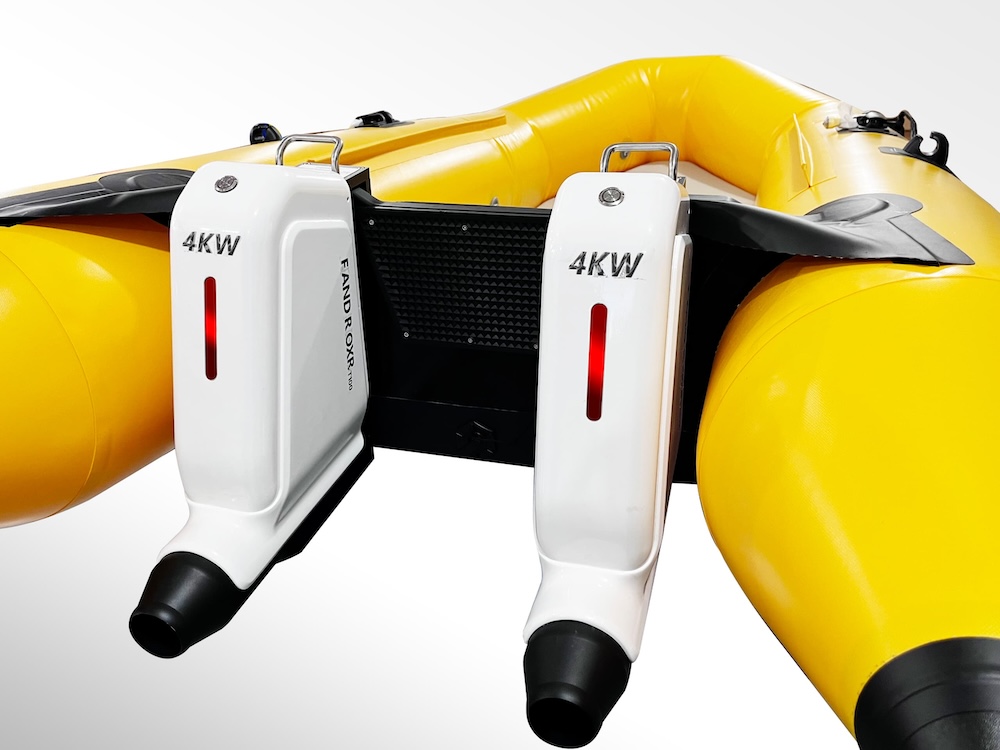
Propulsion arrangements can be selected according to the intended operating environment, maneuverability requirements, payload, expected endurance, and maintenance constraints.
AGISTAR can adapt propeller selection and positioning to address considerations associated with shallow-water operation, debris exposure, and maneuvering. These decisions can be evaluated alongside the platform’s geometry, power supply, and installed equipment.
Battery configurations can also be adapted to different operating and transportation requirements.
One possible travel-oriented arrangement accommodates four 6S batteries rated at 4,000 mAh each, subject to the selected electrical architecture and transport requirements. Configurations supporting up to six batteries can also be considered where additional energy capacity or a different power arrangement is needed.
Operating endurance depends on propulsion demand, environmental conditions, communications equipment, and payload power consumption.
The BX USV II can also incorporate onboard power distribution for customer-supplied instruments, including sensors, cameras, computers, and other electronics.
Where electrical compatibility permits, AGISTAR can develop suitable connections and power distribution arrangements, considering voltage regulation, current capacity, connector selection, protection, and electrical isolation.
This allows compatible equipment to be integrated into a common onboard electrical architecture without necessarily requiring separate power solutions for individual instruments.
Waterproof Electronics and Custom System Integration
The BX USV II can incorporate a waterproof electronics enclosure configured around the selected control systems, communications equipment, power distribution components, and instrumentation.
Depending on enclosure dimensions, weight, ventilation, and thermal requirements, space can also be allocated for additional components or spare batteries.
This flexibility is relevant to research organizations and system integrators working with proprietary sensors, experimental hardware, or specialized data acquisition systems.
Beyond mechanical and electrical integration, AGISTAR can support software development for specific project requirements, including interfaces between the vehicle and its equipment, data acquisition workflows, and mission-specific control functions.
The scope of these modifications depends on the existing systems and the requirements of the application.
Supporting Different Marine Survey and Research Missions
The BX USV II can be configured for different equipment packages, allowing a common base platform to be considered for multiple types of marine fieldwork.
A hydrographic configuration could incorporate bathymetric instruments and GNSS positioning equipment, while an underwater inspection setup might prioritize cameras, lighting, and instrument deployment systems. Environmental monitoring applications could use water-quality sensors and associated data acquisition equipment.
The platform is also relevant to universities and research laboratories developing experimental measurement technologies, as well as USV developers and system integrators incorporating proprietary hardware and software.
The extent to which a vehicle can be reconfigured between missions depends on available payload capacity, mechanical compatibility, electrical requirements, and the operating conditions associated with each application.
AGISTAR’s configuration process considers these factors from the initial assessment of mission requirements through platform material selection, propulsion and battery specification, equipment integration, and any required software development.
By accounting for current instrumentation and potential future modifications, the BX USV II provides a configurable platform for marine organizations requiring different equipment arrangements without necessarily developing a separate vehicle for every application.
To learn more about the BX-USV II and its full capabilities, visit AGISTAR’s website.