
Showcase your capabilities
If you design, build or supply Forward Looking Sonar, create a profile to showcase your capabilities and connect with visitors who have an active requirement for your solutions.


Forward looking sonar enables vessels and underwater vehicles to detect and avoid obstacles in real-time. Unlike consumer-oriented systems used for recreational fish-finding, forward looking sonar systems used in oceanography, commercial shipping, and autonomous vehicles are engineered for precise imaging, long-range detection, and seamless integration with underwater navigation and mission planning systems.
These sophisticated sonar systems utilize phased arrays, beamforming, and volumetric imaging to deliver situational awareness in environments ranging from coastal waters to deep-sea terrain. This page provides an in-depth look at forward looking sonar technologies, their applications, capabilities, and how they differ from simpler forward-facing sonar products used in consumer markets.
Read the Technology Overview




High-Performance Instruments, Sensors & Technologies for Exploring & Monitoring Subsea Environments

Cutting-Edge Underwater Imaging & Positioning Solutions for Subsea Exploration


3D Forward Looking Sonars (FLS) for Critical Vessel Navigation & Situational Awareness

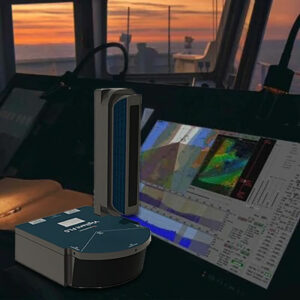
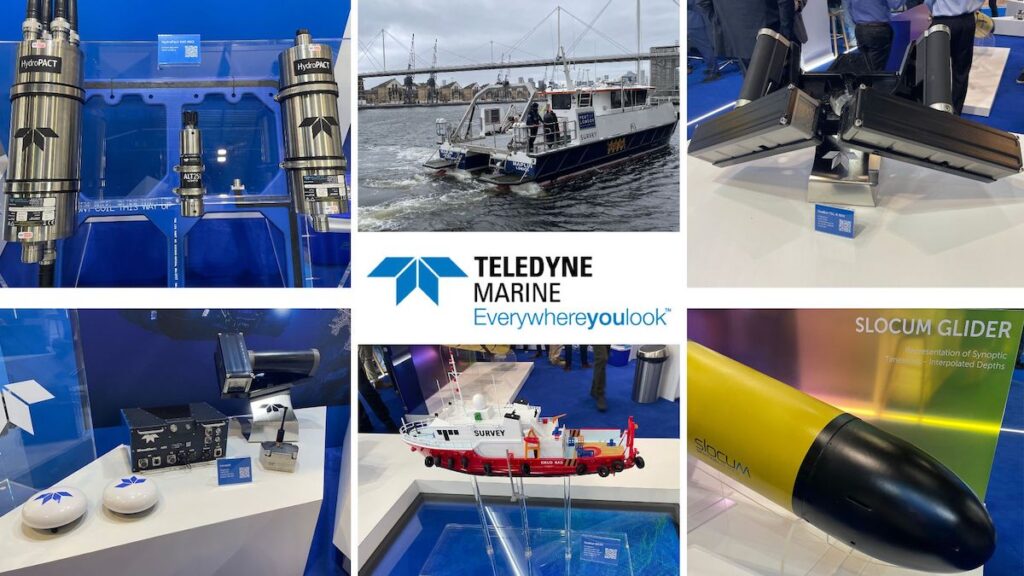
Advanced Sonar Systems for Underwater Detection, Imaging & Navigation

If you design, build or supply Forward Looking Sonar, create a profile to showcase your capabilities and connect with visitors who have an active requirement for your solutions.

Forward looking sonar (FLS) systems are acoustic imaging tools that actively project sound waves forward from the bow of a vessel or the front of a subsea vehicle. The returning echoes are processed to generate real-time visualizations of underwater terrain, hazards, and objects located ahead of the platform’s direction of travel. These systems offer critical insight into navigation and situational awareness, particularly in low-visibility environments where optical systems fail, such as turbid waters, night operations, or beneath the ice.
Unlike traditional downward-looking or side-scan sonar, forward looking sonar provides actionable data ahead of the platform, supporting proactive decision-making in underwater navigation. It is particularly valuable in avoiding submerged hazards, planning safe routes through uncharted waters, and enhancing obstacle detection during autonomous or remotely piloted missions.
There are several classes of forward looking sonar, differentiated by their imaging capabilities and transducer technologies:
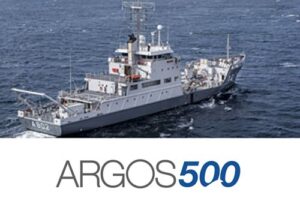
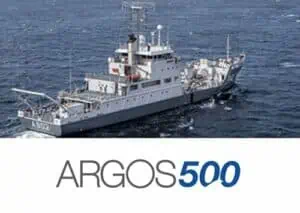
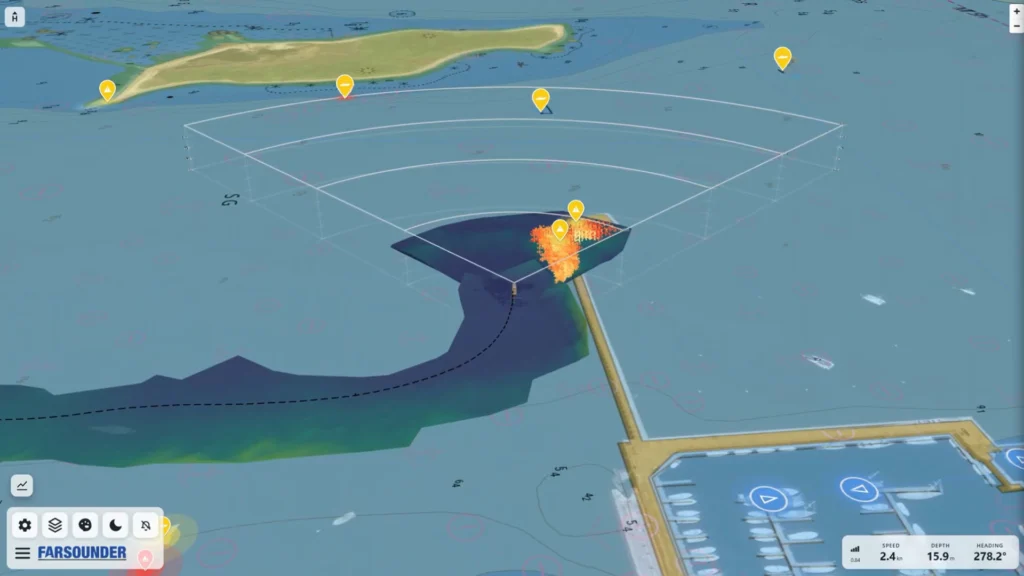
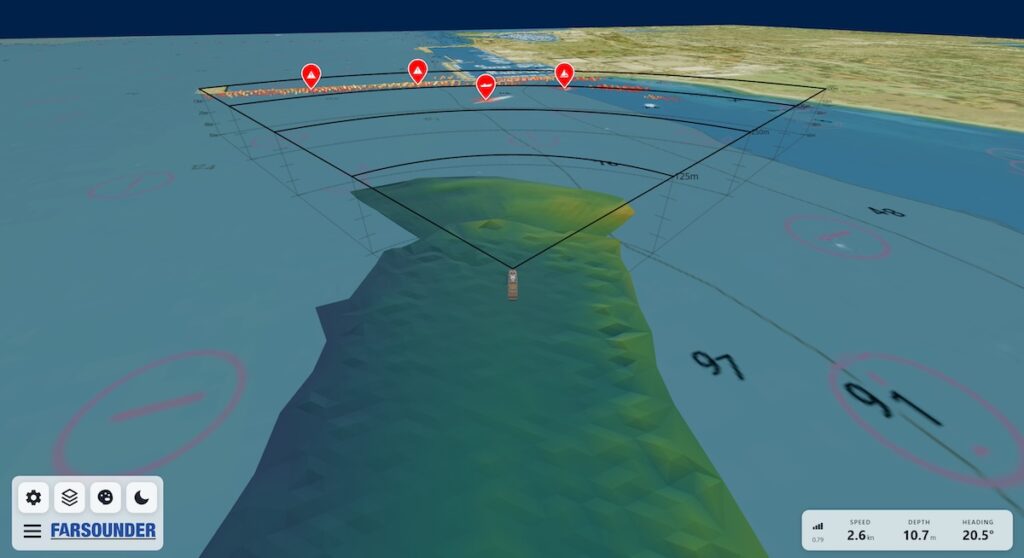
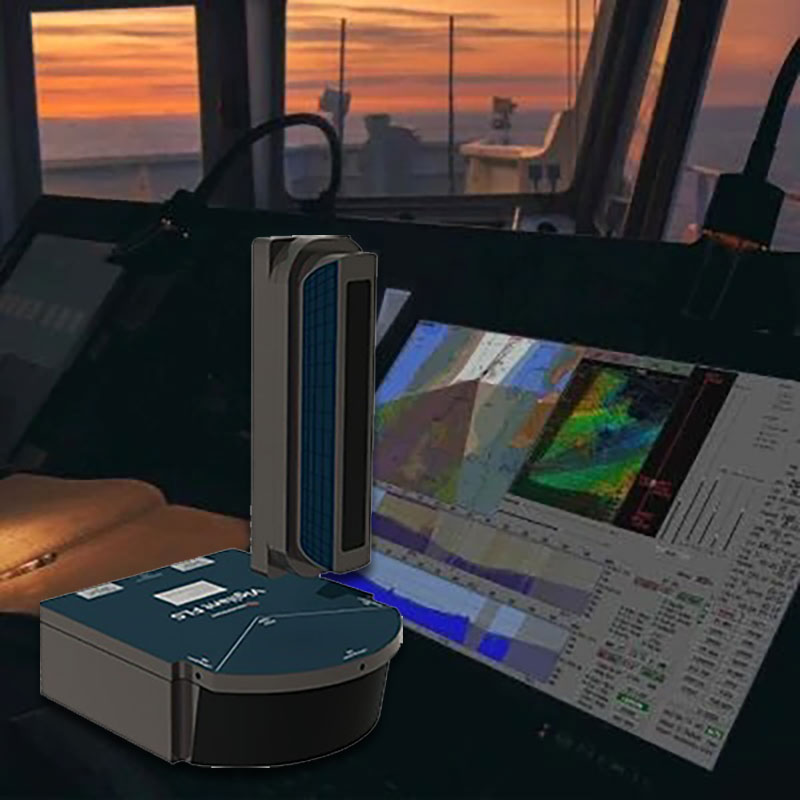
Argos 500 Forward Looking Sonar by FarSounder
2D forward looking sonar creates planar slices of the water column and seabed ahead, offering straightforward visualizations of obstacles in a single cross-section.
These systems are standard in applications where simplicity and clarity are paramount, such as basic obstacle avoidance on remotely operated vehicles (ROVs) and survey boats.
Also referred to as volumetric imaging sonar, produces rich, spatially detailed representations of the underwater environment. These systems are ideal for mapping submerged structures, detecting changes in the seafloor, and performing complex navigational tasks that benefit from full spatial awareness.
These systems use electronically controlled beamforming to steer sonar beams without mechanical movement. This enables rapid, high-resolution imaging across a wide range of sectors, enhancing target separation and reducing latency. Phased array sonar is often preferred for applications that require high refresh rates, such as adaptive mission control in autonomous navigation.
These represent another core distinction. Multibeam forward looking sonar offers wide-swath coverage and detailed terrain mapping capabilities. In contrast, single-beam sonar tends to be more straightforward and cost-effective, making it well-suited for close-range tasks and installations in limited spaces.
Mechanically scanned sonars use rotating transducers to build images line-by-line, which can provide high-resolution detail but at the expense of slower update rates and higher mechanical complexity.
These systems may feature tilt mechanisms to adjust their vertical scanning angle, a crucial feature for platforms operating at varying depths or targeting both near-field and long-range objectives.
A robust forward looking sonar system offers multiple capabilities critical to maritime operations:
By detecting submerged rocks, wrecks, pipelines, and other obstacles in real-time, forward looking sonar enables proactive avoidance strategies, especially in cluttered or uncharted waters.
Combined with autonomous or crewed survey systems, forward looking sonar supports the generation of detailed bathymetric models used in oceanography, environmental monitoring, and seabed infrastructure projects.
The ability to detect and classify objects in challenging underwater conditions makes these systems indispensable in search and rescue (SAR) operations, forensic investigations, and asset recovery.
When navigating in unknown or dynamic environments, forward looking sonar helps in planning optimal paths that avoid hazards while minimizing transit time.
For operators of AUVs, ROVs, and USVs, forward looking sonar provides essential forward visibility, supporting safer missions, especially during autonomous navigation.
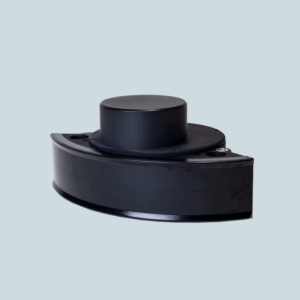
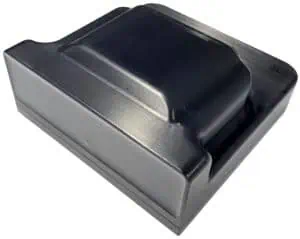
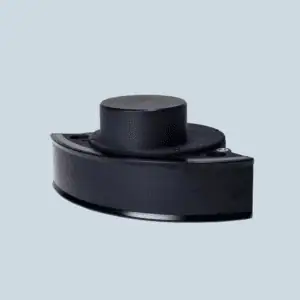
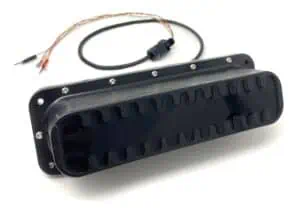
NORBIT FLS (Forward Looking Sonar) by NORBIT Subsea
Forward looking sonar plays a pivotal role in ocean science missions. Mounted on research vessels, AUVs, or towed bodies, these systems facilitate precise seafloor mapping and the detection of benthic features.
Volumetric sonar imaging enables researchers to model ecosystems and track environmental changes over time. Broadband systems offer the high resolution necessary to study sediment transport, reef structures, and benthic habitats in detail.
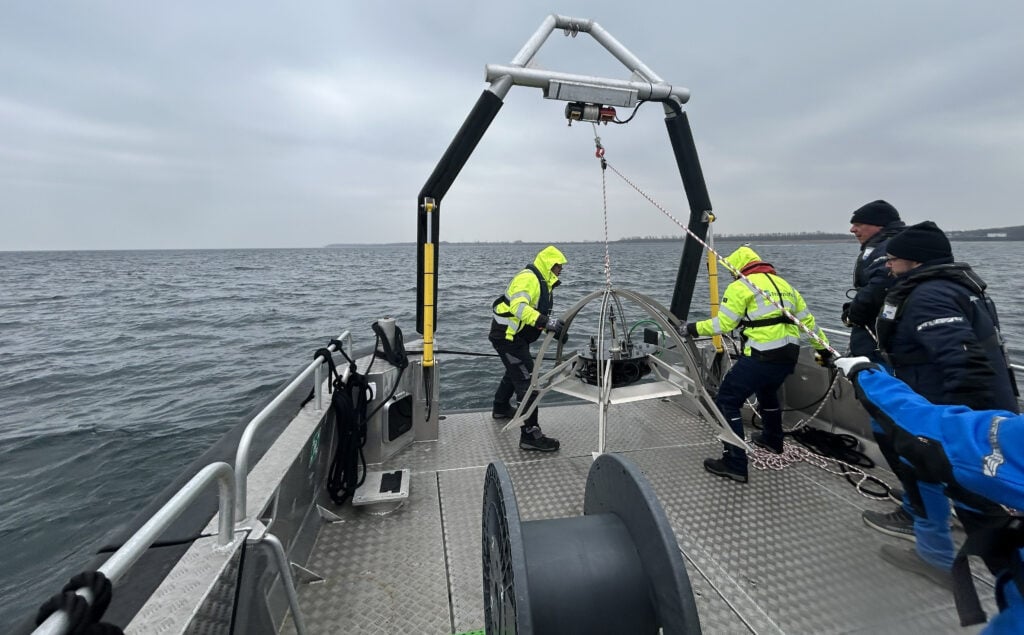
Large commercial ships frequently operate in busy ports, narrow channels, or low-visibility conditions. Forward looking sonar improves navigational safety by identifying submerged obstructions and enabling route adjustments in real time. On ferries and cargo ships, sonar-based hazard avoidance supplements radar and GPS, providing an underwater aspect to the situational awareness toolkit.
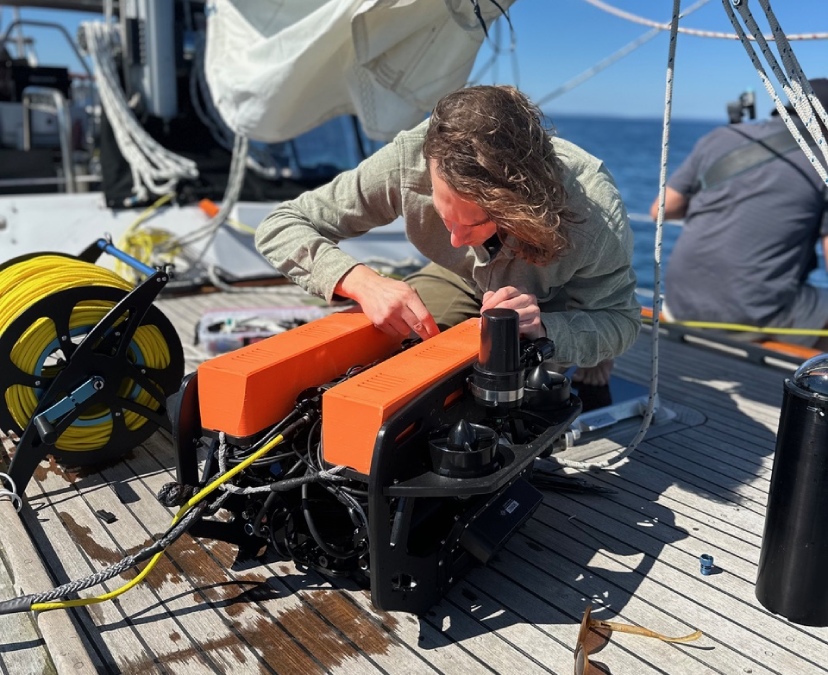
Autonomous and remotely operated platforms rely heavily on forward looking sonar to maintain safe navigation. These vehicles are often tasked with operations near infrastructure, within pipelines, or across challenging seafloor terrain. Imaging sonar systems help prevent collisions and support precision maneuvers during inspection, maintenance, and data-gathering missions.
While forward looking sonar is not primarily used for fish detection, advanced systems can aid in studying marine life behavior and population distributions in open waters or near structures. When integrated with volumetric imaging, they contribute to non-invasive fisheries research and habitat assessments.
Forward looking sonar is instrumental in search and recovery, enabling the detection of downed aircraft, sunken vessels, or lost equipment. Its ability to operate in murky, high-turbidity waters where optical systems fail is essential for the rapid identification and recovery of underwater objects.
To operate effectively in the field, forward looking sonar systems must integrate with a variety of onboard and mission-specific technologies:
Professional, forward-looking sonar systems often need to communicate with a range of onboard electronics, such as GPS, autopilots, depth sounders, and multifunction displays. To support this interoperability, many commercial and research-grade sonar units incorporate support for standardized marine data protocols, such as NMEA 0183 and NMEA 2000.
While NMEA 0183 is simpler and utilizes serial communication, NMEA 2000 offers a more robust, high-speed CAN-based network, ideal for modern digital vessels. Integration via these standards enables sonar-derived obstacle alerts to be used directly by autonomous navigation systems or logged for mission analysis, making NMEA compliance an important consideration for both manned and unmanned platforms.
There is frequent confusion between professional forward looking sonar and the “forward-facing” sonar units marketed to anglers. While both may use similar terminology, their performance and application spaces are vastly different:
| Feature | Professional FLS | Consumer Fish-Finder |
| Primary Use: | Navigation, mapping, and obstacle avoidance | Fish detection |
| Range: | 100–1000+ meters | Typically under 50 meters |
| Imaging: | 2D/3D volumetric, multibeam | Simplified 2D images |
| Deployment: | ROVs, AUVs, survey boats, commercial vessels | Recreational boats |
| Beamforming: | Phased array, multibeam | Single or dual-beam |
| Integration: | Autonomous systems, mission control | Standalone with chartplotter |
Consumer-grade systems, such as forward scan fish-finders, are limited to recreational depths and lack the resolution and signal-processing capabilities necessary for professional missions. They cannot resolve submerged infrastructure, model terrain in 3D, or interface with autonomous navigation protocols.
Forward looking sonar is a vital component of modern underwater navigation and survey operations. With capabilities that extend far beyond those of consumer-grade systems, FLS provides actionable data for safe navigation, seabed mapping, and mission planning across a wide range of maritime domains.
Whether supporting oceanographic research, commercial shipping, or AUV-based exploration, forward looking sonar remains essential to understanding and operating within underwater environments. As technology continues to evolve, we can expect even greater integration, resolution, and autonomy from these powerful systems.
 Searching Companies & Products

 Subscribe to the Weekly eBrief
The latest engineering and technical developments straight to your inbox - join thousands of engineers who receive it.
Subscribe to the Weekly eBrief
The latest engineering and technical developments straight to your inbox - join thousands of engineers who receive it.