Forward Looking Sonar
Discover cutting-edge solutions from 4 leading global suppliers
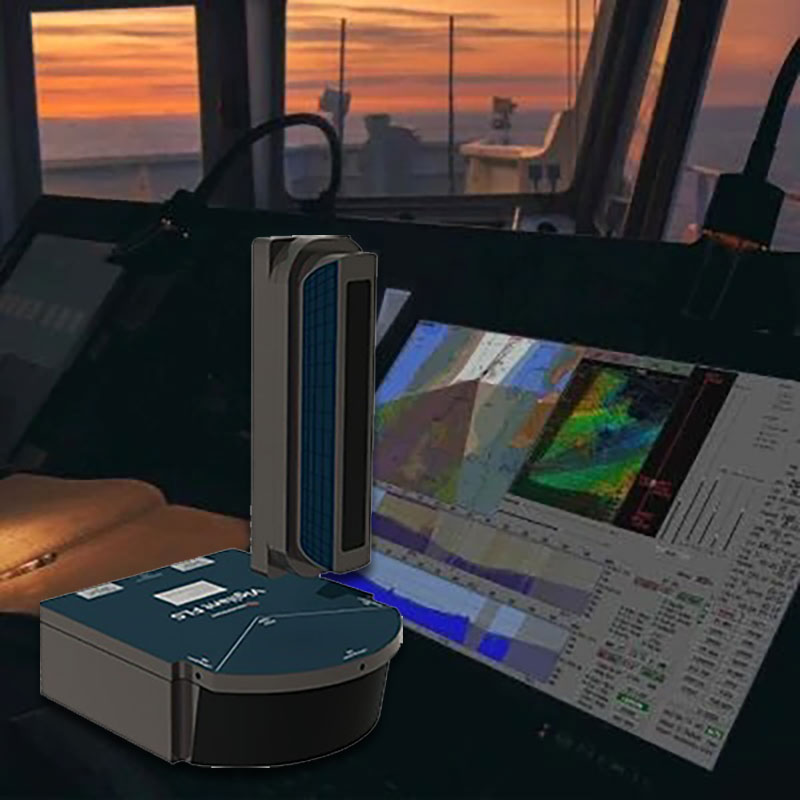
FarSounder is advancing the next generation of unmanned and autonomous naval operations through its Argos series of 3D Forward-Looking Sonars (FLS). Read more >>
As uncrewed systems become integral to maritime defense strategies, their ability to perceive and interpret the underwater domain in real time is becoming essential to mission success. FarSounder’s sonar technology equips both crewed and uncrewed platforms with detailed subsurface awareness, enabling intelligent navigation, mapping, and operational decision-making across diverse marine environments.
Modern naval autonomy depends on multi-sensor integration, where data from complementary systems is combined to form a cohesive operational picture. Above-water technologies such as radar, EO/IR, and machine vision provide reliable surface coverage, yet the underwater domain continues to present challenges. Navigational hazards, limited charting accuracy, and restricted communications can pose significant risks for vessels operating with minimal human input. To expand the effectiveness of these platforms, advanced sensing technologies must extend capabilities beyond situational awareness to provide enduring environmental intelligence.
Expanding Operational Capability
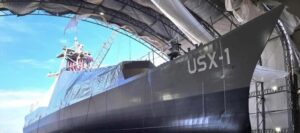
DARPA’s NOMARS demonstration vessel “Defiant” Source: Serco North America
FarSounder’s Argos series sonars are currently deployed on both manned and unmanned vessels, including DARPA’s NOMARS USV “Defiant.” These systems deliver a real-time three-dimensional view of the subsurface environment up to 1000 meters ahead of the vessel while simultaneously mapping the seafloor along its route. For unmanned operations, this functionality offers more than navigational safety; it creates a persistent layer of environmental data that enhances fleet-wide situational understanding and informs command-level decision-making.
Argos 3D Forward-Looking Sonars are designed to support operations ranging from human-in-the-loop control to full autonomy:
- Remote Operator Support: Provides real-time sonar imagery, allowing operators to visualize the underwater environment directly ahead of the vessel.
- Autonomous Control: Delivers fully processed sonar data through an Ethernet-based machine interface, enabling onboard systems to perform intelligent navigation and course corrections.
- Local History Mapping™: Generates and stores bathymetric data collected during operation. This information can be recalled when the vessel revisits a location and securely shared across connected fleets, supporting cumulative environmental awareness.
Enhancing Domain Awareness
Uncrewed surface vessels increasingly function as distributed sensors within hybrid fleets, extending the range and granularity of maritime domain awareness. When deployed forward or alongside manned platforms, these vessels contribute to an interconnected detection network that provides earlier warning of potential threats.
Integrating 3D Forward-Looking Sonar fills a critical information gap below the surface. Continuous detection of subsurface obstacles and real-time mapping of the seabed improve navigational safety and augment tactical situational awareness. As fleets aggregate bathymetric data, they can optimize routing, sustain higher operational tempo, and infer adversary movement based on environmental data, strengthening overall mission readiness.
Intelligence, Surveillance, and Reconnaissance (ISR)
For Intelligence, Surveillance, and Reconnaissance (ISR) operations, unmanned and autonomous vessels equipped with Argos 3D FLS significantly expand the scope of underwater intelligence collection. These platforms can monitor or patrol defined zones while manned vessels focus on priority objectives. Incorporating real-time subsurface awareness enables detection of submerged anomalies, underwater structures, or environmental changes that may influence mission outcomes, supporting a more comprehensive ISR capability.
Integration within Multi-Sensor Ecosystems
Interoperability remains central to modern naval operations. FarSounder’s Argos FLS integrates data from AIS and ARPA targets as well as above-water visual systems such as SEA.AI, providing operators and autonomous systems with a unified operational picture.
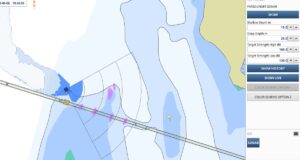
Argos FLS data integrated into Anschütz SYNAPSIS (W)ECDIS NX Interface
Through FarSounder’s SonaSoft™ software and Software Development Kit (SDK), sonar data can be seamlessly incorporated into Anschütz SYNAPSIS (W)ECDIS NX and other situational-awareness platforms. This integration enables both real-time and historical bathymetric data to be distributed across command networks, ensuring accessibility of critical intelligence throughout the fleet. These capabilities support rapid decision-making, enhance autonomous navigation, and contribute to a cohesive maritime information architecture.
Operations in Uncharted Waters
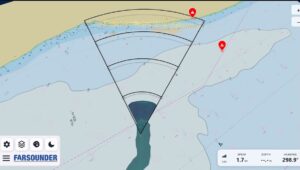
SonaSoft LT™ UI displaying above water detections through SEA.AI Integration
Naval missions often extend into areas that are poorly charted or entirely uncharted. In such environments, uncertainty regarding seafloor conditions can pose significant operational risks. Deploying USVs equipped with Argos 3D FLS allows these regions to be mapped and surveyed without exposing personnel or high-value crewed assets to danger.
The sonar’s range extends to approximately eight times the depth below the sensor. In waters 50 meters deep, for example, Argos can image the seafloor up to 400 meters ahead of the vessel, offering far greater coverage than traditional downward-facing sonars. By combining bathymetric data collected by multiple unmanned vessels, commanders can quickly develop accurate terrain maps, identify safe corridors, and evaluate potential chokepoints. This capability enhances navigation safety, mission planning, and even supports amphibious landing or resupply route preparation.
Mine Countermeasures (MCM)
Traditional mine countermeasure operations rely on towed sensor systems that can be vulnerable to terrain changes and underwater obstacles. Uncrewed vessels fitted with Argos 3D FLS can detect and assess subsurface features well ahead of their position, enabling course or tow depth adjustments that prevent sensor collisions or damage. This capability allows remote operators and autonomous control systems to maintain mission continuity while protecting sensitive equipment and minimizing operational risk.
Supporting the Hybrid Fleet
As naval forces increasingly adopt hybrid fleets that combine manned, unmanned, and autonomous systems, technologies such as 3D Forward-Looking Sonar play a pivotal role in enabling effective coordination and shared situational understanding. FarSounder’s Argos sonar systems contribute beyond real-time navigation, forming part of a larger data ecosystem that enhances autonomy, information sharing, and decision support.
By delivering reliable subsurface intelligence to autonomous control software, remote operators, and fleet command centers, FarSounder’s 3D FLS technology strengthens every level of maritime operation. From domain awareness and ISR to reconnaissance in uncharted waters, Argos systems provide the underwater clarity required for safe, efficient, and intelligent missions within the evolving hybrid naval fleet.