The Global Sourcing Hub for Marine, Subsea & Offshore Technology
Discover cutting-edge solutions from leading global suppliers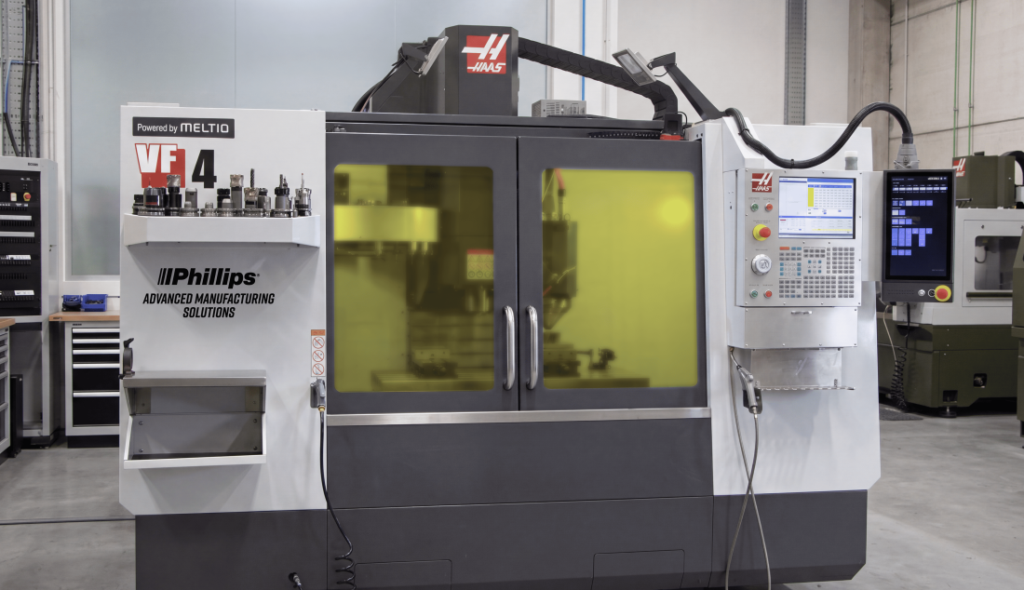
The U.S. Navy is expanding advanced manufacturing training at its Schoolhouse in Danville, Virginia, with the addition of 24 hybrid and additive manufacturing systems, including Phillips Hybrid units integrating Meltio’s Directed Energy Deposition (DED) technology.
Phillips Corporation’s Federal Division is delivering the equipment in partnership with BlueForge Alliance, the Navy’s procurement and program management partner. The deployment comprises 12 Phillips Hybrid Manufacturing Systems and 12 Markforged X7 composite additive manufacturing systems, giving sailors in the Afloat Training Program practical experience with metal hybrid manufacturing, composite additive manufacturing, and production-ready workflows.
The new training environment is intended to reflect manufacturing capabilities increasingly being deployed across the U.S. Navy. Exposure to both metal hybrid and composite additive technologies will help prepare personnel to manufacture, repair, and sustain components closer to the point of need.
Each Phillips Hybrid system is based on a Haas TM-1P CNC platform and incorporates Meltio’s DED technology. Bringing additive and subtractive processes together on one platform allows sailors to produce new components, repair worn parts, restore high-value assets, and deposit material only where it is required.
The combined process provides greater speed and flexibility than traditional manufacturing methods alone, while also reducing material waste and lead times. Training on the systems is designed to support applications including fleet sustainment, depot maintenance, and expeditionary manufacturing.
The Markforged X7 systems add composite 3D printing capability to the facility, allowing personnel to produce durable composite parts, tooling, fixtures, prototypes, and replacement components. Together, the two technology sets provide training relevant to both shipboard and shore-based manufacturing operations.
BlueForge Alliance carried out the procurement on behalf of the U.S. Navy, working with Phillips Federal on a standardized, production-ready manufacturing solution aligned with fleet sustainment and workforce development objectives.
The deployment also supports the Navy’s wider Deployed Advanced Manufacturing efforts, which focus on point-of-need production and the development of personnel skilled in polymer and metal additive manufacturing. Previous shipboard activity, including the production of a replacement sprayer plate aboard USS Bataan, highlights the importance of preparing sailors to use production-ready manufacturing equipment before deployment.
The Navy Schoolhouse is owned by Naval Sea Systems Command (NAVSEA) and operated in collaboration with the Institute for Advanced Learning and Research (IALR).
Bobby Keithley, Vice President of Sales & Product Strategy, Phillips Federal, commented, “This effort reflects a highly collaborative approach between the Navy, BlueForge Alliance, Meltio, Markforged, and Phillips Federal to deliver real-world manufacturing capability for the fleet. By training sailors on the same hybrid and additive systems they will encounter aboard ship, the Navy is accelerating readiness, improving sustainment outcomes, and strengthening its advanced manufacturing workforce. Hybrid manufacturing provides a powerful advantage by combining additive and subtractive processes, enabling sailors to produce new components, repair worn parts, and reduce dependence on traditional supply chains when operating in contested or remote environments.”
Gabriel Ortiz, Americas Channel Manager at Meltio, added, “It is difficult to think of a more challenging environment than out at sea, and Meltio’s technology could not be in better hands than the team at the Navy’s Danville Schoolhouse, supported by Phillips Federal. As a retired sailor, I have a special appreciation for what this technology can accomplish when placed in the hands of well-trained sailors and Marines. Equipping the next generation of naval maintainers with advanced manufacturing capabilities will strengthen fleet readiness and help ensure critical parts can be produced whenever and wherever they are needed.”