Discover World-Leading Technologies for Ocean Science
Discover cutting-edge solutions from leading global suppliers
A battery that ran past its required cutoff with five minutes to spare. A sonar system that separates a layer of fluid mud from the solid seabed beneath it, using one acoustic signal instead of two survey passes. A robotic sailboat that held its bathymetric line through currents running stronger than forecast.
This month’s most-read stories were about existing categories of subsea technology getting more exact: a power system that held full load without thermal throttling, a hull-inspection robot that moved from spotting an anomaly to classifying, locating, and logging it, a camera upgrade sharp enough to resolve skin texture from a distance. Precision, not new capability, was the common thread.
1. Continuous Power Milestone Achieved for High-Voltage Underwater Platforms
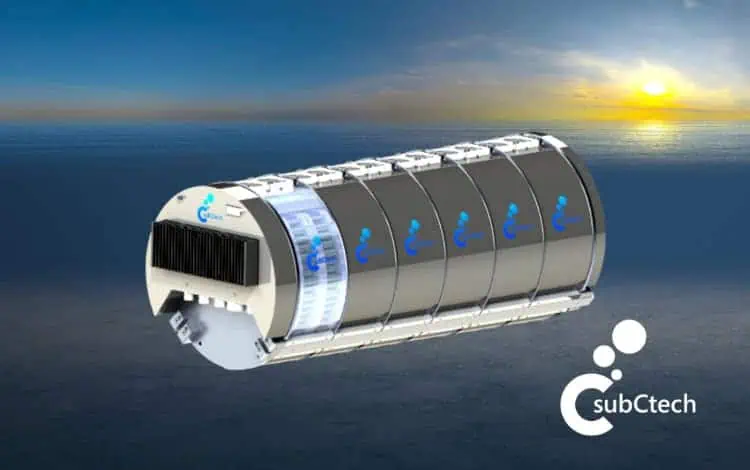
SubCtech has completed full-load electrical testing for a customer-defined underwater platform, successfully demonstrating 50 kW of continuous power from a 600 V-class autonomous underwater vehicle (AUV) battery system. The test validated a power system designed for high discharge rates, featuring a nominal voltage of approximately 600 V and a nominal energy capacity exceeding 40 kWh.
2. Layered Media Detection Added to WINGHEAD X Midwater Multibeam Sonar System

NORBIT Subsea has introduced Layered Media Detection, a new optional capability for its WINGHEAD X Midwater multibeam sonar system designed for hydrographic surveys in complex sediment environments. By combining concurrent detection processes across multiple frequency bands within a single broadband acoustic signal, the system enables surveyors to simultaneously identify fluid mud layers and the underlying navigable bottom during a single multibeam survey.
3. Autonomous USVs & Advanced Sonar Unlock High-Precision Shallow-Water Mapping

The U.S. Navy and autonomous technology developer Oshen have successfully demonstrated the ability to map shallow coastal waters using a small robotic sailing vessel during joint trials off the coast of Mississippi. The two-week evaluation, conducted near Cat Island by personnel from the Naval Meteorology and Oceanography Command alongside Oshen developers, targeted the littoral zone — an area traditionally difficult, hazardous, and resource-intensive for standard naval vessels to survey.
4. Oceanbotics Deploys SRV-8 ROV for Shark Week & Debuts 4K Camera Technology

Oceanbotics has returned to Discovery Channel’s Shark Week production, marking four consecutive years of using the SRV-8 Remotely Operated Vehicle (ROV) to track and film underwater marine life. During a recent two-day expedition off the coast of Catalina, ROV pilot and outside sales representative Ryan Gates alongside head of marketing Mira Nagle tracked and recorded Mako sharks.
5. Greensea IQ Launches Autonomous Hull Inspection Robot

Greensea IQ has introduced Bayonet Sweep, an expeditionary autonomous underwater robot designed to inspect ship hulls and underwater structures for force protection and threat detection. The system provides navies, security teams, and port and harbor authorities with a rapid method of inspecting ship hulls without placing divers in the water.