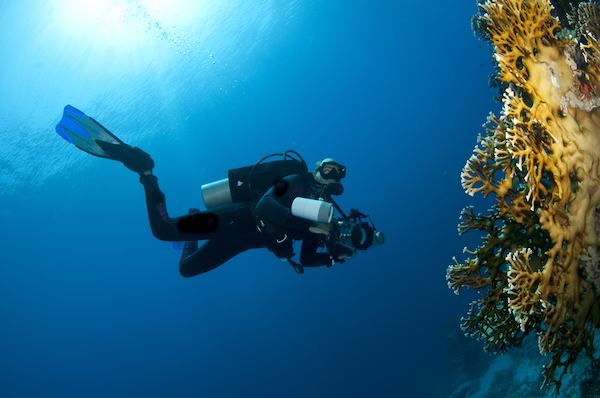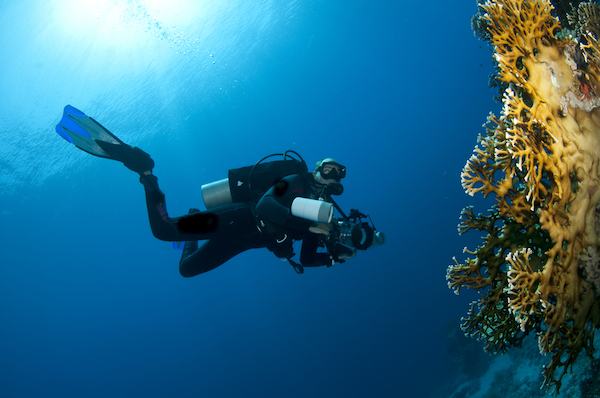

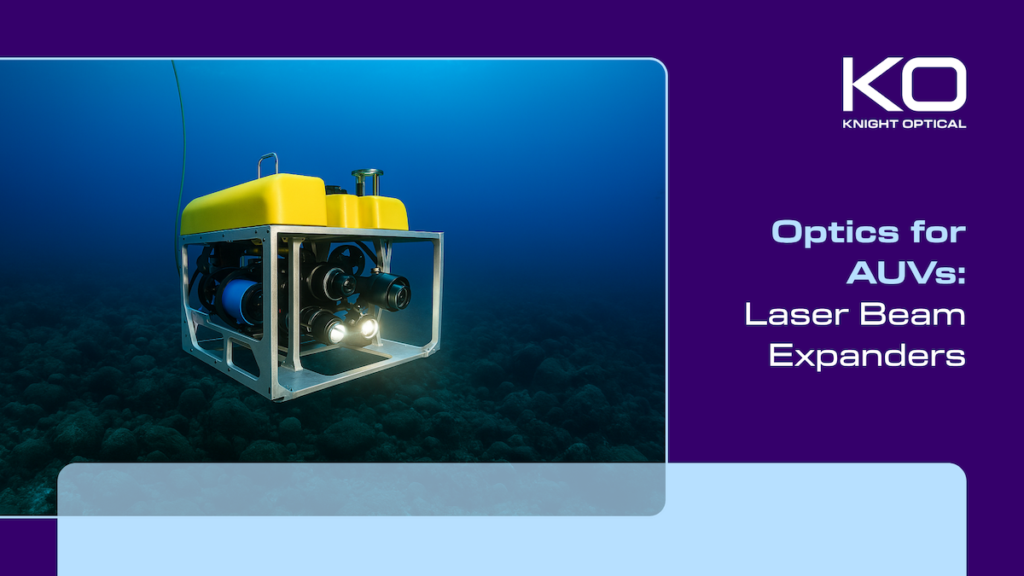
Knight Optical highlights the role of laser beam expanders and pressure-resistant optical components in supporting Autonomous Underwater Vehicle (AUV) operations in demanding subsea environments.
As AUVs are increasingly used for mapping, inspection, navigation, and remote sensing, maintaining laser performance underwater remains a key challenge due to beam divergence, turbidity, refraction, and pressure.
Laser-based technologies support a range of AUV applications, including pipeline and infrastructure inspection, seabed mapping, docking alignment, obstacle avoidance, and Remotely Operated Vehicle (ROV) guidance. Laser scanning and LiDAR systems generate 3D point clouds used to create detailed seabed terrain models. Laser range-finding and remote sensing also support navigation in underwater environments where GPS signals are unavailable.
Optical Challenges Underwater
Underwater environments create several obstacles for laser performance.
Refraction at the water interface changes beam geometry, affecting pointing accuracy, targeting, and measurement precision while introducing wavefront distortion. Turbidity caused by sediment, algae, and marine particles scatters laser light, reducing beam range as well as the sharpness and accuracy of returned readings.
Wavelength selection is also critical in deep-water laser systems. Red wavelengths are absorbed rapidly underwater, while green and blue wavelengths travel farther. Selecting an unsuitable wavelength can reduce both operational range and data quality.
Combined, these effects weaken and distort laser beams as they travel through water, placing additional demands on underwater optical systems.
Beam Expanders for Improved Beam Control
Laser beam expanders help improve underwater laser performance through beam collimation and optical control.
By reducing beam divergence, beam expanders help maintain tighter beam profiles over longer distances before underwater conditions begin degrading performance. They also help control illumination profiles, allowing laser light to strike targets more evenly and improving the quality of returned signals.
As with laser-cutting systems, optical quality earlier in the system affects downstream performance in subsea applications.
Materials for Subsea Optical Assemblies
Underwater optical assemblies must withstand pressure cycles, temperature variation, saltwater exposure, and biofouling, making sealing methods, optical coatings, and substrate selection critical considerations.
Sapphire
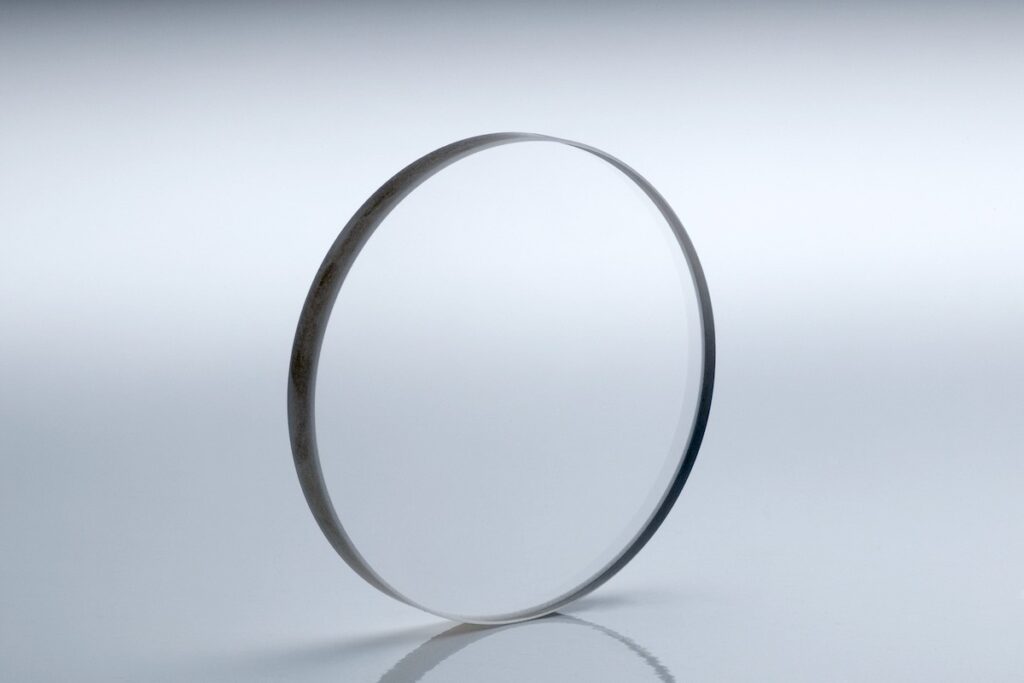
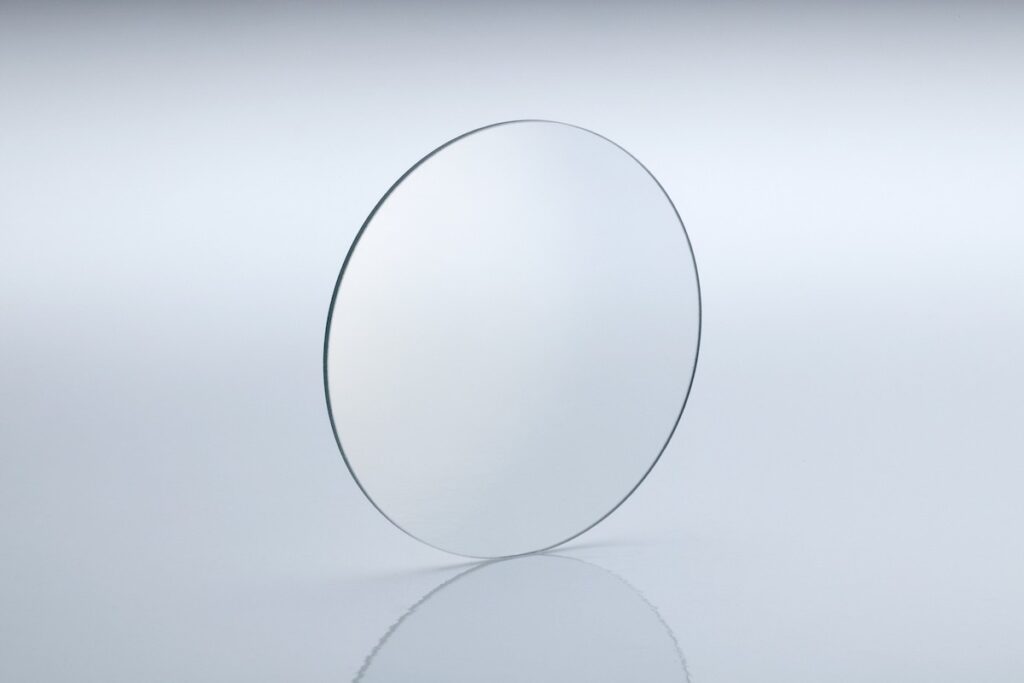
Sapphire windows and viewports are commonly used in AUVs because of their hardness and resistance to scratching, abrasion, and pressure.
N-BK7 and Equivalent Materials
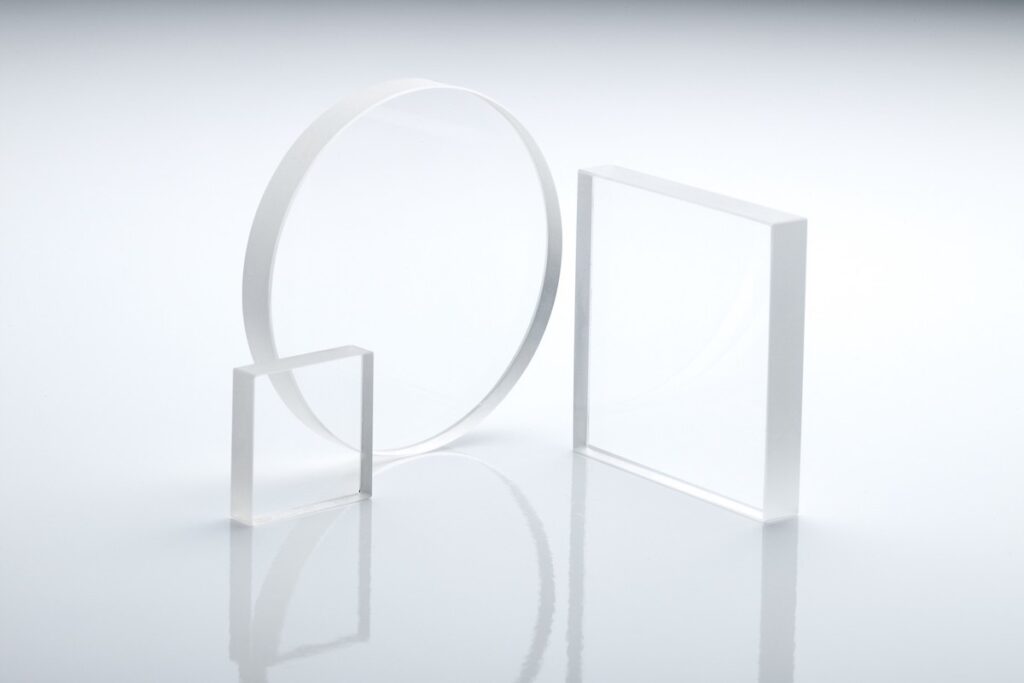
N-BK7 and equivalent optical substrates are often selected where the additional cost of sapphire is not required while still providing good transmission characteristics.
Acrylic
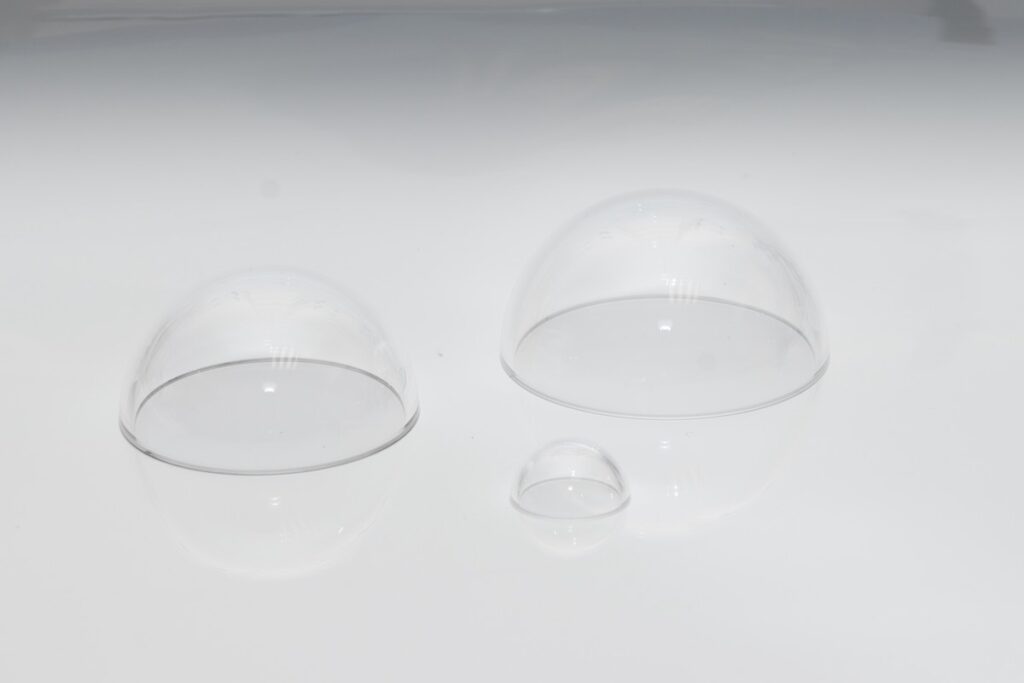
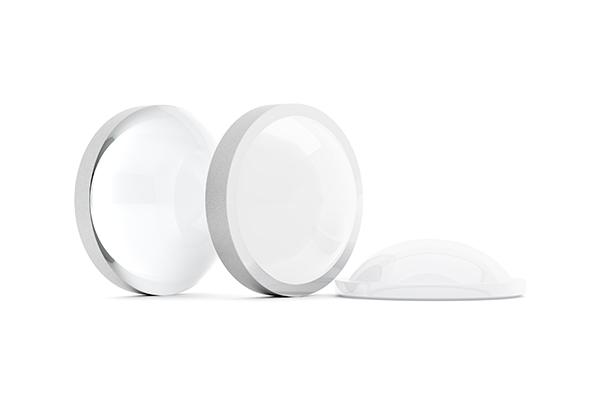
Acrylic is commonly used for optical domes requiring wide-angle coverage, although it is less durable than alternative optical materials.
Knight Optical supplies metrology-tested optical components and laser beam expanders for subsea operations, including pressure-resistant components available in custom sizes for underwater applications.