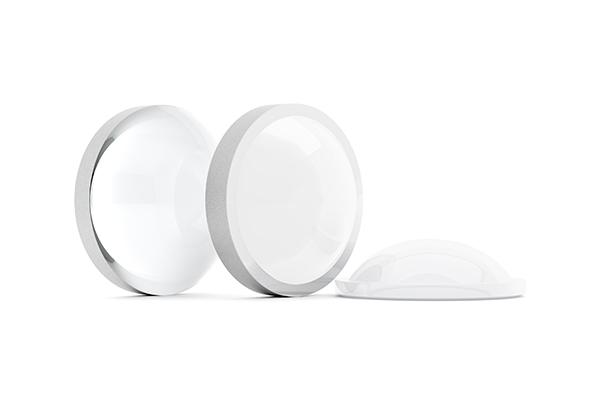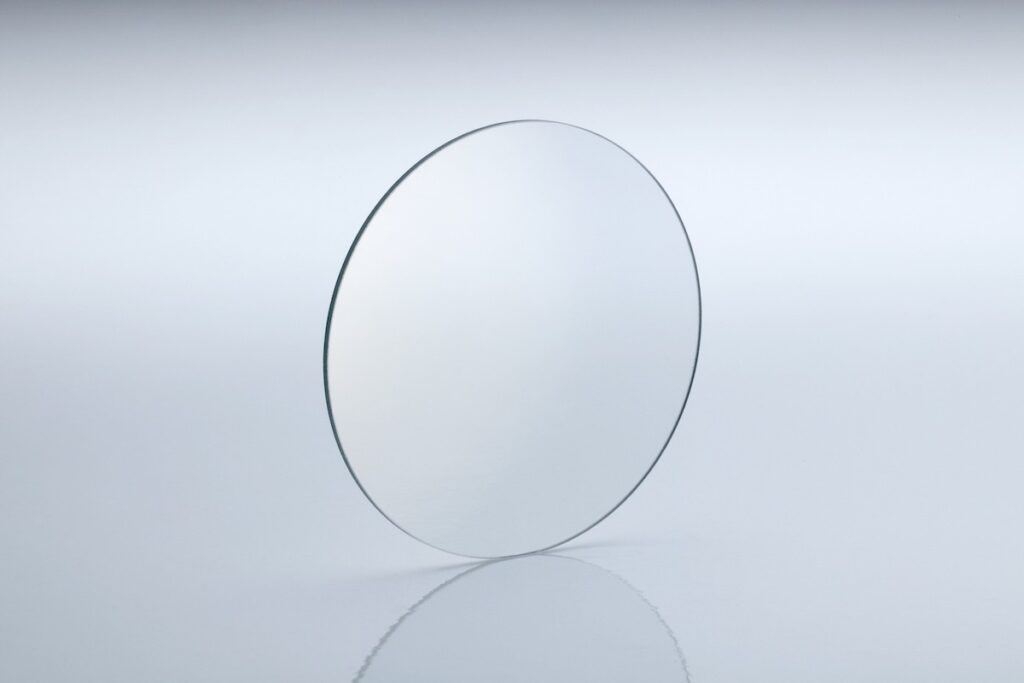


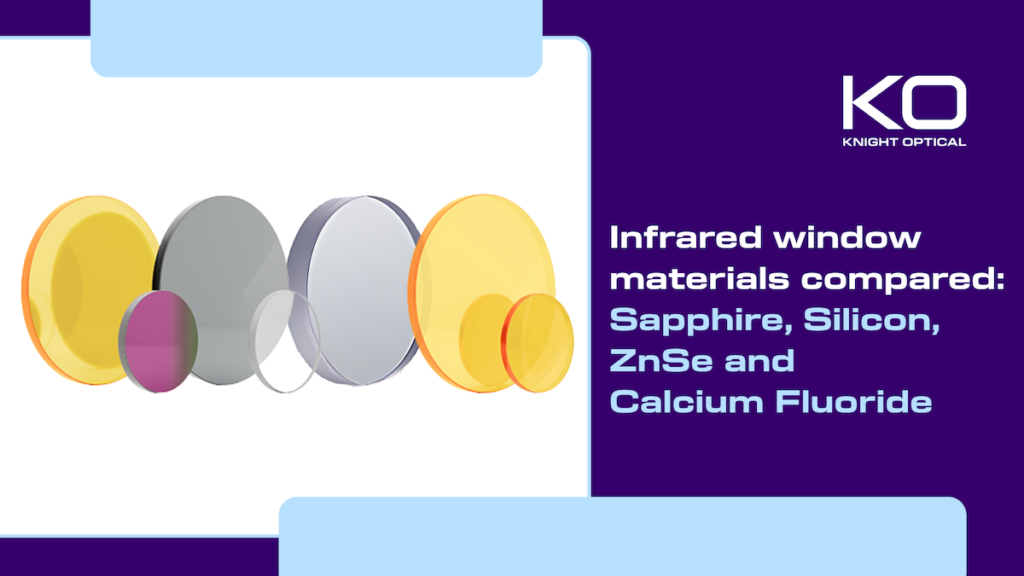
Optical window material selection is an important consideration in imaging and sensing systems, including equipment used in marine and subsea environments. Knight Optical, which supplies precision optical components for underwater imaging and subsea equipment, examines the transmission characteristics of Sapphire, Silicon, Zinc Selenide (ZnSe) and Calcium Fluoride (CaF₂) for infrared applications.
Each material provides a different spectral transmission range, with some covering ultraviolet (UV), visible and infrared wavelengths, while others operate across specific infrared regions. These differences are relevant when specifying optical windows for thermal imaging, surveillance, targeting, range-finding and LiDAR systems operating in the short-wave infrared (SWIR), mid-wave infrared (MWIR) and long-wave infrared (LWIR) bands.
Sapphire Windows for Visible and Infrared Systems
Sapphire (Al₂O₃) transmits wavelengths from approximately 0.17 to 5.5 µm, covering the UV, visible, SWIR and MWIR regions. Its refractive index is 1.768 at 4 µm.
The material is used in protective windows, viewports and sensor cover glass for systems operating across visible and infrared wavelengths.
Sapphire’s transmission range extends through the SWIR and MWIR bands but does not reach the LWIR region.
Silicon Windows for SWIR and MWIR Applications
Silicon (Si) provides transmission from approximately 1.2 to 7.0 µm, covering wavelengths within the SWIR and MWIR regions. A separate transmission range of 25 to 300 µm is also specified, while its refractive index is 3.4289 at 4 µm.
Silicon windows are available with various optical coating options for infrared applications. Knight Optical’s range also includes AR/DLC-coated Silicon windows listed as covering the 7–14 µm LWIR waveband.
Zinc Selenide Windows for Broad Infrared Transmission
Zinc Selenide (ZnSe) has a transmission range of approximately 0.6 to 16 µm, encompassing the SWIR, MWIR and LWIR regions. Its refractive index is 2.4332 at 4 µm.
Of the four materials examined, ZnSe offers one of the broadest transmission ranges and covers the complete 8–14 µm LWIR band.
Coating designs commonly used with ZnSe include 2–14 µm, 2–15 µm, 8–12 µm and 10.6 µm specifications. Knight Optical’s infrared window range includes both anti-reflection (AR) coated and AR/diamond-like carbon (DLC) coated ZnSe options.
Calcium Fluoride Windows for UV to Infrared Applications
Calcium Fluoride (CaF₂) transmits wavelengths from approximately 0.13 to 10 µm, spanning the UV and visible regions and extending into the infrared spectrum. Its refractive index is 1.4096 at 4 µm.
This spectral range includes the SWIR and MWIR bands, together with the lower portion of the LWIR region.
While ZnSe transmits across the full 8–14 µm LWIR band, CaF₂ extends to approximately 10 µm and may be suitable for applications operating toward the lower end of that wavelength range.
Comparing SWIR, MWIR and LWIR Coverage
Infrared applications are commonly divided into three atmospheric transmission bands: SWIR (0.7–3.0 µm), MWIR (3.0–5.0 µm) and LWIR (8.0–14.0 µm).
All four materials provide transmission within the SWIR region, although Silicon’s stated transmission range begins at approximately 1.2 µm rather than extending across the entire band.
Sapphire, Silicon, ZnSe and CaF₂ also transmit throughout the 3.0–5.0 µm MWIR band.
Differences become more pronounced at LWIR wavelengths. ZnSe covers the complete 8–14 µm region, whereas CaF₂ extends to approximately 10 µm. Knight Optical also lists AR/DLC-coated Silicon windows covering the 7–14 µm LWIR waveband.
These transmission characteristics are important considerations when matching optical window materials to the spectral requirements of infrared imaging and sensing systems.
Custom Infrared Windows and Optical Coatings
Beyond standard stock windows, Knight Optical manufactures custom infrared optical windows to customer specifications, with options covering dimensions, thickness, flatness, parallelism and surface quality.
Additional manufacturing capabilities include CNC edging and drilled holes, alongside specialist optical coatings such as DLC coatings. Custom windows can also be manufactured from a range of specialist infrared materials.
Material transmission characteristics, coating options and manufacturing specifications are important considerations when selecting optical windows for imaging and sensing applications. For marine and subsea equipment, additional requirements may arise from the operating environment and the specifications of the optical system. Knight Optical’s wider range of precision optical components supports underwater imaging, subsea survey and mapping, and equipment used in ROV and AUV systems.