
The Global Sourcing Hub for Marine, Subsea & Offshore Technology
Discover cutting-edge solutions from leading global suppliers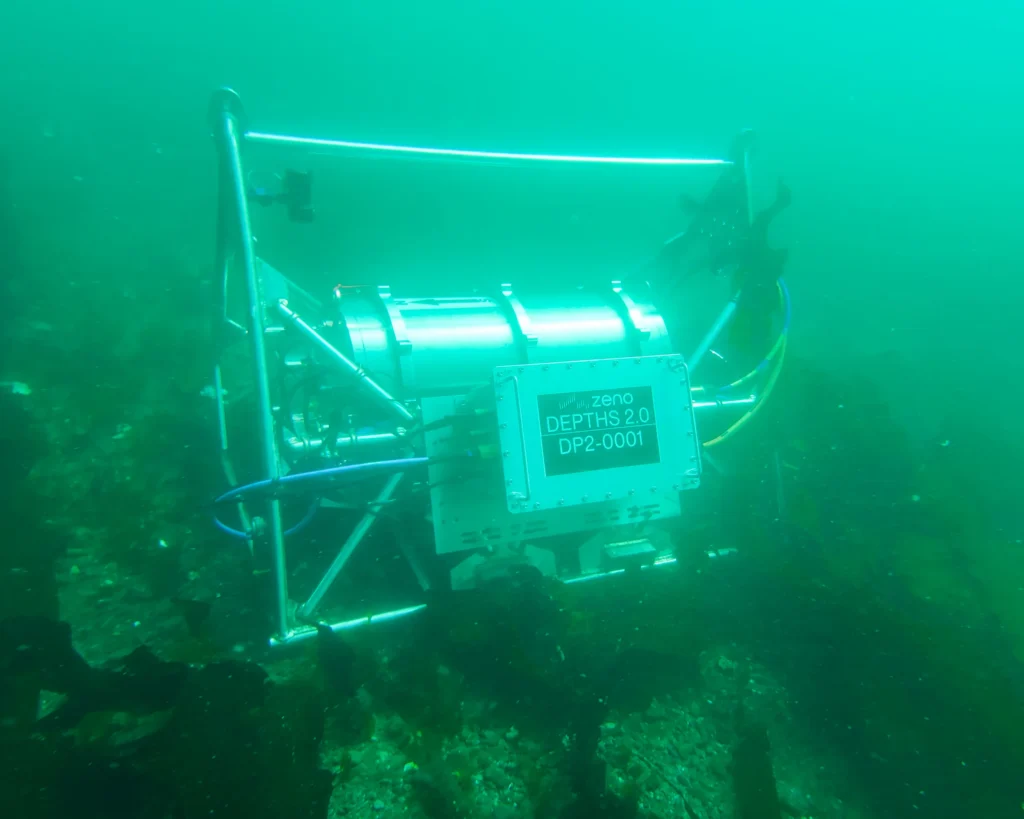
Zeno Power has completed a two-week open-water demonstration of an Electrically-heated Stirling Generator (ESG) in Washington state, marking the first time this type of power conversion hardware has generated electricity on the seabed.
During the controlled maritime trial, the non-radiological prototype produced electrical power outputs exceeding 20 watts before being recovered at the end of the two-week operational window. Rather than using a radioisotope heat source, the test unit relied on an electric heating element to evaluate the Stirling generator, material compatibility, and overall system functionality in a marine environment.
At the core of Zeno Power’s maritime nuclear battery architecture is a Stirling engine, which converts heat into electricity by cycling gas through heating and cooling phases inside a cylinder. This thermodynamic approach allows the system to convert significant amounts of electricity compared to traditional thermoelectric conversion techniques.
Lindsey Boles, Chief Product Officer of Zeno Power, commented, “There’s a difference between a design that works on paper and hardware that works in the field. This is the moment our team has been building toward: proof that this technology works outside the lab. Watching our ESG safely deploy, generate power, and recover it gives us real confidence heading into radiological testing.”
The seabed trial addresses the operational demand for persistent power sources capable of supporting remote underwater systems over multi-year timelines.
Admiral John M. Richardson (USN, ret.), former Chief of Naval Operations and member of Zeno Power’s Board of Directors, said, “Protecting maritime infrastructure and powering distributed systems at sea requires energy; energy that lasts for years, not days or months. As competition intensifies in contested domains, long-lived subsea systems will help keep us ahead. Zeno Power has steadily reduced risk, proven its technology, built a supply chain, and prepared to scale production. This test was another important step towards undersea superiority.”
Zeno Power progressed its maritime nuclear battery prototype from final design to open-water testing in less than 16 months. Following the November 19 announcement, the company is preparing for a radiological demonstration in a controlled tank, with its first operational seabed deployment of a fueled maritime system planned for 2027.