

The Global Sourcing Hub for Marine, Subsea & Offshore Technology
Discover cutting-edge solutions from leading global suppliers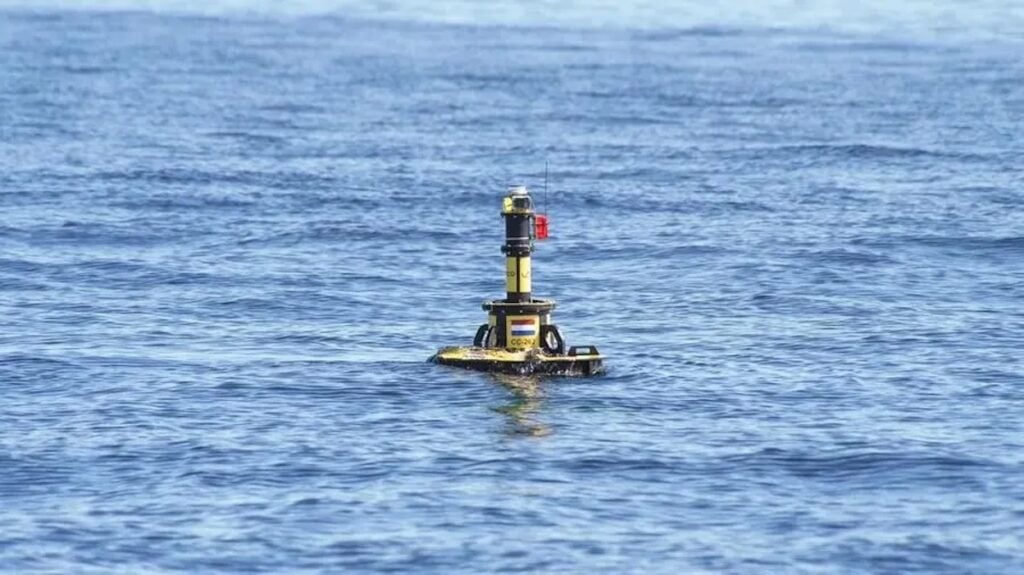
Dutch startup Weco has demonstrated its compact Denshi wave-energy buoy during REPMUS 2026 in Portugal, showcasing its ability to generate continuous offshore power from wave motion to support maritime sensors and communications equipment.
A persistent operational challenge for maritime sensors, communications equipment, and uncrewed systems is energy endurance. As batteries and fuel reserves eventually deplete, operators must deploy vessels to replace them or replenish their supplies. Denshi is designed to reduce this logistical requirement by harvesting energy directly from wave motion, providing a source of electrical power day and night.
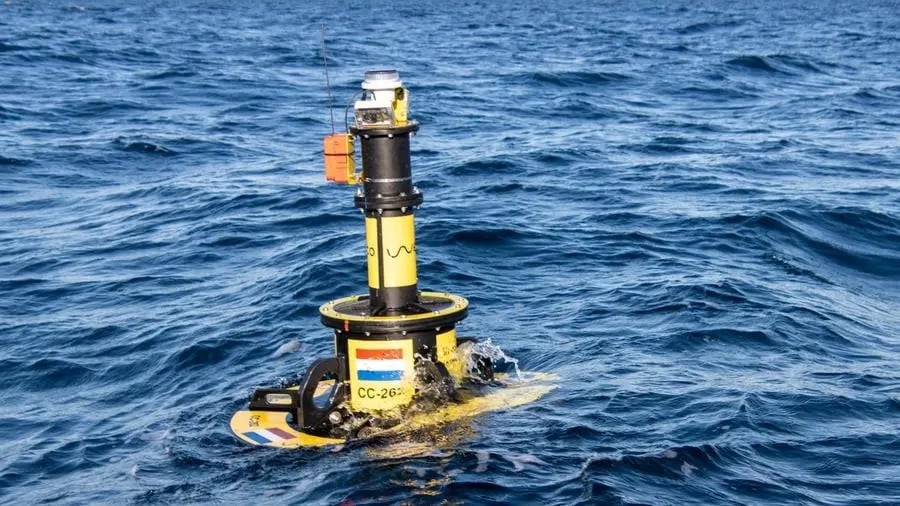
The buoy measures approximately one meter across and is constructed from marine-proven materials, with a design intended to withstand storm conditions. As its floating body moves with the waves, a rack-and-pinion system drives an internal generator, producing a continuous electrical baseload in conditions starting from a significant wave height of 0.3 meters. The unit can be deployed from a small vessel using a single-point mooring system, without requiring a specialized installation vessel.
In addition to serving as an offshore power source, Denshi functions as an integrated communications and computing platform. The buoy incorporates an onboard battery, computing hardware, and LTE/4G/5G communications, with additional communications links available as optional additions.
Demonstrating Denshi at REPMUS 2026
The 16th edition of REPMUS (Robotic Experimentation and Prototyping with Maritime Unmanned Systems) was held from August 31 to September 25, 2026, around Tróia and Sesimbra, Portugal. The exercise brought together more than 1,500 participants from 36 navies, over 60 companies, 13 universities, and five NATO bodies to test maritime technologies alongside crewed and uncrewed systems.
Weco’s participation was made possible with support from the Dutch Ministry of Defence, which is exploring future possibilities for submarine detection in the underwater domain.
At REPMUS, Weco demonstrated how continuous offshore power could support persistent maritime monitoring, allowing sensors to remain deployed without being limited solely by battery capacity. When deployed in numbers, Denshi nodes could also form a mesh network, providing a persistent, low-logistics sensing and communications layer for protecting critical underwater infrastructure, such as subsea cables and pipelines, and detecting Uncrewed Underwater Vehicles (UUVs).
Cas van de Voort, Co-Founder of Weco, commented, “REPMUS let us put Denshi to work next to the systems it is built to serve. Every uncrewed asset at sea is ultimately limited by its power. Showing that a small buoy can keep sensors and comms running on wave power alone, in a real naval exercise and conditions, is a big step. As well as working alongside the Royal Dutch Navy, TNO and other partners has been a great experience.”
Weco plans to use the lessons from REPMUS to further develop Denshi for defense and civil applications, including maritime security and long-term autonomous ocean monitoring.