
The Global Sourcing Hub for Marine, Subsea & Offshore Technology
Discover cutting-edge solutions from leading global suppliers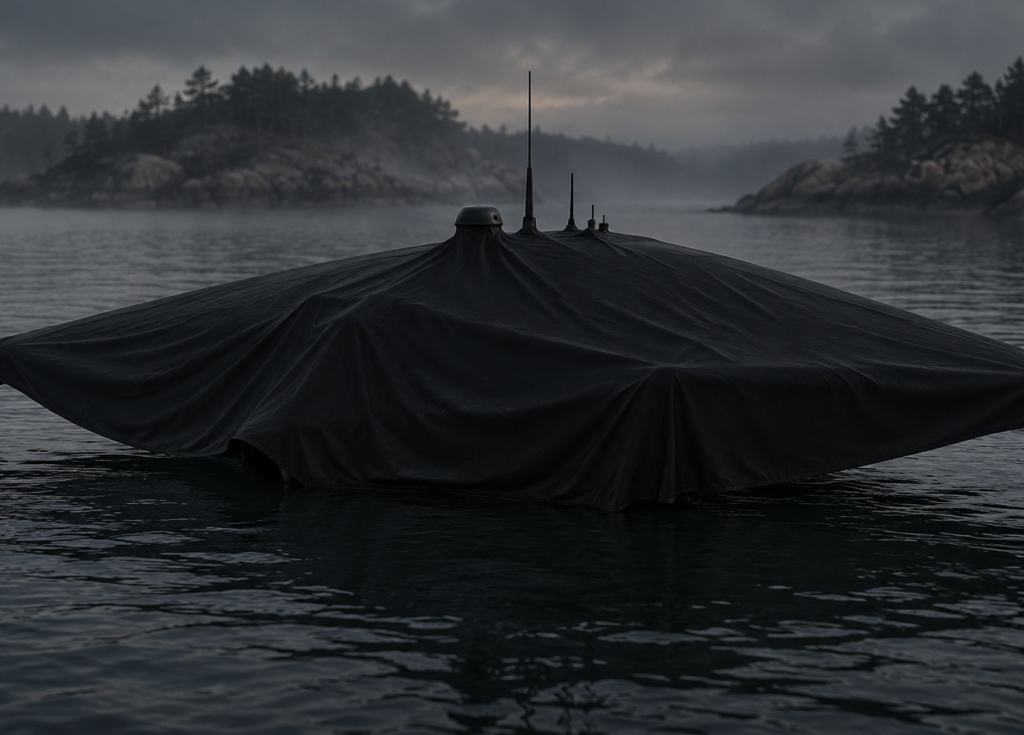
Swedish hull-technology company Petestep is leading the hydrodynamic and aerodynamic design of a new unmanned wing-in-ground craft, known as REINE, to solve the historical challenges of transitioning from water to flight.
The platform, officially titled the next-generation surface-skimming maritime drone for enhanced military capability in the Baltic Sea, is designed for intelligence, surveillance, reconnaissance, and logistics operations. A wing-in-ground craft flies just above the surface on a cushion of air, aiming to combine the high speed of an aircraft with the payload capacity of a ship. This offers greater speed than conventional unmanned surface vessels and better endurance than helicopters.
The Baltic Sea features shallow, island-dense waters typical of littoral environments, which are drawing growing attention for unmanned systems. Following Sweden joining NATO in 2024, the region has been placed at the center of allied security.
Before achieving flight, these craft must overcome a significant resistance peak on the water known as hump drag. Petestep addresses this using patented hull deflectors that capture spray energy and convert it into lift, thereby reducing drag and wetted surface area. Using a computational fluid dynamics-based process, the company models the hull, takeoff, and ground-effect flight in a single simulation chain to manage the transition from a standstill to maneuvering.
Jonas Danielsson, CEO of Petestep, commented, “Ground-effect craft have been around for six decades, but the transition from water to air has at times held them back. That is exactly where our technology, our experience with planing hulls and our advanced flow simulations make a difference.
“On this project we simulate the entire sequence, from standing still to flight, in one process It is also a chance to demonstrate our defense capabilities at home, and contributing to security in the Baltic Sea region feels especially meaningful. We already work with US builders on government and unmanned craft, but on more conventional USV platforms. We welcome conversations with US and allied partners about how our technology and know-how can support their missions.”
The REINE project is funded by a SEK 6.7 million (about $670,000) grant from Sweden’s innovation agency, Vinnova, under its call for needs-driven defense innovation for a secure Baltic Sea region. The project runs from October 9, 2026, to October 8, 2027, culminating in a demonstrator aimed at Technology Readiness Level 5. The resulting on-water trials will compare measured performance with predictions to identify requirements for the next development phase.
To build the demonstrator, Petestep is collaborating with three other organizations. STILFOLD originated the concept and leads engineering, utilizing robotic manufacturing to fold flat sheet metal into rigid structures without product-specific tooling. EmbeddedArt Group is developing the electrical and control systems, while the state-owned research institute RISE coordinates the project and provides independent measurement and validation.
Petestep’s hull technology is already deployed on planing craft ranging from 13 to 115 feet. This includes government and unmanned vessels in Turkey and the United States, such as a patrol boat built by Silverback Marine for New Mexico State Parks.