
The Global Sourcing Hub for Marine, Subsea & Offshore Technology
Discover cutting-edge solutions from leading global suppliers
NOAA’s Geophysical Fluid Dynamics Laboratory and Sofar Ocean have recently established a three-year partnership to develop a coupled atmosphere–wave–ocean model designed to improve global marine weather forecasts.
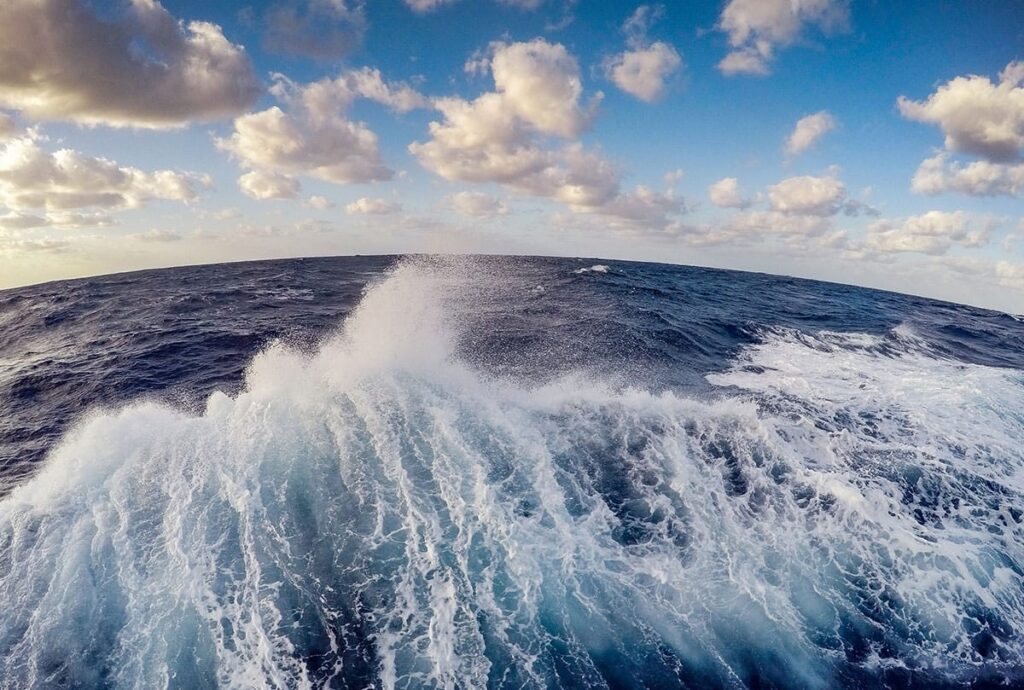
The collaboration, structured as a Cooperative Research and Development Agreement (CRADA), combines parallel efforts from both organizations to create advanced modeling systems. By integrating components from the Geophysical Fluid Dynamics Laboratory (GFDL) System for High-resolution prediction on Earth-to-local Domains (SHiELD) and Modular Ocean Model (MOM6) with real-time data from Sofar’s global network of Spotter buoys, the team aims to produce more precise regional and global weather scenarios.
The Spotter network provides millions of real-time and historical ocean observations that are used to calibrate models at the air–sea interface. These observations fill critical gaps by delivering accurate wave and weather data during heavy convection, rain, and cloud cover where satellite capabilities are often limited. Sofar also utilizes artificial intelligence internally to fine-tune model parameters.

Lucas Harris, leader of GFDL’s Weather and Climate Dynamics Division, commented, “Our collaboration with Sofar explores the benefits of shared technologies and ideas in modeling the coupled Earth system. By combining GFDL model components with observations from Sofar’s global Spotter network, we can build a model to produce highly accurate global marine forecasts.”
Initial results from the experimental coupled model have already demonstrated improved accuracy in wind speed predictions, outperforming other global forecast models in the South Atlantic and Indian Ocean tropics. These improvements directly influence the quality of wave forecasts, which are essential for maritime shipping safety, coastal communities, and the broader blue economy.
Stephen Penny, Head of Weather at Sofar, added, “Public-private partnerships are essential for the advancement of marine weather forecasting in the U.S. Working together, GFDL and Sofar are uniquely positioned to advance the state-of-the-art in marine weather forecasting, helping enhance safety at sea and extreme weather preparedness.”
The agreement represents Sofar’s third CRADA with NOAA. Other ongoing efforts include collaboration with the National Data Buoy Center to advance environmental monitoring and a project with the National Weather Service to optimize physics parameterizations in the WAVEWATCH III wave model.
These partnerships support mutually beneficial research that advances maritime safety and environmental missions.