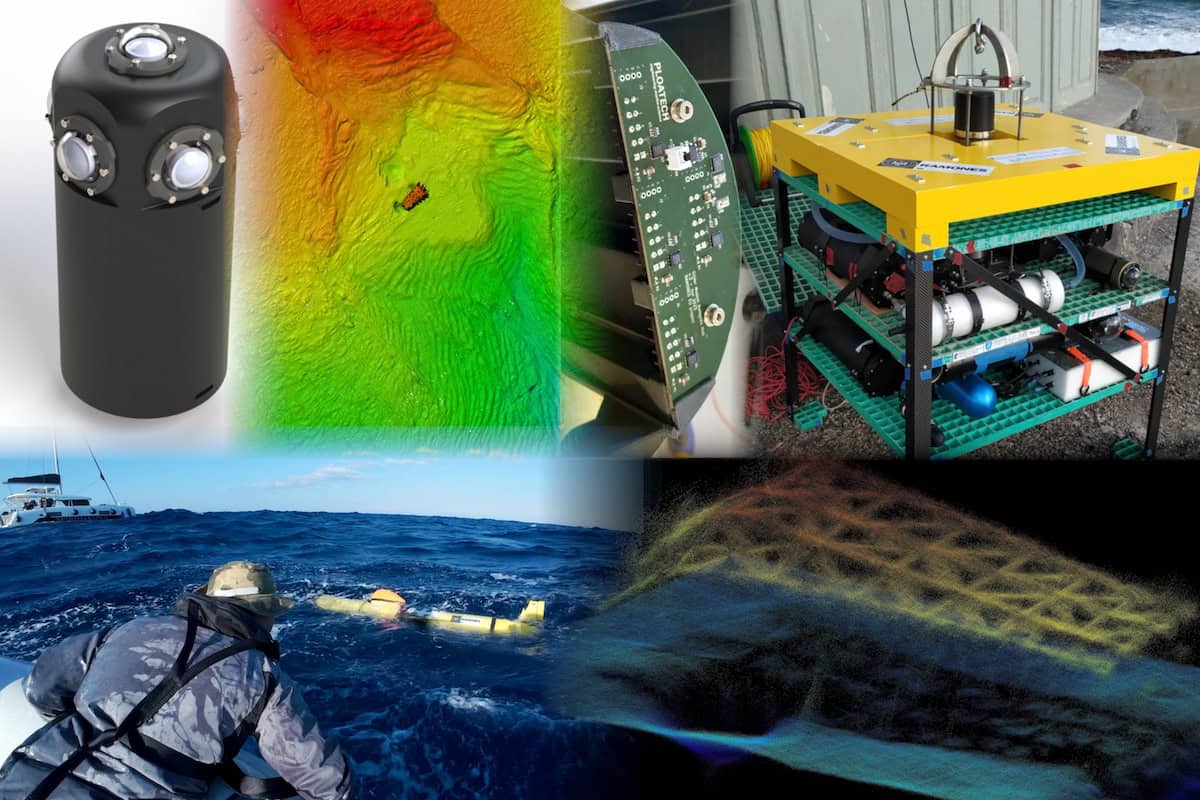


PLOATECH is developing a thermoelectric energy generation system designed to provide a continuous source of power for scientific instruments, sensors, robots, and permanent monitoring stations operating underwater.
The Girona-based underwater technology and scientific engineering company is coordinating the LUCY (Long-term Underwater ThermoeleCtric EnergY) project alongside ViCOROB, the Computer Vision and Robotics research group at the University of Girona (UdG).
LUCY is designed to use the temperature difference between water released at high temperatures from hydrothermal sources on the seabed and the surrounding seawater to generate electricity. This energy would be used to charge specialized underwater batteries supplying scientific instruments and permanent underwater monitoring stations.
Hydrothermal sources are areas of particular scientific interest because of their unique ecosystems and their relevance to climate change research and geological observation. Continuous monitoring of these environments remains limited, however, because of the difficulty of maintaining a constant underwater energy supply.
Manuel Vial, co-founder of PLOATECH, commented, “The lack of a stable energy source means that, currently, many underwater sensors have to ration their operation, depending on expensive ship missions or on very expensive and limited cabling systems.”
“With the LUCY project, we want to have a plug on the seabed, capable of continuously powering the various scientific instruments, sensors and robots, and even allowing these devices to be recharged through underwater power generation stations.”
PLOATECH is leading the design and development of the thermoelectric energy generation system and its prototypes. ViCOROB is contributing to its integration with underwater robotics equipment, including the development and validation of a docking station for vehicle charging.
Potential applications include ecosystem research and data collection for geology, biology, biotechnology, and the pharmaceutical industry. The system could also contribute to the future responsible exploitation of seabed resources by providing scientific knowledge that can help minimize impacts on the ecosystem.
By reducing dependence on ship missions, LUCY could also lower associated costs and emissions while supporting lower-impact research.
The project has received €182,000 in support from ACCIÓ through its grant programme for Green business research and development projects in the field of climate change, with funding from the Climate Fund of Catalonia. ACCIÓ has also advised PLOATECH on protecting the intellectual property and technology developed through the project.
LUCY is currently at the proof-of-concept stage, with a functional prototype validated in a laboratory environment. PLOATECH is seeking funding for the next phase, which will involve developing a prototype for testing in a real underwater environment.
Once this prototype has been developed, PLOATECH estimates that it could have an operational system with commercial scalability potential in approximately 18 months. The company also aims to validate the technology and become the first team in the world to achieve this.