

The Global Sourcing Hub for Marine, Subsea & Offshore Technology
Discover cutting-edge solutions from leading global suppliers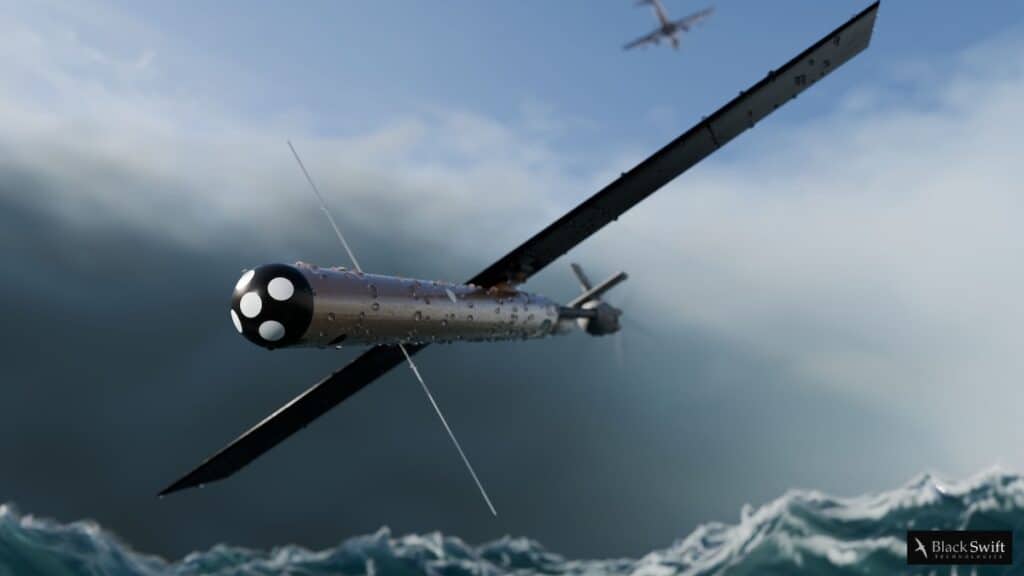
During an operational mission into Hurricane Lala, NOAA researchers successfully demonstrated simultaneous dual-altitude small uncrewed aircraft system flights, marking a major milestone in atmospheric data collection during severe weather events.
The technique, termed Mobile Ocean Towers, involved deploying pairs of Black Swift S0 drones vertically stacked at different altitudes alongside NOAA’s crewed P-3 Hurricane Hunter aircraft. This configuration provides a three-dimensional mapping of storm dynamics from the ocean surface to higher atmospheric levels. During the mission, the aircraft operated using both traditional Lagrangian sampling, which follows wind patterns around the eyewall, and Eulerian sampling, where the drones turn directly into the wind to act as a virtual anchor and remain stationary relative to targeted storm features.
“It’s an extremely exciting time in emerging hurricane technologies,” says Joseph Cione, Lead Meteorologist for Emerging Technologies at NOAA’s Atlantic Oceanographic and Meteorological Laboratory (AOML). “These new capabilities are allowing us to collect unprecedented data in new ways and new areas.”
The deployment achieved a record-breaking 132-minute flight duration for the S0 platform inside a storm. Real-time communications between drone operators aboard the P-3 and National Hurricane Center forecasters in Miami enabled live targeted sampling of specific storm areas. Additionally, an integrated mini radar maintained precise elevation control at altitudes as low as 10 meters above sea level, gathering critical data on marine boundary interactions, ocean surface temperatures, and wave characteristics.
Equipped with suite sensors measuring pressure, temperature, relative humidity, wind velocity, turbulence, and sea surface dynamics, the drones transmitted high-density observational data directly to the National Hurricane Center’s visualization tool. This operational achievement represents multi-year planning and collaborative testing among Black Swift Technologies, NOAA’s Uncrewed Systems Operations Center, NOAA’s Aircraft Operations Center, academic partners, and the Atlantic Oceanographic and Meteorological Laboratory’s Hurricane Research Division, following initial evaluation flights in March and April 2026.