
Autonomous Underwater Vehicles (AUV)
Discover cutting-edge solutions from 9 leading global suppliers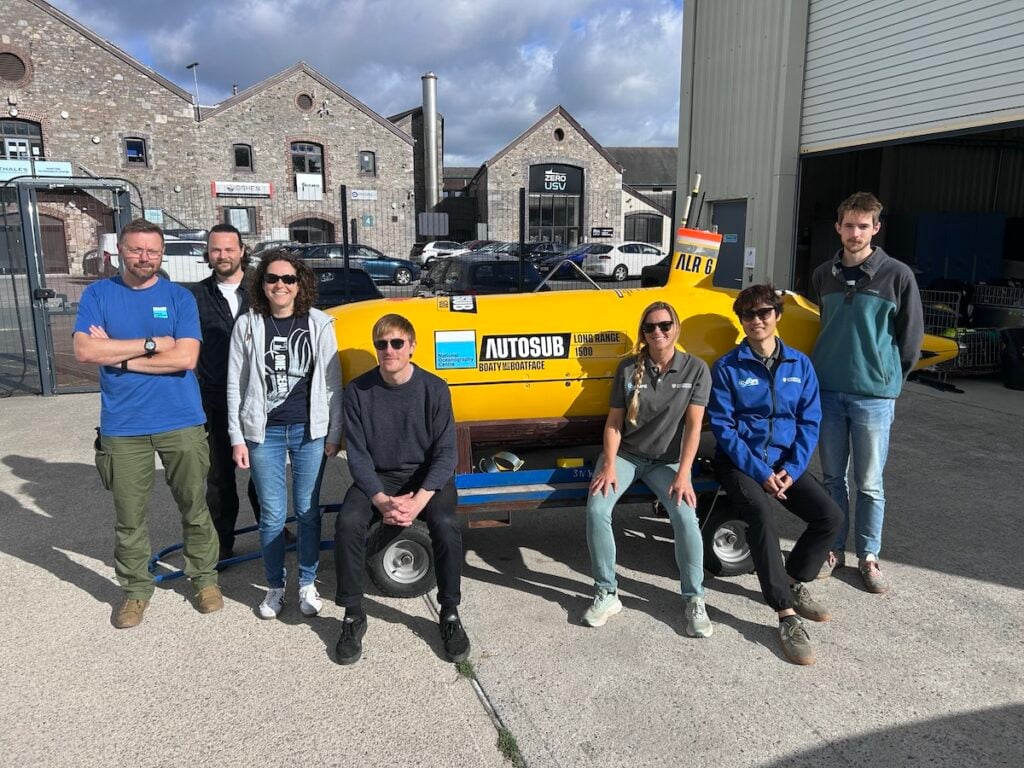
The UK National Oceanography Centre (NOC) has completed sea trials off the coast of Plymouth using its Autosub Long Range autonomous underwater vehicle, known as Boaty McBoatface, to test a new suite of ocean monitoring technologies ahead of planned floating offshore wind developments in the Celtic Sea.
Conducted under Frontline, a £3.5 million research project funded by the Natural Environment Research Council (NERC) and The Crown Estate, the trials demonstrated how marine autonomy, upgraded sensor payloads, and satellite remote sensing can operate together to monitor complex marine environments. As the UK expands offshore wind infrastructure into deeper waters to support its transition to net zero, researchers aim to gather evidence on how large-scale floating installations interact with surrounding ecosystems.
Deeper offshore waters feature dynamic ocean fronts, which are natural boundaries between distinct water masses that concentrate marine life, sustain productive fisheries, and serve as foraging habitats for seabirds and marine mammals. When ocean currents interact with submerged floating wind infrastructure, they can generate wakes and increase water mixing. Because these physical disturbances may alter the strength, location, and persistence of ocean fronts—processes that remain poorly understood—scientists require detailed observational data to support evidence-based planning.
To investigate these interactions, engineers equipped the ALR1500 vehicle with an upgraded sensor package designed to link physical, biological, and chemical ocean conditions with ecosystem activity. Alongside standard environmental measurements, the new payload enables the submersible to map fish and zooplankton populations, record underwater sound, and capture detailed images of plankton.
During the Plymouth endurance missions, operators used over-the-horizon piloting to remotely monitor the vehicle, evaluate incoming data, and adapt missions while it remained at sea. Near real-time satellite observations identified the locations of ocean fronts, allowing pilots to direct the vehicle toward areas of greatest scientific interest in a responsive, data-driven workflow.
The field trials brought together NOC engineers alongside researchers from the University of Plymouth and Plymouth Marine Laboratory. James Burris, Head of Training and Trials, Marine Autonomous Systems at NOC, said, “It’s exciting to see the ALR carrying this new combination of sensors and returning its first observations. Working with the University of Plymouth and Plymouth Marine Laboratory, NOC engineers have been testing and refining the system in real-world conditions. The trial is an important step towards the sustained surveys planned for the Celtic Sea and a better understanding of these dynamic marine environments.”
Dr Lilian Lieber, Frontline Autonomy Work Package Lead at the University of Plymouth, commented, “Marine autonomy allows us to collect more ocean data than ever before, vastly extending the reach and persistence of ocean observation. However, it is not only about collecting more data but choosing the right combination of sensors, with near-real-time capabilities, that will help us make smart decisions when surveying complex and dynamic marine environments.”
She added, “Working closely with NOC’s operational team and our science and industry partners, we have shown how marine autonomy and satellite remote sensing can deliver safe and scientifically valuable endurance missions, inform future surveys in the Celtic Sea, and help understand and safeguard our ocean and the life it supports.”
Alex Phillips, Head of Marine Autonomous and Robotic Systems at NOC, said, “This project is a great example of NOC’s ability to combine world-leading autonomous technology with the engineering, software and operational expertise needed to take projects from concept to deployment. It’s a capability we’ve developed over many years and one that enables us to support cutting-edge ocean science in challenging environments around the world.”
Knowledge gained from the Plymouth trials and upcoming Celtic Sea surveys will support evidence-based decision making to ensure offshore wind energy is developed alongside the protection of marine life and sustainable ocean use.