
Autonomous Underwater Vehicles (AUV)
Discover cutting-edge solutions from 9 leading global suppliers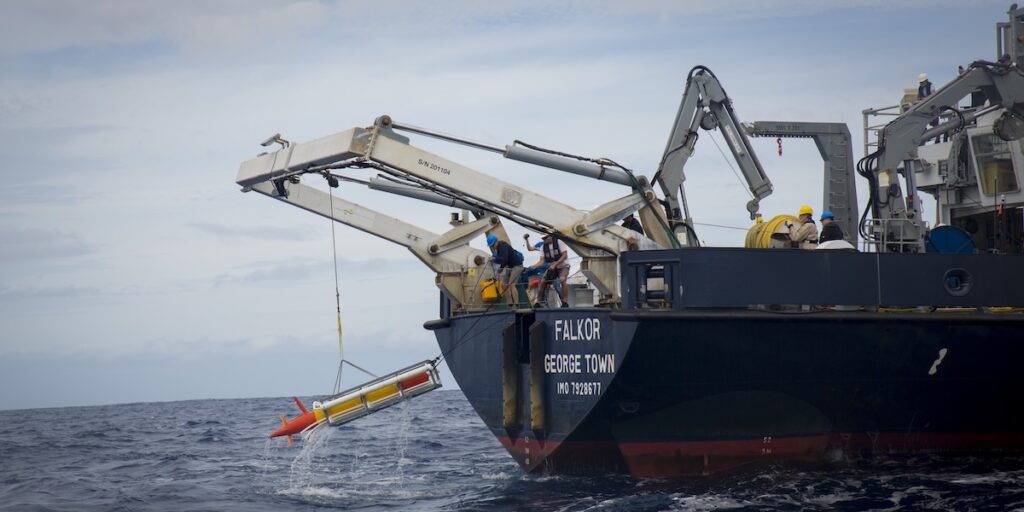
Autonomous robotic technology is providing researchers with unprecedented insights into the daily rhythms of microbial communities and biogeochemical cycles within remote open ocean eddies.
Marine microbes drive critical planetary processes, including oxygen production and biogeochemical cycling, but tracking their populations in dynamic offshore environments has historically proven challenging. To address this, a collaborative study published in Nature Communications by researchers from MBARI, the University of Montana, and the University of Hawaiʻi at Mānoa details how autonomous systems can operate continuously to uncover these hidden marine patterns.
The research utilized MBARI’s long-range autonomous underwater vehicle (LRAUV), a platform designed to detect and follow temperature fronts, salinity gradients, and phytoplankton blooms. When equipped with an Environmental Sample Processor, the LRAUV can autonomously collect samples for advanced genomic analysis, mapping the metabolic shifts of drifting microbes over hourly to weekly timescales.
During a 2018 expedition led by the Schmidt Ocean Institute, scientists deployed two LRAUVs to track deep phytoplankton blooms within cyclonic eddies offshore of the northern Hawaiian islands. The deployment demonstrated how persistent robotic monitoring can shift oceanographic data collection from sporadic snapshots to a continuous, high-resolution presence capable of evaluating global climate systems.