
Autonomous Underwater Vehicles (AUV)
Discover cutting-edge solutions from 9 leading global suppliers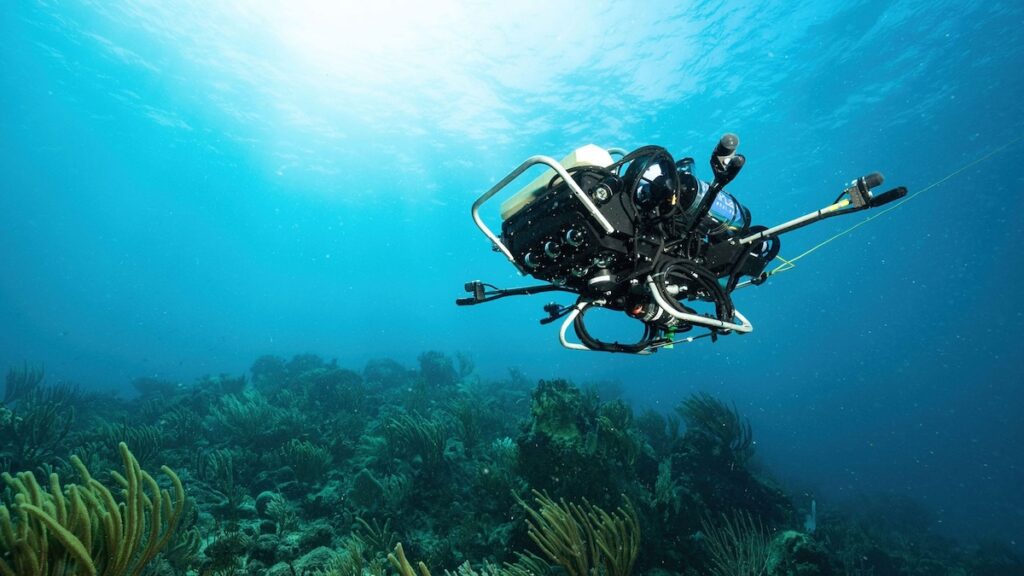
Researchers from the Woods Hole Oceanographic Institution (WHOI) have developed an autonomous robotic system that combines real-time audio and visual data to seek out and map marine biodiversity hotspots on coral reefs with unprecedented precision.
The system, detailed in a study published in Science Robotics, utilizes an underwater robotic vehicle equipped with cameras, hydrophones, and powerful on-board computers to analyze environmental signals simultaneously. By combining direct observations, such as visual animal detections, with indirect observations from reef soundscapes, the vehicle can autonomously identify areas of intense biological activity at a centimeter scale. This multimodal approach represents a significant engineering breakthrough for monitoring fragile reef ecosystems that support roughly a quarter of all marine species despite occupying less than 0.01% of the ocean.
“We know that biodiversity on reefs isn’t distributed uniformly,” said Seth McCammon, a WHOI roboticist and lead author of the study. “But until now we haven’t really been able to reliably quantify that by finding these patchy hotspots, mapping them at the centimeter scale, and measuring just how active they really are. Developing this capability is going to be critical to helping biologists get a deeper understanding of reef ecology moving forward.”
Unlike traditional human diver surveys, which face constraints in depth, duration, and safety, the autonomous vehicle can operate for hours to collect rich datasets across large, complex environments. “That does not mean CUREE is a replacement for human observation of a reef,” said Yogesh Girdhar, the project principal investigator and a roboticist who led the development of CUREE at WHOI’s WARP Lab. “Instead, it’s meant to augment those capabilities and do things a human simply can’t.” The underlying framework coordinates four distinct robotic behaviors: visual fish surveys, acoustic mapping, sound-guided homing, and the autonomous tracking of specific sentinel species.
During field trials spanning three expeditions between 2022 and 2024 at Joel’s Shoal in the U.S. Virgin Islands, the robot successfully and repeatedly localized an ecological hotspot surrounding a major pillar coral structure, recording fish densities nearly 25 times higher than the surrounding reef. The success relies heavily on the complementary interplay between the underwater sensors. Passive acoustics can detect hidden or camouflaged marine life from tens of meters away but struggle to generate precise spatial maps due to ambient reef noise, whereas cameras provide rich species-level data but suffer from limited short-range visibility.
“In some sense, they’re almost a perfect compliment for each other,” said McCammon. “Passive acoustics gives you a broad sense of the environment, while vision is short range, but is this really information-rich data stream.”
The platform can autonomously track distinct biological noises, such as snapping shrimp or specific fish calls, navigating directly toward the source from distances up to 80 meters away. In another trial, the vehicle successfully trailed a barracuda, a top predator critical to the health of the reef ecosystem, as it moved through its environment to identify a hotspot, proving that tracking sentinel species can reveal areas of high ecological importance.
The research team ultimately aims to deploy global fleets of these autonomous robots to chart and monitor fragile reef ecosystems facing mounting pressures from warming ocean waters, disease, overfishing, and coastal development. “As coral reefs face unprecedented challenges, we need smarter, faster ways to understand where life persists and why so conservationists and resource managers can focus their attention where it’s needed most,” said Girdhar. “Autonomous systems like this can help us find—and protect—the most vital parts of these ecosystems before it’s too late.”