The Global Sourcing Hub for Marine, Subsea & Offshore Technology
Discover cutting-edge solutions from leading global suppliers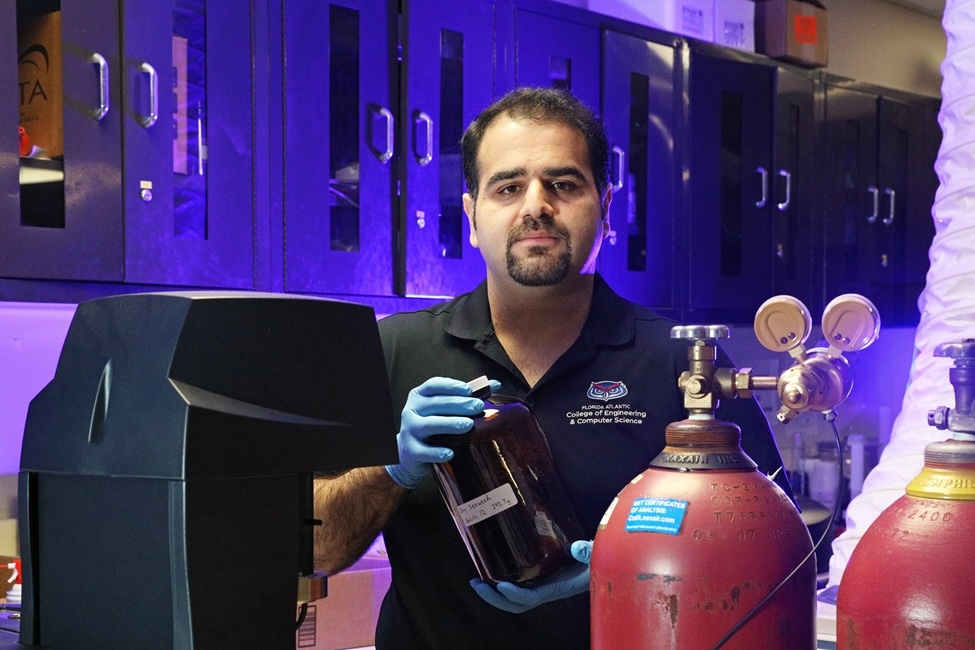
Engineers at Florida Atlantic University have received an $800,475 grant from the Gulf of America Division of the U.S. Environmental Protection Agency to develop an artificial intelligence-guided system that removes excess phosphorus from freshwater systems.
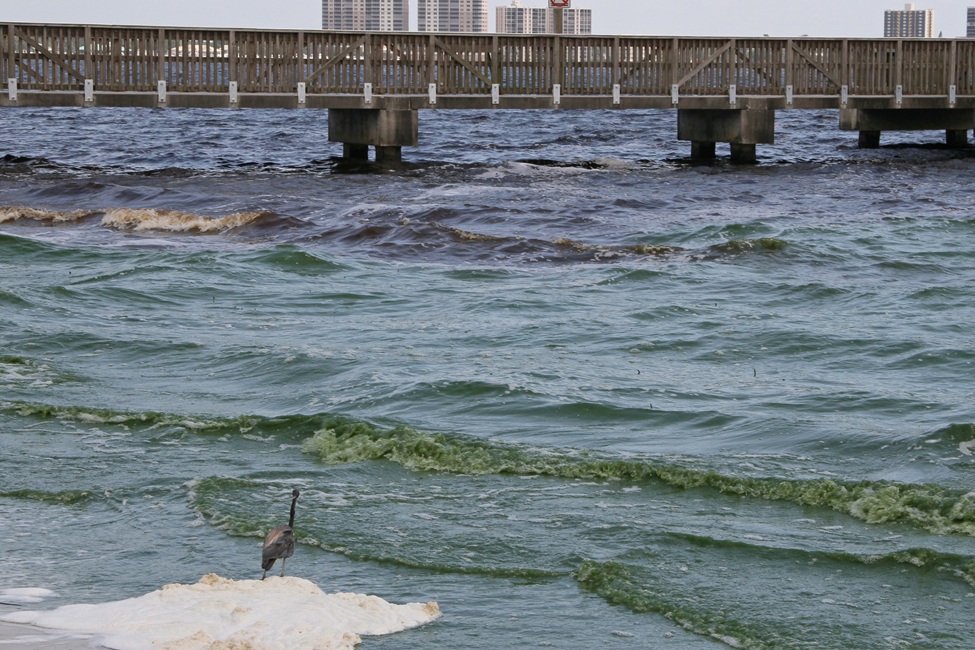
Harmful algal blooms (HABs) have become an increasingly common threat to lakes, rivers and coastal waters across the United States, endangering drinking water supplies, aquatic ecosystems, public health and local economies. Excess phosphorus entering waterways from agricultural runoff, wastewater, failing septic systems and urban stormwater fuels explosive algal growth. These blooms deplete oxygen needed by aquatic life, produce dangerous toxins, and cause significant economic losses for communities dependent on clean water.
Current methods for removing phosphorus often present significant technical and environmental trade-offs. Chemical treatments generate large volumes of sludge, while biological approaches require tightly controlled conditions that are difficult to maintain outside treatment facilities. Furthermore, while lanthanum-based materials effectively capture phosphorus, conventional applications rely on fine powders that settle into lake sediments and can slowly release lanthanum back into the environment.
The three-year project, titled “AI-Guided Use of 3D-Printed Adsorbents for Phosphate Removal,” began July 1 and aims to overcome these limitations. Led by principal investigator Masoud Jahandar Lashaki, Ph.D., an associate professor in FAU’s Department of Civil, Environmental and Geomatics Engineering, the project includes co-principal investigators Yalan Liu, Ph.D., and Mohammed Abdellatef, Ph.D., both assistant professors at FAU, along with sub-awardee Huichun (Judy) Zhang, Ph.D., of Case Western Reserve University.
To address current treatment flaws, the team is developing durable, retrievable 3D-printed structures manufactured from sargassum, a naturally abundant seaweed, modified with lanthanum. Unlike conventional powdered adsorbents, these 3D-printed structures can be deployed into the water column and lake sediments, retrieved, regenerated and reused. This process reduces waste and prevents lanthanum from lingering in the ecosystem.
“This award provides an exciting opportunity to transform how we manage one of the most persistent causes of harmful algal blooms,” said Lashaki. “By combining sustainable 3D-printed materials with the power of AI, we can develop a smarter, more effective and environmentally responsible solution for removing phosphorus from our waterways. This funding allows us to accelerate the development and field testing of this technology while creating a model that can ultimately benefit freshwater ecosystems far beyond Florida.”
Artificial intelligence and machine learning serve as central pillars of the technical workflow. Machine learning models will rapidly identify the most effective adsorbent formulations, determine optimal deployment locations, and predict where phosphorus capture will yield the greatest impact. By integrating real-time environmental monitoring data with variables such as land use, weather patterns, fertilizer applications, livestock operations and septic systems, the system will enable highly precise nutrient management.
Field testing will take place under real-world conditions in Lake Okeechobee, a critical freshwater resource at the headwaters of the Gulf of America watershed with recurring HAB issues. Researchers will track improvements in water clarity, water quality and bloom reduction using field sampling, public environmental data and unmanned aerial vehicles. Data collected during the study will be shared through the U.S. EPA’s Water Quality Exchange to help communities worldwide adapt the scalable technology to local watersheds.
“This award exemplifies the innovative, interdisciplinary research taking place in our college to address some of society’s most pressing environmental challenges,” said Stella Batalama, Ph.D., dean of FAU’s College of Engineering and Computer Science. “Professor Lashaki and his collaborators are developing a solution that combines advanced manufacturing, AI and environmental engineering to protect one of Florida’s most important natural resources. The impact of this work extends well beyond our state, offering a scalable approach that has the potential to improve water quality and protect ecosystems in communities around the globe.”